






Written by
Ann Sylph, MSc, MCLIP
Visiting Researcher
6 October 2026
Over the past 200 years ZSL has inspired generations of artists, poets and authors – bringing people closer to nature than ever before.
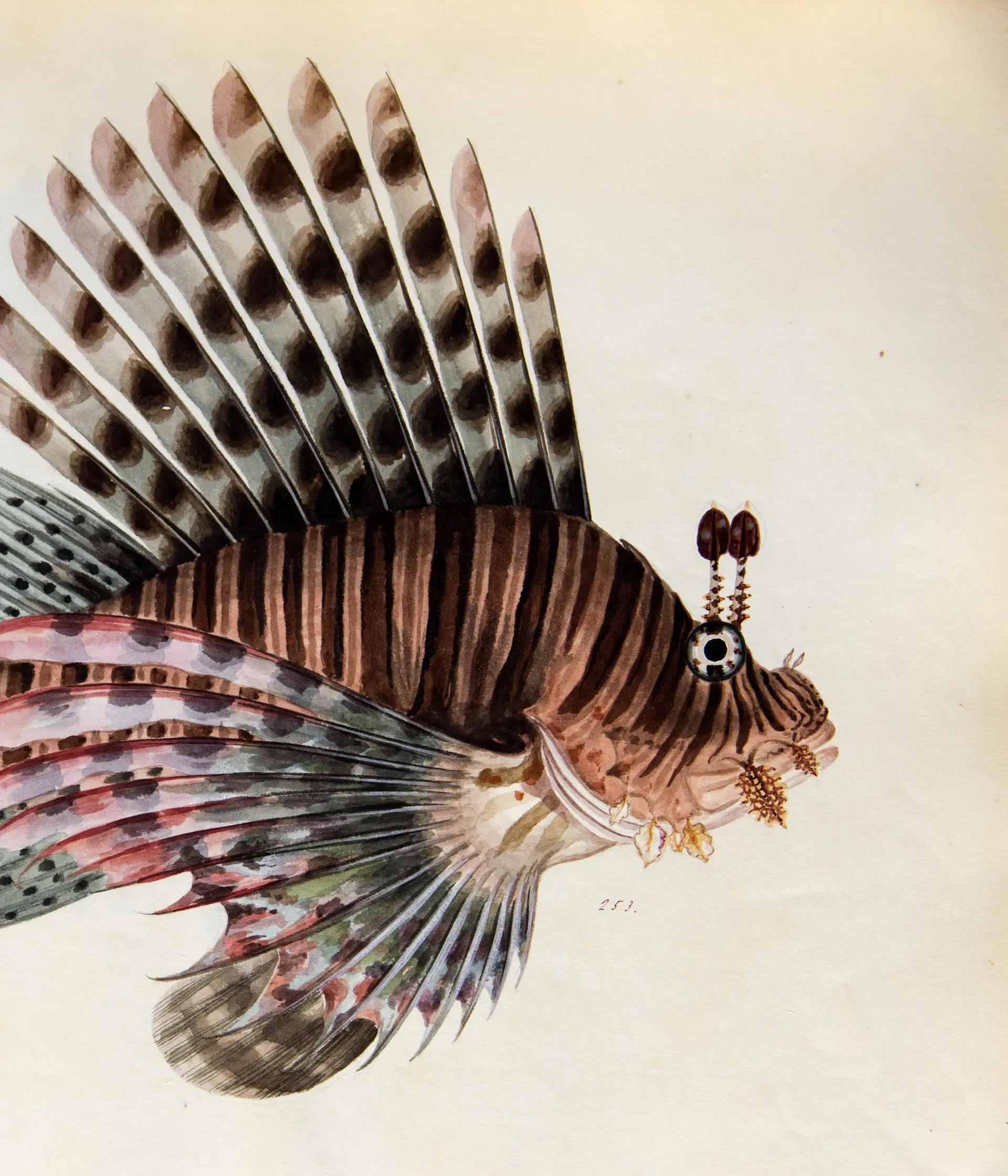
Art and illustration have been, and continue to be, essential in describing animal species for scientists and the wider public, particularly with the development of improved colour paints and printing techniques. As it is popularly said - ‘a picture is worth a thousand words’, an image can be so important when describing a species new to science. However, as well as their scientific use, often the artworks and illustrations of animals can be appreciated for their beauty and allow a different approach to engaging with nature.
ZSL Scientific Meetings and Publications
In the nineteenth century, ZSL had a role as a knowledge hub about animals from around the world; publishing details in ZSL’s scientific publications, the Proceedings and Transactions; studying living animals in the Zoo; collecting specimens for ZSL’s Museum; providing a network for ZSL Fellows and Overseas Members, collectors, amateur zoologists and scientists to discuss and publish about newly described species. ZSL appealed to Fellows, Corresponding Members and more widely to members of the Armed Forces, Ambassadors, administrators and traders to send specimens and information, including illustrations, to ZSL. These collections and details enabled ZSL to become a knowledge hub about all types of animals.
ZSL’s Scientific Meetings were the forum for communicating these details, papers were presented often accompanied by a specimen, an artwork or illustration. Subsequently the paper and illustrations would be published in ZSL’s scientific publications, Transactions of the Zoological Society for longer papers whilst the Proceedings contained shorter papers.
Today, the meetings continue as Scientific and Conservation Talks, whilst the Proceedings and Transactions continue as Journal of Zoology. Both talks and publications have continued throughout ZSL’s 200 years, linking current scientific activity to that in the past.
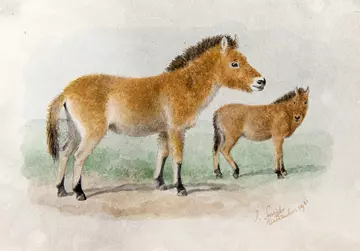
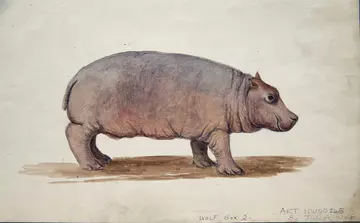
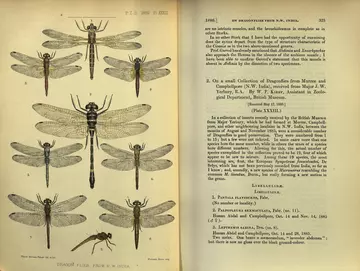
Throughout much of the nineteenth century ZSL or an author, commissioned artists to provide artwork for scientific papers, sometimes the author provided the artwork themselves. The resulting illustrations were then printed as uncoloured in the text or more expensively, as coloured lithographic plates. ZSL Library and Archives have many of these art works in their collections, talented artists such as Edward Lear; Joseph Wolf who also illustrated many animals at London Zoo; Joseph Smit.
Women artists and illustrators
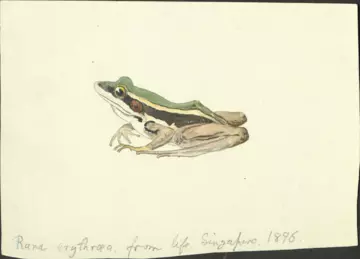
Women took the opportunity to develop skills in illustrating and their own zoological knowledge, some such as Maud Horman-Fisher provided illustrations for scientific papers by others. Women such as Joan Procter, ZSL’s first woman Curator of Reptiles and Amphibians, frequently illustrated their own scientific papers.
Elizabeth Gould (born Coxen) was one of the many artists associated with ZSL, she was married to John Gould, ZSL’s Curator. She illustrated his papers plus the bird volume of The zoology of the voyage of H.M.S. Beagle, under the command of Captain Fitzroy, R.N., during the years 1832 to 1836... written by John Gould and edited by Charles Darwin, this volume includes plates depicting the now iconic Galapagos finches. She also illustrated the large folio volumes for which John Gould is famous. In one of our blogs we feature her illustration of the slender billed curlew, a species very recently declared extinct.
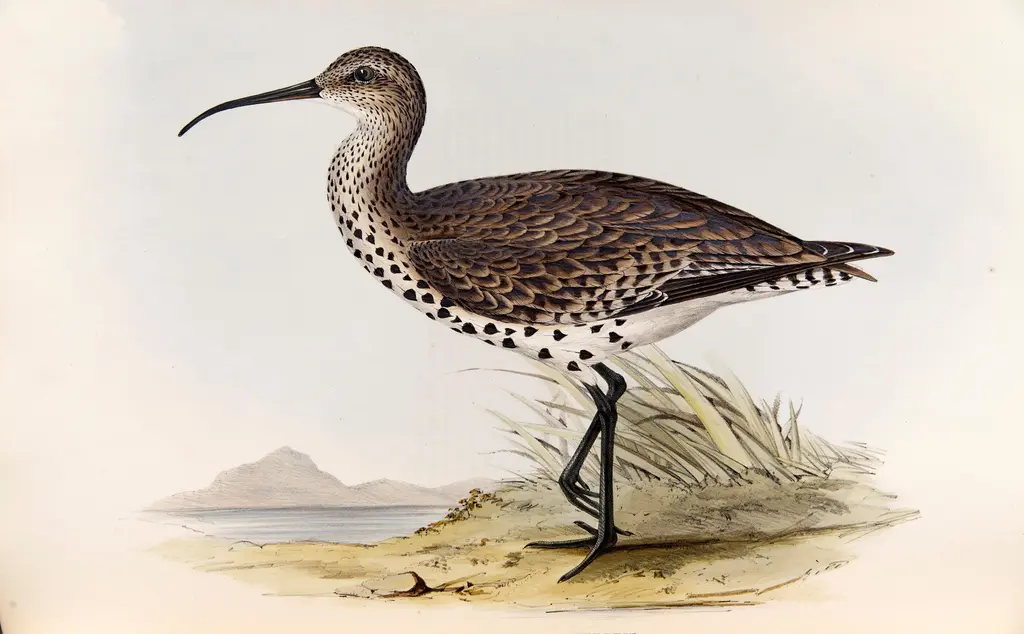
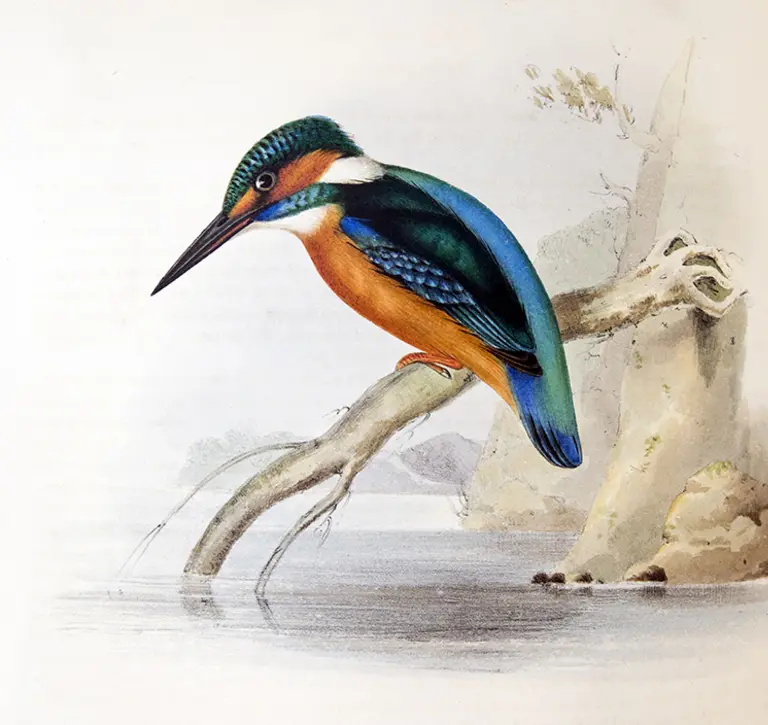
Elizabeth Gould's slender-billed curlew and kingfisher
Discover more about female zoological artists
Travellers, collectors and artists
People working or travelling overseas would collect specimens and artworks often depositing these with ZSL, examples where we hold artworks include
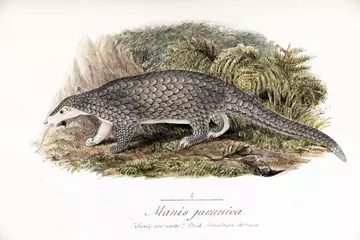
Brian Houghton Hodgson, British Resident in Nepal who then moved to Darjeeling, he commissioned local artists Rajman Singh, Tursmoney Chittakar and others unknown to us; Samuel Richard Tickell, he was related to Hodgson through marriage and illustrated many species found in India; John Reeves, employed as a Tea Inspector in China, he commissioned now unknown Chinese artists.
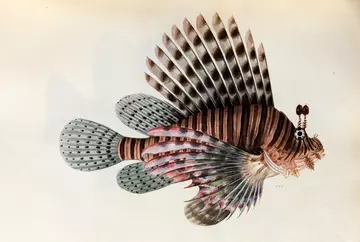
Other little known but talented artists gave artworks to ZSL such as Major Henry Jones who presented ZSL with over 1,200 of his paintings of birds.
Rare and extinct animals
Even today illustrations are frequently used instead of photographs to depict animal species. In field guides an illustrator can emphasise distinguishing features or present a variety of species together in one illustration, for example a selection of species found in a particular habitat but not usually seen together.
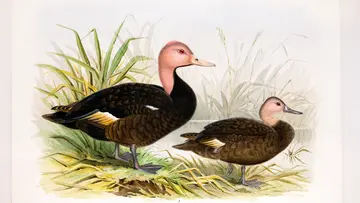
Revisiting early papers is important for current scientists and conservationists, to check distribution and migration details, factors which change owing to human impacts and changing climate. They may need to look at the details of the ‘type specimen’ on which a species description is based. As well as helping in identifying and describing species many of the artworks and illustrations have a different use now, sometimes they depict rare or extinct species.
Search and view original artworks in ZSL’s Library catalogue
Interested in viewing artworks and prints in person? ZSL’s Prince Philip Library and Archive is open to all by appointment, email library@zsl.org in advance of your visit.
Publications mentioned
- The zoology of the voyage of H.M.S. Beagle, under the command of Captain Fitzroy, R.N., during the years 1832 to 1836... / edited and superintended by Charles Darwin. London : Smith, Elder, [1838]-43.
- Proceedings and Transactions of the Zoological Society can be viewed online to subscribers.