






6 February 2026
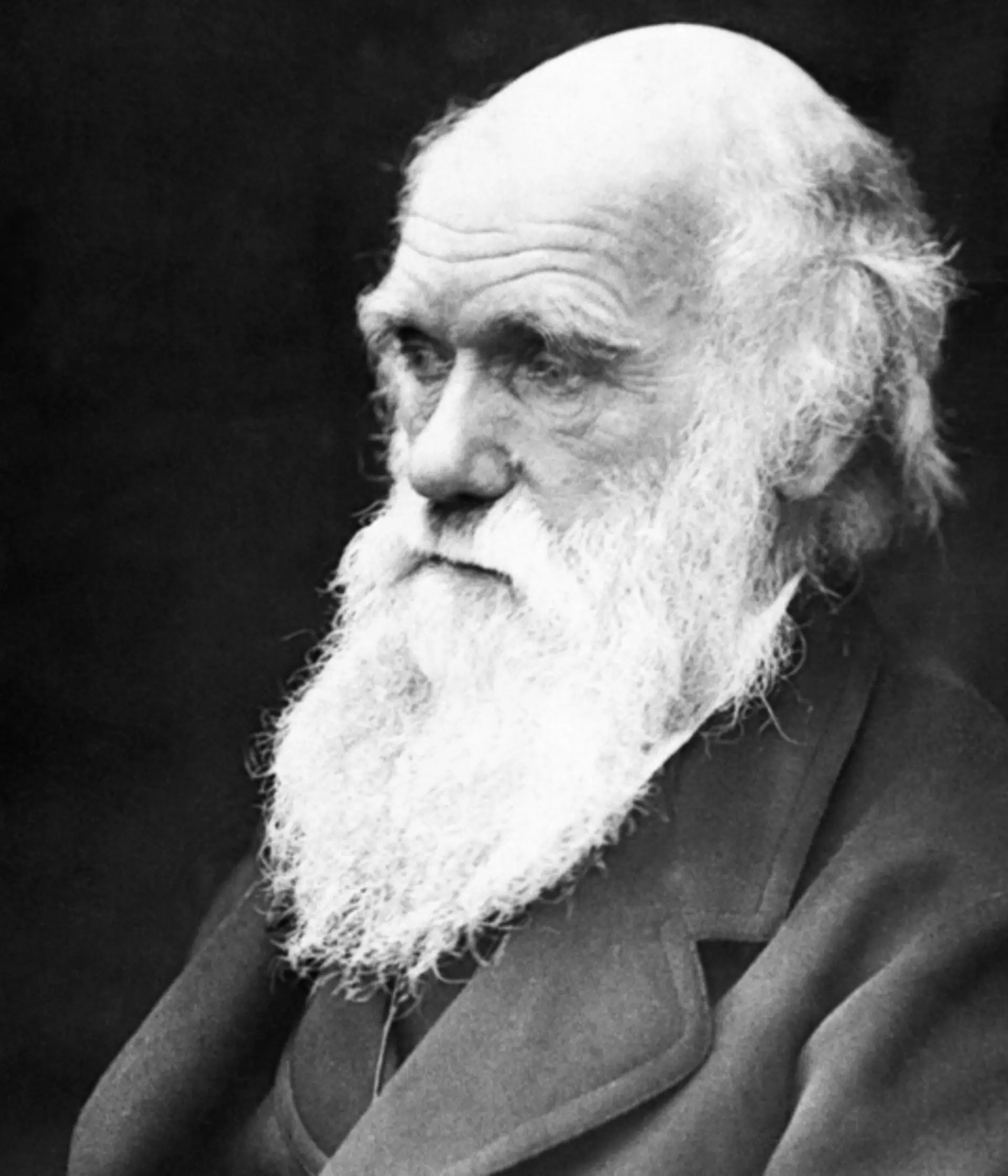
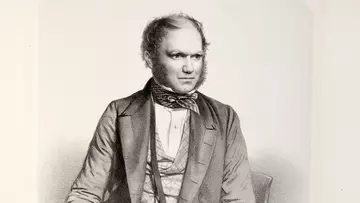
Charles Darwin had a really close connection with ZSL, using London Zoo and our experts to advance his evolutionary theories.
We’re extremely proud to have played a crucial role in Darwin’s work, and he’s a hugely important part of our history. But how much do you really know about Charles Darwin?
Who was Charles Darwin and why is he still so famous?
Charles Darwin, often referred to as the Father of evolution, was born on 12 February 1809. He studied medicine at the University of Edinburgh, and then later theology in Cambridge, and it was here that he developed a passion for natural history.
Darwin went on to become a famous naturalist, best known for developing the theory of evolution by natural selection. His ideas were controversial at the time, especially with religious institutions, but they transformed our understanding of biology and formed the foundation of modern science.
How is Charles Darwin connected to ZSL?
In short, we played a significant role in Charles Darwin’s early career. Darwin’s relationship with ZSL, his observations at London Zoo, and the expertise from our staff were central to the formation of evolutionary theory. Here’s how:
HMS Beagle and Darwin's finches
Before heading off on his famous expedition on HMS Beagle in December 1831, Darwin – who had become a corresponding Member of ZSL earlier that year – asked our experts for advice on how to preserve his specimens.
After his return, the specimens of 80 mammals and 450 birds were taken to the ZSL museum in Leicester Square where they were examined by different experts. Perhaps most importantly, the birds were passed on to John Gould, Superintendent of the Ornithological Department (dedicated to the study of birds) at the museum.
Gould helped to identify the legendary ‘Galápagos finches’ and highlighted their beak variations. This insight was pivotal in Darwin’s realisation that species could adapt and evolve independently to fill different ecological niches.
In the case of the finches, the beaks changed as birds developed different tastes for seeds, fruit or insects – long pointed beaks were better for picking seeds out of cactus fruits, whereas shorter stronger beaks worked better for eating harder seeds found on the ground.
This collaboration between Gould and Darwin helped to shape the theory of natural selection.
Jenny the orangutan
Darwin also made good use of his affiliation with ZSL by visiting London Zoo to study the animals’ behaviour.
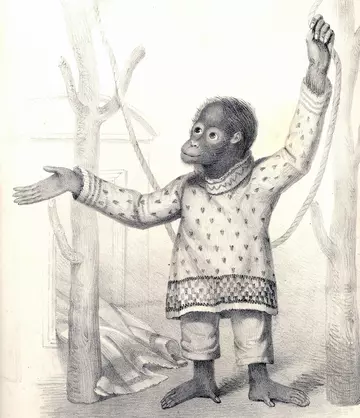
In 1838, Darwin met Jenny the orangutan – this was the first time he’d seen an ape before. She made quite the impression on him and he was fascinated by her human-like emotions and reactions. This interaction went on to influence his thinking about the continuity between humans and animals.
Read more about Jenny the orangutan
Fellowship
Darwin cemented the relationship with ZSL by becoming a Fellow in 1839 and serving on Council from that year until 1841.
As a ZSL fellow, Darwin continued to visit the animals at London Zoo to develop his scientific work further.
He is, without doubt, one of our most honoured and notable, historic ZSL Fellows.
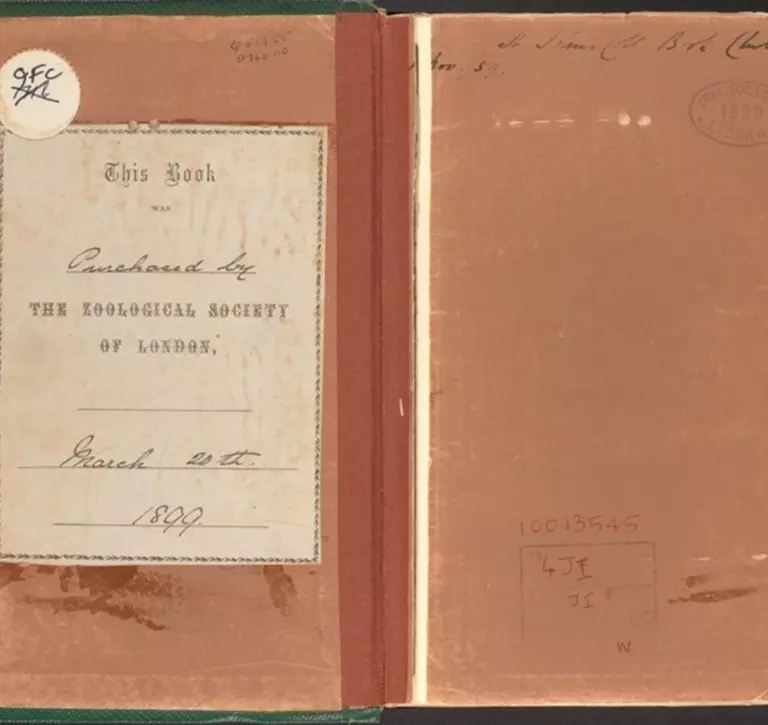
On the Origin of Species
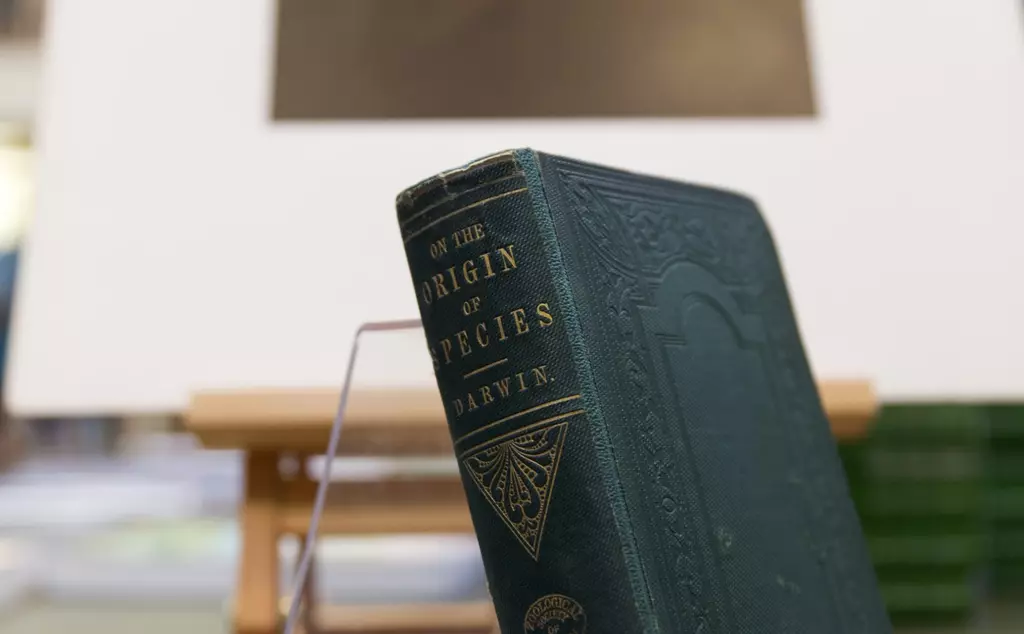
Charles Darwin took all of this knowledge on board and The Origin of Species was published on 24 November 1859. It introduced the theory of evolution by natural selection, arguing that species evolve gradually through variation and survival of the fittest.
It was influential, yet controversial at the time, and changed the way many people thought about their place in the world.
Read more about ZSL’s relationship with the book
We still hold important Darwin-related materials, including a first edition of On the Origin of Species, records of Darwin’s fellowship and his scientific interactions with us in the ZSL Library and Archives.
Find out more about ZSL's Library aNd Archives and how to visit
Honouring Charles Darwin and his legacy
Without ZSL, Darwin’s ideas might have taken much longer to materialise, and we’re extremely proud to be a part of his work.
We continue to honour Charles Darwin today by preserving his treasures in our archives, through awarding the annual ZSL Charles Darwin Award and Marsh Prize, and by educating our Zoo visitors. We even have a replica HMS Beagle in London Zoo’s Animal Adventure play area so children can follow in Darwin’s daring footsteps through play.
And every year on 12 February, alongside people and organisation across the globe, we celebrate Darwin Day. We mark the anniversary of Charles Darwin’s birth to honour him and the legacy he has left behind. And it really is a remarkable legacy!
Darwin’s theories continue to inform and inspire us today. And as we celebrate our bicentenary, we hope to continue paving the way for the evolution of knowledge – inspiring, informing and empowering all generations to protect wildlife and their habitats around the world.
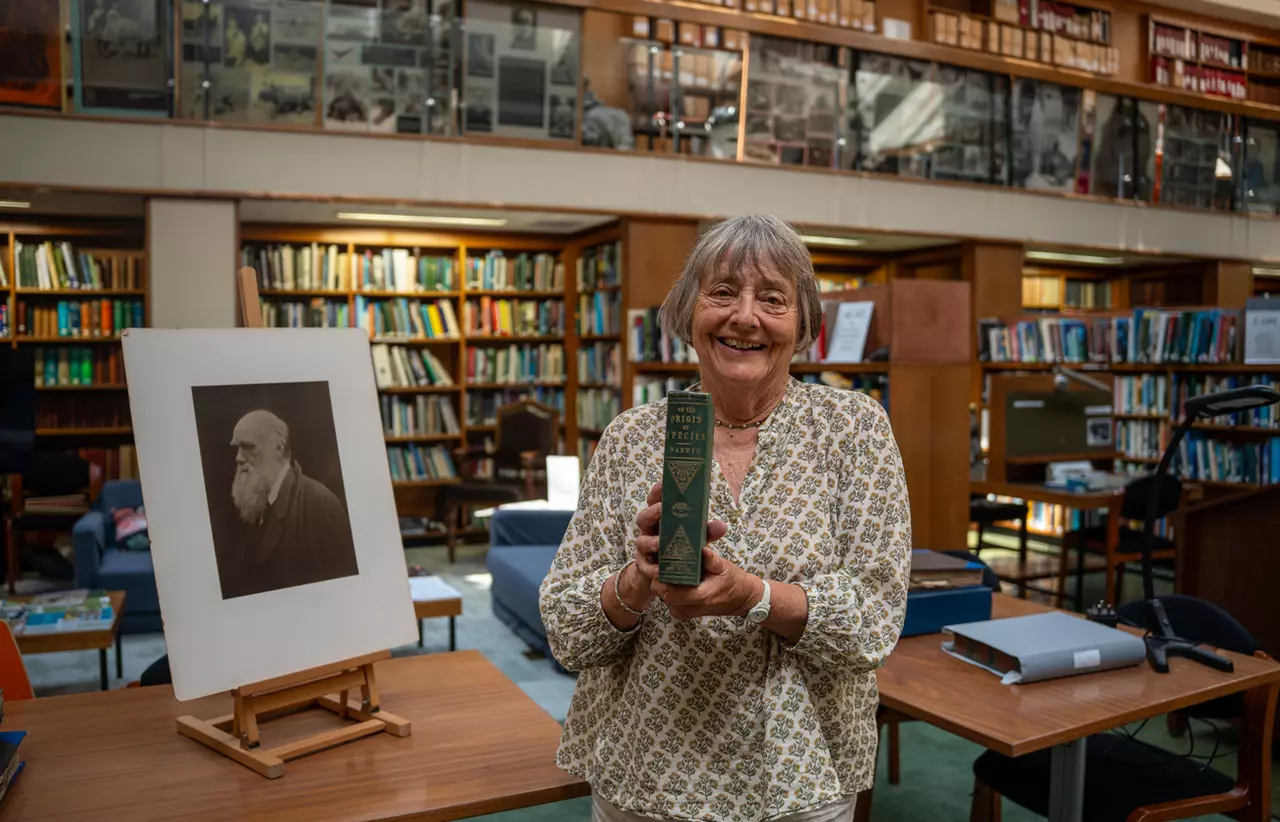
Hear from the great-great-granddaughter of Charles Darwin
As we celebrate 200 years of ZSL, we're sharing recorded interviews from some of our supporters, including that of Camilla Whitworth-Jones, the great-great-granddaughter of Charles Darwin.
In her oral archive, she remembers London Zoo fondly from her childhood and talks about Darwin, family, and conservation.