






Camilla Whitworth-Jones is the great-great-granddaughter of Charles Darwin, and a long-time supporter of our conservation charity, championing and investing in talented early-career conservationists in the UK and around the world.
Camilla’s father, Erasmus Darwin Barlow, was ZSL’s Secretary between 1980 and 1982 and Camilla remembers London Zoo fondly growing up.
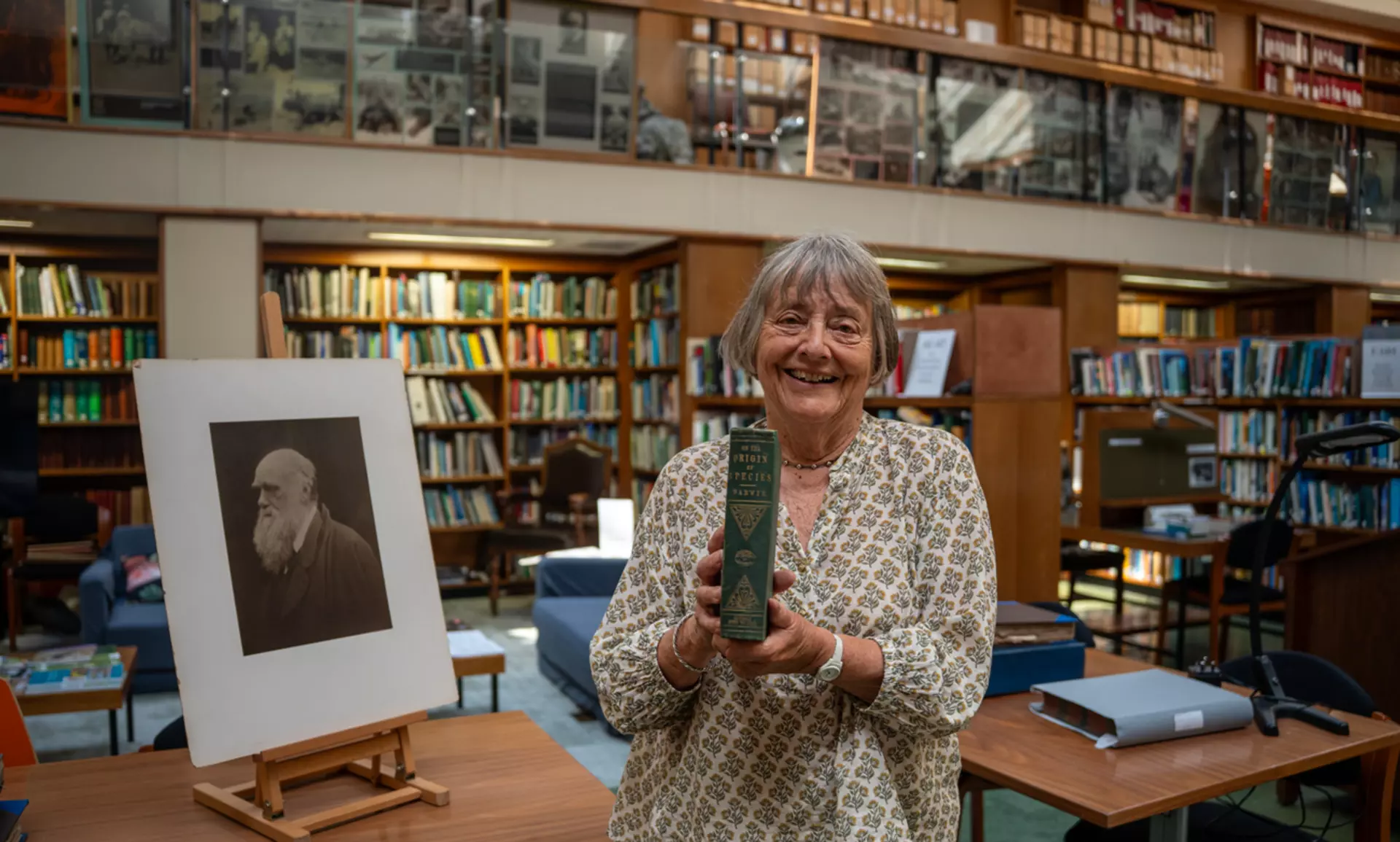
My name is Camilla Whitworth Jones, and my father was Erasmus Darwin Barlow, and he was Secretary of the Zoo at some period of his life, and very keen on the Zoo. So it's always been part of my life. And my sister Phillida was made a life Fellow at the Zoo when she was 21 and I remember that it was a great bonus to us all, as we had lovely visits here whenever we wanted. And that was wonderful.
I think he [Erasmus Darwin Barlow] found it quite stressful, because all the problems of the Zoo to do with finances, conservation, making it attractive, I think he was very aware of it. We did as children visit London Zoo a lot, because it was very easy to come to and it was wonderful to be able to come when we wanted. I remember elephants roaming around in London, which of course, they're now in Whipsnade and I remember these baby penguins in dust bins, which was very sweet as they looked up at one. But it was just a very nice thing to do as a child, and then to bring one's own children and indeed grandchildren here as well.
I don't think conservation featured very much in our life. I do remember my grandmother, who was Charles Darwin's granddaughter, doing this extraordinary thing with orchids round their house in Bucks, which was trying to fertilise them because she wanted them to spread over the Downs there. That's what I remember. So obviously, conservation was there, and concern about nature, but not something we as young discussed.
The Erasmus Darwin Barlow Foundation came into being when my father died in 2004 and a member of the development department approached my sister, who's called Phyllida Barlow, a canny development, and she had been made a fellow by my father when she was 21 and suggested that they had these scholarships in memory of my father, to help conservationists at a later stage of their life, just postgraduate really. There was a particular sort of gap, really, for these postgraduate people, for them to do exciting work all over the world. And that's indeed what they did. They went, they travelled far, and of course, those things are expensive. We chose the name because it was in memory of him. My father was a lovely man, and he had been secretary of the Zoo. He loved the Zoo. And also it was a clever fundraising ploy, because we could approach all his friends and relatives. And that's indeed, who mainly funded the first programme. And they were pleased to do something in memory of him, the greatest achievements and highlights of the programme, and I think it was all very successful.
I can't remember now any particular work that was any better than any other piece. I just remember being very impressed by the young people who did it and their resilience and their enthusiasm and sort of gave one hope for the future really.
My relation to Charles Darwin is through my grandmother, Nora Darwin. Nora Barlow. She married a Barlow who was Charles Darwin's granddaughter. I think that we all realised that he was a great man. Understatement of it, but I think people think it's more important than it is because you're just, you know, you all have grandparents, and that's who they are. I think my grandmother said something very interesting, which was when she was very much involved in preserving his life, or remembering his life, admiring his life, she said "he will become much more famous". And she was so right about that, because I think when we were being brought up, we were aware of Darwin, but not to the extent that he's become this sort of icon with people like Richard Dawkins, and yelling and screaming about it all, and that's the way it is now, and that's different.
When we were clearing out my father's and mother's house so they could downsize, there was masses of stuff, and we were all going frantic, and I picked up this wooden, large cotton reel with a bit of string coming out of the top. And I said to my father, "God, Dad, what's this?" And he looked at me and said, "Charles Darwin's string box". So it wasn't going to the dump, so I kept it. And when he died, we took it down to Down House, where, as I'm sure you know, Charles Darwin lived, and they very, very carefully placed it on his desk, where it is to this day. So that was an heirloom that was preserved.
He was always an interest, somebody one was aware of. But my schooling was not like that. My cousin Ruth Pardell, my first cousin, she was the daughter of Hilda Pardell, who was my father's elder sister. She's been very influenced by Darwin, and she's written some wonderful poetry, and indeed books which involve him and conservation, and a fantastic book about tigers. So I think she is an important person who has been very influenced by the relationship with Darwin.
If I could speak to Darwin today, what would I ask him? I would like to ask him about God and what his feelings were about that, because I think that must have been very complicated. And actually that does come out in the letters, because Emma Darwin, his wife, was a believer. And as I understand it, Charles Darwin, after his daughter, Annie, died of TB, he lost his faith. I can't confirm that completely obviously that she died of TB, but I think so. I think his attitude to religion, living in a very religious society, which was what the Victorian era was, and then having this extraordinary theory, which threw all that on the ground, and then being buried in Westminster Abbey, that's another thing which is extraordinary, isn't it? So, yes, I think religion and possibly his health, it would be nice to know what he felt about that.
I think retaining interest is about the future and about what happens, because evolution doesn't stop, it goes on. And there's a most incredible museum in Rio de Janeiro, which is entirely devoted to sort of evolution, and they obsessed with Darwin, but they want to take it further. Darwin was the beginning of how to show things evolve in the future.
These archive recordings capture personal memories and perspectives. They reflect the way people remember events which may be shaped by time, or differ from other accounts.