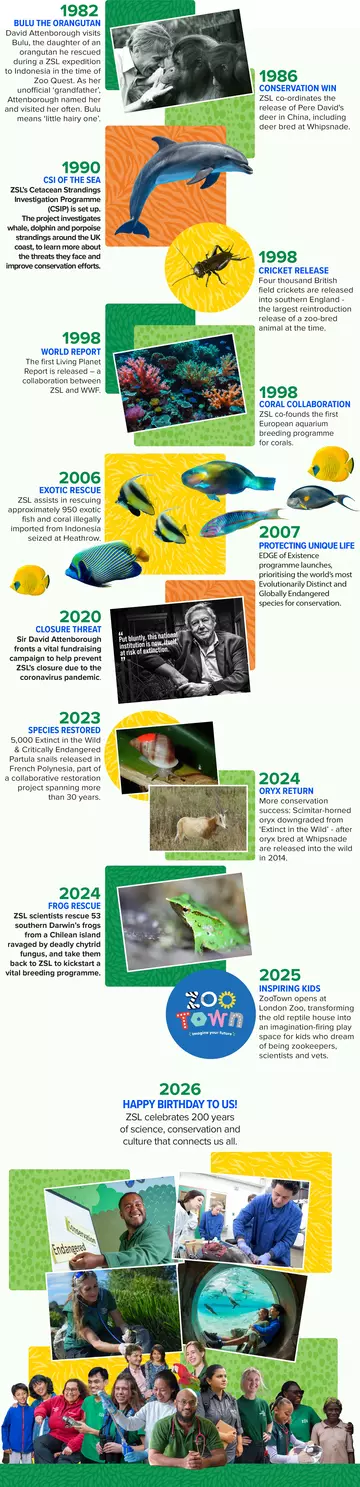




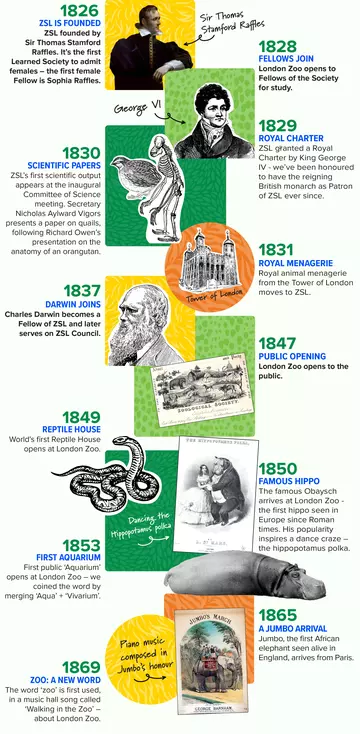
From pioneering science to unforgettable animals, cultural milestones and conservation breakthroughs - explore 200 years of ZSL history set against a changing world.
ZSL have spent two centuries shaping the way we understand, care for, and protect wildlife. From the first scientific Zoo to the rise of wildlife television and today’s conservation work, our story runs alongside some of the greatest cultural, scientific and technological changes of modern history. This timeline traces our journey across four eras - placing our milestones alongside the inventions, ideas and moments that transformed how people experienced the natural world and their connection to wildlife. Scroll through time to discover the people, animals and breakthroughs that built our legacy and springboard our future.
The timeline below uses images. If you would like to read the accessible version click below.
Accessible Version
1826 – 1876: The age of discovery
Science awakens, cities expand, photography is born and the modern zoo takes shape.
The early Victorian era was defined by exploration and invention. The first permanent photographs were taken, railways transformed travel, and public institutions flourished as science stepped into the spotlight. It was during this period of intense curiosity that ZSL was founded - creating the world’s first scientific zoo and opening a new chapter in the study of living animals. From the arrival of Jumbo the elephant and the hippo Obaysch to the first public aquarium - and even the popularisation of the word “Zoo” itself - this era laid the foundations for modern zoology and the public’s fascination with wildlife.
1876 – 1926: Curiosity meets conservation
Incredible new species are described, women cement their place in science, and the first seeds of conservation are sown.
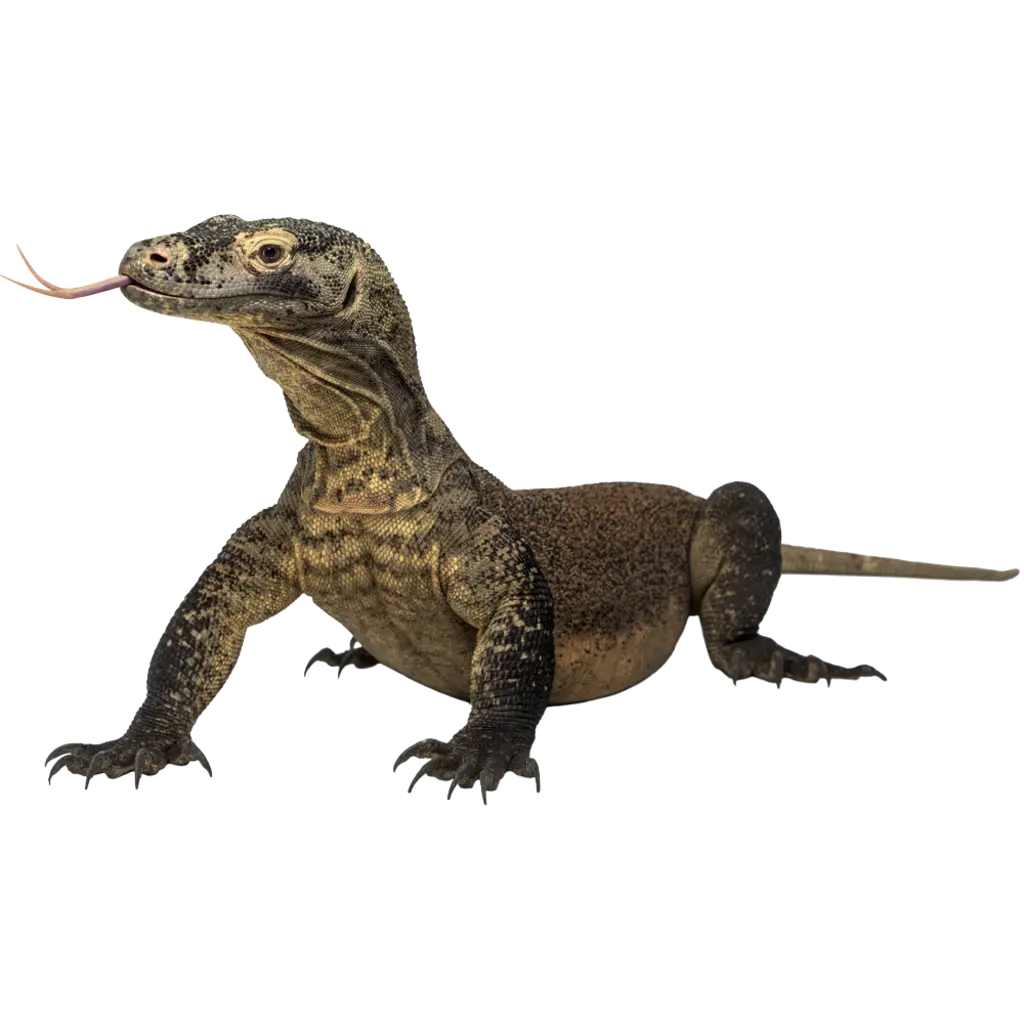
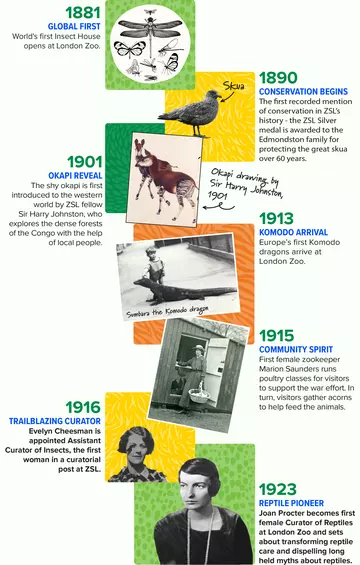
As telephones connected the world and early cinema captured moving images for the first time, scientific understanding accelerated. This dynamic period saw ZSL expand its research influence while conservation thinking began to emerge. The okapi was formally introduced to Western science, Komodo dragons arrived in Europe for the first time, and groundbreaking women like Evelyn Cheesman and Joan Procter reshaped zoological practice. It was a time of discovery - but also reflection - as awareness grew that wildlife needed protection, not just observation.
1926 – 1976: Wildlife on the world stage
Children’s books, broadcast television and bold modern architecture bring animals into everyday life.
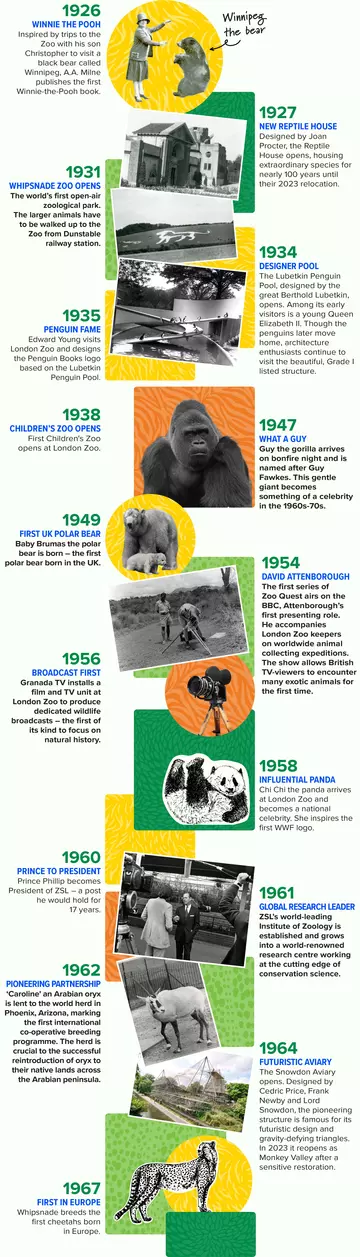
Mass media transformed how people connected with nature. Winnie-the-Pooh leapt from the pages of a London Zoo-inspired book, wildlife documentaries reached living rooms through Zoo Quest, and the world’s first dedicated wildlife TV unit was installed at London Zoo. At the same time, Whipsnade Zoo pioneered open-air zoological parks, and landmark structures like the Lubetkin Penguin Pool and Snowdon Aviary redefined modern zoo design. Charismatic residents - from Guy the Gorilla to Chi Chi the panda - became household names, inspiring logos, campaigns and lifelong fascinations with wildlife.
1976 – 2026: conservation in action
From local rescue to global restoration - science becomes a lifeline for species under threat.
As environmental awareness surges and digital technology shrinks distances, conservation becomes our driving force. This era is marked by field programmes being set up around the world, international breeding efforts, species reintroductions, and urgent responses to wildlife crises - from rescuing Critically Endangered frogs to releasing thousands of snails back into their native habitats. Programmes including the EDGE of Existence and scientific outputs such as the Living Planet Report have helped guide global conservation priorities, linking scientific research directly to protection on the ground. Today, as we celebrates 200 years, the focus is firmly on action – protecting wildlife, restoring ecosystems, training future conservationists and safeguarding wildlife for the centuries ahead.