






1 February 2026
In 1826, a group of scientists and naturalists came together with an ambitious vision - to establish a new kind of organisation ‘for the general advancement of zoological science’ and help people better understand the diversity of life on Earth.
That organisation was ZSL and to support this understanding we opened the first scientific zoo in the world – now known as London Zoo. From the very beginning, it was here where we brought together the brightest minds of the day to share discoveries, debate theories, and shape the future of zoology.
This year, as we mark our 200th anniversary, we’re celebrating our origins as a space for scientific debate with our Wild Talks Lecture Series – six special evenings celebrating two centuries of scientific discovery, while looking ahead to the next 200 years.
Taking place at our iconic HQ, at London Zoo, these lectures will invite the public to engage with the latest research and ideas in conservation science, in the very place where some of the most famous scientific debates in history have taken place.
A society of science
We began hosting scientific meetings in the early 19th century, soon becoming one of London’s most important intellectual spaces. Fellows of our Society gathered regularly to hear lectures and presentations from leading scientists, naturalists, and explorers. These were the days before email, social media or even telephones – if you had a new discovery or a radical new idea, you presented it in person at a ZSL meeting.
And some of the names on those early lecture lists are etched into scientific history.
Charles Darwin was a regular visitor of ours, attending meetings and drawing inspiration from London Zoo’s animals. He presented several key papers here and spent time with our then curator of birds John Gould, who shared insights about animal behaviour and anatomy that supported the shaping of Darwin’s thinking on evolution.
Alfred Russel Wallace, co-discoverer of natural selection, also lectured for us, sharing his and his assistant Ali’s findings, including the description of new species of Bird of Paradise. The renowned explorer and biologist David Livingstone wrote letters to the Society from Africa, updating Fellows on the wildlife he encountered. Richard Owen, the palaeontologist who coined the term ‘dinosaur’, debated the theory of natural selection with Darwin here.
Meanwhile, our curators and keepers at London Zoo were conducting ground-breaking work in animal care, veterinary science, and taxonomy - often presenting their findings at our scientific meetings.
A platform for progress
These lectures weren’t just for celebrity scientists. Our meetings created a platform for people working across the world – from British officers collecting specimens new to the Western world to female zoologists who found opportunities to share their work here long before they were accepted by other scientific societies.
In fact, we were the first learned society in the world to admit women, welcoming Sophia Raffles as a Fellow in 1827 – a landmark moment for science and inclusion.
Over time, our scientific meetings evolved into a key part of the global scientific community. The Society began publishing the Proceedings of the Zoological Society of London, a prestigious journal that helped launch thousands of research careers. At age 19, and soon-to-be ZSL's first female curator of reptiles, Joan Procter authored her first paper for the Proceedings - about the Pit Viper - and became a world-leading authority on reptiles within just a few years. The legacy of the Proceedings lives on today in our peer-reviewed journals Animal Conservation, Journal of Zoology and Remote Sensing in Ecology and Conservation.
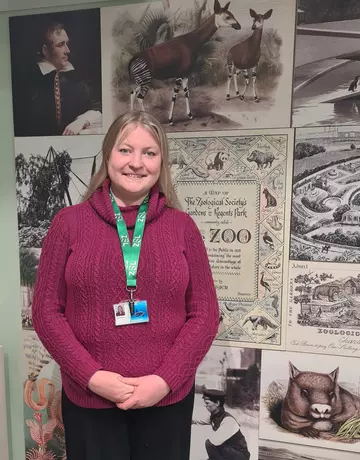
Here, Elina Rantanen, Journals Manager at our Institute of Zoology, takes us through the early years of ZSL’s scientific meetings.
Digging into our archives
I’m fortunate to hold one of the oldest roles at ZSL. As Journals Manager, I oversee the day-to-day management of the scientific journals owned by ZSL and published in partnership with Wiley. Our earliest publication, Proceedings of the Zoological Society of London, began in 1830 - just four years after the founding of the Society in 1826 by Sir Stamford Raffles.
Since that time, someone at ZSL has always been responsible for editing and managing our journals, and I’m proud to follow in their footsteps today, overseeing the editorial processes for our current titles: Journal of Zoology, Animal Conservation, and Remote Sensing in Ecology and Conservation.
But how did our first scientific journal begin?
To find out, I explored the very first volume of the Proceedings - and the answer appeared right on page one. On 21 July 1830, the ZSL Council established a “Committee of Science and Correspondence” to support the Society’s aim of “cultivating an extensive correspondence on subjects of Natural History.” Their goal was to host scientific meetings where zoological material could be shared, discussed and - crucially - published.
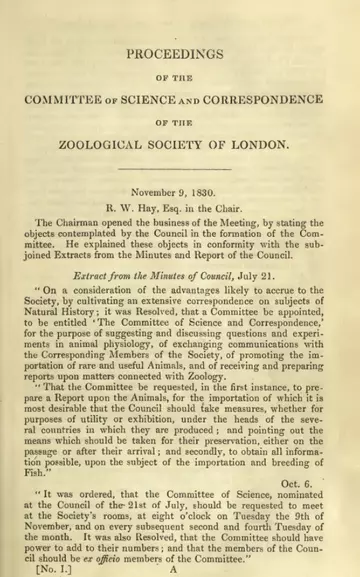
The committee’s remit included “receiving and preparing reports upon matters connected with zoology,” and their meticulously recorded meetings became the foundation of the Proceedings themselves.
I was immediately hooked and continued reading - and it soon became clear why this committee was formed.
Inside our first scientific meetings
The very first meeting, on 9 November 1830, featured newly described Himalayan birds presented by N.A. Vigors, alongside beautiful colour illustrations of these species, first sketched from nature by John Gould and then re-created via lithography by his wife, the artist Elizabeth Gould, for their publication A Century of Birds from the Himalaya Mountains.
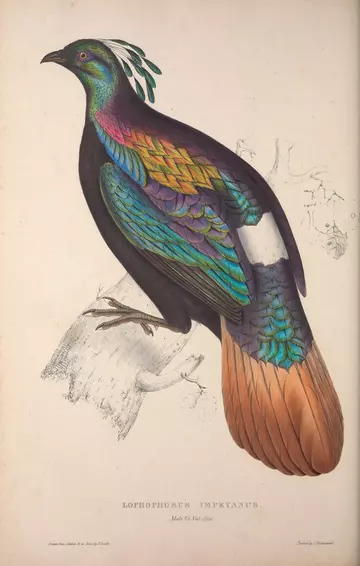
Himalayan monal (Lophophorus impejanus) by Elizabeth Gould, published in 1831 in ‘A Century of Birds from the Himalaya Mountains’. Licensed under the Creative Commons Attribution 2.0 Generic license.
One moment in the minutes particularly struck me: Vigors expressed his pleasure in naming a species - Mrs. Gould's sunbird - in honour of Elizabeth Gould, who had created the artwork. At a time when women’s contributions were rarely acknowledged, this felt like a powerful reflection of the Society’s early spirit of inclusion.
Also at that first meeting, Richard Owen began what became a multi-session presentation on the anatomy of the orangutan, comparing it with chimpanzees and humans - long before Darwin would propose a shared ancestry. The secretary later referred to Owen’s lengthy contributions as a “memoir,” suggesting they were either impressively thorough or a little too long!
Wildlife up close
The committee displayed preserved specimens and, at times, live animals. At a meeting on 25 January 1831, a pair of meerkats were presented and described as:
“Extremely gentle, and suffered themselves to be handled and played with, without evincing any uneasiness.”
During that same session, members conducted a post-mortem examination of a lion.
Meetings also featured illustrations (“plates”), reports of newly described species - written in Latin, then the language of science - and letters from researchers around the world. One notable example was a correspondence from M.F. Cuvier in Paris, thanking ZSL for its scientific circular and welcoming ZSL’s proposal for global scientific collaboration.
There were practical discussions too, including recommendations on animal care and early approaches to veterinary treatment.
The animals of the early London Zoo
Much of the work focused on the animals at the Society’s Garden in Regent’s Park - now London Zoo - which was not yet open to the public. By 1831, this living scientific collection included:
- Meerkats, kangaroos and lions
- Four ostriches presented to ZSL by King George IV (originally a gift from the Sultan of Morocco) · Antipodes parakeet, later illustrated by Edward Lear
- A spider monkey, southern flying squirrel, Reunion giant tortoise, armadillos, seals, Asian black bear, crocodile and monitor lizard
- Chinchillas, nilgai, reindeer and beavers
- Masked barn owls and northern gannets
- Ocelots, hyenas and pumas
- An American tapir and a leopard
One particularly significant moment came on 31 May 1831, when attendees examined the magnificent tail feathers of Reeve’s pheasant, measuring an astonishing five feet six inches - taken from the first bird of its species brought alive to Europe from China and housed in the Society’s Garden.
Discoveries through living study
Our living collection enabled discoveries impossible to make from preserved specimens alone. At a meeting on 10 May 1831, E.T. Bennett used a living lappet-faced vulture to settle a scientific debate about the bird’s distinctive folds of neck skin, previously doubted based on stuffed specimens.
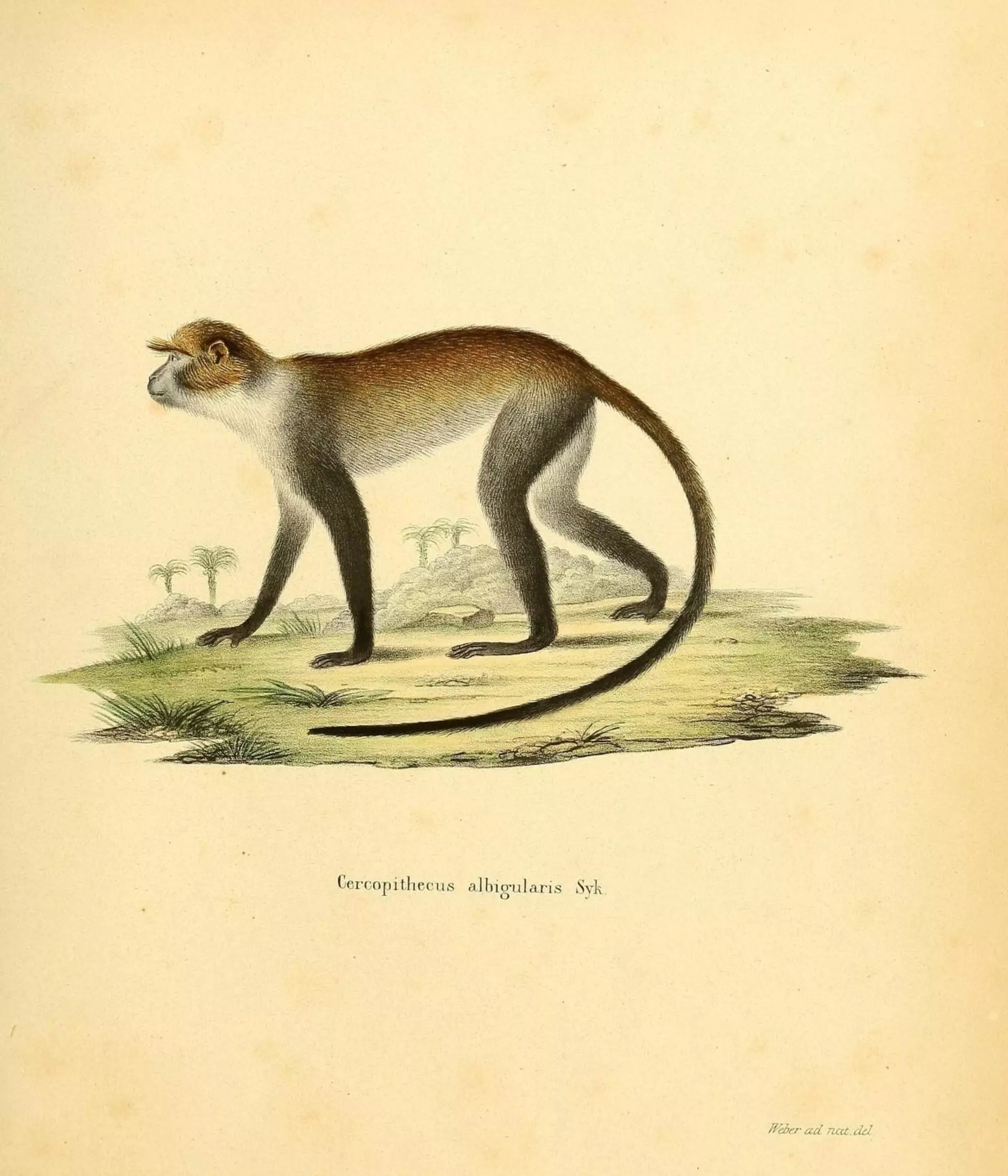
Live study also revealed behaviour. When Colonel W.H. Sykes described the newly identified Sykes’ monkey on 12 July 1831, he noted:
“The manners of this monkey are grave and sedate. Its disposition is gentle but not affectionate... yet resenting irritating treatment, and evincing its resentment by very smart blows with its anterior hands.”
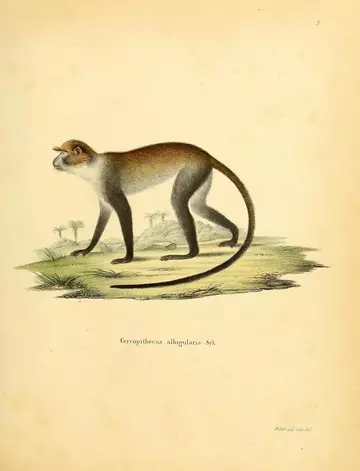
Sykes’ monkey (Cercopithecus mitis albogularis), published in ‘Die Säugthiere in Abbildungen nach der Natur, mit Beschreibungen’ authored by Georg August Goldfuss, Johann Christian Daniel Schreber, and Andreas Johann Wagner in 1774-1855. Licensed under the Creative Commons Attribution 2.0 Generic license.
Science in action
When animals could not be shown alive, meetings sometimes resembled pop-up museums. At one session, scientists examined the skins of 110 North American bird species collected during Captain Sir John Franklin’s Arctic expedition, including 23 species new to science, alongside newly identified possum and ray species. Anyone who missed that meeting surely regretted it!
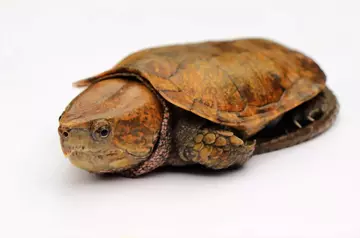
By the end of 1831 alone, an extraordinary 232 new species had been presented at the science committee meetings. Among them was the big-headed turtle (Platysternon megacephalum), described by J.E. Gray on 12 July 1831 - today recognised as an EDGE (Evolutionarily Distinct and Globally Endangered) species, highlighting its exceptional evolutionary importance and conservation urgency. It remains the sole living member of its genus, a group also named by Gray at that meeting.
That year also saw the creation of:
- Four new genera of fish
- Six new genera of birds (mostly Himalayan species presented by Vigors)
- Four new mammal genera, including ferret-badgers (Helictis), civets (Paguma), bamboo rats (Rhizomys) and pottos (Perodicticus)
Science takes centre stage
In 1832, our Council elevated scientific meetings from a committee activity to the Society’s core work, establishing general scientific meetings for all members. Their decision was explained in a moving Council Report stating:
“In their last Annual Report, the Council adverted with unmixed satisfaction to the meetings of the Committee of Science and Correspondence, and to the published Proceedings which have emanated from those meetings.
The Council saw in them proofs of the scientific zeal of the Members of the Society, both at home and abroad; and subsequent meetings and proceedings have confirmed the impression made by them, that much important information was likely to be afforded to the public by the industry and talent of those Members who have taken a share in producing them, as well as of other Members, not less qualified to add to the general stock of zoological knowledge.
Aware from such ample evidence that the Society may, by the exertions of its Members, assume a rank in the scientific world commensurate with its resources and their zeal, the Council have under consideration a plan for substituting in lieu of meetings of a Committee, general meetings of the Society for scientific purposes.
They trust to be able to lay before an early meeting the details of such a plan. With it will be connected the publication, with the requisite illustrations, of all the more important papers which may be communicated to the scientific meetings.”
Reading those words filled me with pride - the committee’s work had been a resounding success and had laid the foundations of ZSL’s reputation as a world-class scientific society.
A lasting legacy
These later meetings became the stage for momentous presentations - including Charles Darwin’s findings from the voyage of HMS Beagle and his groundbreaking theory of natural selection, and the natural history explorations of Alfred Russel Wallace across Southeast Asia. Richard Owen, once a leading voice of the committee, went on to become Superintendent of what would become the Natural History Museum, championing its establishment on its current Kensington site.
Women’s contributions to zoology steadily gained recognition through the journals that grew from these meetings: the Proceedings and Transactions of the Zoological Society of London, which were later merged into the Journal of Zoology in 1966.
Today, ZSL continues this publishing tradition with three journals:
- Journal of Zoology, covering various aspects of animal biology and behaviour
- Animal Conservation, focused on wildlife conservation research
- Remote Sensing in Ecology and Conservation, addressing the conservation of entire ecosystems
Nearly two centuries on, the same spirit that animated ZSL’s first meetings still drives our work: sharing knowledge, supporting discovery, and advancing conservation for the benefit of wildlife — and everyone who cares about our natural world.
Join the conversation
Though much has changed from the Society of 1826, to this day, ZSL has kept to its original mission – to bring people together to share ideas, debate the big questions, and inspire new generations of scientists. ZSL’s scientific meetings/events are now open to the public and take place roughly once a month, mostly on a Tuesday evening - the same evening of the week as those early meetings since 1830. Today, we gather a panel of experts to these meetings to present on a topic in zoology or conservation. The events are always free to attend.
This year, the Wild Talks lecture series will feature a mix of world-leading researchers, conservationists, and science communicators, speaking on topics from species recovery and biodiversity loss to wildlife health and our relationship with nature. Hosted by special guests including Adam Rutherford and Lucy Cooke, whether you're a lifelong science enthusiast or simply curious about the natural world, these talks will offer a chance to learn, reflect and take part in the ongoing story of zoological discovery.
We’ll be holding the lectures at London Zoo, in the heart of Regent’s Park – the same site where Darwin once sat, scribbling notes on animal behaviour. Today, just as then, these talks are a chance to be part of something bigger: a living, breathing tradition of science in action.
So come and follow in the footsteps of giants. Discover the science that shapes our world – and be part of the next 200 years of ZSL.
Our 200th Anniversary
Discover more about our incredible 200 year history and how you can get involved with our 2026 celebrations by heading to our 200th anniversary hub