







10 July 2026
Since our founding in 1826, we've enjoyed a steadfast and meaningful link with the British Royal Family.
During our anniversary year we’re honoured to reflect on two centuries of royal connections - from our first Royal Charter and ceremonial gifting to architectural masterpieces and conservation leadership - that has helped us work towards our vision of a world where wildlife thrives.
Our royal beginnings
We were founded on 29 April 1826 by Sir Stamford Raffles, who envisioned a scientific institution dedicated to the ‘advancement of zoological science’. From our inception, as with many societies of the day, we sought royal patronage to gain credibility and support to continue our work. This early support - regular visits, and in some instances key roles within the Society - proved instrumental to our transformation into one of the world's leading conservation organisations.
King George IV granted us our Royal Charter on 27 March 1829, establishing us as an institution of national importance. In 1831, William IV, our first official Royal Patron, offered to move the Royal Menagerie from the Tower of London, giving the animals there a new home and providing our scientific zoo with new wildlife for our scientific Fellows to study and publish new scientific literature about.
London Zoo: a royal gift to the public
When what is now known as London Zoo opened in Regent's Park in 1828, it was the world's first scientific zoo. The location itself reflected royal influence, situated within a royal park designed by John Nash for the Prince Regent. Initially accessible only to Fellows of the Society, royal encouragement resulted in us eventually opening to the public in 1847.
Throughout the Victorian era, members of the Royal Family regularly visited our scientific zoo, helping to establish the ‘Zoological Gardens’ as a place to be. Generating public interest and media attention, this helped cement the Zoo's place in British cultural life, bringing millions of visitors closer to wildlife.
Queen Victoria and cultural significance
Queen Victoria took a personal interest in our work, visiting London Zoo and its famous residents. Her reign coincided with some of the Zoo's most celebrated animal arrivals, including Obaysch the hippopotamus in 1850 - the first hippo seen in Europe since Roman times - and legendary elephant Jumbo in 1865. Jumbo was the largest animal anyone had ever seen in Britain, and became so adored that his name became synonymous with the word for large – which is why we use it today. When Jumbo moved on to P.T. Barnum's circus in 1882, the public outcry was huge, with thousands of schoolchildren writing to the Queen pleading for her to stop the sale.
Royal gifts of animals - while no longer something that takes place - also became a tradition during this period, with monarchs and foreign dignitaries presenting animals symbolic of their country to the Royal Family to show respect and strengthen diplomatic ties. Because of our expertise in animal care, we were tasked with providing a home for these animals at the Zoo.
The 20th century: 70 years of patronage
As we evolved into a global conservation organisation - led by our passion for nature and knowledge, scientific approach, and pioneering spirit - royal support continued. King George V and Queen Mary officially opened our new aquarium in April 1924. The aquarium, built beneath the current Mappin Terraces, was a groundbreaking example of design at the time, influencing the design of public aquariums across the world.

In World War Two, the Zoo was asked to remain open to boost morale for the nation. Soon after, Queen Elizabeth II became our patron upon her coronation in 1952. Throughout her 70-year reign, she demonstrated an incredible commitment to her role as Patron, attending events and openings and highlighting the importance of wildlife conservation.
Prince Philip: President and champion of science
Prince Philip, the former Duke of Edinburgh, played a particularly significant role in our history. His commitment to evidence-based conservation aligned with our belief that conservation works best when powered by science. He served as President from 1960 to 1977, leading the way during a transformative period for conservation science - being instrumental in the establishment of the Institute of Zoology, our world-leading scientific research division. Even after his presidency, Prince Philip remained an Honorary Fellow from 1977 until his passing in 2021, maintaining a lifelong passion for wildlife and supporting our zoos, science, and conservation work for decades.
Today, our Prince Philip Zoological Library and Archives honours his legacy - containing over 200,000 volumes, 5,000 journals, illustrations and historic correspondence that continue to support generations of zoologists, scientists, and conservationists in understanding the natural world.

Lord Snowdon's architectural legacy: the Aviary and its secret tribute
One of the most visual examples of royal connection to London Zoo is the iconic Snowdon Aviary, designed by the former Lord Snowdon (Antony Armstrong-Jones, 1st Earl of Snowdon) who was married to Princess Margaret from 1960 to 1978. The aviary, which opened in 1965, was Britain's first walk-through aviary and was an innovation in engineering and design.
Working with architect Cedric Price and structural engineer Frank Newby, Lord Snowdon created a soaring structure inspired by the flight patterns of birds. The Grade II* listed building features a revolutionary tension design with aluminium framework and steel cables, rising to 24 meters high in places.
Legend has it that Lord Snowdon placed a secret romantic tribute to his wife within the original design: when viewed from above, the walkway formed the shape of an 'M' for 'Margaret.' Today, the structure has been sympathetically restored and reimagined as Monkey Valley, home to our eastern black-and-white colobus monkeys, ensuring this architectural treasure continues to inspire visitors.


Royal visits through the decades
Queen Elizabeth II first visited as a child in 1938 with Princess Margaret, beginning a lifelong connection with us. As Queen, she returned multiple times, including in 1976 to open the Lion Terraces, 1990 to inaugurate an elephant tracking project in Central Kenya and open the Lifewatch Centre, and again in 1999 to open the Millennium Conservation Centre.

Then, in 2016, marking her 90th birthday year, she and the then Duke of Edinburgh opened Land of the Lions, a new conservation breeding centre for Asiatic lions at London Zoo. This visit held special meaning as the Queen had opened the Zoo's previous lion habitat 40 years earlier, completing a circle of royal engagement spanning decades.
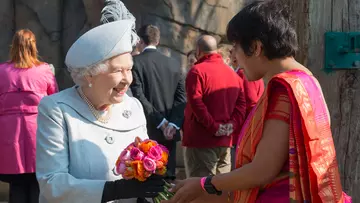
In November 2013, Prince William attended a United for Wildlife meeting at London Zoo, exploring Tiger Territory and meeting with conservationists to discuss bringing about the end of the illegal wildlife trade crisis.

Whipsnade Zoo: a cherished royal moment
The opening of Whipsnade Zoo in Bedfordshire in 1931 saw the creation of the UK’s largest Zoo and introduced a new model of animal care focused on space and natural design - based on our scientists’ and conservationists’ research. The sprawling 600-acre site, nestled in the Dunstable Downs, pioneered an approach that would influence zoo design worldwide, reinforcing our commitment to the highest and evolving standards of animal care.
Royal visits to Whipsnade reinforced the importance of our innovative conservation work. Prince Philip, alongside Queen Elizabeth II, opened Whipsnade's new Centre for Elephant Care in 2017, in what was one of his final public engagements.

His Majesty King Charles III: continuing the Legacy
His Majesty King Charles III, known for his long-standing environmental advocacy, first visited us at London Zoo when he was just one year old, to see Brumas, a newborn polar bear cub – the first to be born in Britain. He has returned many times since, including as a child to visit Pets Corner, now Animal Adventure, to ride a pony. Aged 13, he joined our Exceptional Young Zoologist (XYZ) Club, which was created to get children interested in nature and zoology. In May 2024, coinciding with the one-year anniversary of his Coronation, His Majesty’s Patronage of our conservation charity was announced.
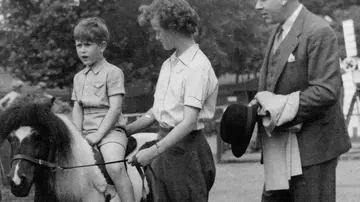
King Charles’ commitment to biodiversity and sustainable practices aligns with our mission to protect species, restore habitats, train conservationists, and create change.
A Royal visit to mark 200 years of conservation impact
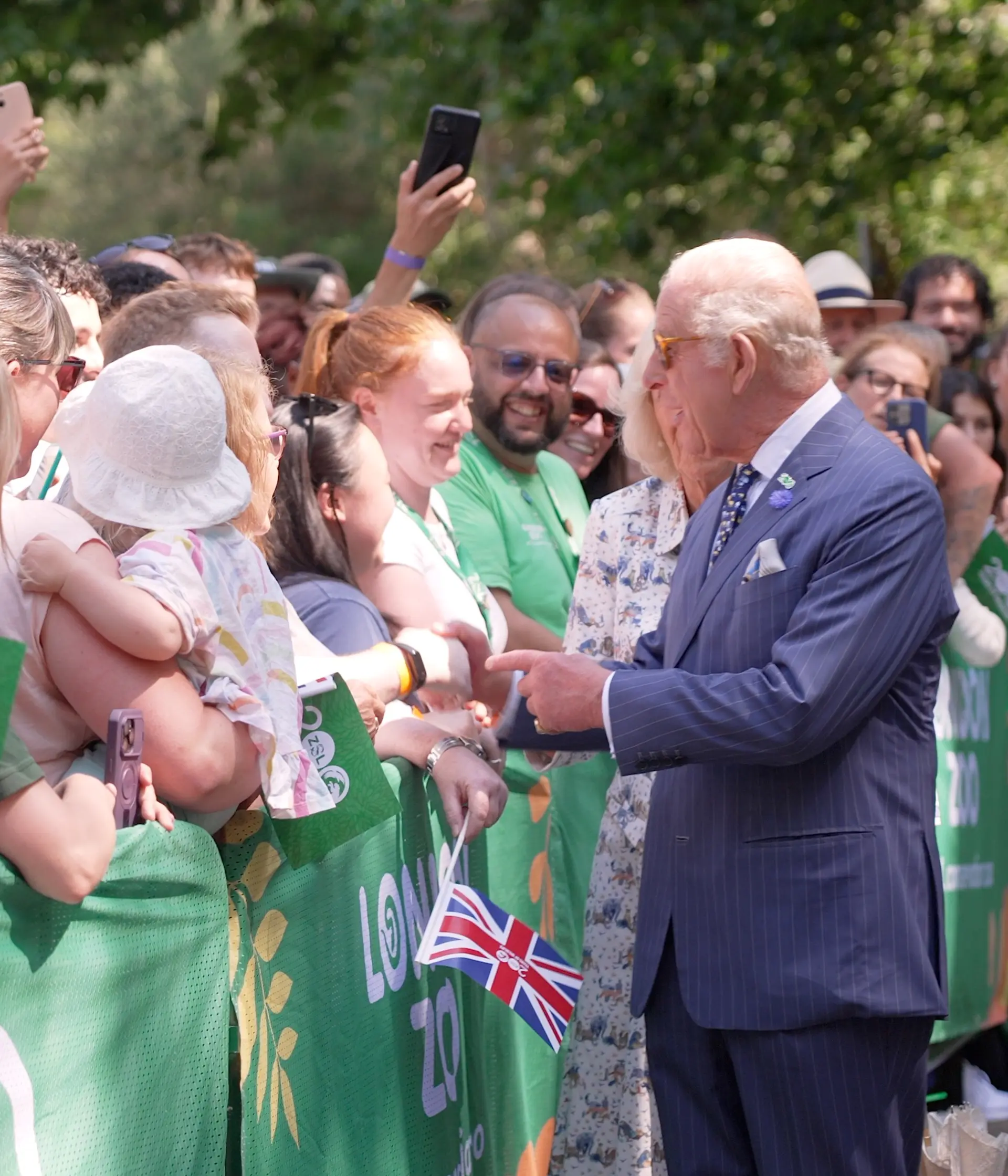
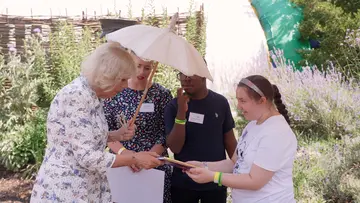
On 9 July 2026, His Majesty King Charles III and Her Majesty Queen Camilla visited London Zoo to celebrate our 200th anniversary, recognising our two centuries of scientific discovery, wildlife conservation and action to restore nature around the world.
The visit marked His Majesty King Charles III's first official engagement as our Patron, a role that has been held by the reigning monarch since 1830. It was also Her Majesty The Queen's first official visit to ZSL.
Their Majesties met conservationists, scientists, veterinarians, educators and animal care experts whose work is helping species recover, advancing wildlife health knowledge and inspiring people to protect the natural world.
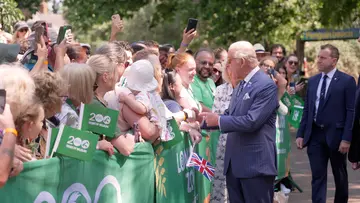


Their Majesties join keepers and meet some of the animals


Sam Aberdeen and HRM King Charles paint partula rosea snails
As we work toward our strategic goals throughout and beyond our 200th year - supporting at least 200 threatened species and moving 60 at greatest risk of extinction towards global recovery – we're honoured to work in support of a shared vision, strengthening safeguards for nature and inspiring countless millions to advocate for wildlife.
ZSL's 200th Anniversary
Discover more about our incredible 200 year history and how you can get involved with our 2026 celebrations by heading to our 200th anniversary hub