






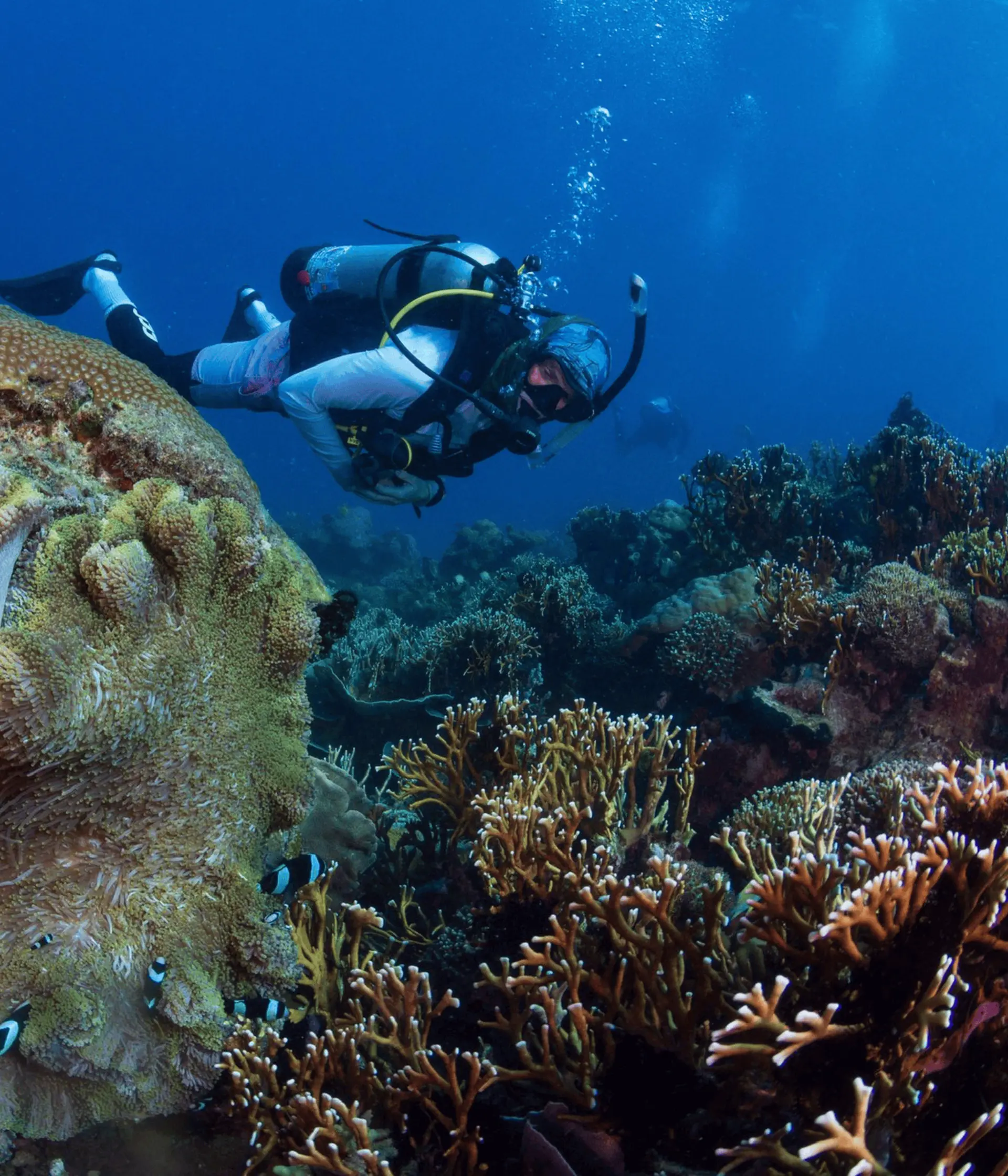
Underwater bombs are being set off in a global wildlife hotspot in the Indo-Pacific Ocean at a rate of almost one per hour, reveals latest study led by our team.
In a paper published this week in Remote Sensing in Ecology and Conservation, the authors of the pilot study call for stronger global action to protect communities and wildlife impacted by this destructive fishing practice – and demonstrate the critical role that tech-empowered monitoring can play.
As heatwaves put coral reefs across the planet at increased risk of deadly bleaching events, the proof-of-concept research offers vital hope for the future of these reefs and the billions of people that depend on them.
Considered the world’s most destructive fishing practice, bomb fishing is an illegal fishing practice that uses homemade explosives to kill any fish in its vicinity for quick harvest. It is banned across the globe – yet continues to play a major threat to marine life, and has been reported in at least 34 countries - including Tanzania, Sri Lanka and Turkey.


Listening to the ocean
The team of British and Indonesian scientists placed microphones under the waves in the Spermonde Archipelago, Indonesia, where they recorded the sounds of the coral reef, from the chirps and purrs of fish swimming past the microphone, to homemade bombs being dropped into the ocean from as far as 17km away.
Over the course of 16 months, the microphones recorded almost 3,570 cases of bomb fishing from 3,650 hours of underwater audio - equivalent to around 8,500 incidents per year and 160,000m2 of degradation.
To help the team process the resulting thousands of hours of audio, they developed an AI model to quickly identify each time a bomb went off, allowing them to process a month's worth of audio in just four hours.
Empowering action for coral reefs and communities
This pilot study in Indonesia shows that the method can be used to identify hotspots and plan interventions to protect coral reefs across the globe - including working with impacted communities to develop solutions and stricter enforcement of regulations.
Marine biologist Dr Ben Williams, who led the study at our Institute of Zoology and UCL, said: "The results were sobering. We hadn't expected the scale to be quite so big, yet the rate at which bombs are being used to fish in this area alone is enough to destroy sections of precious coral reef as large as the Vatican City in just three years.
"Coral reefs are far too important for people and wildlife, and this level of destruction will have devastating impacts on people's livelihoods and the biodiversity of our oceans.
"The good news is, we're paving the way for action. Our work studying coral reefs in Indonesia demonstrates exactly how technology can be used to identify where and how steps can be taken to have the biggest impact on protecting coral reefs globally from these unsustainable practices."

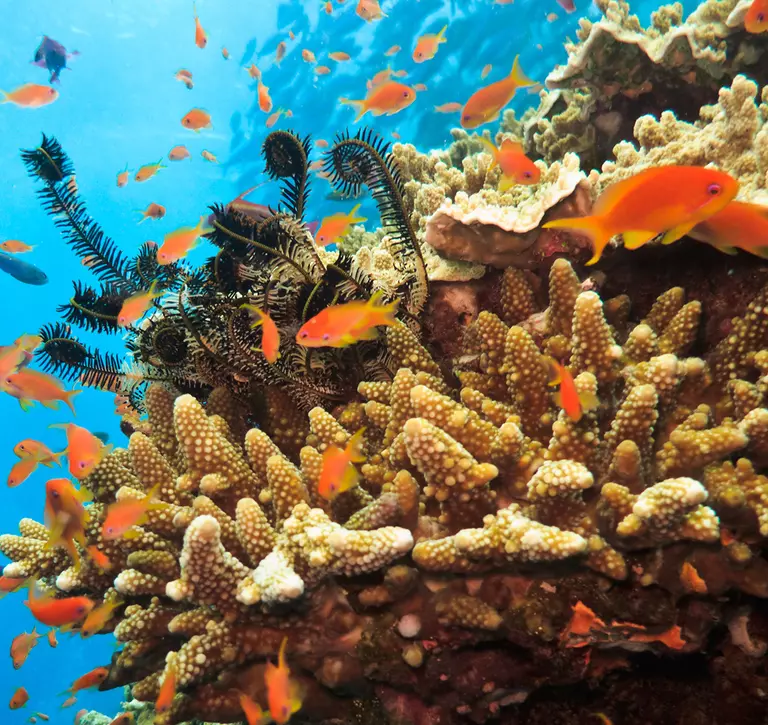
Bomb fishing can decimate entire reef systems to fields of rubble, and consequently threatens the livelihoods of the communities that rely on these reefs for food security, protection from storms, and income from tourism.
Ben added: "It can take decades for fish populations to recover from bomb fishing, and each bomb leaves the local communities that depend on them increasingly vulnerable. Despite this, some people still turn to this practice given how economically attractive it is, especially given how hard a ban is to enforce.
"Understanding where and when this method is being used will help governments and conservationists in impacted regions work with communities to reduce dependency on bomb fishing, target support to the development of alternative livelihoods, and help restore our ocean for generations to come."
Professor Jamaluddin Jompa, researcher at Hasanuddin University, Indonesia and co-author of the paper said: “Bomb fishing threatens dozens of reefs off the coast of Indonesia, and is thought to be the leading cause of reef loss on the Spermonde Archipelago. Over the last 20 years of working in the Archipelago, we’ve seen the difference that restoration can make – but restoration efforts struggle to keep up with such rapid rates of destruction caused by bombing. Immediate work to tackle bomb fishing is needed to future for these reefs, and our work shows how technology can ensure action is as rapid and effective as possible."


Conservation is needed more than ever
We work across the globe to understand and protect coral reefs – including helping establish community-managed marine protected areas in the Philippines and developing computer algorithms to monitor the health of reefs across the globe.
Last year, an international team of scientists – including our own researchers – identified that warm-water coral reefs are already passing their tipping point for irreversible change due to rising global temperatures.
While this shocking finding highlights the need for global action to stabilise and lower global temperatures, it also shines a spotlight on the critical role conservation - such as addressing the threat of bomb fishing - plays in maximising the resilience of these vibrant, underwater ecosystems against warming waters.
Georgina Chandler, Head of Policy at ZSL, said: "Just as we are experiencing the impacts of the ongoing heatwave here in the UK, we’re seeing the impacts of warming waters on coral reefs across the globe – but we shouldn’t give up hope. As long as these reefs still exist, we still have a chance to save them, and every hectare of coral reefs saved from other stressors reduces our risk of completely losing them to bleaching and warming waters.
"This must go hand-in-hand with concrete commitments from world leaders on progress to tackle climate change and biodiversity loss. Human health, the economy, nature and the climate are all parts of interwoven systems and as the governments from across the globe come together this autumn to take stock of our progress, it’s crucial they commit to building a more resilient future for all.”
At ZSL, we believe that nature can recover, and that conservation is most effective when driven by science. We work with people to improve co-existence with wildlife, safeguarding nature and creating a healthier, sustainable future for both wildlife and people.