







Prof. Rosie Woodroffe
Professor
The UK government has launched a new strategy to eliminate a devastating cattle disease from England over the next 12 years. The plan brings together the expertise of over 100 farmers, vets, scientists, and policy makers, working towards a single goal – freeing farmers from bovine tuberculosis.
Report authors Professor Rosie Woodroffe from ZSL’s Institute of Zoology, and Professor James Wood from the University of Cambridge, explain the science behind the strategy.
A new co-designed strategy to control bovine tuberculosis (bTB) in England brings hope, not just for farmers whose businesses – and wellbeing – may be devastated by this cattle disease, but for anyone seeking an effective and sustainable solution to a complex and controversial problem.
Why is bovine tuberculosis a problem?
The UK has been trying to eliminate bTB for decades, partly to protect cattle health and trade, but originally because it can infect people. Current control measures keep the risk extraordinarily low (and bTB bacteria are killed when milk is pasteurised or meat is cooked). But a year-long pause in bTB controls while the nation dealt with the 2001 Foot-and-Mouth epidemic showed how quickly bTB can spread, and how risks to people – especially farmworkers – would grow if the disease were to be left unchecked.
The challenge of controlling bTB is partly technical. Infection is difficult to diagnose, the disease-causing bacteria can survive long periods in the environment, and they can infect multiple species – most notably badgers. This complexity makes it difficult to decide where to focus control efforts. But the challenge is also social. Farmers have felt hopeless when prevented from trading (always for months, often for years) after cattle which had appeared healthy were condemned for slaughter, or when a herd which had finally tested clear was shut down again a few months later. Beating bTB can seem impossible, and many farmers lost the will to try.


The path to eliminating bovine tuberculosis
So where to find hope? First, from scientific advances around cattle vaccination. An elegant experiment, conducted in Ethiopia where bTB is widespread, demonstrated how effectively the widely-used human TB vaccine can curb transmission. Back in the UK, scientists have developed a novel test which avoids the risk of mistaking vaccinated cattle for infected ones. The new strategy aims to make cattle vaccination available to UK farmers by 2030.
Second, by setting aside controversy and focusing on the most effective tools. To say that bTB management has been controversial is an understatement. While cattle farmers were desperate to control an invisible disease which many believed came from badgers, nature lovers were appalled to see a protected species slaughtered to control a disease of cattle. From 2013 to 2025, a quarter of a million badgers (and 350,000 cattle) were killed for bTB control. Arguments raged, protesters marched, marksmen hunted badgers, activists tried to stop them, and over £36 million of taxpayers’ money was spent just on policing.
Cutting-edge wildlife health research
At the heart of the controversy was a disagreement about the importance – or otherwise – of badgers as a source of bTB. Badgers have long been described as a bTB “reservoir”: that is, a species in which infection persists, from which infection can “spill over” into species of concern, and without which the infection would die out. For example, UK grey squirrels act as a reservoir for squirrel pox, which causes them no harm but devastates red squirrels. Describing badgers as a reservoir implies that they are driving the bTB epidemic, and that cattle herds can never be protected without managing badgers, warranting a major focus on badger control.
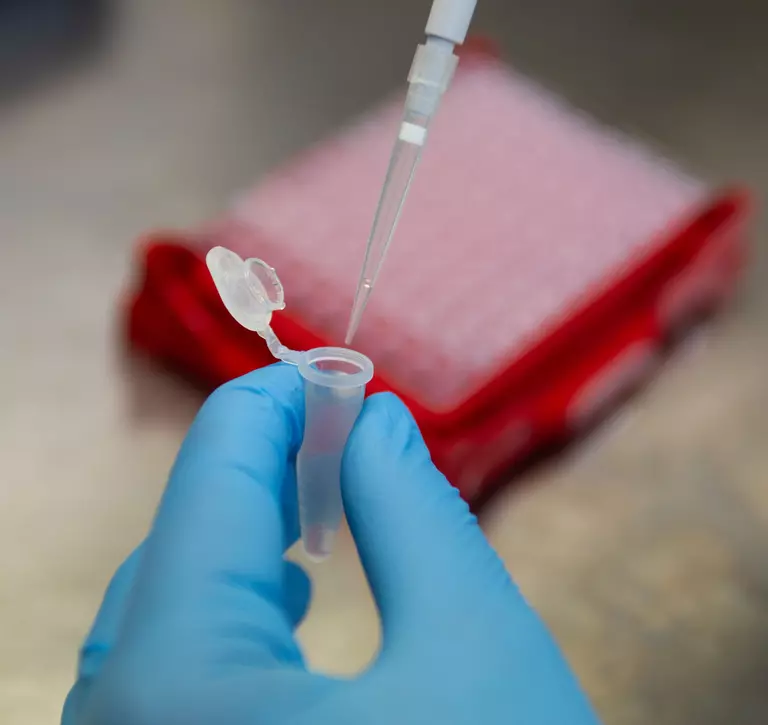
New evidence, however, shows that the “reservoir” concept does not currently apply to badgers and cattle. By sequencing the genomes of bTB bacteria, scientists have used tiny variations in genetic sequences to trace chains of infection from animal to animal. Such studies have indeed found cases where badgers have infected cattle. But they have revealed far more cases of cattle-to-cattle transmission: in the largest study, for every cattle herd infected by badgers, there were 17 herds infected by other cattle. Such high transmission among cattle happens because the most widely-used test misses many infected cattle, allowing disease to spread undetected. In the past, when herds tested clear, only to be shut-down again soon afterwards, it was assumed that they were being re-infected by badgers. New evidence shows that it is far more likely that they were persistently infected throughout.
This insight means that the big wins in bringing down bTB will come from improving cattle testing – and so this is a major focus of the new strategy, empowering farmers and vets to avoid business shut-downs by going beyond the testing required by government. Accordingly, the new strategy focuses far less on wildlife, encouraging badger vaccination in priority areas, and surveillance in deer, but otherwise emphasising cattle testing and vaccination. Badger cull licences have expired across the High-Risk Area on England, and not been renewed.
Finding solutions that work for everyone
Past controversies have entrenched ideas and slowed the adoption of new and better bTB control tools. In a first for the UK government, the new strategy has been co-designed by farmers, vets, scientists, and policymakers, with input from over 100 experts, to give it the best chance – if accepted and properly funded – of solving this complex problem, and making England officially bTB-free by 2038. If successful, the co-design approach offers exciting opportunities for other challenging problems.