






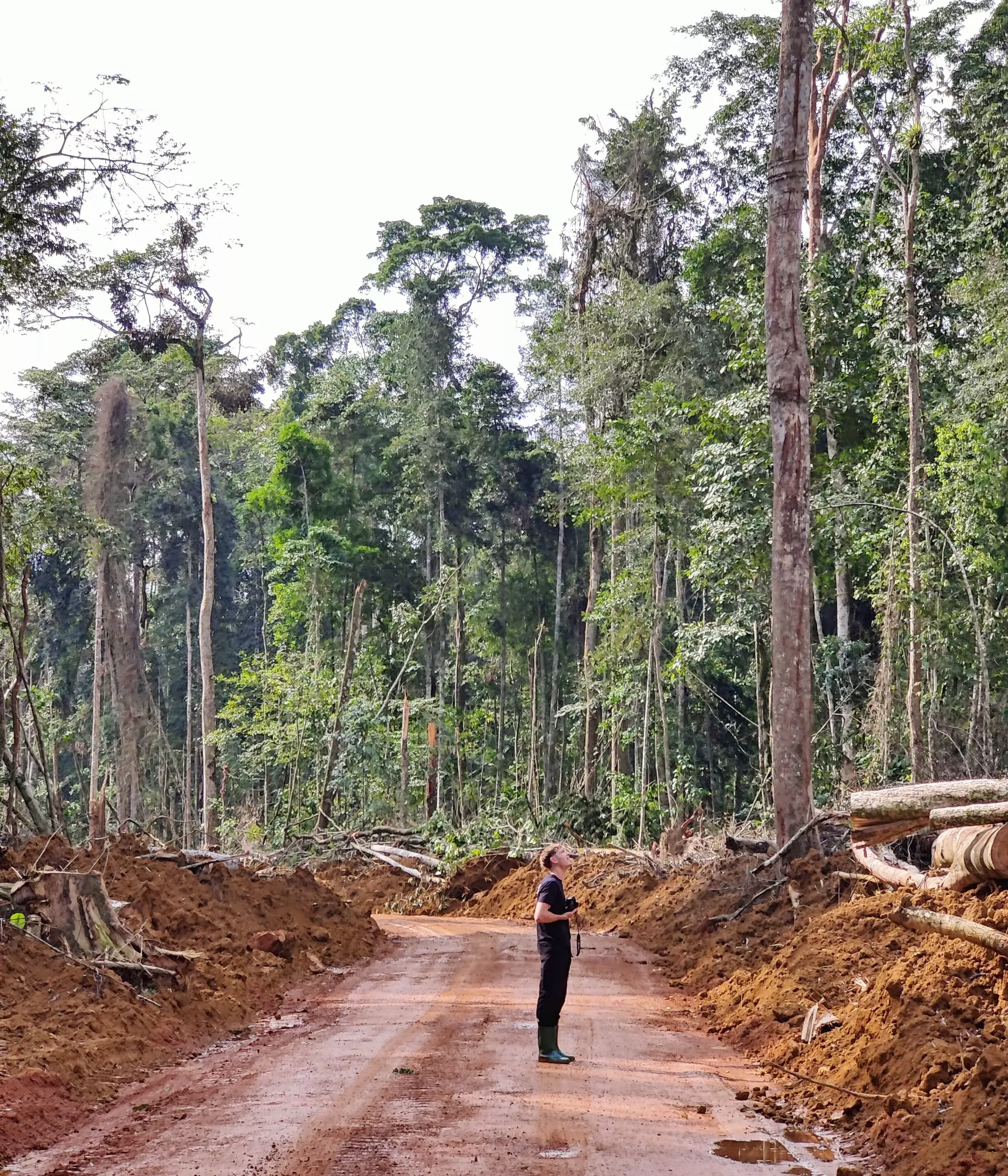
Verify your wood products come from legal, deforestation-free sources
As scrutiny on forest-risk commodity sourcing intensifies, companies and regulators need tools that can pinpoint exactly where their products come from, and this is especially relevant for timber. Chemical testing provides independent evidence of geographic origin, helping identify high-risk supply chains, support legality assurance, and demonstrate compliance with regulatory frameworks. Yet many market actors are still unclear on what chemical testing involves, when it should be used, and how it fits within existing due diligence processes.
This webinar took a step-by-step approach following the journey of chemical testing, from collection in the field to practical application by downstream companies.
In this webinar, speakers will cover:
- What problem does timber testing solve for companies, and why is more reference data needed?
- How do we ensure samples collected in the field are accurate and usable for scientific origin verification?
- How do forestry companies support sampling, and what does the process reveal about concession practices?
- How does chemical testing verify origin and how can companies use it as part of their due diligence?
This webinar was free to attend and open to all, however it will be of particular interest to timber buyers, suppliers, retailers, regulators, and anyone looking to strengthen their due diligence to support regulatory compliance and help build reference libraries for timber origin testing.
You will hear from...
- ZSL’s timber and forestry experts – Samuel Ross, Armstrong Mba and Moses Shu – drawing on decades of combined experience in sustainable forestry, legality, and supply-chain transparency in the Congo Basin, including insights from their recent timber sampling work in Cameroon.
- Cicely Podmore, World Forest ID, representing an organisation that creates the data and tools necessary to verify the claimed origins of forest-risk commodities, including timber and agricultural products.
- Peter Clayton, Timber Connection UK, sharing an industry perspective on how timber origin testing has been applied in practice, and lessons learned so far from using the tool.
This webinar is part of ZSL’s work with World Forest ID (WFID) and other expert partners to build upon WFID’s reference libraries that can help verify where wood products have come from, focusing on widely traded species in Cameroon and the Republic of the Congo, funded by Fondation Lombard Odier and the EU through the ECO-SOLVE project.
Cameroon and the Republic of Congo are strategic focus areas because they host a significant part of the Congo Basin, the world’s second-largest tropical rainforest, and Cameroon is one of Africa’s major timber exporters. ZSL’s work currently focuses on three commercially important species: Milicia excelsa, Afzelia bipindensis, and Tectona grandis.
Collecting geolocated reference samples for these species contributes towards a robust global reference library, aimed at tackling the opacity created by complex supply chains, mixed record keeping, and varying levels of oversight. These samples help companies and enforcement authorities independently validate claimed harvest locations and address risks linked to illegality, unsustainable harvesting and deforestation.
Read more about this work here.
- This event is free to attend and booking a ticket is required so we can monitor event numbers. Please only register for a ticket if you are planning on attending.
- The event will feature talks from several speakers, followed by a Q&A discussion panel. It will run from 1-2pm, and guests will be admitted to the online meeting shortly before 1pm.
- The event will take place over Zoom Webinar. The meeting link will be included in your confirmation email once registered to attend, and again in a reminder email shortly before the event day.
- Recording disclaimer: The presentations and Q&A session will be recorded, and the recording published on our Science and Conservation YouTube channel afterwards. Please be aware that by attending this event you consent to be filmed or your voice to be recorded during the Q&A session, which will be included in the published video.
- ZSL Science and Conservation Events sustainability guidance can be found here.
- For enquiries about this event, please email scientific.events@zsl.org.
- For press enquiries, please contact the ZSL Press Office: press.office@zsl.org.
- Listen to our ZSL Wild Science podcast here or subscribe on your favourite podcast app.
- Follow us on Twitter @ZSLScience to hear about new publications from our researchers, upcoming events and podcast episode releases.
- Follow us on Facebook @ZSLScienceAndConservation to receive notifications about new events.
- To catch up on all our recorded previous events, you can subscribe to our YouTube channel.
- For more information about how to join the ZSL Fellowship programme and engage with a network of thousands who are shaping the future of conservation, please click here.