







Project collaborators

David Curnick
Senior Research Fellow

Emma Levy
Marine Science Programme Coordinator
Alison Debney
Conservation Lead, Wetland Ecosystem Restoration
The Greater Thames Estuary (GTE) borders London and the coastlines of Kent, Essex and Suffolk. It is a rich and dynamic coastal environment with internationally important coastal and marine habitats found there.
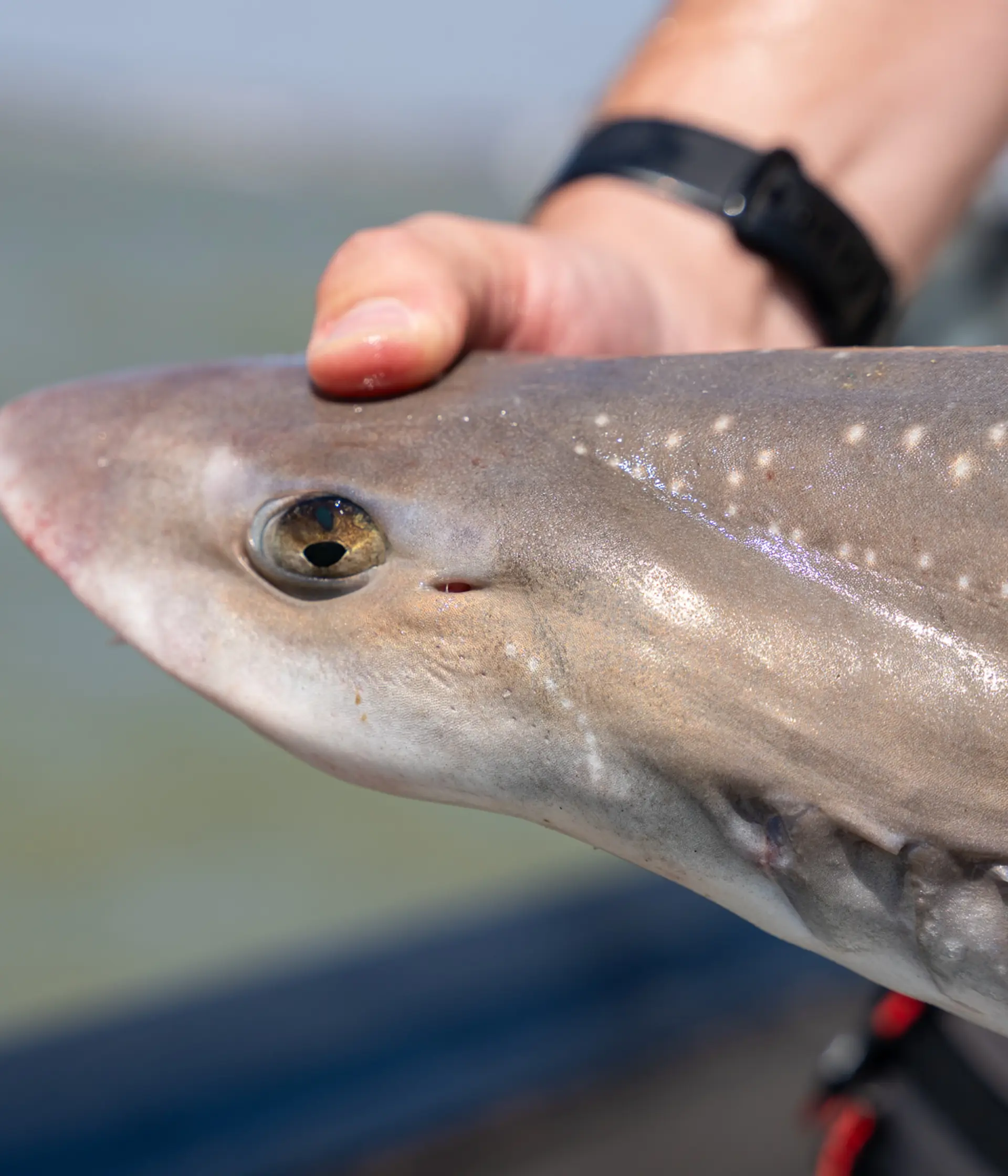
The marine environment of the Thames supports coastal livelihoods including recreation, tourism and fishing and has upwards of 31 million recreational visits each year. Concerns have been raised by anglers and skippers over the health of shark and ray populations within the GTE especially given their vulnerability to exploitation. Little is known about exactly how sharks and rays use the Thames and its variety of habitats and features. ZSL’s conservationists have therefore launched a new project to engage young people in the region to better connect them with their natural heritage and to better understand how these animals use our capital’s waterway.
Project Partners
Sharks Connect the Thames project is made possible thanks to The National Lottery Heritage Fund.
>250,000
hectares covers the GTE
>115
species of fish supported by GTE
5,319
sharks recorded by fisherman between 2020 and 2024
Project Summary
Working alongside a youth-led organisation, Youngwilders, the University of Essex, local schools, colleges and the local community we will connect people to local shark and ray conservation as well having them inform and lead activities such as egg case surveys, baited underwater camera surveys and tagging. These activities aim to understand where our target species are most frequently found in the Thames. These data allow conservationists to prioritise protecting and restoring the habitats most important for the focal species survival. As part of our mission to get more young people learning in and about nature, we are working with teachers and education institutions to boost expertise and confidence in teaching outside the classroom to inspire younger generations to pursue further education about and involvement in their local environment.
Shark and Ray Movements
Using tracking data as well as data collected across the GTE, we will improve understanding of the distribution and ecology of the four focal species (Spurdog, Tope, Starry Smooth Hound and Thornback Ray).
Communities Lead Conservation
We will create opportunities for local young people to lead conservation activities such as Great Eggcase Hunts and Baited Remote Underwater Video surveys. We will also engage with fishers and anglers to create a Thames Shark Sightings Database.
Nature Based Education
Working with local schools, colleges and universities the project aims to deliver teacher education to embed local natural heritage across the curriculum. A student co-developed programme will focus on ocean literacy, building connection with local heritage and skill development.
Supporters
Sharks Connect the Thames project is made possible with The National Lottery Heritage Fund, with thanks to National Lottery players.
The National Lottery Heritage Fund is the largest funder for the UK’s heritage. Using money raised by National Lottery players we support projects that connect people and communities to heritage. Our vision is for heritage to be valued, cared for and sustained for everyone, now and in the future. From historic buildings, our industrial legacy and the natural environment, to collections, traditions, stories and more. Heritage can be anything from the past that people value and want to pass on to future generations. We believe in the power of heritage to ignite the imagination, offer joy and inspiration, and to build pride in place and connection to the past.