






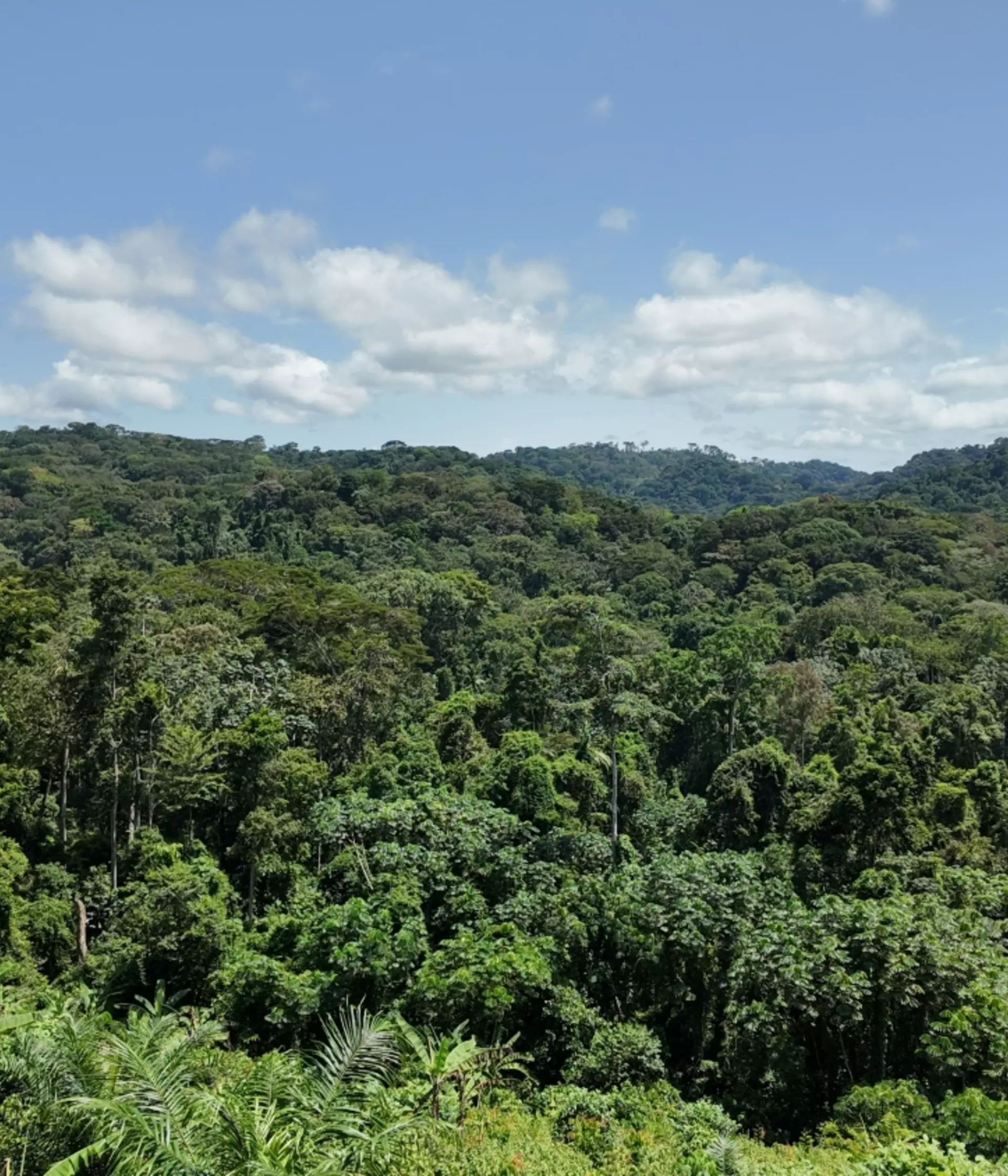
Opaque supply chains put billions in timber investment at risk and jeopardise future of indispensable forests worldwide
The majority of the world’s leading tropical forestry companies are failing to disclose where their wood and pulp come from - according to our latest SPOTT assessment – with the lack of transparency putting markets at serious risk as downstream buyers and financiers are left exposed to mounting scrutiny and legal pressures.
The global trade in timber and pulp is worth more than USD 480 billion a year (FAO 2023), meaning even small traceability failures can put billions in market value and investment at risk.
Our 2025 assessment of 100 of the world’s top tropical forestry companies found that just 18% disclose the countries they source from, with only 4% reporting what share of their supply is traceable all the way to forest management unit (FMU) level. Without this transparency, companies cannot demonstrate to customers or investors that their timber is responsibly sourced.
The assessment also found that none of the assessed companies publish georeferenced maps for all their third-party FMUs, and only 3% report what share of their supply is verified as deforestation-free, revealing a major blind spot in supplier-level traceability and accountability.
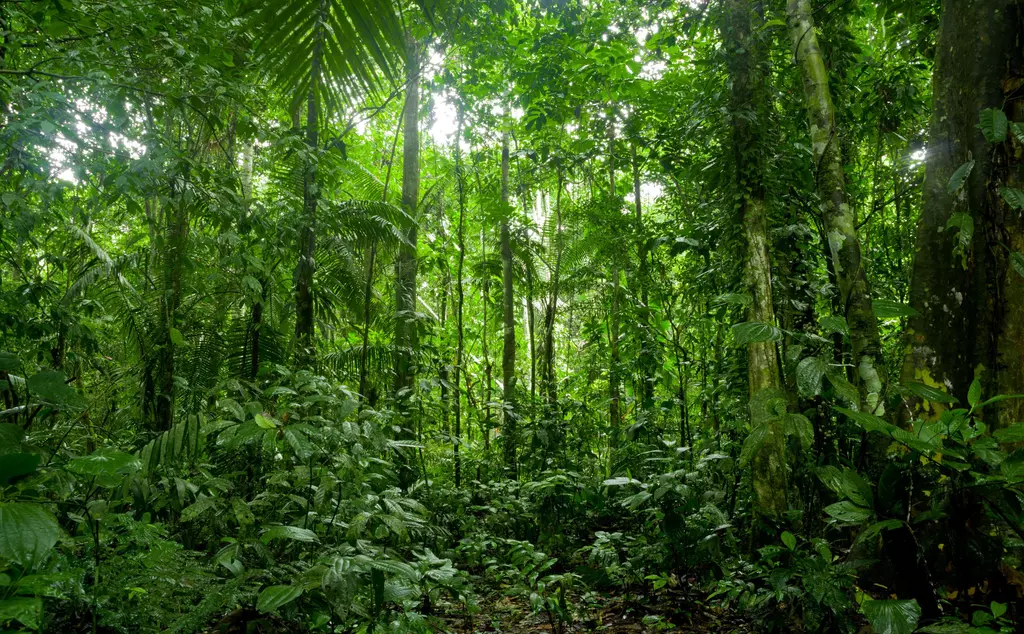
We are calling on timber and pulp companies to adopt the tools already available to them to close these gaps. By doing so, they can protect buyers and investors while showing genuine commitment to safeguarding the forests that both underpin a stable global climate and the very markets that timber companies depend on.
Sam Ross, ZSL’s timber expert who led the assessment, said, “Protecting these forests isn’t optional – they keep our water clean, filter our air, and stabilise our climate. Safeguarding them means safeguarding life as we know it.
“These gaps threaten upstream companies’ market access, investor confidence, and compliance with tightening regulations – and the risk cascades down the supply chain. For downstream buyers, the lack of clear sourcing data can undermine even the most advanced verification tools, such as satellite monitoring and scientific origin testing. Public disclosure is the essential first step in the due diligence process. All verification tools rely on knowing a product’s claimed source.”

A key moment for forests
The assessment comes at a pivotal time for both the world’s forests and for forestry companies. In just two months, the UN Climate Change Conference (COP30) - set be hosted in the heart of the Amazon – will put forests and their future firmly in the global spotlight. The international convention sits against the backdrop of the fast-approaching deadline to halt deforestation worldwide by 2030 and the incoming EU Deforestation Regulation (EUDR), which is set to take effect in December 2025.
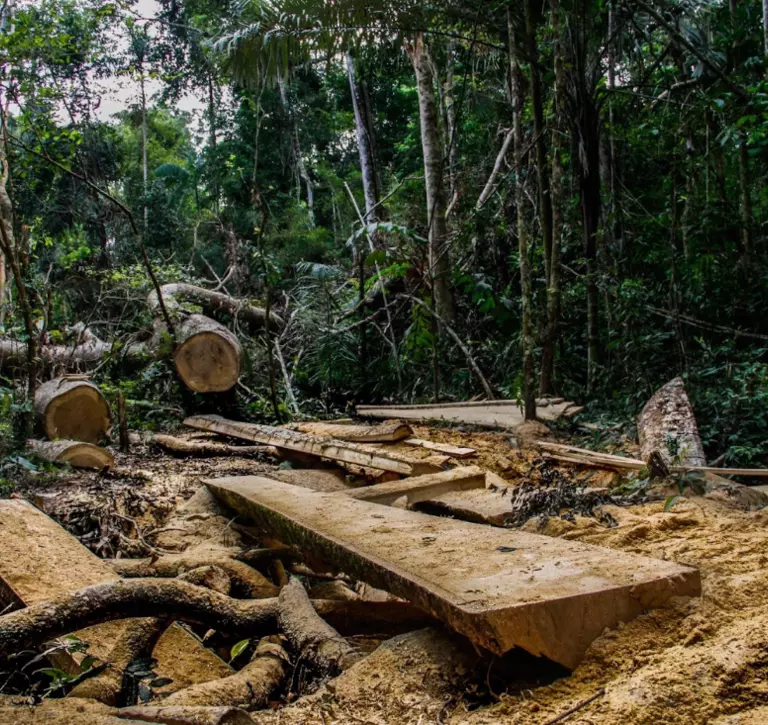
The rate of tropical forest loss has doubled since 2023, with the equivalent of 18 football fields disappearing every minute. Logging alone was responsible for an estimated 335,000 hectares of loss in 2024.
Sam added: “With international deadlines and the global summit on tackling climate change on the horizon, the pressure is mounting for timber companies. They must not only be transparent about where their materials are coming from, but also whether it is deforestation-free. We need these companies to show that they’re serious about their role in protecting the ecosystems that we all rely on.”
SPOTT-assessed companies manage more than 43 million hectares of forest, putting them in a pivotal position to help tackle the mounting crisis. Yet only 10%, responsible for managing around 8 million hectares, publish geo-referenced maps for all their FMUs, leaving the rest unable to demonstrate where deforestation and forest degradation may have taken place.
Without robust traceability systems, the likelihood of illegal logging entering supply chains rises sharply. Globally, illegal logging and illicit timber trade account for an estimated 15-30% of all timber traded, fuelling corruption, enabling land grabs, and, in some cases, driving violence against communities.

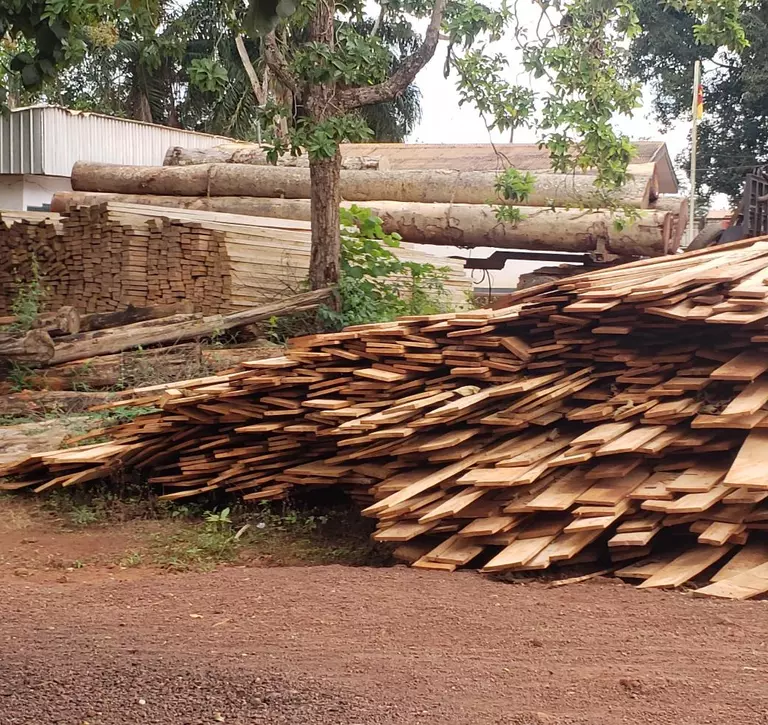
Immediate action can be taken to protect our forests
Sam added: “The solutions are already available. Active supplier engagement, satellite monitoring and independent third-party verification can all strengthen traceability systems and provide the confidence that markets and investors need. What’s missing is not the technology, but the will to use it.”
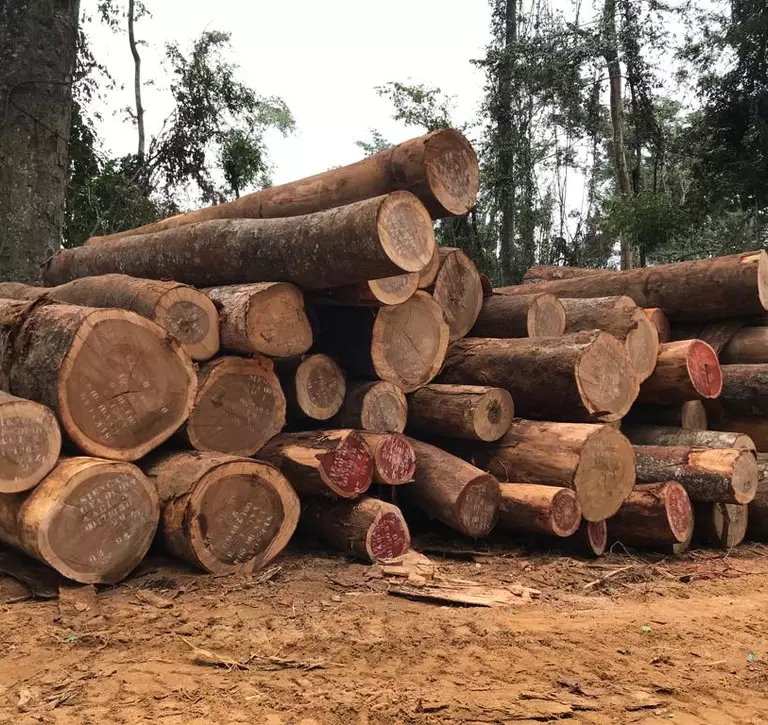
Scientific origin testing is one available technology that is seeing strong engagement across the value chain. We are supporting the development of the World Forest ID reference library through the collection of wood samples for species widely traded in Central Africa. These will allow for the analysis of wood products to verify whether their claimed origin is accurate, adding evidence where paper trails fall short.
Buyers and investors can both play a vital role in pushing for greater transparency within the sector. We are calling on buyers to demand detailed origin data and Chain of Custody certification, and engage in active due diligence to ensure timber is traceable from forest to final product. Investors and financiers can set clear traceability performance criteria, engage companies to monitor and pressure for progress, and promote sectoral collaboration.
We work with companies, financiers, and stakeholders worldwide to strengthen traceability, ensure legal compliance, and protect biodiversity. The team is ready to support with a suite of services, from due diligence and supply chain risk assessment to biodiversity monitoring and verification, helping businesses and financial institutions meet their commitments and regulatory requirements.
We believe nature can recover, and that conservation is most effective when driven by science. We call for science to guide all global decisions on environment and biodiversity and build a healthier future for wildlife, people and the planet.
Climate change and human activity have pushed our precious planet to its limit, causing the devastating loss of so many habitats and species. From lab to field, hands on and behind the scenes, we’re leading the future of conservation, shaping agendas and influencing change to support better life, health and living for people and wildlife.
Through SPOTT, we shine a light on performance and highlights where urgent action is needed.