








8 October 2026
There have been many stand-out characters in our 200-year history at both London Zoo and Whipsnade Zoo.
Here’s our most influential residents – how many of them do you remember? Look out for some of these iconic names in our Zoo Plaque trail around London Zoo, open until 31 December 2026.
1. Jenny the orangutan
Jenny was London Zoo’s very first orangutan. She arrived on 25 November 1837, so 10 years before we opened to the wider public, and became one of the most talked-about animals in Victorian London.
Just a few months after her arrival, Charles Darwin, who was a ZSL Member at the time and later a Fellow, visited the Zoo to meet her. This was the first time he’d ever seen an ape before, and she made quite the impression on him; he was fascinated by her human-like emotions and reactions, and wrote that she behaved ‘precisely like a naughty child’.
This interaction went on to influence Darwin’s thinking about the similarities between humans and animals, which would later form part of his theory of evolution. Jenny, and ZSL as a whole, played a pretty big role in Darwin’s work.
Jenny sadly died in May 1839 and another female orangutan joined us who, by tradition, was also confusingly named Jenny. The second Jenny was visited by Queen Victoria and Prince Albert in May 1842. Queen Victoria was said to be fascinated (but also repulsed!) by her first sighting of an orangutan.
Jenny (and Jenny II) weren’t the only iconic orangutans in our history. Read on to discover all about Bulu, her father Charlie, and their close connection with Sir David Attenborough.
2. Obaysch the hippopotamus
On 25 May 1850, Obaysch the hippopotamus arrived at London Zoo, the first living hippo seen in Europe since ancient Roman times.
This was a big deal, and he sparked an outbreak of 'hippomania' in Victorian England, inspiring souvenirs and even a popular song, the 'hippopotamus polka'. He was also dubbed "HRH" (His Rolling Hulk) by the media.
Thousands of people flocked to see him, with visitor numbers to the Zoo reportedly doubling in 1850 – at the height of Obaysch’s fame, up to 10,000 visitors a day came to see him!
Obaysch helped to establish London Zoo as one of the world's leading zoological collections, went on to father a calf – the first captive-bred hippopotamus successfully reared by its mother – and stayed at the Zoo until his death in 1878.
‘The Hippopotamus Polka' by L. St. Mars published by Charles Jefferys (London 1852) and illustrated by Brandard (left) and a small sculpture of Obaysch in our library
Today, we care for pygmy hippos at both of our Zoos, with a recent arrival of a male called Bogús to London Zoo. And a sculpture of Obaysch can be seen in our ZSL Library and Archives.
3. Jumbo the elephant
15 years after Obaysch’s arrival, there was another headline addition to London Zoo who would go on to become a huge part of our history, in every sense.
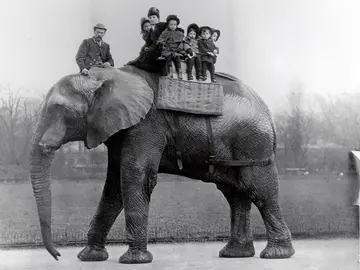
On 26 June 1865, Jumbo, the first African elephant seen in England, joined us from Paris. He was only young – and small – but grew into a towering bull elephant weighing over six tonnes (about the same as four cars!). He became a firm favourite with the public.
Jumbo was put under the care of keeper Matthew Scott, and they formed a really close bond. But, as Jumbo got older, he became increasingly violent. It’s now thought that this might have stemmed from him having toothache, caused in part by the diet of sticky buns fed to him by Zoo visitors.
During this period of turbulent behaviour, an offer came from P.T. Barnum to buy Jumbo for £2,000 (equivalent to around £220,800 today). Despite the public outcry, Jumbo was sold and left the Zoo, accompanied by Matthew Scott, in 1882.
They travelled across the Atlantic to join the Barnum & Bailey Circus and Jumbo was with the circus until 1885, when his life tragically ended in Ontario, Canada. As he was led along the track back to his carriage, he was hit by an unscheduled freight train. Jumbo died on 15 September, with his trunk holding onto Scott’s hand.
His legacy remains to this day, with the word jumbo commonly being used to refer to things of large size.
Elephant care and conservation
Our understanding of elephants has dramatically changed since Jumbo’s time. Today, our team of expert keepers and vets at Whipsnade Zoo works tirelessly to ensure each elephant receives the highest standard of care.

4. Winnie the bear
As World War I was breaking out, a bear’s journey was just beginning – and she would go on to become one of the most famous bears in the world.
In 1914, Lieutenant Harry Colebourn bought an American black bear while travelling to join the war effort. Named Winnie after the Canadian city of Winnipeg, Lt. Colebourn’s home, she was brought over to England with him and became the mascot of his regiment.
Before going to fight in France, Lt. Colebourn decided to leave Winnie at London Zoo for safekeeping. He visited when he could, but at the end of the First World War he decided that she should remain at the Zoo, and she lived there until she died in 1934.
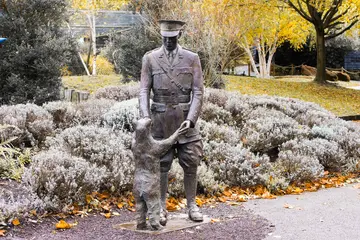
Just outside of Butterfly Paradise, you’ll see a touching statue of Winnie and Lt. Colebourn that was presented to us in 1995.

This is a story in itself, but there’s much more to tell.
During her time at London Zoo, she had a special bond with a young visitor called Christopher Robin Milne, who named his teddy after her. This inspired his father, A.A. Milne, to create the beloved character Winnie-the-Pooh, and the rest as they say, is history.
Don’t miss our trail at London Zoo this October to discover more about the ‘silly old bear’.

5. The White Lion
You thought Jumbo was big, but our largest animal by far in our 200-year history – at nearly 150 metres long – is the Whipsnade white lion.
The chalk figure was carved out of the hillside between 1931 to 1933 and, to this day, is an iconic local landmark. Covering an area of around 6,500 square metres, it's so big it was hidden during World War II as it would have been a very useful navigation aid to enemy planes.
Volunteers have taken on the momentous task of maintaining the chalk lion, and it stands proudly as a symbol of the Zoo and our history. In September 2026, as part of our 200th anniversary celebrations, the lion was illuminated, which caused much excitement and local press coverage.
6. Rota the Lion
But the chalk lion isn’t the only iconic lion in our history.
In 1938, an African lion was born in a circus and he went on to become a wartime symbol of British defiance.
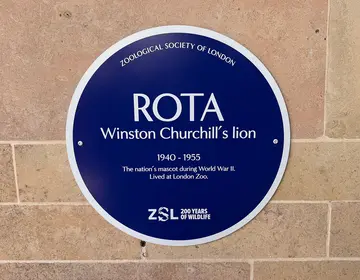
The lion was initially won in a bet by a businessman named George Thomson, who named him Rota (as he worked at a company called Rotaprint) and raised him like a dog in his suburban garden in Middlesex. But when WWII broke out in 1939, neighbours were terrified that a bomb might hit and cause him to escape. There was also the problem of food rationing, which made it impossible to keep him.
So in May 1940, Rota was moved to London Zoo for safe keeping. Then in 1943, after the Allied victories in North Africa, he was formally presented to Britain’s wartime Prime Minister, Winston Churchill. And he was delighted to accept the gift, but famously joked that he did so only on the condition that he would not have to house Rota at Downing Street or Chequers!
Rota remained at the Zoo and achieved considerable fame as Churchill’s lion, appearing in newspaper articles, in several cartoons, and in four films.
After he died in 1955, he was prepared by taxidermists and can now be found on public display at the Lightner Museum in Florida.

7. Guy the Gorilla
On 5 November 1947, a Western lowland gorilla arrived at London Zoo. And while he wasn’t our first gorilla, he was certainly one that wouldn’t be forgotten.
Named after Guy Fawkes (because he joined us on Bonfire Night), this gentle giant became something of a celebrity in the 1960s and 1970s, capturing the nation’s hearts and becoming one of our most beloved residents.
While his actual birthday was unknown, keepers gave Guy an official birthday of 30 May. And, every year, he was inundated with cards from the public who loved watching him grow up from a youngster into a magnificent silverback.
Guy was known for his quiet affinity with nature, often holding out his hand for birds to rest on, examining them, and then letting them fly away unharmed. And he lived at the Zoo until his death in 1978.
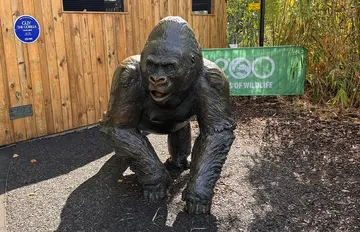
Decades on, he can still be seen preserved in the Natural History Museum for all to see. And a statue commemorating Guy now sits in the entrance to the newly revamped Gorilla Kingdom, home to today’s gorilla troop.

8. Brumas the polar bear
Two years after Guy’s arrival, in November 1949, the first ever polar bear was born in the UK at London Zoo. And she became an overnight sensation.
The female cub was named Brumas, after her two main zookeepers, Bruce and Sam (with Sam's name reversed).
Brumas helped to bring in record-breaking crowds – around 3 million people visited in 1950 – and her fame sparked an extensive line of merchandise, from postcards to soft toys.
One of many notable artefacts in our archives is a limited-edition bear-shaped soap, which was produced by Cullingfords to mark the birth of baby Brumas.

9. Clarissa the carp
At 44lbs, Clarissa was the largest carp ever recorded when she was caught in a pond in Ross-on-Wye, Herefordshire, in 1952 – she beat the previous record by nearly 13lb! It was Richard Walker who caught her, and recognising how exceptional the fish was, he phoned London Zoo.
Clarissa, who was originally named 'Ravioli', became one of our most famous fish and lived in our Aquarium until her death in 1972. She was then preserved as a taxidermy specimen, and is still regarded as one of the most important artefacts in British angling history.
Sadly, she doesn’t still hold a record – it was beaten in 1980 by a fish weighing 51½ lb.

10. Chi Chi the panda
There was much excitement when Ming the giant panda arrived at London Zoo in 1938 – the first to ever be seen in the UK. Visitors flocked to meet her, including the young Princess Elizabeth and her sister Princess Margaret.
But it was 20 years later when another giant panda, Chi Chi, became the real icon.
Chi Chi was the first Zoo animal to be promoted through television. And in 1966, her highly publicised trip to the Moscow Zoo to mate with the only other giant panda outside of China was broadcast, attracting international media interest.
While Chi Chi didn’t produce any offspring, her legacy continues as she was the inspiration behind the world-famous WWF logo still seen today. And Chi Chi herself can still be seen today – she’s been preserved in the Natural History Museum since 1972 where she still attracts the crowds.

11. Bulu the orangutan
ZSL has had a strong connection with Sir David Attenborough since the early years of his career, where London Zoo provided the setting and expertise that supported the filming of a groundbreaking series, Zoo Quest.
It was during the filming of this series, on an expedition to Indonesia and Borneo, that Sir David encountered an orphaned male orangutan, Charlie. He travelled back to the UK with Sir David, lived at London Zoo, and went on to father a baby born in 1961 – the first British-born orangutan.
The baby girl was famously named by Sir David who chose ‘Bulu’, meaning ‘little hairy one’ in Malay and he often visited her. This fabulous interaction was captured in 1982.
In 1992, Bulu moved to Paignton Zoo where she lived to be 47 years old – she was the oldest zoo-bred orangutan in Europe at the time of her death in March 2008.

12. Caroline the Arabian oryx
When Arabian oryx arrived at London Zoo in 1959, there were just eight living in zoos and only 30-40 remaining in the wild. They would soon be hunted to extinction, but the international zoo community stepped in.
In 1962, our oryx 'Caroline' was lent to the ‘World Herd’ in Phoenix, Arizona, for the first ever international cooperative breeding programme. And, in short, she played a pivotal role in helping to save her entire species.
By October 1972, the Arabian oryx was completely extinct in the wild and the species survived solely because of the World Herd’s breeding programme. With help from Caroline, the species went on to achieve a remarkable conservation comeback, becoming the first mammal in history to successfully transition from Extinct in the Wild all the way back to Vulnerable on the IUCN Red List.
Our oryx conservation
We continue to be at the forefront of conservation, and more recently have successfully brought the scimitar-horned oryx back from the brink of extinction.

13. Goldie the golden eagle
In February 1965, London Zoo’s male golden eagle, Goldie, became a household name for his great escape – he managed to fly off while his enclosure was being cleaned.
He didn’t get far – just out into Regent’s Park – but it caused nationwide exposure. The public were gripped, braving the cold winter weather to try to track down the eagle, or getting in touch with wild suggestions of how to get him back.
There were chaotic scenes, which hindered efforts to capture him, with traffic jams of people trying to get to the park, and mass press coverage. Goldie was even mentioned in the House of Commons!
Finally, after 12 days, he was returned to the Zoo. His adventure – and associated publicity – then led to a surge in visitor numbers.
The story didn’t end there though. Just 10 months later, Goldie escaped again, this time for five days. It’s unclear as to whether it was the same keeper who was cleaning the enclosure at the time!
14. Belinda the Mexican red-kneed spider
Belinda arrived at London Zoo in 1978 and lived until the age of 22.
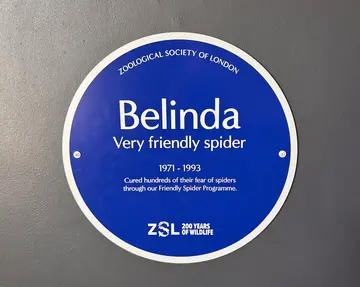
Look out for the Zoo plaque for Belinda inside our Tiny Giants building at London Zoo
During her life, she featured in a TV advert for the Zoo, and went on to become a film star, with a crawl on part in Indiana Jones and the Temple of Doom alongside co-star Harrison Ford. She even met the then Prince William at his eighth birthday party, which was held at the Zoo.
Arguably her biggest achievement though was helping to cure people of their arachnophobia through our Friendly Spider Programme. Our landmark course has been running for more than 30 years and has seen thousands of arachnophobes from all walks of life take part, helping them to conquer their fears.
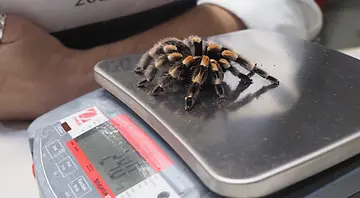
Another Mexican red-kneed spider, Carol, on the scales at London Zoo
Love spiders? Visit our Mexican red-kneed tarantulas in our Tiny Giants area at London Zoo.
Your story: Our history
Do you have a favourite animal, or memory from our Zoos? Let us know and contribute to our community storybook.
15. Dominic the sea lion
Whipsnade Zoo was home to sea lions in the early years – in fact, the first one arrived in 1932. But it was the sea lions that joined us from the late 1980s onwards that really captured the affection of visitors, with children rushing to the ‘splash zone’ during demonstrations – it’s a core childhood memory for so many!
All of the sea lions were special, with their heart-shaped noes and their own unique personalities, but perhaps the most stand-out was Dominic.

Born on 12 June 2007, Dominic was Whipsnade Zoo's first sea lion pup in five years, so was particularly special. And he was named after a Radio One newsreader, Dominic Byrne, whose favourite animal at the Zoo was the pup’s dad, Berkeley. He was often talked about on the radio show by his namesake, aiding his fame.
His keeper, Alex, shares her fond memory of when Dominic was born:
“I remember, I had just got home, and I got a call saying Salt', his mother, was in labour. I arrived back to the Zoo just in time to see him be born – it was actually on the same date as his father Berkeley.
“I then was able to watch him father three pups of his own. He was always such a great dad and was so patient with his offspring even when they were trying to bite his bottom!
“Dominic’s calm demeanour and temperament made him a lovely sea lion to work with. He was always eager to learn new behaviours and played a crucial part in the demonstration educating the public about these amazing animals.”
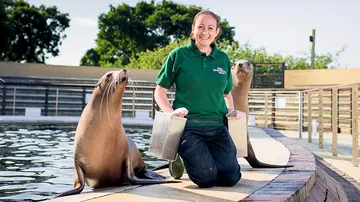
Years later, our Zoos were forced to close during the Covid-19 lockdowns. And it was our sea lions, alongside keeper Alex, that brought Whipsnade Zoo directly into people’s homes.
Dominic took part in a series of interactive Facebook Lives that were broadcast in real time from the pool, reaching thousands of people to keep them connected with wildlife and make them smile during those challenging times. And we raised vital funds for ZSL too, which was a huge boost during our closure.
Dominic also featured in our ITV documentary “London Zoo: An Extraordinary Year” as the crew followed our plans for the sea lions’ departure. And in 2021, the colony moved to their new home at Yorkshire Wildlife Park.
Dominic sadly died in 2025, but his legacy lives on in the pups that he fathered. And he left a lasting impression on all who were lucky enough to meet him.
16. Donna the Asian elephant
In 2017, a very special moment took place at Whipsnade Zoo, and an iconic photograph was captured that made headlines around the world.
Queen Elizabeth II, accompanied by Prince Philip, Duke of Edinburgh, unveiled our Asian elephants’ new home and gave it the royal seal of approval, before meeting Donna the elephant.
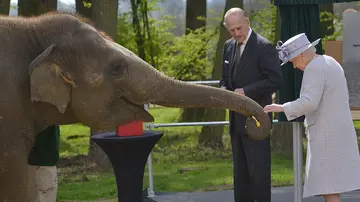
There was so much publicity around the interaction, and a photograph of Queen Elizabeth II feeding Donna a banana featured on her official Christmas card that year.
In 2022, Donna gave birth to a female calf who was named the Thai word for ‘Queen’, paying tribute to the late Queen for her work as ZSL’s patron and honouring Donna’s famous encounter with her.
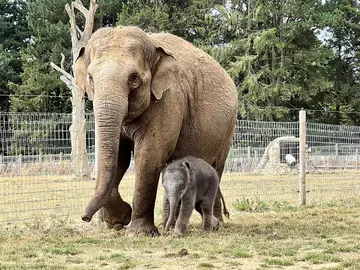
Donna with female calf, Nang Phaya
Then in June 2026, Donna had a second calf, a baby boy. We held a fundraising prize draw to name him, raising thousands of pounds, and the winner chose to call him Anusorn (pronounced ‘Ah-Noo-Sawn’), which means "remembrance".
Donna, and the rest of the multigenerational herd, are playing a crucial role in the global breeding programme for Asian elephants, and they’re important ambassadors for our conservation work. But they also play an active role in helping to ensure the future of their endangered species in the wild. From providing dung samples to testing thermal cameras, our elephants are contributing to vital veterinary advancements and helping conservationists in the field.
17. Vulture chicks Egbert and Rupert
In 2023, we celebrated a conservation success story: a critically endangered vulture chick hatched at London Zoo for the first time in 40 years!
The Rüppell's griffon vulture, named Egbert, had a dramatic start to life, and our expert zookeepers hand-fed him and cared for him for the first three months before he was strong enough to be returned to his parents, Philomena and Cuthbert.
Egbert received a lot of love on our social media channels as the public followed his journey from hatching to fledging, and photos of him cuddled up to a surrogate cuddly toy owl gained much press attention.


Then, a year later, we had another milestone achievement for the species. Philomena and Cuthbert had another chick, Rupert. And, for the first time in London Zoo’s history, we successfully returned a hand-reared vulture chick to its parents to continue the rearing process.
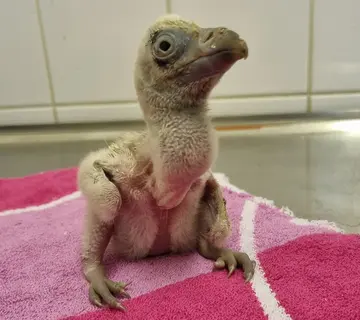
This milestone marked a key step forward, not only to boost population numbers, but to aid the global community of conservation zoos working to protect the species.

18. Koko the chimpanzee
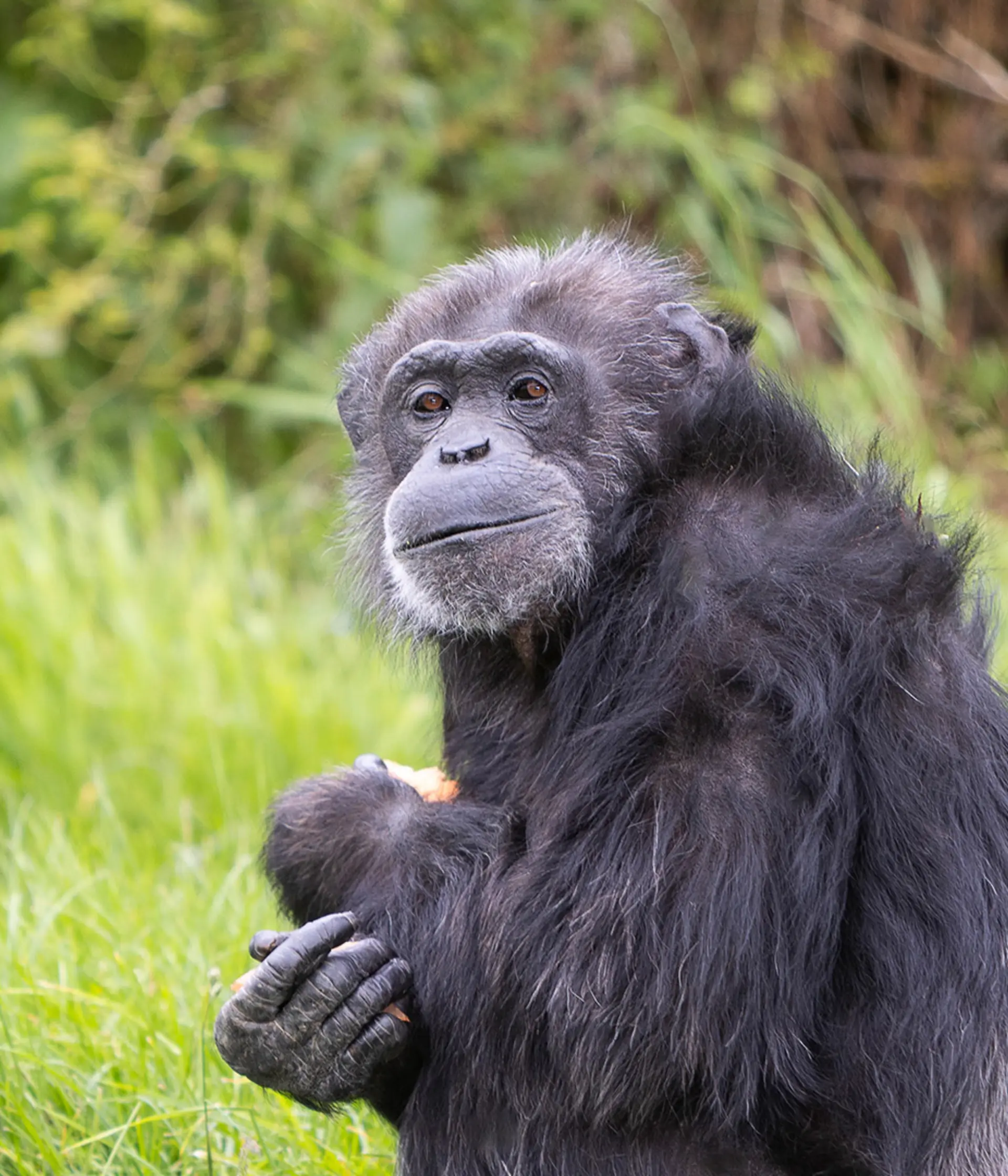
Born at Dudley Zoo in 1973, Koko moved to London when she was nine, before heading to Whipsnade at age 33. She was a much-loved member of the chimp troop and lived through many milestones, including meeting the late Dame Jane Goodall.
During her time at Whipsnade, Koko was trained to use finger monitors so vets and keepers could gather ECG readings, as well as conduct ultrasound examinations on her heart to help understand more about chimpanzee cardiovascular health. This critically important data was shared with the Great Ape Heart Project to form part of a centralised database on great ape heart health, which helps to ensure primates receive the best possible care at conservation centres around the world.
Koko lived to the remarkable age of 52, having outlived the average chimp by more than a decade, and she was our oldest mammal at Whipsnade Zoo at the time of her death in October 2025.
Her legacy lives on, not only through those she left a lasting impression on, but through the impact she has made on advancing the conservation of her species.

19. Bhanu the Asiatic lion
A majestic male lion, Bhanu, arrived at London Zoo in 2016 from Assiniboine Zoo in Winnipeg, Canada. He moved into our newly opened Land of the Lions habitat, soon became a firm favourite with visitors, and had a distinctive roar that would make many a dog walker stop in their tracks in Regent’s Park. For those lucky enough to sleep over at the Zoo, just a whisker away from our Asiatic lion pride, they would often wake up to the sound of his roar, which was something truly special.
Asiatic lions are endangered in the wild, with only several hundred remaining in a tiny area smaller than Greater London. Bhanu not only contributed to the vital conservation breeding programme for his species by fathering three cubs, but he was an important ambassador, educating Zoo visitors about our work in the field.
During the Covid-19 pandemic and the restrictions in place, he was also the face of our fundraising campaign to help us stay open, and his handsome pose atop his platform has appeared in many of our marketing materials.
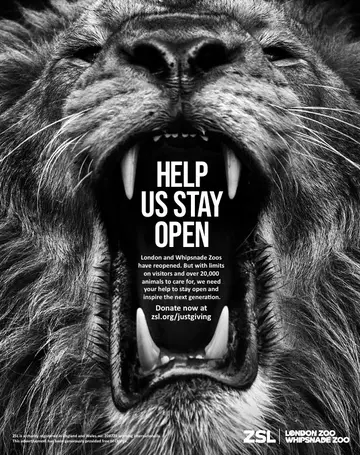
Bhanu was the face of our fundraising campaign during the Covid-19 pandemic
Bhanu died in April 2026 and after his death was announced on the Zoo’s social media channels, they were flooded with love, memories, and photos of him looking ever the regal lion king. He was a very special, and unique big cat.