






20 December 2025
For 200 years, at ZSL, we have been a place of wonder and discovery - where people from across the world have helped shape our collective understanding of animals and the natural world.
But historically, not every contribution has been equally recognised. Behind the famous names and celebrated discoveries lies an important, but often untold history: the stories of animal experts who journeyed across continents to bring the animals in their care to the UK; women who pushed forward scientific understanding long before their work was widely valued; and countless local and Indigenous guides, collectors and assistants whose knowledge and skill underpinned early zoological exploration.
Today, as we celebrate our past, we recognise that science has always been a collective endeavour - built not just by a few recognised individuals, but by communities of researchers, caretakers, travellers and local knowledge holders working together.
Here are just a few of the incredible people who have helped shape our conservation charity – and wildlife history.
Cabas, Omar and Abdalah
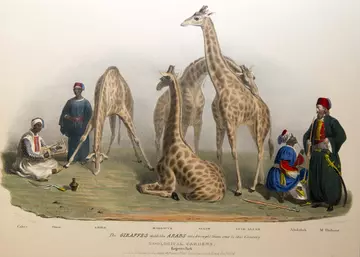
In May 1836, London Zoo had some very special new arrivals – its first ever herd of giraffes. Three males and one female made the long journey from Kordofan (in what today is now central Sudan) all the way to Regent’s Park.
The newspapers at the time were full of excitement, sharing every detail of their journey. After arriving at Blackwall Docks, the giraffes then made the three hours walk to reach the Zoo. The Metropolitan Police closed off roads for the occasion, and the giraffes were allegedly a little nervous when they spotted cows in a nearby field!*
Imagine how challenging it must have been for Keepers to look after animals they’d never seen before. Fortunately, three experienced Keepers travelled with the giraffes, from at least as far as Egypt, all the way to England. Their names? Cabas, Omar, and Abdalah.
We still know very little about these men, and we believe they only stayed in England as long as it took to settle the giraffes, but one incredible image survives – a lithograph by Georg Scharf. It not only records their names but shows them alongside the giraffes, bringing this remarkable moment in Zoo history to life.
*Leicester Journal, May 1836
Hamet Safi Cannana
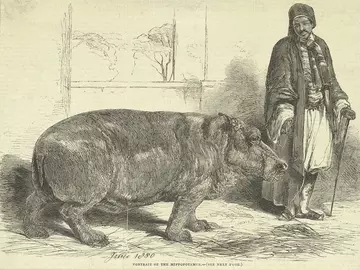
When Obaysch the hippopotamus arrived at London Zoo on 25 May 1850, he caused a sensation - the first hippo seen in Europe since ancient times. But behind the headlines was a man whose story is rarely told: Hamet Safi Cannana.
Hamet was an Egyptian animal handler with years of experience working for Britain’s consul-general in Egypt. Skilled and trusted, he cared for Obaysch in Cairo before accompanying him on the long journey to England. On board the steamship Ripon, Hamet even slept in a hammock beside Obaysch’s water tank, sometimes reaching out an arm to reassure the restless hippo.
Once at the Zoo, Hamet coaxed Obaysch into his new home with a bag of dates and stayed on as his keeper for two years. He also acted as a translator for visiting performers, including snake charmers who wowed crowds during the Great Exhibition of 1851.
Hamet’s story is a rare glimpse into the lives of non-European keepers whose expertise shaped the early years of London Zoo – a hidden figure behind one of its most famous residents.
Jabar Abou Maijab and Mohammed Adu Nescian
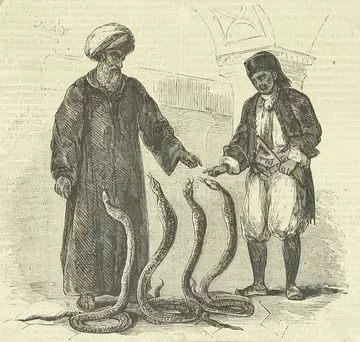
Two other lesser-known figures from our are the two Egyptian snake charmers, referred to above, who worked at London Zoo in 1850 - Jabar Abou Maijab and his son Mohammed Adu Nescian. Their performances with snakes intrigued Victorian visitors, but their presence also reflects the global expertise that shaped the Zoo in its early years.
Communication with audiences was not straightforward, and Hamet Safi Cannana – the Egyptian keeper who cared for Obaysch the hippopotamus – acted as their translator. Records even note that the snake charmers spoke to intrigued high-profile visitors, including Queen Victoria, after their demonstrations.
Though mentioned only briefly in surviving archives, Jabar and Mohammed were part of a wider network of non-European workers whose skills and knowledge were essential to our society.
Rajman Singh & Tursmoney Chittakar
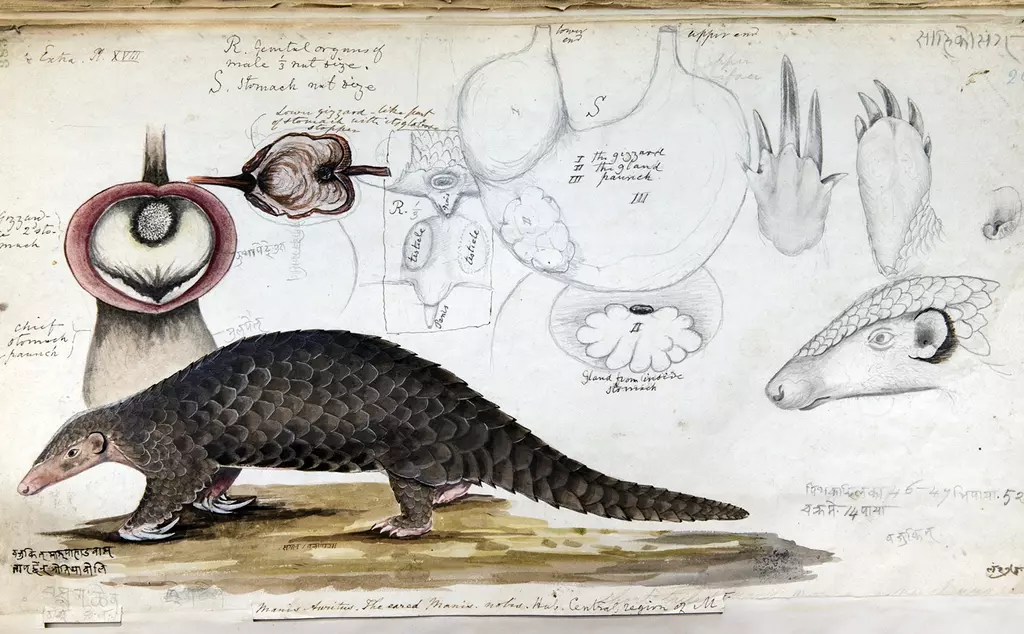
The ZSL Library & Archives are fortunate to have 8 beautiful volumes of manuscripts attributed to 19th century British naturalist Brian Houghton Hodgson. For over 20 years
(1820-43) Hodgson was based in Nepal, and he quickly realised that many of the animal species he encountered were new to European audiences.
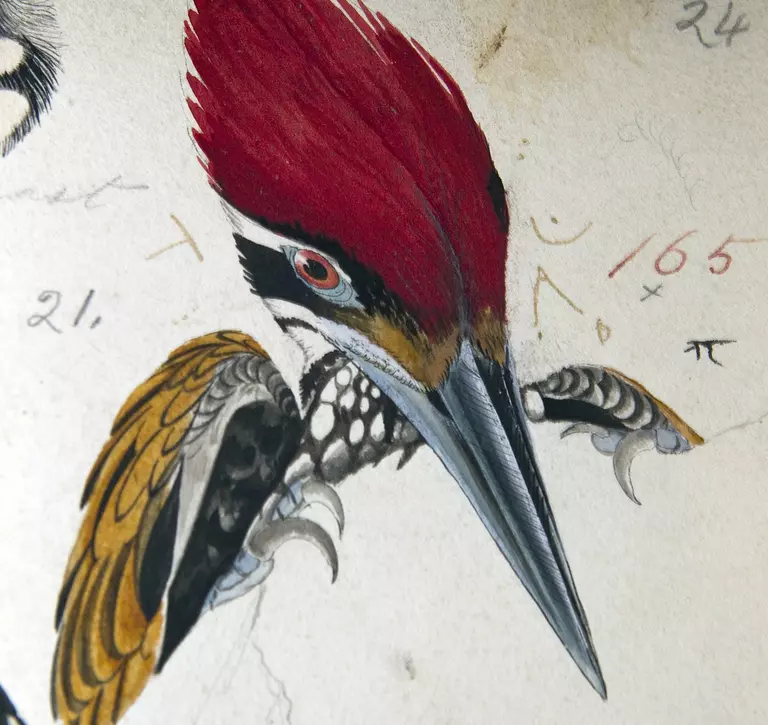
This is where Nepalese artists such as Rajman Singh and Tursmoney Chittakar played a crucial role.
Singh produced many of the mammal drawings in Hodgson’s manuscripts, creating detailed watercolours that captured anatomy, posture, and local names. These weren’t just beautiful pictures - they were scientific tools. Most images include measurements, notes in Devanagari script, and multiple anatomical views, allowing zoologists to identify species without ever seeing the animal in person.
Although their names appear only briefly in the archives, Rajman Singh and Tursmoney Chittakar were central to the success of Hodgson’s work and highlighting Nepal’s incredible biodiversity to a global audience.
Francois Le Comte
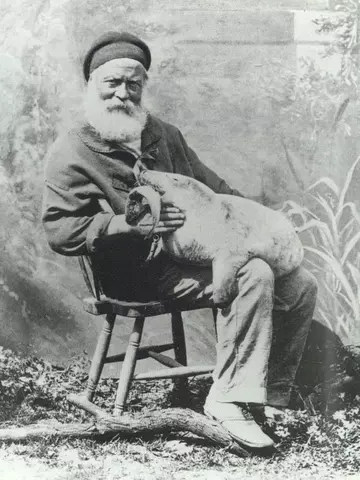
During the 1860s, London Zoo employed a keeper whose knowledge of seals and sealions established him as something of an expert. His name was Francois Lecomte.
Accounts suggest that Lecomte originally lived in France and had been a sailor, but at some point turned his skill to working with seals and sealions. After a stint of working in the Caribbean, and later at Cremorne Gardens in Chelsea, Lecomte came to work at London Zoo.
The knowledge of seals that Lecomte had seems to have impressed senior management as he was sent on an expedition to the Falkland Islands to study seals and investigate the possibility of bringing some back to England. The result of this study can be read in ZSL’s early journal The Proceedings of the Zoological Society of London.
Simon Pereira
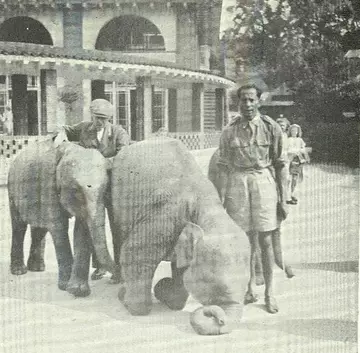
In 1946, Simon Pereira, an experienced mahout (elephant trainer/keeper) from Ceylon (now Sri Lanka), travelled to London with three elephants – Rajah, Ranee, and Maneki – who came from Colombo Zoo.
Simon cared for the elephants during their journey and stayed on at London Zoo for six months to help settle the animals in and share his skills before returning home. His role is recorded in staff files, correspondence, and also featured in an instalment of the then Zoo Life members magazine.
Marion Saunders
During World War One, more working opportunities opened for women whilst many men were away at the front line, and London Zoo was no exception, with women stepping up to fill empty positions in offices, the library, and more.
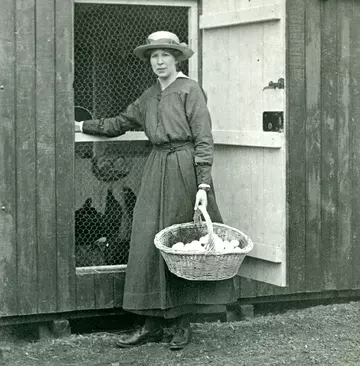
But one woman who deserves special mention is Marion Saunders, our first female keeper, who ran the Poultry Culture Exhibition at London Zoo in 1916, encouraging London’s urban gardeners to keep poultry in their back yards to help with food shortages. Newspapers and our own annual reports show that the exhibition was so successful Saunders was asked to repeat the display the following year as well.
Saunder’s contribution to the war effort was one of many crucial events we held during the first world war to support the community; other public services hosted included first aid training and an exhibition on the dangers of rats spreading diseases!
Thanks and credits
This blog would not have been possible without the research of various researchers and colleagues. Special mentions must go to Daniel Phillips, David Lowther, Ann Sylph and Adrian Taylor.
ZSL's 200th Anniversary
Discover more about our incredible 200-year history and how you can get involved with our 2026 celebrations by heading to our 200th anniversary hub