






20 February 2026
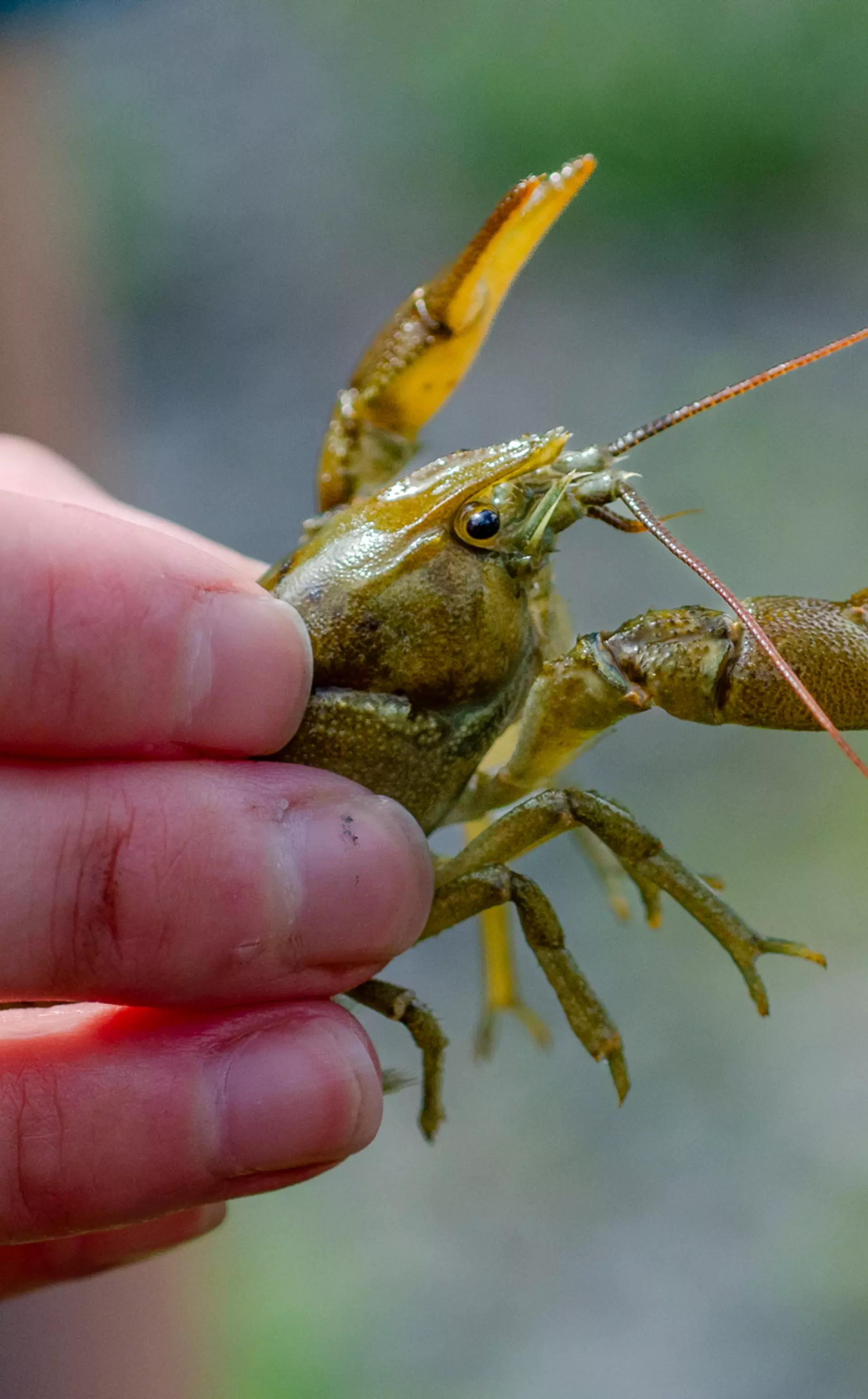
Header image © Sarah (Telling Stories Volunteer)
Climate change could erode millions of years of crayfish evolutionary history, according to a new study by researchers Sebastian Pipins and Dr Rikki Gumbs, which identified 70 priority species for conservation.
When you think of crayfish, you'd be forgiven for picturing a small, drab, lobster-like crustacean, with long antennae and big claws known as chela. But they're actually an incredible diverse and intriguing group of species, due in part to their deep evolutionary roots, originating in the Middle Triassic period. They actually pre-date the great dividing of Pangaea, having lived on this planet long before the land masses we recognise today even took shape.
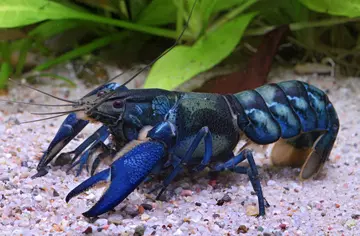
Modern crayfish species range in size, from the fingernail-sized swamp crayfish (Tenuibranchiurus glypticus) to the giant freshwater crayfish (Astacopsis gouldi), that can grow to reach a length longer than your arm. Crayfish also come in a whole spectrum of different colours, with many Cherax species from New Guinea coming in dazzling shades of purple, blue and green. Some species are hermaphroditic (they possess both male and female organs), some are semelparous (they reproduce once in their lifetime and promptly die), many display parental care, most can breathe in water and on land, and a few are totally blind. Crayfish can be found in lots of different habitats too - in lakes, caves, forests, swamps, and rivers - and across all major continents besides mainland Africa, where freshwater crabs dominate, and Antarctica. They have two key centres of diversity: in Southeastern United States and Eastern Australia.
Cherax communis in Papua New Guinea
Crayfish are ecological multitaskers
There are roughly 700 species of crayfish. Most are unfussy, omnivorous eaters. They will hunt small fish, snails, and insects, helping to keep the food chain in check. Vegan meals? Also not a problem for crayfish: they will tear through vegetation, through thick mattes of algae, freeing up space for new plants to grow, and facilitating nutrient cycling in the process. Crayfish may be messy, but this shredding makes perfectly sized morsels for smaller species. In fact, they shred so prolifically that their presence can determine the overall abundance of co-occurring crustacean species in their community. And just as crayfish consume a variety of prey, they are in turn consumed by a variety of predators, ensuring other species do not go hungry. However, their role extends far beyond their importance to the food web: crayfish are quintessential ecosystem engineers. Many will burrow extensively, tunnelling into riverbanks or in nearby terrestrial soils, creating subterranean labyrinths, and shifting mountains of sediment in the process. These burrows provide oxygen-rich shelters for crayfish and may later serve as refuges for other species evading predation. Because of their ability to impact whole ecosystems, many crayfish have been recognised as ‘keystone’ species. This is a term given to those species that are ecologically vital and disproportionately impactful.
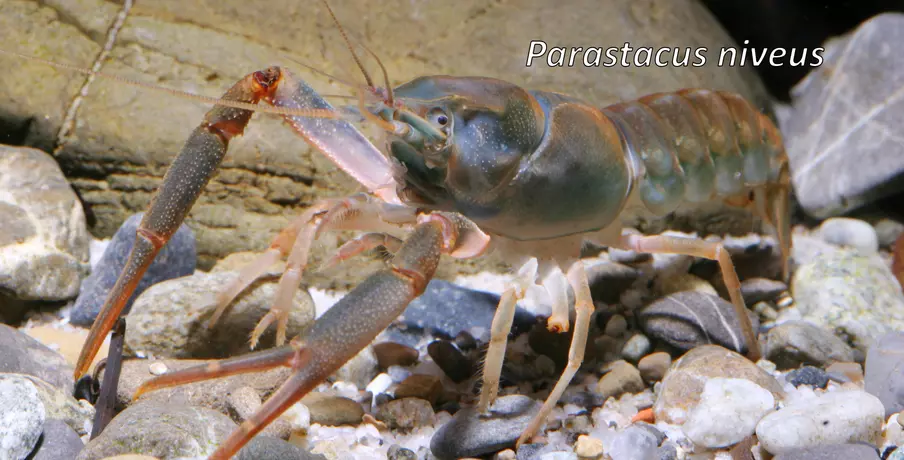
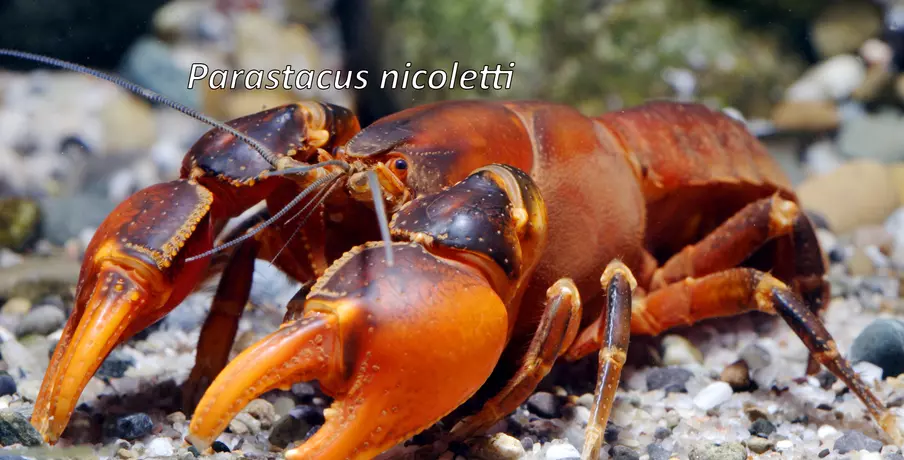
Observe the differences between crayfish Parastacus niveus & Parastacus nicoletti. Image © Chris Lukhaup.
Feeling the pinch
Around the world, freshwater species are in peril. Monitored populations of freshwater vertebrate species have declined, on average, by 85% since 1970, and around one quarter of freshwater animal species have been estimated at risk of extinction. Several human activities are at fault: around the globe, freshwater systems have been dammed, drained and channelised, they have been polluted by fertilisers, heavy metals, plastics, and pesticides, and the species within have been overfished and overexploited.
Unsurprisingly, crayfish are in peril too: around one-third of all crayfish species assessed on the International Union for Conservation of Nature (IUCN) Red List of Threatened Species are threatened with extinction. Invasive species are a particular threat to crayfish, especially other invasive crayfish. For example, the red swamp crayfish (Procambarus clarkii), and the American signal crayfish (Pacifastacus leniusculus), are carriers of the deadly crayfish plague, which has heavily impacted native crayfish species across Europe, including in the UK. Furthermore, climate change is estimated to affect many crayfish species in the near future: it is estimated that roughly 87% of crayfish are sensitive to climate change, with many being highly specialised to their present-day habitat conditions. Many crayfish species also have highly restricted distribution ranges and are highly exposed to the present-day and projected impacts of climate change.
Crayfish on the EDGE
Faced with limited resources, it is vital that conservation efforts are prioritised, and this requires that a conservation value is determined. From an evolutionary perspective, species that are more closely related share a greater number of traits than species that are more distantly related. Framing biodiversity in this way can therefore help us account for the differences between species, and when used in a priority setting, it can help us ensure that the evolutionary history across a whole clade is maintained: we can focus on the species that are most evolutionarily distinct and the lineages that are most likely to be lost.
This is exactly what the EDGE metric was formulated to do. It’s a method that is used to highlight species that are Evolutionarily Distinct and Globally Endangered, and which serves as the foundation of our EDGE of Existence programme. For over a decade, our EDGE of Existence programme has been funding and training conservationists, helping over 140 EDGE species in the process. The approach has been bolstered by a recent revision to the original EDGE metric, but, so far, no invertebrate group has been formally incorporated.
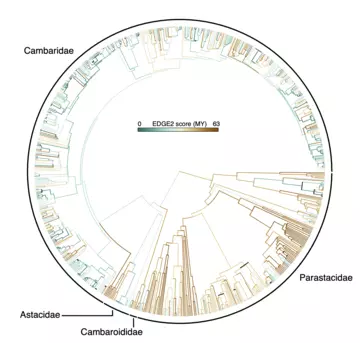
We therefore set out to produce an EDGE assessment for crayfish, whilst also determining how climate change is likely to impact the group. To do this, we compiled multiple data sources: a species-level phylogeny, a comprehensive taxonomy, IUCN Red List threat assessments, and a climate change vulnerability assessment. We found that crayfish together comprise roughly 15 billion years of evolutionary history, about 3 billion of which is at risk of being lost.
Identifying priority crayfish species
Priority EDGE species are species with high evolutionary distinctiveness that have a high extinction risk (those that are Critically Endangered, Endangered, or Vulnerable as per IUCN Red List). This study highlighted 70 EDGE priority species, spanning 14 genera and three families, with 44 found in Australia, 21 in USA, four in Mexico, and one – the white-clawed crayfish – found in Europe. Together, these 70 species represent 10.3% of the total species diversity but constitute 40.8% of the total amount of crayfish phylogenetic diversity that is expected to be lost, given present day extinction risks. By focusing on just these 70 species, we can safeguard much of the whole group’s evolutionary history.
These 70 EDGE species include both the smallest and largest crayfish species mentioned earlier. The swamp crayfish (T. glypticus), which inhabits a few small locations in the coastal Wallum swamps around Brisbane, is threatened by the rapid human expansion occurring across the Sunshine Coast. Meanwhile, the giant freshwater crayfish (A. gouldi), endemic to Northern Tasmania, has declined in abundance by an estimated 80% in 50 years, though reintroductions across part of its range have proved successful. The top ranked EDGE species, the Scottsdale burrowing crayfish (Engaeus spinicaudatus), is also found in Tasmania. This species is Critically Endangered on the IUCN Red List and is one of the most evolutionarily distinct crayfish species worldwide, with 65 million years separating this species from its closest living relative. In the United States, multiple species of cave-adapted crayfish are identified as EDGE species. This includes the Benton County cave crayfish (Cambarus aculabrum), a totally unpigmented, blind, and Critically Endangered species found in the Ozark plateau.
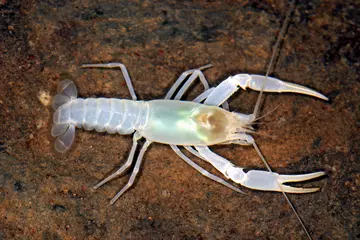
A cave-adapted EDGE species: Cambarus tartarus.


Reaching boiling point – crayfish and climate change
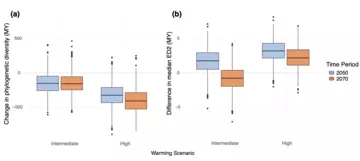
With climate change posing a significant threat to crayfish, our study further determined the extent of crayfish evolutionary history threatened by changing conditions. We found that a high warming scenario could affect up to 409 million more years of crayfish evolutionary history than expected at random. That’s 251 million more years than under an intermediate warming scenario.
Additionally, future climate change disproportionately threatens evolutionary distinct species. For example, the smallest crayfish in the world (yes, the swamp crayfish, [pictured, right] - again!) is the second most evolutionarily distinct species overall and is vulnerable to climate change. It’s not alone among Australian species, with 23 of the 70 EDGE crayfish being found in Australia and being vulnerable to climate change. Avoiding a high warming scenario will therefore be essential for the conservation of Australia’s crayfish.
What can I do to help?
The threats to crayfish may seem beyond our individual control, but there are actions we can all take to help our crustacean friends, and other freshwater species too:
- Vote for environmentally and climate conscious policies.
- Choose sustainable and climate friendly food – shop local!
- Support conservation work in your local area, by volunteering, spreading the word, and/or financial support.
- Help conserve freshwater systems by conserving water, avoiding or limiting pesticides and other pollutants in your home and garden, reducing single-use plastic, and disposing of waste responsibly (including pet waste) so it doesn’t end up in our freshwaters.
- Become a citizen scientist to support vital research on crayfish species. There’s plenty of great work being done, from NatureTrackers, which monitors the Central North burrowing crayfish (Engaeus granulatus), an EDGE species found in Tasmania, to the Yorkshire Crayfish Forum, which seeks to monitor, protect and restore populations of the native white-clawed crayfish, another EDGE species, in Yorkshire, England.

And we can certainly all be advocates for crayfish. When the group is this cool, it’s really not so difficult. In Sweden, every summer, they throw a big party, a crayfish-themed party, aptly called a crayfish party, or a kräftskiva in Swedish. There the focus is on eating crayfish, but maybe you and your friends could throw a party just to celebrate crayfish. And for the astacologists amongst us, know this: you could be the first crayfish EDGE fellow.