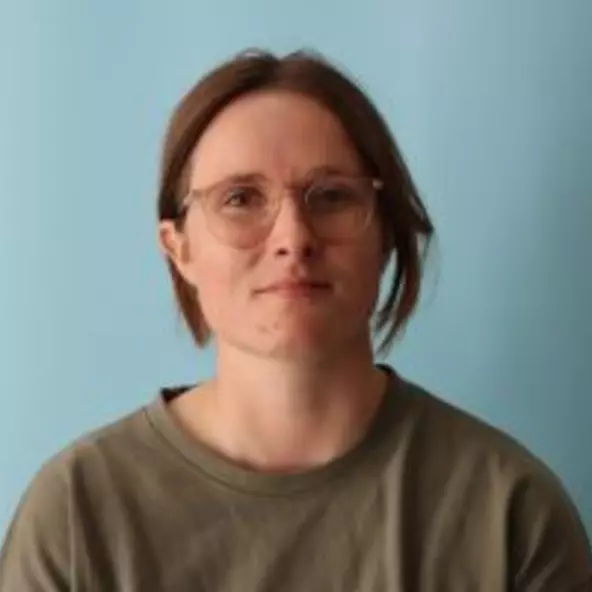


Dr Rhiannon Lloyd

Leverhulme Early Career Research Fellow

Curriculum Vitae:

Nov 2009-Present:

Visiting Research Fellow. School of Biological Sciences, University of Portsmouth, Portsmouth, UK.

Oct 2009-Present:

Leverhulme Trust Early Career Fellow. “Is the secret of a good hybrid nuclear-mitochondrial cooperation?”. Reproductive biology group, Institute of Zoology, London, UK.

April-Sept 2009:

Postdoctoral Research Assistant. “Evaluation of existing and the development of novel methods for detecting invasive amphibians and pathogens in the environment”. Wildlife Epidemiology group, Institute of Zoology, London, UK.

2005-April 2009:

Postdoctoral Research Assistant. “The development of a modern long-life storage diluent for fresh ram spermatozoa”. Reproductive biology group, Institute of Zoology, London, UK.

2001-2005:

PhD. “The regulation of mitochondrial DNA (mtDNA) transmission to generate offspring that are genetically identical”. Mitochondrial & Reproductive Genetics Group, Medical School, University of Birmingham, Birmingham, UK.

1998-2001:

BSc (Hons) Ecology. The School of Biological & Biomedical Sciences, University of Durham, Durham, UK.

Main Research Interests:

  • Nuclear-cytoplasmic interactions during embryo and adult development.
  • Assisted reproductive technologies.
  • Genome resource banking.
    .

Current External Collaborators:

  • Dr John McGeehan, Biomolecular Structure, University of Portsmouth, UK.
  • Dr Peter Foster, Natural History Museum, London, UK.
  • Dr Tim Littlewood, Natural History Museum, London, UK.
  • Professor Matthew Guille, Genes and Development, Molecular Embryology, University of Portsmouth, UK.
  • Dr Richard Gibson, North of England Zoological Society, Chester, UK.
    .

Grants & Sponsorship:

2010:

“Towards a Biobanking Strategy for Amphibian Conservation” workshop (co-applicant; sponsorship), £6,614.
Cold Spring Harbor Laboratory “Xenopus Cell and Developmental Biology” course (stipend), $1,350.

2009:

British Andrology Society’s annual meeting “Young Researcher Oral Communications” (sponsorship), £300.
“Impacts of Environmental Change on Reproduction and Development in Wildlife” symposium (co-applicant; sponsorship), £3,250.
The Leverhulme Trust Early Career Fellowship (50% salary and research costs over 2 years), £54,463.

2008:

The British Andrology Society (conference travel grant), £250.
The Society for Reproduction and Fertility (conference travel grant), £350.

2007:

The Elephas Maximus 2007-2010 Project (Institute of Zoology representative; EU-Asia Link grant), €800,000.

2006:

The Royal Society (conference travel grant), £1,770.

2003:

The Society for Reproduction and Fertility (conference travel grant), £300.
The University of Birmingham (conference travel grant), £400.

Committee & Society Membership (role):

2009-Present:

The Frozen Ark Advisory Group (member, Head Amphibian Expert Group).

2008-Present:

Amphibian Ark Biobanking Advisory Committee (member; Secretary 2008-2009, Officer 2009-Present).

2005-2010:

The British Andrology Society (member; committee member and young researcher representative 2008-2010).

2003-Present:

The International Embryo Transfer Society (member).

2001-Present:

The Society for Reproduction and Fertility (member).

Organised Symposia & Workshops:

2010:

Main organiser of the international “Towards a Biobanking Strategy for Amphibian Conservation” workshop. Co-hosted by the Zoological Society of London (London) and the European Xenopus Resource Centre (Portsmouth), 6-8 September.

2009:

Main organiser of the British Andrology Society’s annual meeting “Young Researcher Oral Communications” and “Young Researcher Question Time” sessions. Held at Queen’s University (Belfast), 19-20 November.

2009:

Co-organiser of the international “Impacts of Environmental Change on Reproduction and Development in Wildlife” symposium. Held at the Zoological Society of London (London), 15-16 October.

Invited Oral Communications:

2011:

“Safety and efficacy of methods to avoid mitochondrial disease: lessons from non-human animal nuclear transfer and human mitochondrial DNA haplotype analyses” presented to the core scientific review panel established by the Human Fertilisation and Embryology Authority (HFEA) on behalf of the Secretary of State, HFEA, London, UK.

2008:

“Assisted Reproduction Techniques and Gene Banking for Amphibian Conservation, Hope and Reality” presented at the international “Halting the global decline in amphibians: research and practice” symposium, Zoological Society of London, London, UK.

2007:

“You do what???!!! Life as a postdoctoral research assistant at the Institute of Zoology” presented at The British Andrology Society annual meeting, GlaxoSmithKline, Ware, UK.

2007:

“The development of long-life extenders for fresh semen using proteins present in the oviduct” presented at the opening symposium of the EU-Asia Link funded “Managing the health and reproduction of elephant populations in Asia” project, University of Kasetsart, Bangkok, Thailand.

Publications:

Journal articles:

Browne RK, Li H, Robertson H, Uteshev VK, Shishova NR, McGinnity D, Nofs S, Figiel CR, Mansour N, Lloyd RE, Agnew D, Carleton CL, Wu M, Gakhova EN. Reptile and amphibian conservation through gene banking and other reproduction technologies. Russian Journal of Herpetology. In press.

Rawson DM, McGregor Reid G, Lloyd RE. Conservation rationale, research applications and techniques in the cryopreservation of lower vertebrate biodiversity from marine and freshwater environments. International Zoo Yearbook. 2011; 45(1): 108–123.

Coy P, Lloyd RE, Romar R, Satake N, Matas C, Gadea J, Holt WV. Effects of porcine pre-ovulatory oviductal fluid on boar sperm function. Theriogenology. 2010; 74(4): 632-42.

Holt WV, Lloyd RE. Sperm storage in the vertebrate female reproductive tract; how does it work so well? Theriogenology. 2010; 73:713-722.

Milligan SR, Holt WV, Lloyd RE. Impacts of climate change and environmental factors on reproduction and development in wildlife. Philos Trans R Soc Lond B Biol Sci. 2009; 364(1534):3313-9.

Lloyd RE, Elliott RM, Fazeli A, Watson PF, Holt WV. Effects of oviductal proteins, including heat shock 70 kDa protein 8, on survival of ram spermatozoa over 48 h in vitro. Reprod Fertil Dev. 2009; 21(3):408-18.

Lermen D, Blömeke B, Browne R, Clarke A, Dyce PW, Fixemer T, Fuhr GR, Holt WV, Jewgenow K, Lloyd RE, Lötters S, Paulus M, Reid GM, Rapoport DH, Rawson D, Ringleb J, Ryder OA, Spörl G, Schmitt T, Veith M, Müller P. Cryobanking of viable biomaterials: implementation of new strategies for conservation purposes. Mol Ecol. 2009; 18(6):1030-3. Review.

Lloyd RE, Romar R, Matas C, Gutierrez-Adan A, Holt WV, Coy P. Effects of oviductal fluid on the development, quality and gene expression of porcine blastocyst produced in vitro. Reproduction. 2009;137(4):679-87.

Elliott RM, Lloyd RE, Fazeli A, Sostaric E, Georgiou AS, Satake N, Watson PF, Holt WV. Effects of HSPA8, an evolutionarily conserved oviductal protein, on boar and bull spermatozoa. Reproduction. 2009; 137(2):191-203.

Holt WV, Lloyd RE. Artificial insemination for the propagation of CANDES: the reality! Theriogenology. 2009; 71(1):228-35.

Yeste M, Lloyd RE, Badia E, Briz M, Bonet S, Holt WV. Direct contact between boar spermatozoa and porcine oviductal epithelial cell (OEC) cultures is needed for optimal sperm survival in vitro. Anim Reprod Sci. 2009; 113(1-4):263-78.

Lloyd RE, Badia E, Fazeli A, Watson PF, Holt WV. Temporal dynamics of ram sperm binding and survival during 48-h coculture with oviducal epithelial cells. Reprod Fertil Dev. 2008; 20(7):835-45.

Bowles EJ, Lee JH, Alberio R, Lloyd RE, Stekel D, Campbell KH, St John JC. Contrasting effects of in vitro fertilization and nuclear transfer on the expression of mtDNA replication factors. Genetics. 2007; 176(3):1511-26.

Lloyd RE, Lee JH, Alberio R, Bowles EJ, Ramalho-Santos J, Campbell KH, St John JC. Aberrant nucleo-cytoplasmic cross-talk results in donor cell mtDNA persistence in cloned embryos. Genetics. 2006; 172(4):2515-27.

St John JC, Lloyd RE, Bowles EJ, Thomas EC, El Shourbagy S. The consequences of nuclear transfer for mammalian foetal development and offspring survival. A mitochondrial DNA perspective. Reproduction. 2004; 127(6):631-41. Review.

St John JC, Lloyd RE, El Shourbagy S. The potential risks of abnormal transmission of mtDNA through assisted reproductive technologies. Reprod Biomed Online. 2004; 8(1):34-44. Review.

Edited books:

Milligan SR, Holt WV, Lloyd RE (Eds). Impacts of climate change and environmental factors on reproduction and development in wildlife. Phil Trans R Soc Lond B Biol Sci. 2009; 364(1534).

Chapters in books:

St John JC, Amaral A, Bowles E, Oliveira JF, Lloyd RE, Freitas M, Gray HL, Navara CS, Oliveira G, Schatten GP, Spikings E, Ramalho-Santos J. The analysis of mitochondria and mitochondrial DNA in human embryonic stem cells. Methods Mol Biol. 2006; 331:347-74.

Printable version

Dr Rhiannon LloydResearch Theme:
Reproductive Biology

Contact Details:

T: 020 7449 6329
F: 020 7586 2870
E: rhiannon.lloyd@ioz.ac.uk

Institute of Zoology
Zoological Society of London
Regent's Park,
London, United Kingdom
NW1 4RY