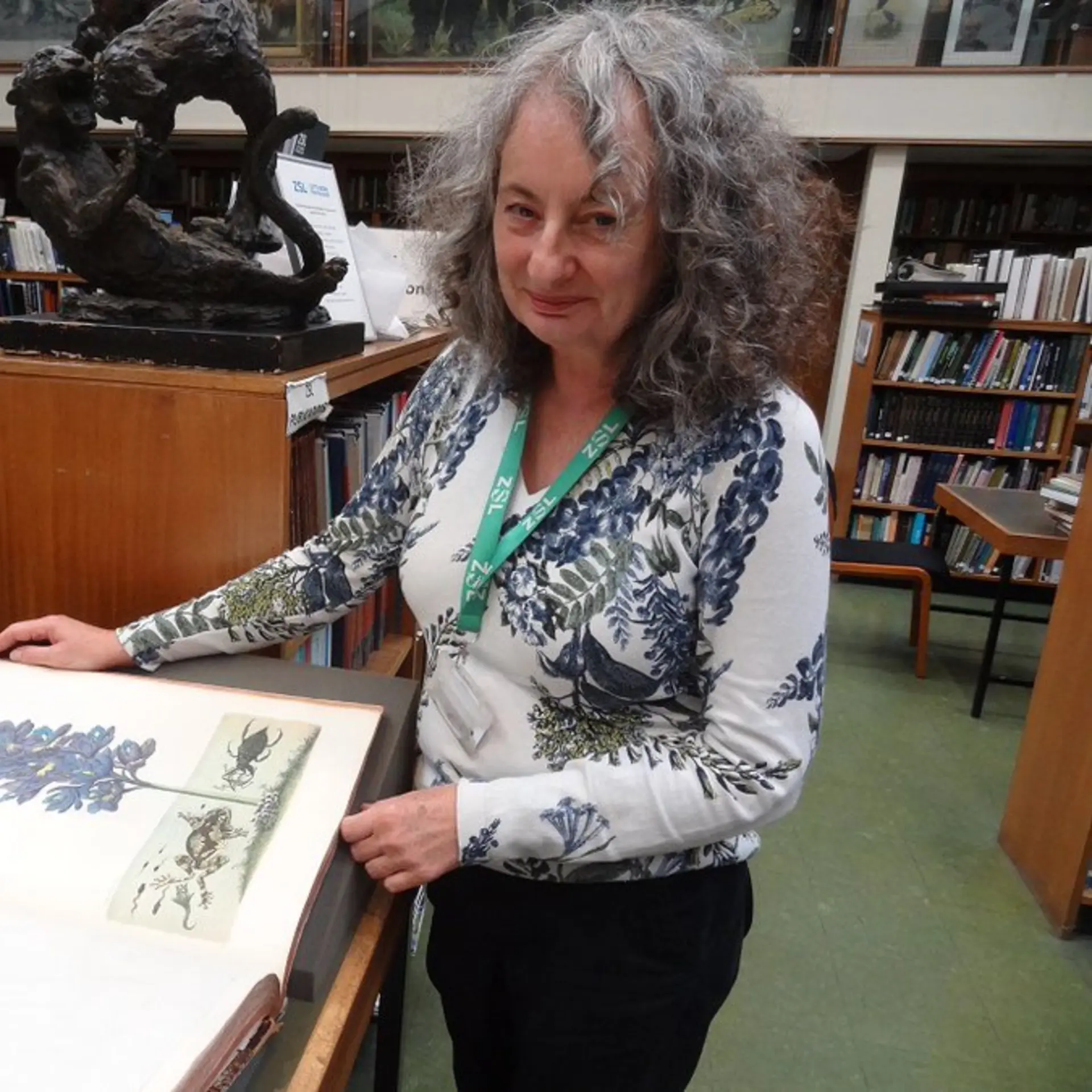


Dr Jon Bielby

Postdoctoral Research Assistant

Curriculum Vitae:

  • May 2009: Post-doctoral research assistant on ‘RACE: Risk Assessment of Chytridiomycosis to European amphibian biodiversity’ project.
  • 2008-2009: Conservation Programme Manager of ZSL’s UK and Mainland Europe conservation programme.
  • 2004-2008: NERC PhD candidate, Imperial College London/IoZ.
  • July 2004–September 2004: Field volunteer on Tsaobis Baboon Project .
  • May 2004–July 2004: Research Assistant on the "Alliance for Zero Extinction" project.
  • 2002-May 2004: Research Assistant (NERC funded), Institute of Zoology.
  • 2000-2001: MSc Biodiversity and Conservation (with Distinction), University of Leeds.
  • 1995-1998: BSc (Hons) University of Hull.
    .

Research Interests:

Amphibian Disease Ecology

My research explores how the fungal pathogen, Batrachochytrium dendrobatidis, impacts upon its amphibian hosts at a range of spatial and biological scales.

At the broadest geographic scale I am interested in how host life-history, ecology and threat intensity interact in order to determine the susceptibility of a species. I am interested in using the rules-of-thumb obtained in such analyses to prioritise and direct conservation management options, and in assessing those options in order to implement cost-effective conservation. For further examples of this type of approach work, please see Bielby, J., Cooper, N., Cunningham, A.A., Garner, T.W.J. and Purvis, A. (2008) Predicting declines in the world’s frogs. Conservation Letters 1(2): 82-90.

Efforts to mitigate the impacts of any given threat process, disease being no exception, are best directed at the level of the host population or community. In the case of Batrachochytrium dendrobatidis there is a great deal of variation in host competency within a community, with different species and even different age-classes within a species having different levels of risk of infection and proliferation of disease. This being the case I am interested in why variation in response to exposure to Bd exists at the population and community level and how this knowledge may be used to better direct conservation efforts. Understanding how this variation manifests itself in the transmission dynamics within a given system is my main area of interest at present.

Publications:

Carbone, C., Turvey, S.T., Bielby, J. (2011), Intra-guild competition and its implications for one of the biggest terrestrial predators, Tyrannosaurus rex. Proceedings of the Royal Society. DOI: 10.1098/rspb.2010.2497

Bielby, J., Cardillo, M., Cooper, N., Purvis, A. (2010) Modelling extinction risk in multispecies data sets: phylogenetically independent contrasts vs. decision trees, Biodiversity and Conservation. 19: 113-127.

Bielby, J., Bovero, S., Sotgiu, G., Tessa, G., Favelli, M., Angelini, C, Doglio, S, Clare, F.C., Gazzaniga, E., Lapietra, F. and Garner, T.W. (2009) Fatal Chytridiomycosis in the Tyrrhenian Painted Frog. EcoHealth, May 2009, DOI: 10.1007/s10393-009-0232-2

Bielby, J., Cooper, N., Cunningham, A.A., Garner, T.W.J. and Purvis, A. (2008) Predicting declines in the world’s frogs. Conservation Letters 1(2): 82-90.

Bielby, J., Mace, G.M., Bininda-Emonds, O.R.P., Cardillo, M., Gittleman, J.L., Jones, K.E., Orme, C.D.L. and Purvis, A. (2007) The fast-slow continuum in mammalian life-history: an empirical reevaluation. American Naturalist 169(6): 748-757.

Bielby, J., Cunningham, A.A., Purvis, A. (2006) Taxonomic selectivity in amphibians: ignorance, geography or biology? Animal Conservation 9: 135-143.

Stefan Lo¨tters, Jos Kielgast, Jon Bielby, Sebastian Schmidtlein, Jaime Bosch, Michael Veith, Susan F. Walker, Matthew C. Fisher, and Dennis Ro¨dder (2010) The Link Between Rapid Enigmatic Amphibian Decline and the Globally Emerging Chytrid Fungus, EcoHealth. DOI: 10.1007/s10393-010-0281-6

Rödder, D., Kielgast, J., Bielby, J., Schmidtlein, S., Bosch, J., Garner, T.W.J., Veith, M., Walker, S.F., Fisher, M.C., and Lötters, S. (2009), “Global Amphibian Extinction Risk Assessment for the Panzootic Chytrid Fungus”, Diversity 1:52-66.

Jones, K.E., Bielby, J., Cardillo, M., et al., (2009) PanTHERIA: a species-level database of life history, ecology, and geography of extant and recently extinct mammals, Ecology 90(9): 2648.

T.M. Doherty-Bone, Bielby, J., Gonwouo, N.L., LeBreton, M., Cunningham, A.A. (2008) In a vulnerable position? Preliminary survey work fails to detect the amphibian chytrid pathogen in the highlands of Cameroon, an amphibian hotspot. Herpetological Journal 18:115-118.

J. Schipper, et al. (inc. J.Bielby) (2008) The Status of the World's Land and Marine
Mammals: Diversity, Threat, and Knowledge. Science 322: 225.

T. J. Davies, Fritz, S.A., Grenyer, R., Orme, C.D.L., Bielby, J., Bininda-Emonds, O.R.P., Cardillo, M., Jones, K.E., Gittleman, J.L., Mace, G.M., and Purvis, A. (2008) Phylogenetic trees and the future of mammalian biodiversity. Proceedings of the National Academy of Sciences 105(Supplement_1): 11556–11563.

M. Cardillo, Mace, G.M., Gittleman, J.L., Jones, K.E., Bielby, J., Purvis, A. (2008) The predictability of extinction: biological and external correlates of decline in mammals. Proceedings of the Royal Society 275(1641): 1441-8.

Cooper, N., Bielby, J., G. Thomas, G., Purvis, A. (2008) Macroecology and extinction risk correlates in frogs. Global Ecology and Biogeography 17: 211-221.

Cardillo, M., Mace, G.M., Jones, K.E., Bielby, J., Bininda-Emonds, O.R.P. Sechrest, W., Orme, C.D.L. and Purvis, A. (2005) Multiple causes of high extinction risk in large
mammal species. Science 309: 1239-1241.

Ricketts, T.H., Dinerstein, E., Boucher, T., Brooks, T.M., Butchart, S.H.M, Hoffmann, M., Lamoreux, J.F., Morrison, J., Parr, M., Pilgrim, J.D., Rodrigues, A.S.L., Sechrest, W., Wallace, G.E., Berlin, K., Bielby. J., Burgess, N.D, Church, D.R., Cox, N., Knox, D., Loucks, C., Luck, G.W., Master, L.M., Moore, R., Naidoo, R., Ridgely, R., Schatz, G.E., Shire, G., Strand, H., Wettengel, W., and Wikramanayake, E. (2005) Pinpointing and preventing imminent extinctions. Proceedings of the National Academy of Sciences – US 102(51): 18497-18501.

Cardillo, M., Purvis, A., Sechrest, W., Gittleman, J.L., Bielby, J., Mace, G.M. (2004) Human population density and extinction risk in the world's carnivores. PLoS Biology 2(7): 909-914.

Croft, D.P., Arrowsmith, B.J., Bielby, J., Skinner, K., White, E., Couzin, I.D., Magurran, A.E., Ramnarine, I., and Krause, J. (2003) Mechanisms underlying shoal composition in the Trinidadian guppy, Poecilia reticulata. Oikos 100: 429-438.
.

Editorial Positions:

Review Editor, EcoHealth

Associate Editor, Animal Conservation

Associate Editor, Journal of Herpetology
.

Journal Reviewer:

Journals include: African Journal of Herpetology, American Naturalist, Animal Conservation, Biological Conservation, Conservation Biology, Global Ecology and Biogeography, Herpetological Review, PLoS Biology, Proceedings of the Royal Society Series B - Biology, Trends in Ecology and Evolution.
.

Press Links:

Radio BBC 4 Frontiers Programme: ‘Amphibian Collapse?’
Chytrid Fungus Q&A
Chytrid fungus in the UK feature on CBBC’s ‘Newsround’.
Where have all the primates gone?

Printable version

Dr Jon Bielby
Research Theme:

Wildlife Epidemiology

Contact Details:

T: 020 7449 6696
F: 020 7483 2237
E: jon.bielby@ioz.ac.uk

Institute of Zoology
Zoological Society of London
Regent's Park,
London, United Kingdom
NW1 4RY