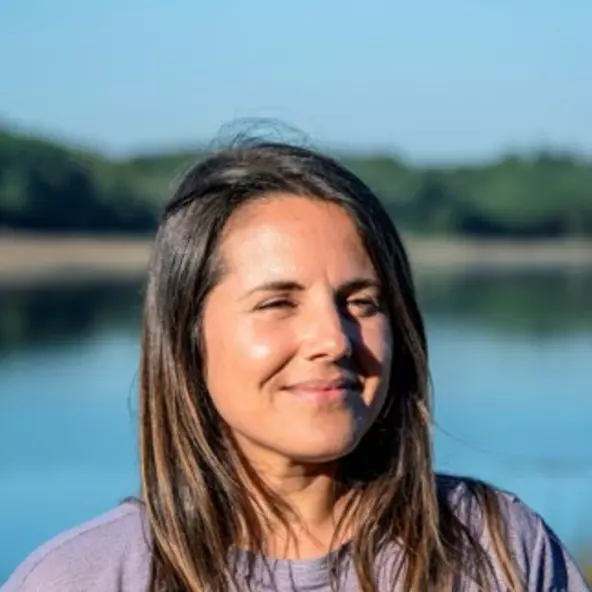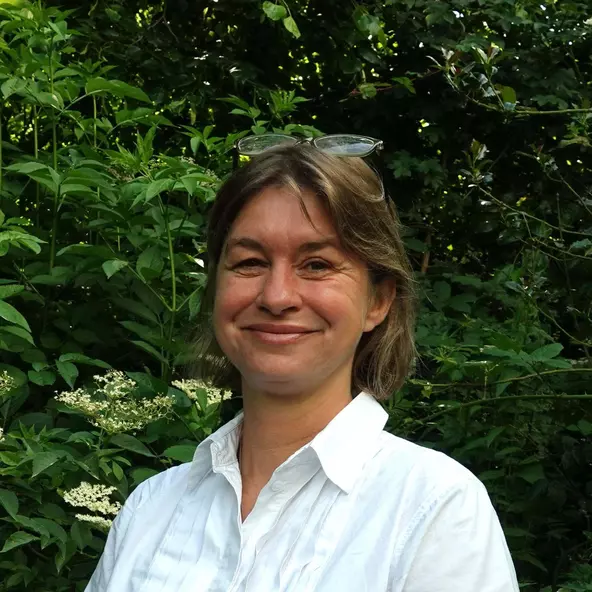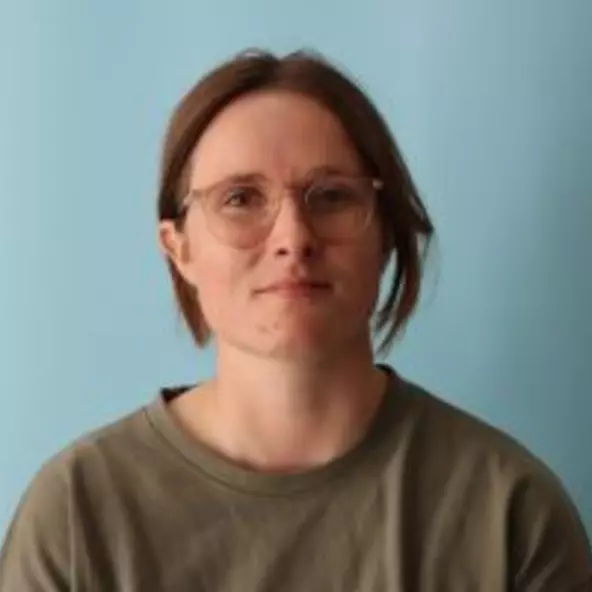


Dr Karina Acevedo-Whitehouse

Postdoctoral Research Fellow

Curriculum Vitae:

  • 2004–2010. Research Fellow, Institute of Zoology, ZSL.
  • 2001–2004. PhD. Department of Zoology. University of Cambridge, UK.
  • 1999–2001. MSc. Department of Marine Ecology. Centre for Science and Advanced Studies, CICESE, Mexico.
  • 1994 – 1999. BVMS (Hons.), School of Veterinary Medicine, UNAM, Mexico.
    .

Research Interests:

My research aims to understand the contribution of genetic architecture and gene expression of wildlife on resisting environmental pressures, specifically pathogen and UV related. I currently run three main research programmes related to wildlife immunogenetics, DNA damage and health, and disease ecology.

Wildlife immunogenetics

Infectious diseases are strong biotic forces that threaten biodiversity by causing population declines and accelerating extinctions. Thus, characterizing genetic components of immunity and investigating functional variations in resistance to disease is important to understand wildlife diseases within an evolutionary context. During the past years I have investigated heterozygosity-fitness correlations for pathogen resistance in wildlife. My studies have identified potential candidate genetic regions of evolutionary importance (Acevedo-Whitehouse et al 2005, 2006). Currently, my lab is characterising different genes and gene families related to innate immunity in non-traditional vertebrate species.

External collaborators: Brian Aldridge, Royal Veterinary College, UK; John A. Hammond, University of Stanford, USA. Bill Amos, University of Cambridge, UK. Christian Gortazar and Jose de la Fuente , IREC, Spain.

DNA damage and health of marine mammals.

Bioaccumulation of xenobiotics and increased ultraviolet radiation can induce DNA damage, mutations and immunosupression, causing a synergistic detrimental effect on natural populations. My aim is to determine the impact of particular contaminants and UV radiation on marine mammal health by assessing DNA and cellular damage and gene repair expression (research partly funded by The Royal Society). This work is carried out with a variety of collaborators including, at the Institute, Paul Jepson, Alex Rogers and Laura Martinez (NERC funded PhD student).

External collaborators: Diane Gendron , CICIMAR, Mexico; Rob Knell, Queen Mary University, UK; Volker Arlt, Institute of Cancer Research, UK.

Disease ecology

Most host species are spatially distributed in patches that will influence disease spread and pathogen persistence. I am currently investigating such spatial patterns of disease/immunity in marine mammals. In species such as the California sea lion, whose diseases and causes of mortality are well documented, it is possible to investigate the importance of host colony for the spread and maintenance of disease (Project funded by The British Ecological Society and Morris Animal Foundation; External collaborators: Frances Gulland and Denise Greig , The Marine Mammal Center, USA). However, when not much is known about disease, it is necessary to first establish the pathogen load or immune parameters that can indirectly allow predicting disease occurrence and estimating risks to the population. Together with Diane Gendron , I am characterizing the respiratory pathogen load of large whales in the Gulf of California, Mexico. For this, we are using a non-invasive method to collect whale blow, which has proved successful and is promising to be a good tool for population surveillance. I am now starting similar studies in collaboration with Renaud de Stephanis in Gibraltar, and Tracey Rogers in the Antarctic. I am also investigating aspects of innate immunity in Galapagos sea lions, in collaboration with Ailsa Hall (Sea Mammal Research Unit, St. Andrews), Simon Goodman (University of Leeds), Jochen B.W. Wolf (Uppsala University) and Marylin Cruz (Galapagos National Park). This project is the main component of Paddy Brock’s PhD thesis (NERC funded student).
.

Publications:

Acevedo-Whitehouse, K., Cole, K. J., Phillips, D. H., Jepson, P. D., Deaville, R., Arlt, V. M. Hepatic DNA damage in harbour porpoises (Phocoena phocoena) stranded along the English and Welsh coastlines. (Submitted)

Acevedo-Whitehouse, K. and Duffus, A.L.J. Effects of environmental change on wildlife health. Philosophical Transactions of the Royal Society B: Biological Sciences. In Press.

Acevedo-Whitehouse, K., Rocha-Gosselin, A., Gendron, D. A novel non-invasive tool for disease surveillance of free ranging whales and its relevance to conservation programmes. Animal Conservation. DOI 10.1111/j.1469-1795.2009.00326.x

Acevedo-Whitehouse, K., Petetti, L., Duignan, P., Castinel, A. (2009) Hookworm infection, anaemia and genetic variability of the New Zealand sea lion. Proc Roy Soc B. Download PDF

Estrada-Pena, A., Naranjo, V., Acevedo-Whitehouse, K., Mangold, A., Kocan, K. and de la Fuente, J. (2009) Phylogeographic analysis reveals association of tick-borne pathogen, Anaplasma marginale, MSP1a sequences with ecological traits affecting tick vector performance. BMC Biology 7:57. View Abstract/PDF

Smith, K.F., Acevedo-Whitehouse, K., Pederson, A. (2009) The role of infectious diseases in biological conservation. Animal Conservation 12: 1-12.

Amos, W., Acevedo-Whitehouse, K. (2009) A new test for genotype – fitness associations reveals a single microsatellite allele that strongly predicts the nature of tuberculosis infections in wild boar. Molecular Ecology Resources.

Naranjo, V., Acevedo-Whitehouse, K., Vicente, J., Gortazar, C., De la Fuente, J. (2008) Influence of methylmalonyl-CoA mutase alleles on resistance to bovine tuberculosis in the European wild boar (Sus scrofa). Animal Genetics 39: 316-320.

Acevedo-Whitehouse, K., Cunningham, A. (2006) Is MHC enough for understanding wildlife immunogenetics? Trends in Ecology and Evolution 21: 433-8.

Acevedo-Whitehouse, K., Spraker, T. R., Lyons, E., Melin, S. R., Gulland, F., DeLong, R. L., Amos, W. (2006) Contrasting Effects of Heterozygosity and Survival and Hookworm Resistance in California Sea Lion Pups. Molecular Ecology 15:1973-82.

Acevedo-Whitehouse, K., Vicente, J., Höfle, U., Fernández de Mera, I. G., Amos, W. Gortazar, C. (2005) Genetic resistance to bovine tuberculosis in wild boars. Molecular Ecology 14:3209-17.

Acevedo-Whitehouse, K., Gulland, F., Greig, D., Amos, W. (2003) Inbreeding: Disease susceptibility in California sea lions. Nature 422:35.

Acevedo-Whitehouse, K., de la Cueva, H., Gulland, F. M., Aurioles-Gamboa, D., Arellano-Carbajal, F., Suárez-Güemes, F. (2003) Evidence of Leptospira interrogans infection in California sea lion pups from the Gulf of California. Journal of Wildlife Diseases 39:145-51. Download PDF (168 KB)

Acevedo-Whitehouse, K., Constantino-Casas, F., Aurioles-Gamboa, D., Rodríguez-Martínez, H. A., Godínez-Reyes, C. R. (1999) Hepatic carcinoma with spleen metastasis in a California sea lion from the Gulf of California. Journal of Wildlife Diseases 35: 565-68. Download PDF (134 KB)

Mena R, J. A. Montaño, K. Acevedo-Whitehouse, D. Aurioles, E. Alfonseca. Serological evidence of Brucella spp. Exposure in California sea lion pups from the Gulf of California. (In preparation).

Acevedo-Whitehouse K, H. de la Cueva, D. Brousset, D. Aurioles-Gamboa. Physical and chemical urine parameters of free-ranging California sea lion pups. (In preparation)
.

Laboratory of Molecular Epidemiology:

  • Current members: Paddy Brock (PhD student), Laura Martinez (PhD student), Cristina Jimenez-Pinedo (MSc student), Jonathan Spencer (volunteer).
  • Past members: Ashley Barratclough, Chloe Booth, Milagros González-Hernandez, Alex Gray, Claire Louise Jeffries, Laura Petteti, Emilio Rendón-Franco, Agnes Rocha-Gosselin, Janie Steele, Emily Thomas, Veerle van den Bossche, Mike Williamson.

Group and fieldwork photos (383 KB)

Printable version

Karina Acevedo WhitehouseResearch Theme:
Wildlife Epidemiology

Contact Details:

T: 020 7449 6437/6486
F: 020 7483 2237
E: karina.acevedo-whitehouse@ioz.ac.uk

Institute of Zoology
Zoological Society of London
Regent's Park,
London, United Kingdom
NW1 4RY