







Alison Debney
Conservation Lead, Wetland Ecosystem Restoration
Dr Catherine Head
Research Fellow
Since it was declared biologically dead in 1957 in parts, the tidal stretch of the River Thames has made an astounding recovery.
We puiblished the second complete health check of the River Thames on 19 January 2026, revealing positive news for wildlife, and ecosystem recovery, while warning of climate change threats and pollution from a variety of sources. This latest edition of the State of the Thames Report, which builds upon the first State of the Thames Report in 2021, led by our experts, uses 21 different indicators to assess the health of the Thames’ natural environment. The report saw experts from 21 organisations demonstrate how decades of dedicated action has turned the health of the Thames around since it was declared ‘biologically dead’ in 1957.
The methods we use
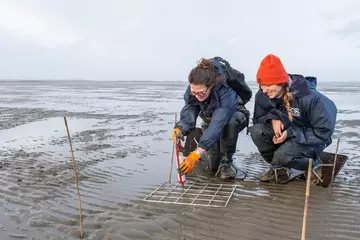
Collaborating with experts from over 21 organisations, we identified 21 indicators to measure against, spanning water quality, ecology, and human benefits. For as many of these indicators as possible, the best available data was found and analysed to determine long and short-term trends. Where time series data were unavailable, important baselines were set for future comparison.
Summary of findings
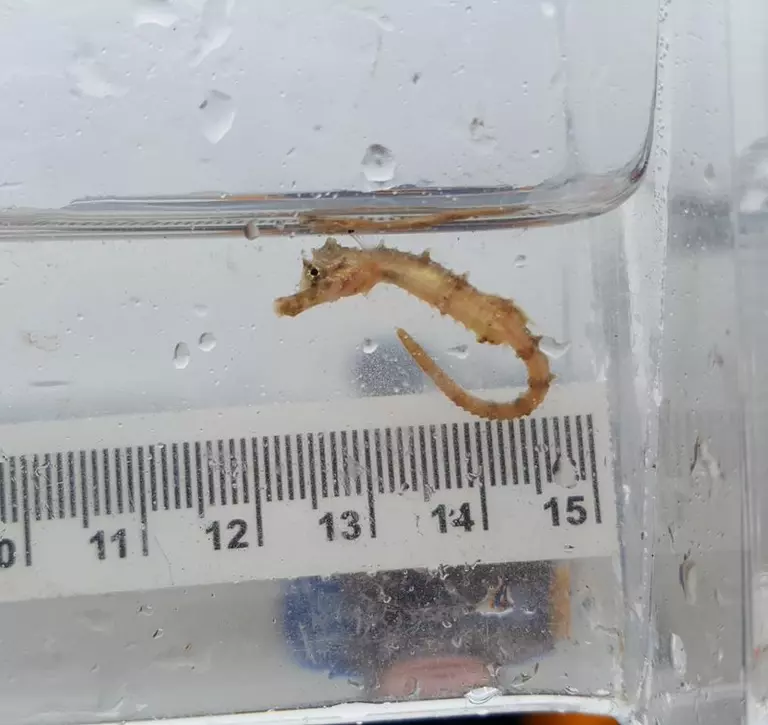
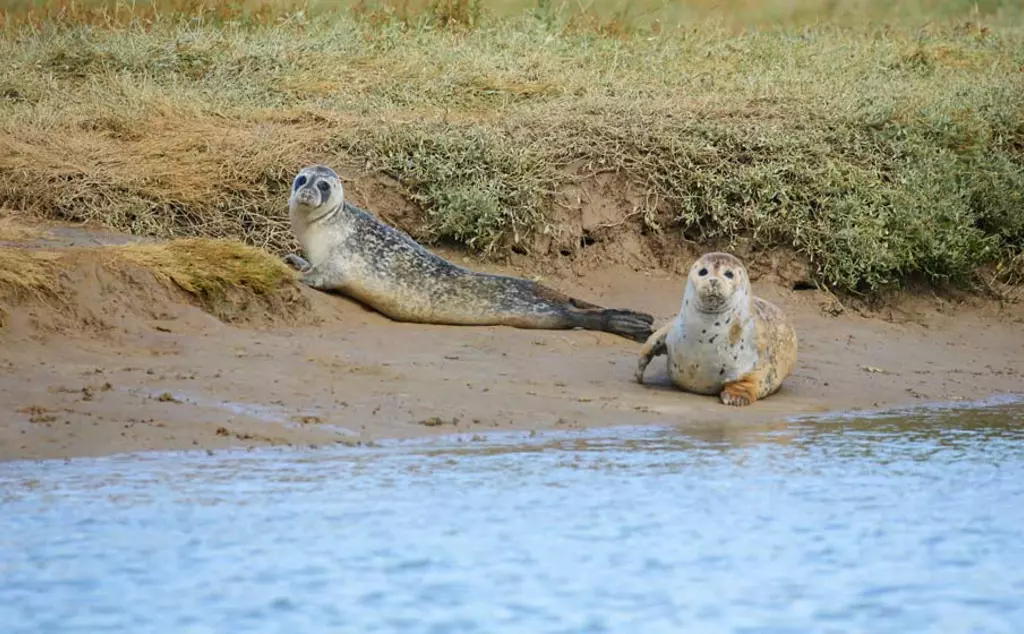
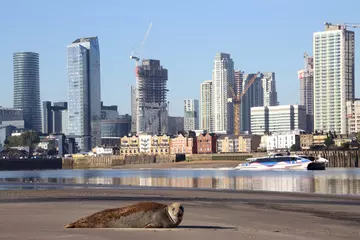
Highlighting the impact of dedicated conservation efforts, the overall picture was bright for nature, with evidence of an increase in a range of wading bird species, marine mammals and restoration of natural habitats such as intertidal habitat, an important nursery habitat for many fish species. Surprising species living in the Thames include seahorses, eels, seals and even sharks, including tope, starry smoothhound and spurdog. Since the early 1990’s, the number of fish species found in the Tidal areas of the river have showed a slight decline, with conservation scientists saying that further research is needed to determine the cause.
Climate change has increased the summer temperature of London's waterway by 0.13⁰C per year on average since 2007, which combined with associated sea-level rises, paints a worrying picture.
Water levels have been increasing since monitoring began in 1911 in the Tidal Thames. Sea levels in the heart of the city around Tower Bridge and the Tower of London have been rising by 5mm per year on average since 1993. Water temperature in the upper tidal Thames also showed a significant increase during summer and winter in both the long-term (2007–2024) and short-term (2020–2024) data sets. As water temperature and sea levels continue to rise above historic baselines, the estuary’s wildlife will be particularly impacted, through changes to species’ lifecycles and ranges.
Also, the findings show significant long-term improvements in water quality thanks to five updated London sewage treatment works and investment in the Lee Tunnel, seen particularly in improvements to dissolved oxygen availability, and declines in phosphorus concentrations and zinc and copper concentrations. However, sewage effluent continues to cause gradually increasing nitrate concentrations which can be dangerous to aquatic life. The sewage treatment upgrades were followed by a £4.6 billion investment in a new Thames Tideway Tunnel 'super sewer', which was fully connected to the Thames Water network in 2025, and is expected to drive further improvements in water quality.
Habitat Restoration
The report describes how creation of new saltmarsh habitat and ‘estuary edges’, all indicate a shift towards habitat restoration in the estuary. Grey seals have seen short-term increases in population numbers and wading birds have seen long-term increases. However short-term decreases in populations numbers are seen for both wading and wildfowl birds. Whilst the number of fish species found in the Tidal Thames also showed a slight decline in recent years, further research is needed to determine the cause. Further habitat creation is planned as part of our newly funded Transforming the Thames project, an ambitious partnership uniting conservationists, communities, government bodies and landowners to scale up recovery across the Greater Thames Estuary.
What is the water quality of the River Thames like?
Short-term trends reveal that water quality has improved, with dissolved oxygen (DO) concentrations showing a positive, long-term increase from 2007 to 2024. Understanding DO concentrations is important as low concentrations (less than 45% DO) can kill fish and impact relationships between key species that live in the river.
Overall, phosphorus concentrations have decreased since the 1990s. The average concentrations taken from the yearly data from 1990 to 2024 indicated that in many cases, improvements at sewage treatment works have been successful in reducing phosphorus loadings entering the river.
However, there has been a long-term increase in nitrate concentrations, which can negatively affect water quality and be damaging to wildlife. The Environment Agency has identified industry and sewage as the main source of nitrate in London waterways. In addition, there are many chemicals of emerging concern, also termed 'forever chemicals', that are not being regularly monitored, with potentially harmful impacts on the wildlife of the Thames.

The Environment Agency's commitment
The Environment Agency are also planning for climate-induced changes, with their Thames Estuary 2100 Plan which sets out a long-term approach for adapting to rising sea levels. We are calling for nature-based solutions to be at the heart of this.
Charlie Wood, London Area Director at the Environment Agency said:
“This ZSL report is a brilliant spotlight on the health of the River Thames and we are delighted to have contributed. It is through such monitoring and evidence that we can understand the progress made to bring the river back to a thriving state but also identify emerging threats from factors such as climate change.
“Strong regulation and steering investment in infrastructure has played a major role in the improvements we see, but the future of the Thames also relies on working in partnership across the public, private and voluntary sectors and we look forward to continuing our role in that.”
As well as providing vital evidence about the ways that the 153-mile river is used, and the importance of the Thames for local people and the millions of visitors that come to London each year, the report also features an indicator for plastic pollution in the Thames; plastic cotton bud sticks, once one of the most commonly found litter items in the Thames, have all but disappeared from its shores following the UK’s sale-ban in 2022. Our conservationists hope the same will be achieved for plastic wet wipes, another disastrous form of pollution found along the Thames, which are due to be banned in the UK later this year.
The Tidal Thames supports over 115 species of fish, 92 species of bird and has almost 600 hectares of saltmarsh which is a crucial habitat for a range of wildlife. For the nine million people living alongside it, it also provides drinking water, food, livelihoods, and protection from coastal flooding.
The importance of natural solutions
Alongside technological solutions, it is well recognised that Nature-based Solutions such as habitat restoration, can also provide benefits for both biodiversity and protecting against the impacts of climate change. Tidal Thames habitats, such as mudflats, wetlands, tidal marshes, reedbeds and saltmarsh for example, are not only important places for species of birds, fish, and seals, but also critical ‘blue carbon’ stores. Their role in offsetting the damaging impacts of human-induced carbon emissions means that protecting them is even more essential.
Alison Debney, ZSL Lead for UK Nature Recovery said: “The River Thames isn’t just a famous landmark flowing through the heart of the UK’s capital – it’s a lifeline for all who live along it. Every fragment of the Thames put under strain reduces the river’s resilience and threatens the vital services it provides British wildlife and the millions of people living alongside it – whether that’s providing nursery grounds for fish, securing clean drinking water, or providing an outdoor space to enjoy weekends with friends and family.
“As we enter a new year, the Thames reminds us that transformation is possible. The Thames may have been declared ‘biologically dead’ in the 1950s, but the estuary we see today demonstrates just how quickly things can change when decisive action is taken. We’re celebrating those wins today – but we must act now to secure the wins of tomorrow.”
Importantly, the report highlights the ways people use the Tidal Thames for its physical and mental health benefits through recreational use of both the riverside paths and the waters of the Tidal Thames. Finally, the report features some of the many organisations, opportunities and activities that allow people to learn about nature and history, and in doing so to access the cognitive benefits of the Tidal Thames.
This report demonstrates that climate change is clearly impacting the Tidal Thames. We are calling on world leaders to unify solutions to tackle biodiversity loss and climate change, and put nature at the heart of all decision making. You can support our world-leading conservation work by donating to us online.
The hope is for this data to be revisited over the coming years, to once again observe how indicators have changed.
If you have a time series dataset for the Tidal Thames that has not been included in this 2026 report, please email marineandfreshwater@zsl.org.
Header image credit: For all of Our Existence, Brendan Conway | Thames Lens 2020 Shortlist | Courtesy of Thames Festival Trust