






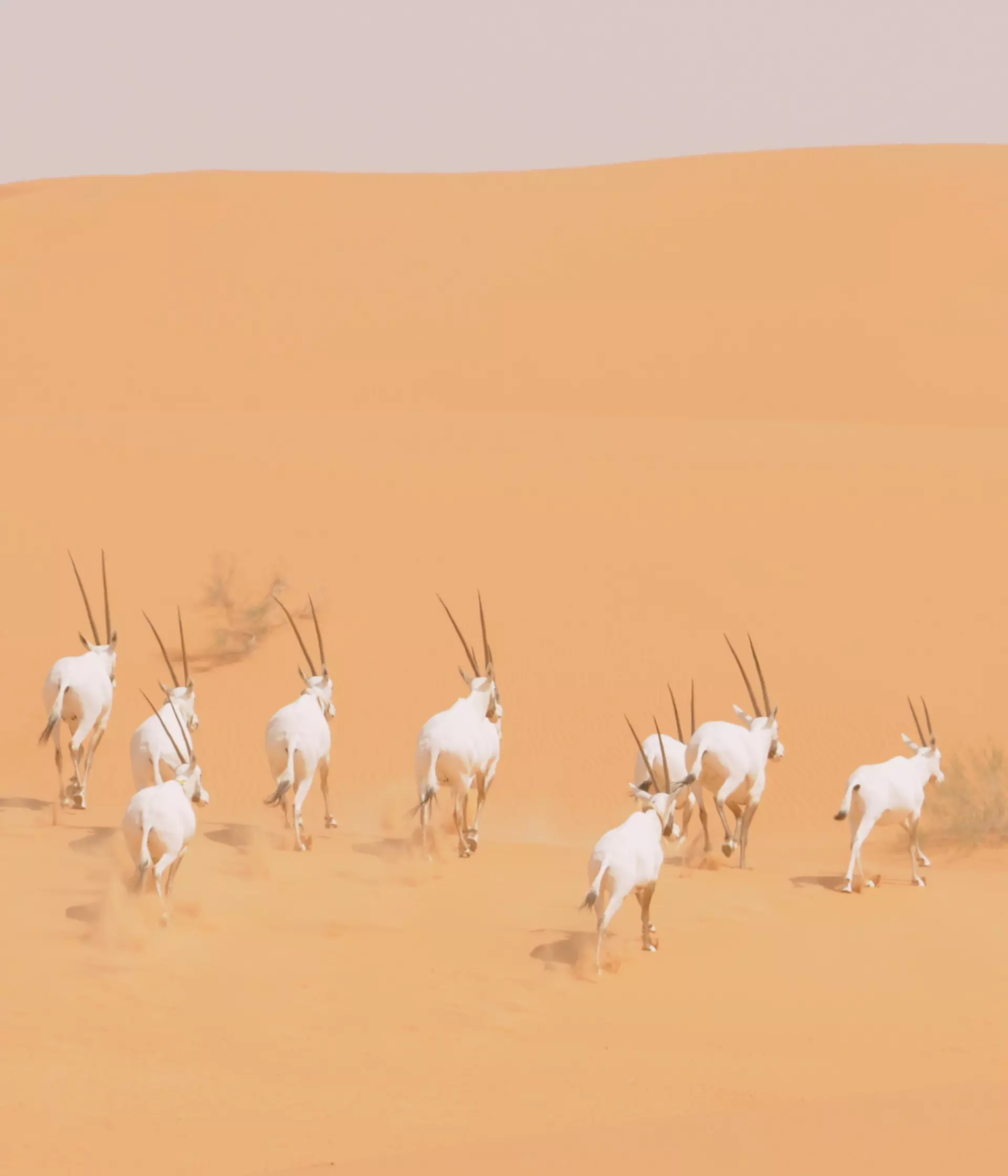
King Khalid Wildlife Research Centre (KKWRC) is one of the largest gazelle breeding centres in the world. We managed KKWRC for the Saudi Wildlife Authority from 1987 until 2016, making it our oldest field-based conservation project. We worked directly with The Saudi Wildlife Authority and have enjoyed 28 years of support and success within the Kingdom.
The Living Collection (our breeding population of gazelles) acted as a genetic reservoir for a number of highly threatened species, and as a source to supplement wild populations. We ran a number of long-term monitoring programmes within Protected Areas, as well as active research into mammal biodiversity, using the latest remote camera technology.
The KKWRC laboratory carries out a range of screening and disease diagnosis, and houses one of the most important collections of biological samples in the Arabian Peninsula.
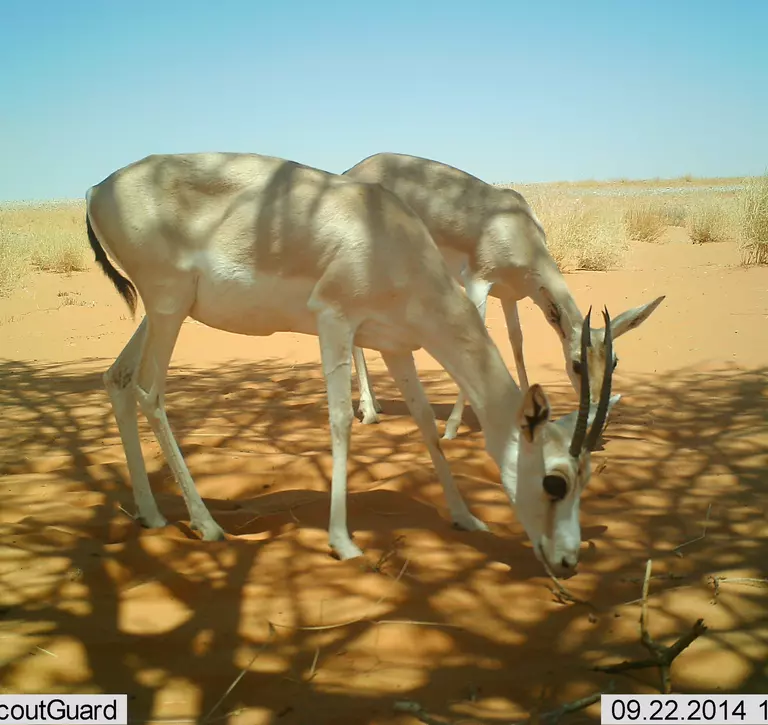
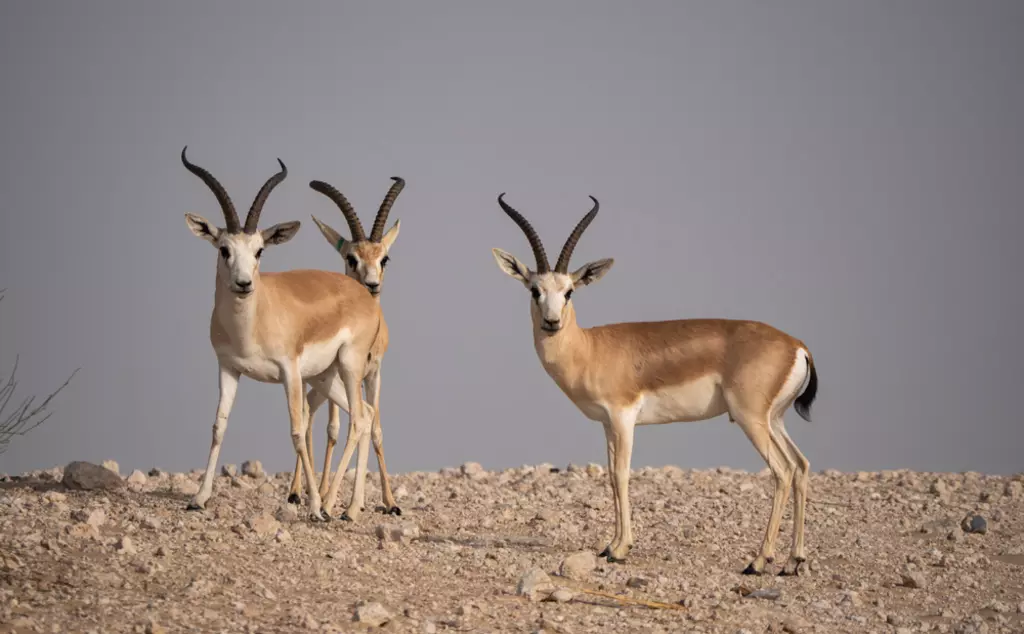
We provided the Saudi Wildlife Authority with expertise in the captive management of threatened species, and provided conservation support, training and assistance in monitoring the extensive Protected Area network within Saudi Arabia.
Early involvement focused on the conservation breeding, reintroduction and post-release monitoring of animals into a range of Protected Areas. Since the successful reintroductions, we focused on providing applied conservation support through training Protected Area Managers and field rangers in survey techniques, providing management advice and regular supplementary reintroductions.
Establishing wildlife conservation in Saudi Arabia
We have been involved in various projects over the years including:
- Long-term captive management and breeding of four key threatened species (Arabian and Sand Gazelles, Nubian Ibex and Arabian Oryx)
- Successful reintroduction and monitoring of Arabian and Sand Gazelles into the Empty Quarter, a vast area of desert in the southern Arabian Peninsula
- Successful reintroduction of Arabian Gazelles into the Ibex Reserve Protected Area
- Long term monitoring of Nubian Ibex and Arabian Gazelle populations in the Ibex Reserve Protected Area
- A camera trap survey within the Ibex Reserve Protected Area to assess the diversity of small and medium-sized mammals
- National genetic survey of the Arabian Wolf (Canis lupus arabs)
- Contributing to the understanding of the complex area of gazelle genetics
- Periodic censuses of gazelle populations in protected areas such as The Farasan Islands, The Ibex Reserve, Uruq Bani Ma’arid and Harrat al Harrah
- Collection and archiving of more than 75,000 biological samples from a range of Saudi Arabian wildlife.
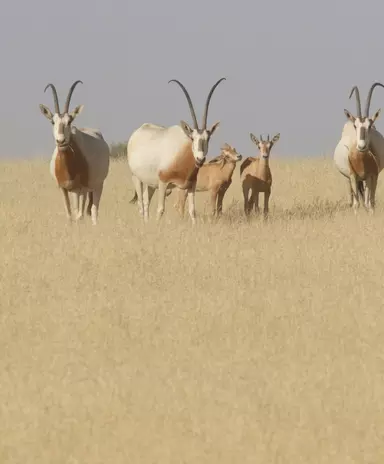
Led by the Environment Agency of Abu Dhabi (EAD) and the Sahara Conservation Fund, the iconic scimitar-horned oryx has been returned to its homelands on the edge of the Sahara desert. Since 2016, more than 300 captive-bred animals have been released in 14 successive groups to a remote region of Chad.
The species was classified as Extinct in the Wild by the IUCN in 2000, and this landmark reintroduction programme represents one of the most significant conservation successes for a large mammal species.
Celebrating conservation in Saudi Arabia
After 28 years, we have handed back the reins at the King Khalid Wildlife Research Centre (KKWRC) to the Saudi Wildlife Authority, which will oversee future management of the centre.
The Centre has delivered some tremendous results over the years, including reintroducing two species of gazelle to the Uruq Bani M'Arid protected area; a region from which they had disappeared. Over the years, we have been working on cutting edge research and conservation at the Centre and we have been responsible for the only successful reintroductions of wild antelopes anywhere in the world.
We work with people to find solutions
Our role in this partnership is to develop and lead a team of Chadian staff responsible for intensive post-release monitoring of the oryx in the wild. We look for answers through science - training our team to make maximum use of daily satellite collar data managed by colleagues at Smithsonian's Conservation Biology Institute, while we oversee the field data they collect.
Our team records vital information for the progress of the reintroduction, detecting new births among all known females and investigating mortalities. To date, over 500 wild births have been registered, with some females from the earliest releases producing eight to ten calves each since returning to the wild.
As the oryx population grows and spreads, the team may travel up to 200km from base camp to visit locations flagged by satellite collars, though they mostly operate within a 100km radius. Seasonally, they also conduct formal transect surveys using line distance sampling across multiple 20-40km transects. These surveys provide population estimates not only for scimitar-horned oryx, but also for dorcas gazelles, critically endangered dama gazelles, and other near-endemic species of neglected Sahelian habitats, such as Nubian and Arabian bustards.
We have built a firm foundation to restore and safeguard wildlife in the country for years to come.