







The Living Planet Index (LPI) is a measure of the state of global biological diversity based on population trends of vertebrate species from around the world.
It does this in much the same way that a stock market index tracks the value of a set of shares or a retail price index tracks the cost of a basket of consumer goods. It is not a census of all wildlife, but reports the cumulative average percentage change in the size of these populations monitored throughout the world.
The Living Planet Report
The results of the global LPI are published every two years in WWF's Living Planet Report (LPR), in collaboration with ZSL. The LPR is a leading science-based publication on the state of biodiversity, and associated challenges and solutions to address the crisis.
Key findings in the Living Planet Report 2026
The Living Planet Index (LPI) measures changes in the sizes of 35,803 populations of 5,790 vertebrate species (amphibians, birds, fishes, mammals and reptiles) that have been monitored over time.
Based on the largest dataset to date, the global LPI shows an average 73% decline in monitored wildlife populations between 1970 and 2022. This means that the size of these populations fell by, on average, 73% between 1970 and 2022.
The freshwater LPI, based on monitored populations of freshwater fish, birds, mammals, amphibians and reptiles, has declined by 85%.
Particularly stark declines are shown in the Latin America and the Caribbean region (95%) and Africa (80%). The main drivers of wildlife population decline around the world are habitat degradation and loss, exploitation, the introduction of invasive species, pollution, climate change and disease. Human action may be the driving force behind these concerning statistics, but the report also shows that through human action we can restore nature.
Conservation works, increasingly at large scales
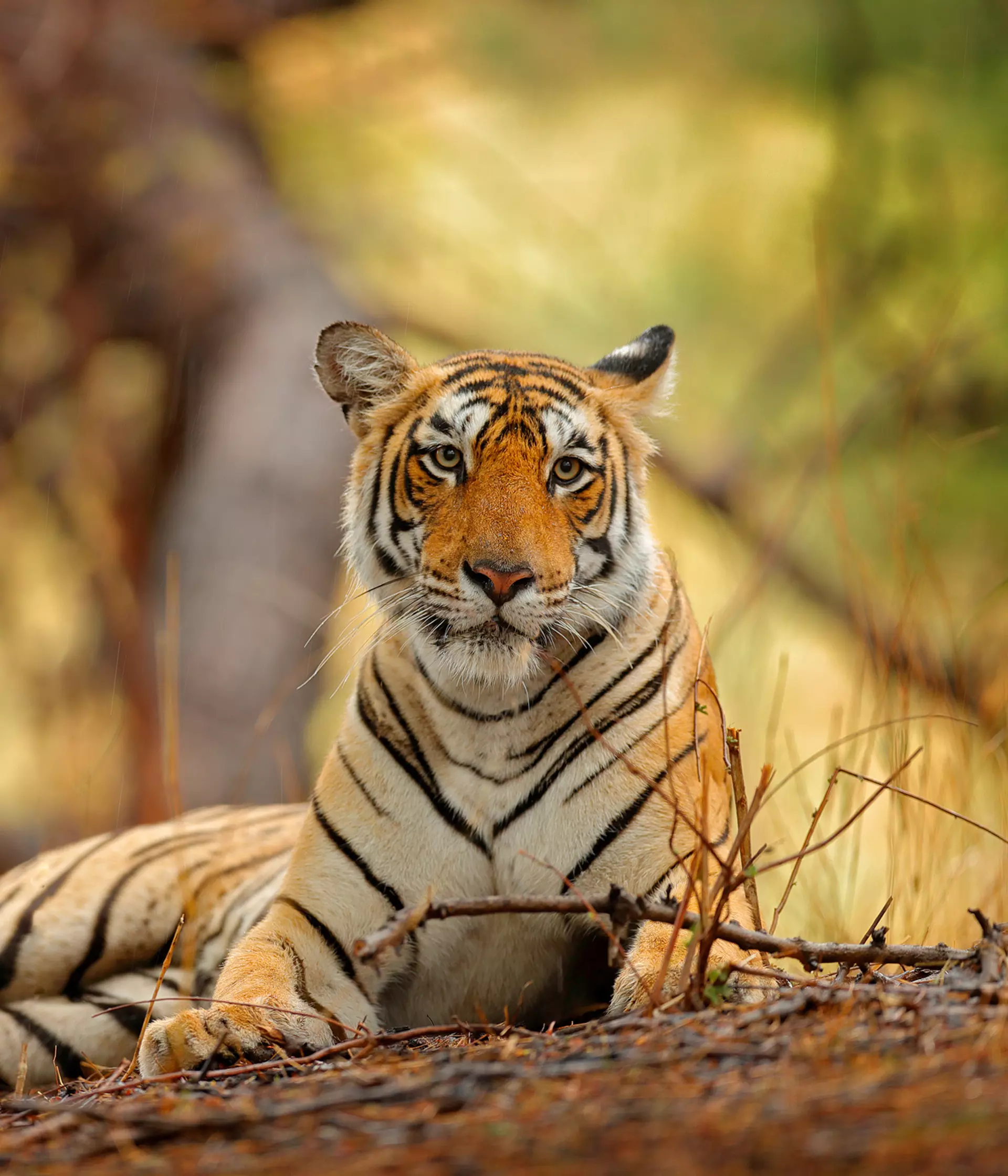
Tigers are one of the clearest examples. In 2010, only around 3,200 wild tigers remained, and the species seemed to be sliding toward extinction. By 2025, the population had grown to roughly 5,700, an increase of more than 70%.
Atlantic and Pacific bluefin tuna, which were collapsing after decades of overfishing, have recovered to the point where neither is now considered threatened. Southern African elephants are stable or growing in many of the places where local communities lead the management of the land they share with them.
In 2025, the green sea turtle became the first marine turtle ever to be downlisted from Endangered to Least Concern, after 50 years of work across more than 80 nesting countries.
VISIT THE LIVING PLANET INDEX WEBSITE
You can find more information on how the LPI is calculated and about the sensitivity tests performed ahead of each Living Planet Report in the report’s technical supplement.
73%
average decline in monitored species population numbers globally between 1970 and 2022
5,790
vertebrate species (amphibians, birds, fishes, mammals and reptiles) included in the LPI
85%
average decline in population abundance of monitored freshwater species
The Living Planet Database
The Living Planet Database (LPD) currently holds time-series data for more than 40,000 populations of nearly 6,000 mammal, bird, fish, reptile, amphibian and butterfly species from around the world, which are gathered from a variety of sources such as journals, online databases and government reports. Using a method developed by ZSL and WWF, these species population trends are aggregated to produce indices of the state of biodiversity to inform policy and communicate trends to a wider audience.
The global dataset, which is continuously expanded, can be disaggregated to measure trends in different thematic areas, including changes in different taxonomic groups, looking at species trends at a national or regional level, identifying how different threats affect populations and providing an insight into how conservation intervention can promote species recoveries.
The index can also be used to show how populations may respond in future to different conservation, management or policy interventions to see what action is needed to bend the curve of biodiversity loss.
To learn more about the different applications of the LPD, you can explore the research and publications on the LPI website.
Please support our work
Help us protect global biodiversity by supporting our Back from the Brink appeal.