







5 December 2025
One of the leading news magazines in the US, an appearance on the cover of TIME magazine has long been recognised as an indicator of notoriety.
To mark the announcement of TIME’s Top 100 Photographs of 2025, a rather unusual star joined the list of world leaders, change makers and celebrities that have graced the cover over the decades – a turtle, appearing to swim through the ocean in the inky depths of night, surrounded by a sea of glowing green algae.
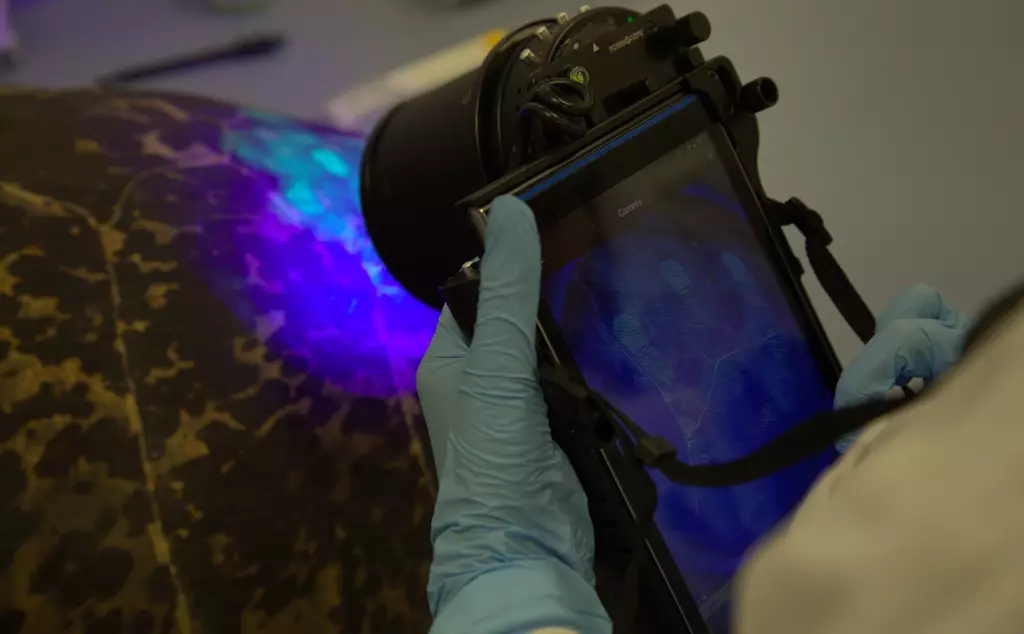
Only that’s not quite what’s happening. The mysterious green glow that surrounds the turtle isn’t a bioluminescent algae, but a finely milled powder. The same powder reveals a bright green handprint on the turtle’s back. The turtle isn’t swimming either – in fact, it hasn’t swum in quite some time.
This stuffed green sea turtle (Chelonia mydas) is part of a groundbreaking archive held at our Institute of Zoology, which allows our scientists and others to carry out vital research to drive forward conservation. The ZSL Biobank is a huge collection of frozen, wet and dry biological samples - many of which, including this stuffed green turtle, were donated over the decades by the UK Border Force and wildlife crime investigations.
One of TIME’s Top 100 Photos of the Year, the photo taken by wildlife photojournalist Britta Jackinski, illustrates one such project, which has been investigating how fingerprinting techniques traditionally used for human crime scenes can be used to tackle the illegal wildlife trade – one of the largest threats to wildlife worldwide.
Learn more about the work from Louise Gibson, Biobank Manager at our Institute of Zoology:


Q: Firstly, how does it feel to see your work featured on the cover of TIME magazine?
It feels surreal to see our research to protect species appear on such a large platform, and amazing to have this opportunity to increase awareness for the threat that the illegal wildlife trade poses to nature worldwide. People usually think of the impact of the illegal wildlife trade on tigers and elephants before they think of turtles, so it gives us a chance to raise awareness for how wide reaching this threat is to species across the globe.
Watching Britta work to translate our science into a series of compelling images that each tell a unique story was an eye-opening experience, and the time flew by so quickly.


Q: Tell us more about your work.
I use science to drive innovation around how we protect some of the world’s most threatened species. This ranges from investigating if new versions of fingerprint powders will improve detection of human culprits of wildlife crimes, to researching how new AI technology can be used to quickly identify snake species by the patterns on their scale – whether that’s in the in the wild or on bags and shoes thought to be illegally made from the scales of protected species.
Q: What does the picture show?
The picture demonstrates our research into the use of newly advanced fingerprinting powders for identify prints on animals and items seized by law enforcement. Fingerprints provide a vital clue to help identify and take down criminal gangs, but without the right techniques to collect this evidence, opportunities to protect wildlife risk being lost forever. Working with Alex Thomas, who was studying at the Institute at the time, we began trialling the use of different types of fingerprint lifting in 2018.
The Biobank collection is an essential resource for this work – allowing us to work with collaborators to test hypothesis and refine techniques, all with the goal of giving conservationists and law enforcement the tools they need to protect threated species across the animal kingdom.

Q: How does fingerprinting work?
The finely milled, fluorescent powder adheres to the mixture of secretions deposited by the ridges of our fingertips when we touch a surface – and multispectral imaging system under UV light can then be used to pick up the details of the fingerprints.
Turtle shells, snake skins and ivory fragments all present unique challenges to finger-lifting techniques, so it takes a lot of trial and error to understand how best to apply these techniques to each specific trafficked item.

Q: Why is the illegal wildlife trade a problem, and how does your research help address it?
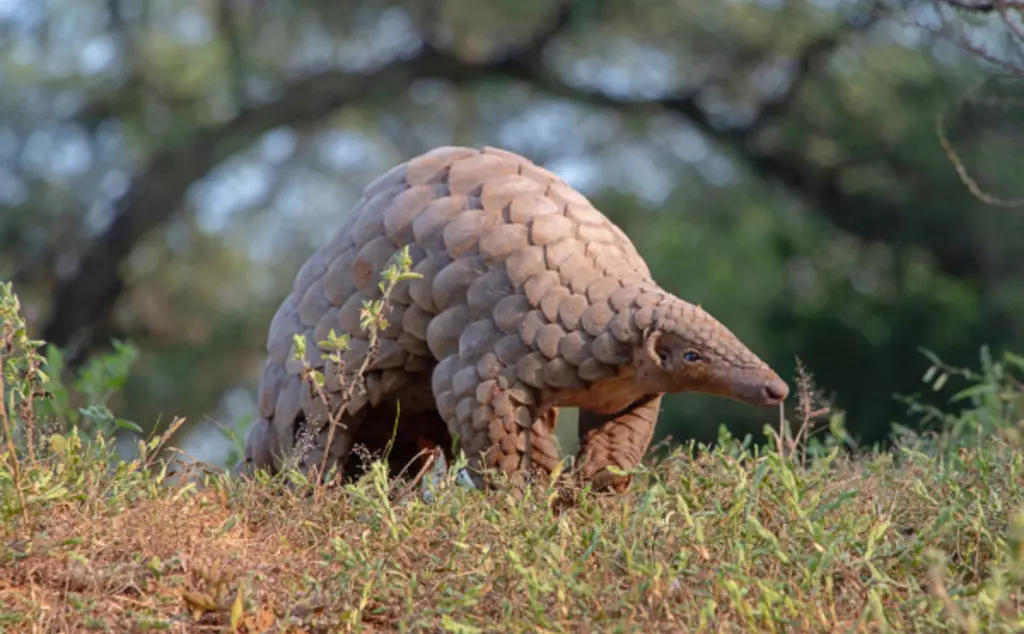
Many species globally are threatened by the illegal wildlife trade – whether that’s through the exotic pet trade or due to demand for their parts (e.g. such as bones, skulls and skins) as decorative items or for traditional medicines.
These crimes are often carried out by organised gangs, who not only cause harm to the wildlife they take or kill, but also destroying habitats in the process - yet a lack of evidence in court poses a huge challenge to tackling this threat to wildlife. Forensics tools can be used to detect evidence left by human culprits, helping deter future crime and enable law enforcement and park rangers to collect the evidence needed to build a picture of trade routes and break down the underground networks responsible for driving unsustainable, illegal wildlife trade.
This is just one part of the work happening across ZSL to tackle the illegal wildlife trade – from providing a home to live animals smuggled into the UK, to writing action plans to protect at risk species.
Nature can recover
ZSL believes nature can recover, and that conservation is most effective when driven by science. We call for science to guide all global decisions on environment and biodiversity and build a healthier future for wildlife, people and the planet.