


9 November 2026
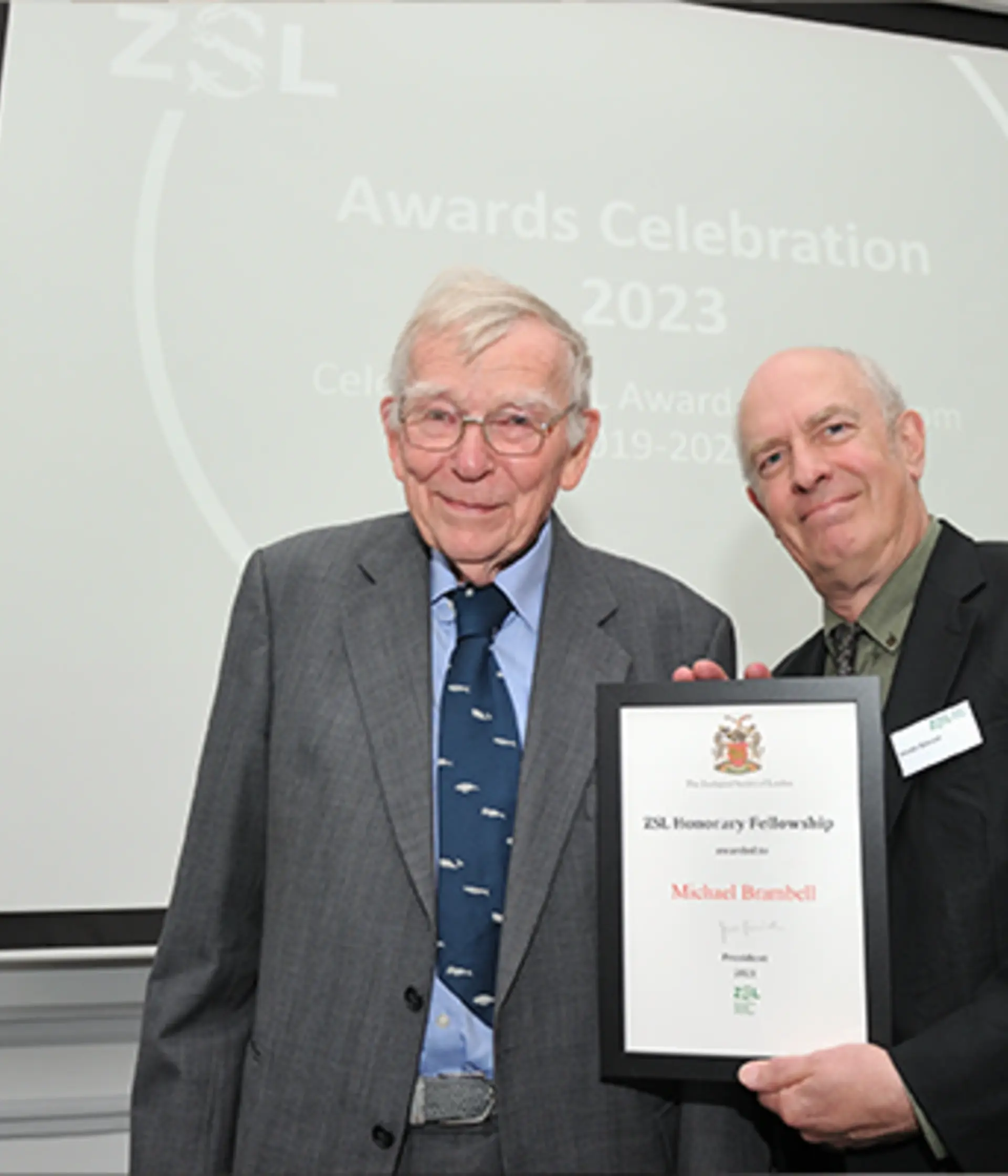
Today we said goodbye to zoologist Michael Brambell, whose work at London Zoo helped shape a new era in the role of zoos in wildlife conservation.
Michael was part of a generation of zoologists who helped transform thinking about what zoos could achieve. Moving beyond their historic role as places where people could encounter and learn about animals, he championed their contribution to scientific research and the conservation of threatened species.
During his time at London Zoo, where his responsibilities included caring for the Zoo’s giant pandas and other mammals, Michael played an important role in the development of international conservation breeding. He was a strong advocate for zoos working together across borders, exchanging animals to build healthy, sustainable populations of species at risk of extinction.
His influence extended well beyond London Zoo. Michael helped organise the second world conference on breeding endangered species in human care and contributed to the development of the World Zoo Conservation Strategy. He was also instrumental in establishing formal standards for zoo inspection in the UK, helping to advance expectations for the care and management of animals in zoos.
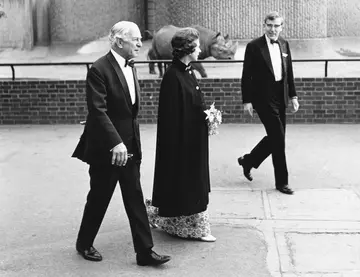
Michael Brambell (right), then Curator of Mammals, with Queen Elizabeth II and ZSL Secretary Lord Zuckerman at London Zoo in 1976, when Her Majesty opened the new Lion Terraces.
His commitment to wildlife conservation continued long after his retirement. Writing at the age of 80, Michael acknowledged the enormous pressures facing threatened wildlife, but remained convinced of both the importance of conservation breeding and the need for optimism:
“When that happens, as we must all hope, it will be the time to repopulate the wild with those species which, without captive breeding, would otherwise have become extinct.”
The Michael Brambell Travel Grant, launched at ZSL in 2001 in his honour, has given many ZSL colleagues opportunities to travel for research and training, helping them develop their expertise and bring new knowledge and experience back to the organisation. Over more than two decades, it has supported the development of a new generation of conservationists, zoologists and zookeepers, a fitting continuation of Michael’s own belief in learning, collaboration and the role zoos can play in securing a future for wildlife.
That belief, that zoos have a responsibility not simply to care for wildlife but to contribute actively to its future, remains deeply relevant to ZSL today. Conservation breeding is one part of our wider work to protect species, restore habitats, advance conservation science and help create a world where wildlife thrives.
Michael Brambell, zoologist, was born on 2 August 1932 and died on 18 October 2026, aged 94.