






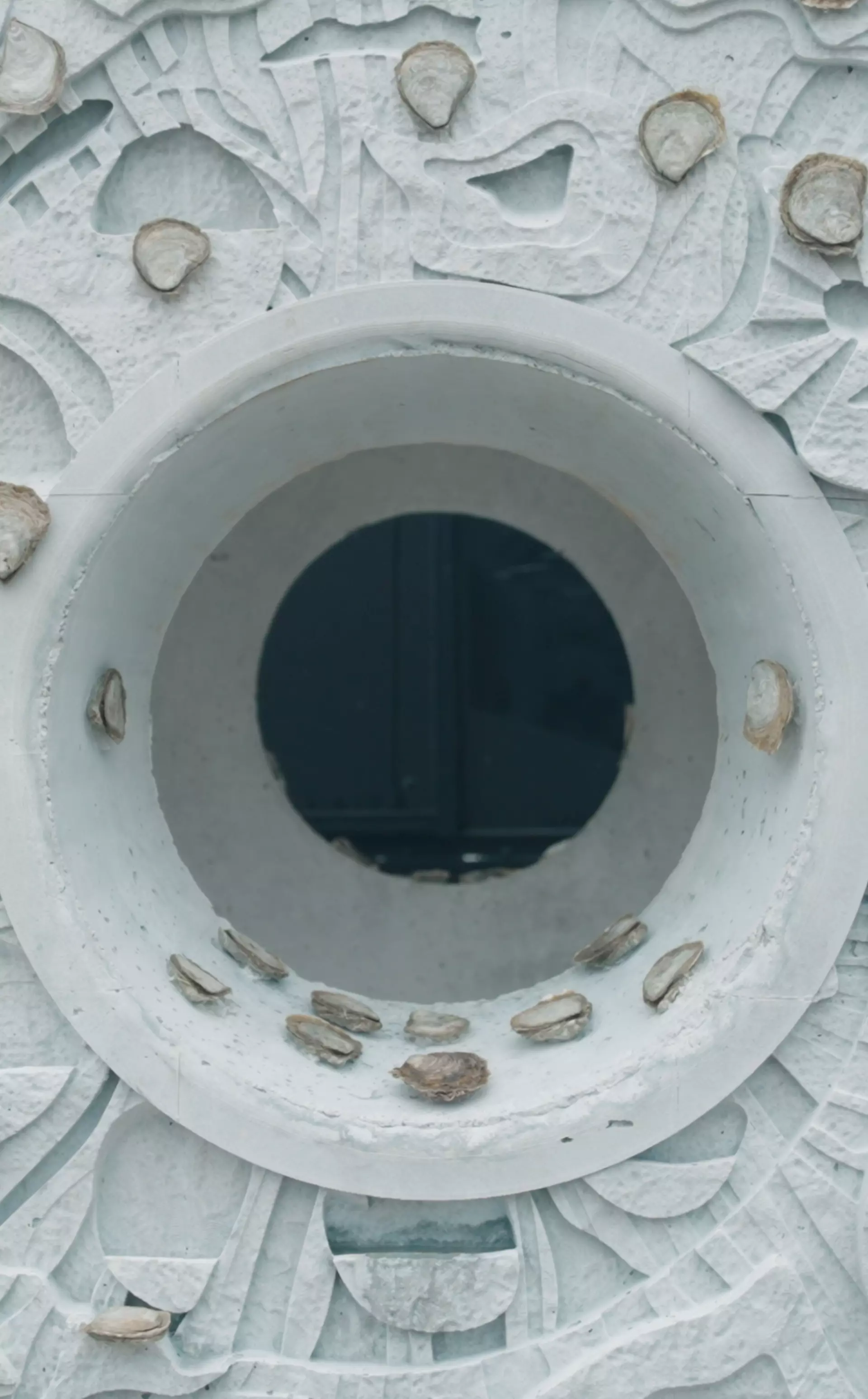
Oyster "cubes" have been deployed off the North East coast of England, in a bid to restore the near-extinct native species to UK waters.
In a UK-first, marine conservationists from ZSL & Groundwork North East and Cumbria have deployed 20 specialised oyster reef cubes – textured concrete-like blocks which are home to 4,000 European native oysters - in the North East coast, as part of an innovative project to restore marine life in the UK.
The specially designed oyster reef cubes aim to help restore the oysters and revive their reefs in the North Sea. In doing so, the project aims to bolster the health and resilience of the region through improving water quality, boosting biodiversity and supporting fish nursery habitats.
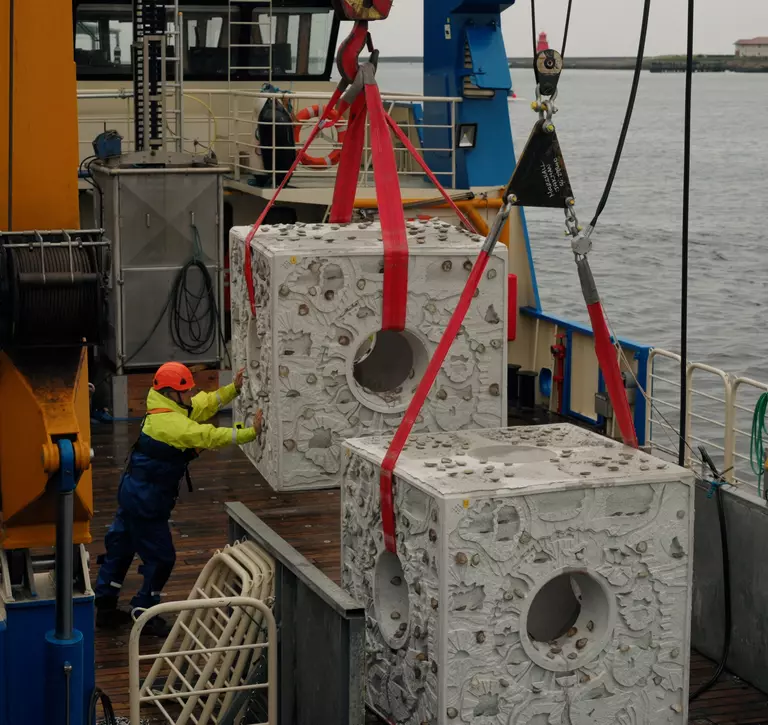
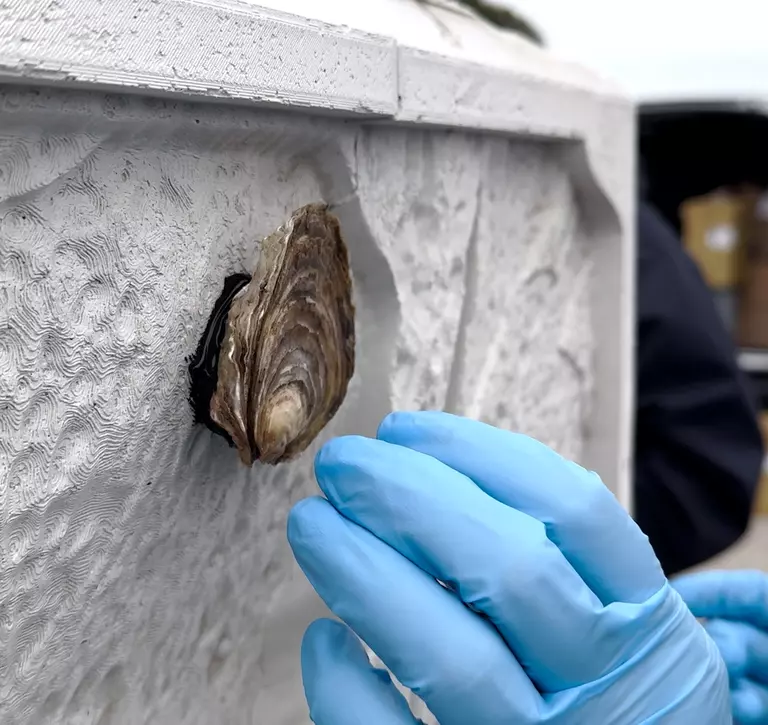
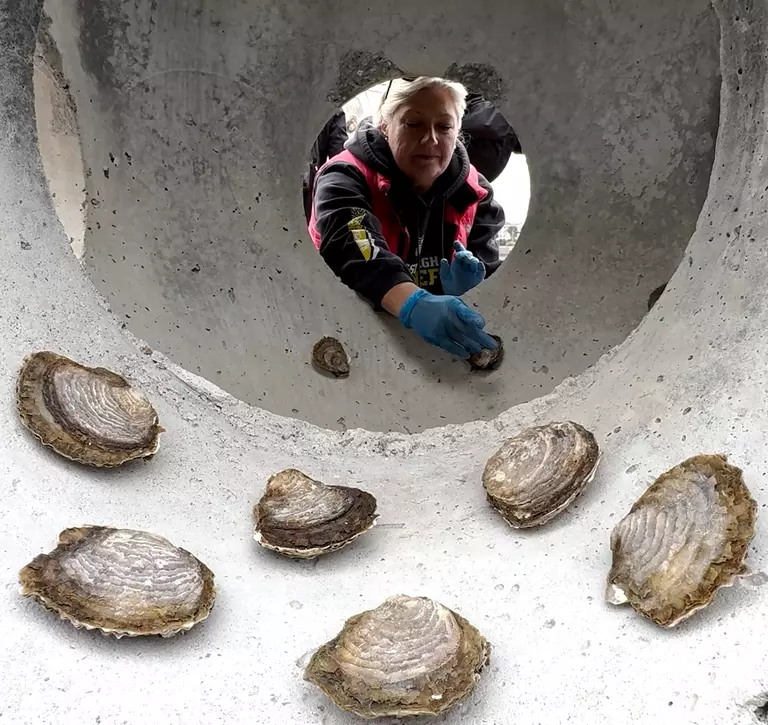
The team are trialling the use of cubes as ballasts to secure the native oysters to the seabed and help shield them from storms and tidal surges – making it the first time that the approach has been deployed at this scale in the UK. Each oyster reef cube is made from 6-tonnes of a robust, seawater-resistant and carbon-neutral alternative to concrete, known as Marine Crete®. Each block is engraved with ridges and textures to mimic natural marine surfaces, providing shelter for other species. Large portholes in the centre of the cubes will also encourage other marine life to the reef by creating hiding spaces for species such as lobsters and fish.
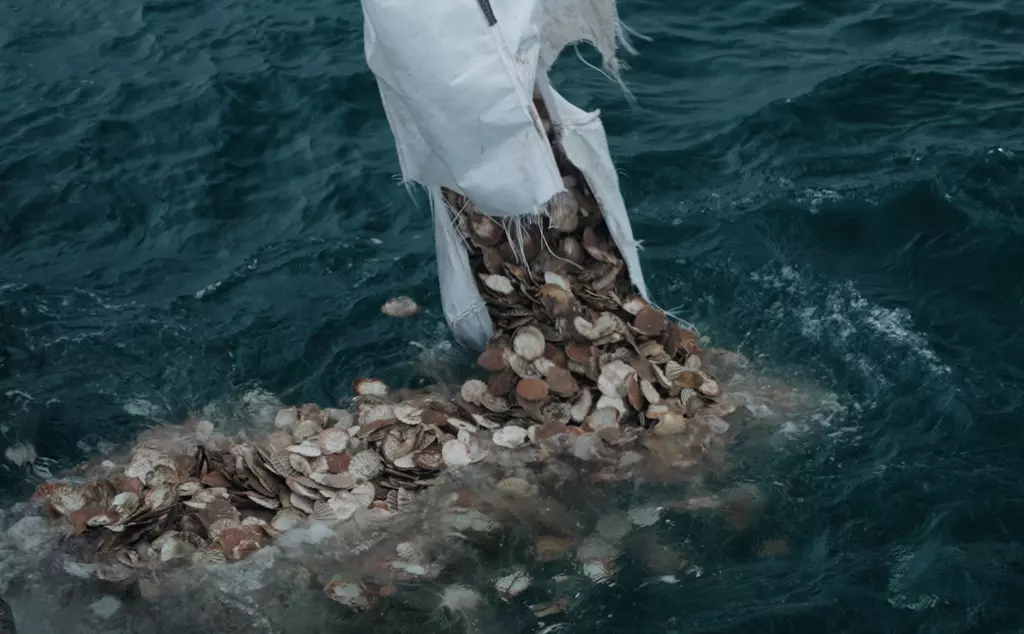
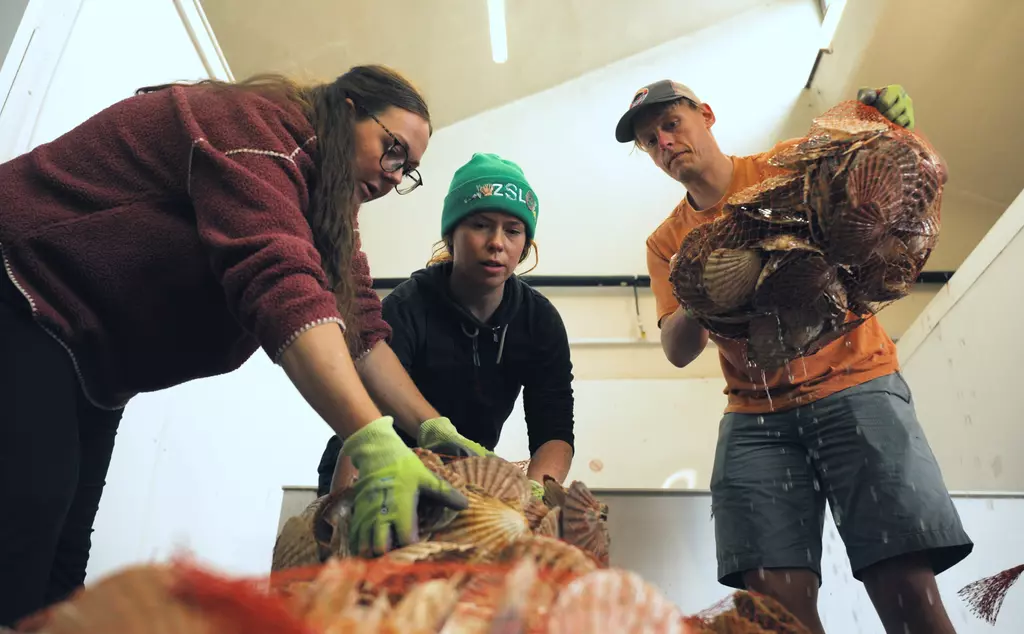
To further support the restoration of oyster reef in this area of the North Sea, the team also deployed over 35,000 juvenile oysters, or spat, attached to shells, along with 40 tonnes of re-purposed scallop shells that will form the bed of a growing oyster reef, also known as cultch.

Why oysters are important to marine ecosystems
A thriving native oyster reef can help to support healthy, biodiverse, and resilient coastal waters, with their reefs providing a home to a large number of other species such as fish, crabs and shrimp.
Each oyster can filter around 200 litres of water a day – equivalent to a bath full of water - boosting coastal water quality.
Native oyster reefs disappeared from the region over a century ago, and across the UK, habitat loss, over-harvesting, pollution and disease have led to a decline in native oyster numbers of over 95% since the 1800s. This issue goes beyond British shores, with a recent assessment by our team and the University of Edinburgh identifying that these once thriving ecosystems have collapsed across Europe.
Celine Gamble, our Wild Oysters Project Manager, said: “They may be small, but oysters can play an important role in keeping our seas clean and healthy. As we work to restore native oysters in the North Sea, we are using novel techniques to help us contend with the challenges of restoring species in a challenging environment. The oyster reef cubes have been selected, to help provide a stable environment for the oysters during storms, and we hope that over time they’ll also attract fish, sponges and crustaceans to the reefs as we work to restore this lost ecosystem.”
Restoring native oysters isn’t just about bringing back a lost species, it is about building a healthier, more resilient North Sea.
The efforts are part of The Wild Oysters Project: Tyne and Wear, a five-year restoration and conservation project, currently funded by the Stronger Shores Partnership and led by South Tyneside Council, with funding from DEFRA as part of the £200 million Flood and Coastal Innovation Programmes (FCIP) which is managed by the Environment Agency. The programmes will drive innovation in flood and coastal resilience and adaptation to a changing climate.
Preparing 4,000 oysters for life at sea
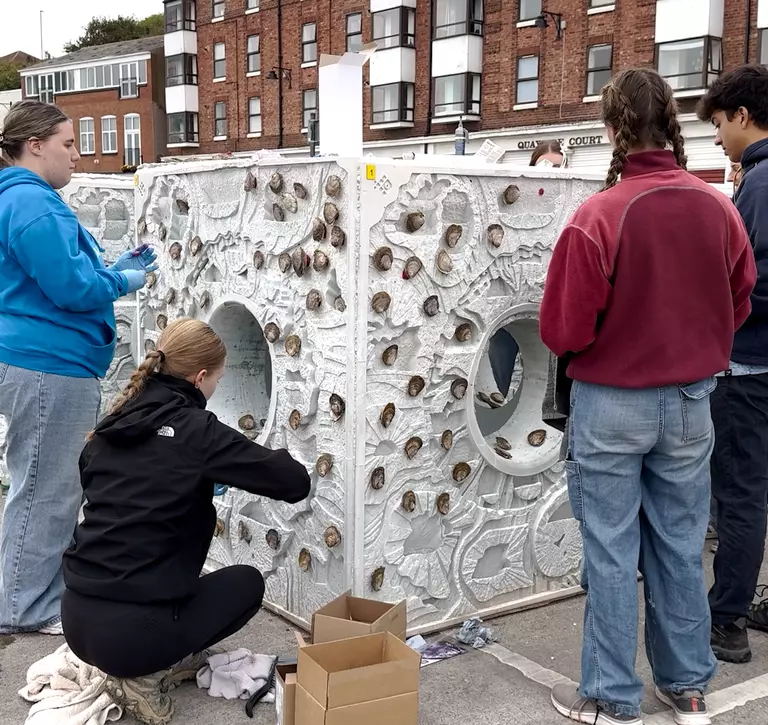
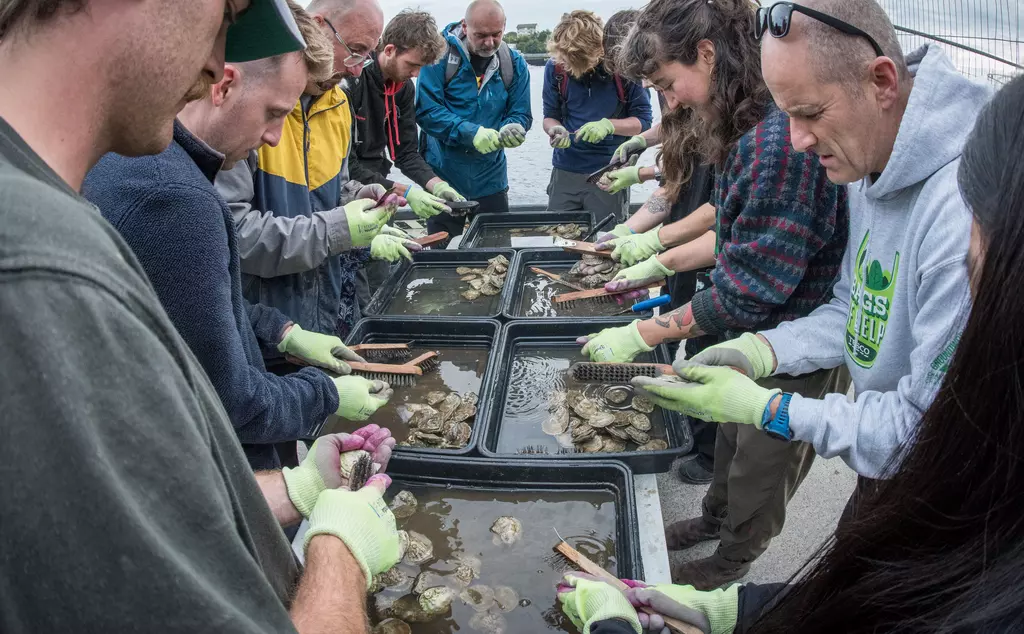
To prepare the 4,000 oysters for restoration, they were cleaned and scrubbed at North Shields Fish Quay by 90 local volunteers based at North Shields Fish Quay, helping ensure that no other species were accidentally introduced during the restoration work. A further 100 local volunteers, helped to carefully attach the oysters onto the oyster reef structures, using specialist reef glue.
Benjamin Coppin, Marine Engagement and Restoration Officer at Groundwork NE & Cumbria, said: “The assistance of local volunteers has been crucial in helping us reach this milestone. Everything that the project has achieved would not have been possible without volunteers’ enthusiasm and energy, and we are extremely grateful for the time and effort that they have given us."
A survey vessel was then used to transport and lower the artificial reef structures, spat, and cultch onto the seabed, to a site 1.8km off the coast selected by the team following consultation and engagement with local stakeholders and fishers.
Adapting to the challenges of marine conservation
The deployment follows an earlier phase of the project in October 2023, when 10,000 mature native oysters were released off the coast of Whitburn, along with 750 tonnes of cultch. Monitoring following the 2023 deployment has revealed that a series of unprecedented weather events – including Storm Babet, a cyclone which hit the coastline just weeks after the oysters were released – dispersed some of those oysters and cultch away from the reef site.
With this deeper knowledge of the challenges that establishing oyster reefs face in the North Sea, the reef blocks were selected for this year’s restoration to make the oysters more storm resilient as they become established on the seabed.
Dr Ashleigh Tinlin-Mackenzie, Marine Ecology Technical Lead for Tyne & Wear at Groundwork NE & Cumbria, said: “This project is breaking new ground.
"Like many innovative conservation initiatives, especially those working with nature, we’ve had to stay agile, learning, adapting, and trialling new techniques to give native oysters the best chance of returning to our coastline."
"Restoring native oysters isn’t just about bringing back a lost species, it is about building a healthier, more resilient North Sea. Oyster water filtration improves local water quality and clarity, and their complex 3D reef structures create homes for other marine species, providing feeding and nursery grounds, and boosting marine biodiversity. The reef cubes mimic many of the positive attributes of mature wild oyster reefs, allowing us to see ecological benefits in a shorter timescale than using oysters alone. We’re trialling new approaches that could shape future marine restoration on exposed open coastlines around the world. I look forward to monitoring this site and seeing how it develops over time.”
We work at speed and scale to drive forward a journey of recovery for the planet, protecting critical species, restoring essential ecosystems, supporting those living with wildlife and inspiring positive change - shaping a world where people and wildlife can thrive