






Atewa slippery frog and Afia Birago’s puddle frog move to London Zoo habitat as conservationists around the world fight against their extinction
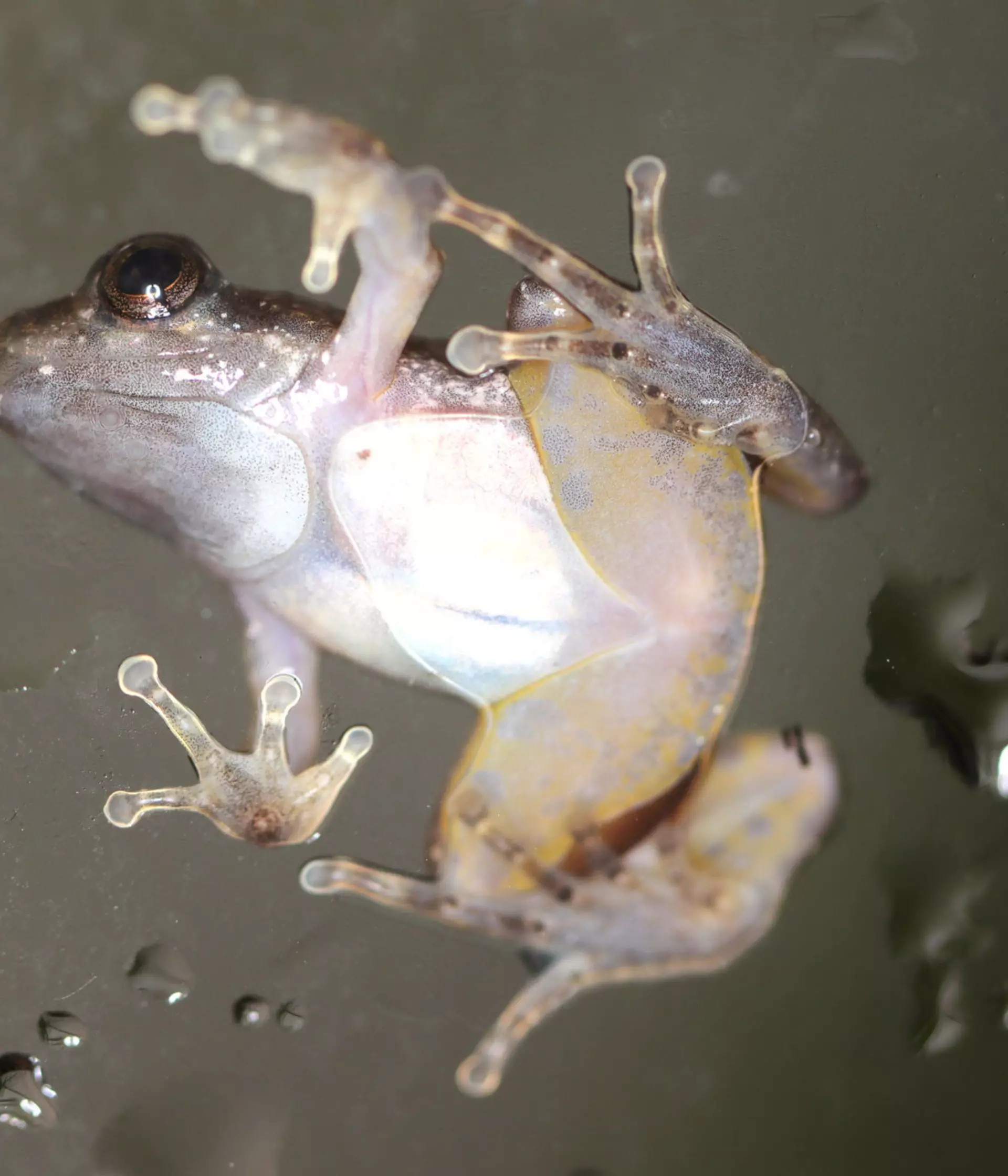
A “whistling frog" has moved into London Zoo’s Secret Life of Reptiles and Amphibians as part of efforts by our global conservation charity and Ghanaian partners to save two rare species from extinction.
The Atewa slippery frog (Conraua sagyimase) and Afia Birago’s puddle frog (Phrynobatrachus afiabirago) are found only in Ghana’s Atewa Hills Forest Reserve. The Atewa slippery frog features on our Evolutionarily Distinct and Globally Endangered (EDGE) species list due to its distinctive features and the threats to their survival – largely driven by human-caused habitat destruction.


The critically endangered Atewa slippery frog was only described to science in 2021, yet is already facing the threat of extinction due to mining of its forest habitat. Known for its unique fish-like swimming skills, and distinctive noise, the frog is often described as ‘whistling’ when it calls. It is estimated that less than 1500 Atewa frogs remain in the wild.
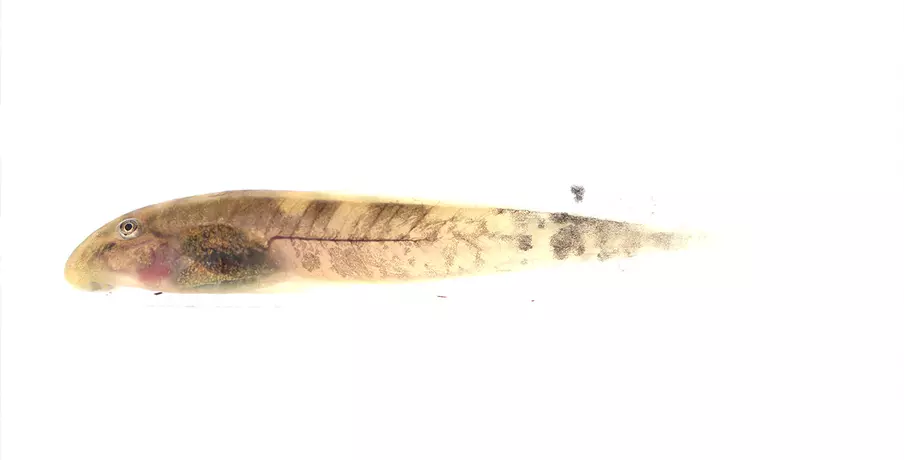
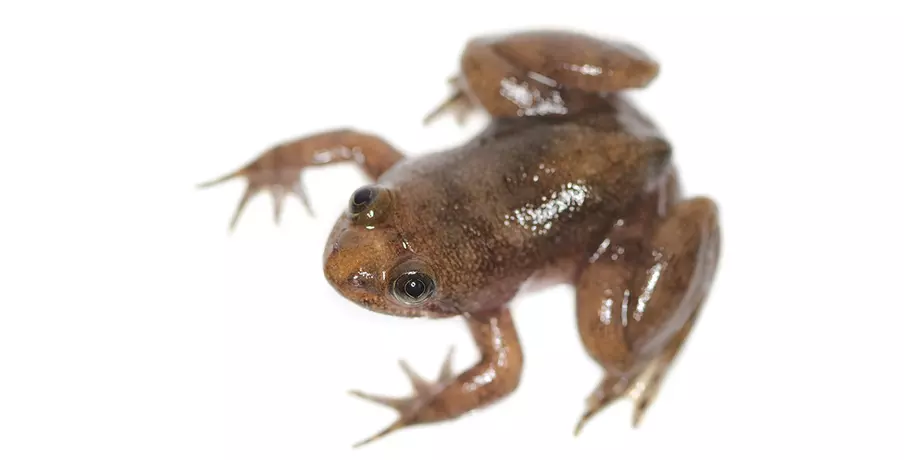
Atewa slippery frog tadpole and metamorph (above)
The Afia Birago’s puddle frog, which weighs in at under 1.75g and could sit comfortably on a £1 coin, was described just three years earlier than the Atewa slippery frog, in 2018. It is now known to survive in just two perennial pools within the Atewa Hills Forest Reserve; and their entire habitat is at risk from mining.
Our Curator of Reptiles and Amphibians Ben Tapley said: “ZSL has been working alongside Herp Conservation Ghana and the Forestry Research Institute of Ghana to establish a pioneering conservation breeding programme for both the Atewa slippery frog and Afia Birago’s puddle frog in Ghana.
“However, with both frog species facing an imminent risk of extinction, but limited experience in amphibian care and difficulties obtaining specialist equipment locally, it was decided that a population of the frogs should be moved to ZSL’s London Zoo to learn as much as possible about these species while we still have the time.


The frogs - 10 adult Atewa slippery frogs, 20 Atewa slippery frog tadpoles and 20 adult Afia Birago’s puddle frogs - were imported in September 2025, in partnership with Herp Conservation Ghana and the Forestry Research Institute of Ghana, and were first cared for in a behind-the-scenes habitat at London Zoo.
Ben added: “ZSL’s ability to combine world-leading animal care with our science research and in-situ conservation work, means we are uniquely placed to care for these precious animals, while building global understanding of the species and sharing that with our partners working in Ghana.”
Thanks to the efforts of all involved, the frogs and tadpoles survived the 4,500-mile journey to London. Subsequently every Atewa slippery frog tadpole metamorphosed successfully, and in November 2025 the frogs bred at London Zoo - making it the first in the world to breed the species in human care.
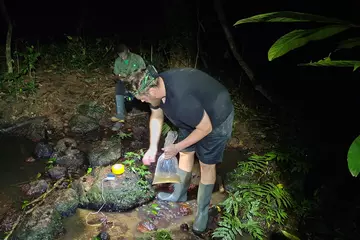
Unnar Aevarsson, amphibian keeper at London Zoo (pictured, right), travelled to Ghana to help set up a new facility for the frogs in Kumasi, the first dedicated facility for amphibian conservation in West Africa – and to gather as much information on their wild habitat as possible, from water samples to images of foliage, to help create the best environment for the frogs in Ghana and at London Zoo.
Unnar said: “Nothing like this has ever been attempted before in West Africa. We’re working with limited knowledge of these species, particularly Afia Birago’s puddle frog, which has never been in human care anywhere in the world before these animals arrived in London.
“By bringing some of the frogs to be looked after by amphibian experts here at London Zoo, we can develop rigorous animal care and breeding protocols that can be implemented by our partners in Ghana, where they plan to establish sustainable in-country conservation populations that can be used to restore wild populations.”
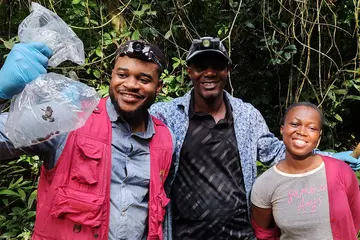
Caleb Ofori-Boateng, Director of Herp Conservation Ghana and our Regional Programme Manager (Africa) for the EDGE of Existence Programme, helped describe both species to science and named Afia Birago’s puddle frog after his mother.
As part of the wider conservation effort, newly appointed ZSL EDGE Fellow Anthony Churcher, employed by Herp Conservation Ghana, will investigate potential habitat on private land surrounding the Atewa Hills Forest Reserve that could support future releases of frogs bred in Ghana.
Visitors to London Zoo’s Secret Life of Reptiles and Amphibians habitat will be able to see the frogs being cared for by London Zoo’s amphibian experts from this Friday, 15 May – book online now and enjoy a day out that makes a difference for wildlife around the world: