






12 November 2025
Building on decades of world-leading amphibian and reptile conservation, our work continues deep in the field.
Daniel Kane, Team Leader of the Herpetology department at London Zoo, has just returned from the latest in a series of expeditions to Vietnam, ensuring the progression of critical monitoring and discovery work.
Working closely with Vietnam based EDGE Fellows, Tran Thi Tuyet Dung (Dzung) and Luan Thanh Nguyen, this most recent trip is just one of many to the region that have contributed towards the longest-running continuous amphibian monitoring program in South East Asia. The teams latest work ensures the continued application of our expertise to protect these vulnerable populations.
The EDGE of Existence programme is a global conservation initiative that focuses on identifying the world's most Evolutionarily Distinct and Globally Endangered (EDGE) species and equips emerging conservation leaders, EDGE Fellows, with the skills, knowledge and opportunities to spearhead the efforts to protect these unique species.
Frogs of Fansipan and beyond
The northern Vietnamese mountains around the border with China are a biodiversity hotspot and are particularly rich in amphibians. The varied topography creates many different habitats in close proximity which support a high diversity of species. Their geographical location at the junction of E and SE Asia provides opportunity for species from both regions to meet in suitable areas.
For two weeks in July I travelled around these mountains with a team of Vietnamese scientists to continue the decade plus of work aiming to better understand the region’s incredible diversity of frogs and the threats they currently face.
Our fieldwork was divided into two main parts: surveying Mount Fansipan and then Mount Nam Kang Ho Tao, a few hours’ drive to the south, both within the Hoang Lien National Park.
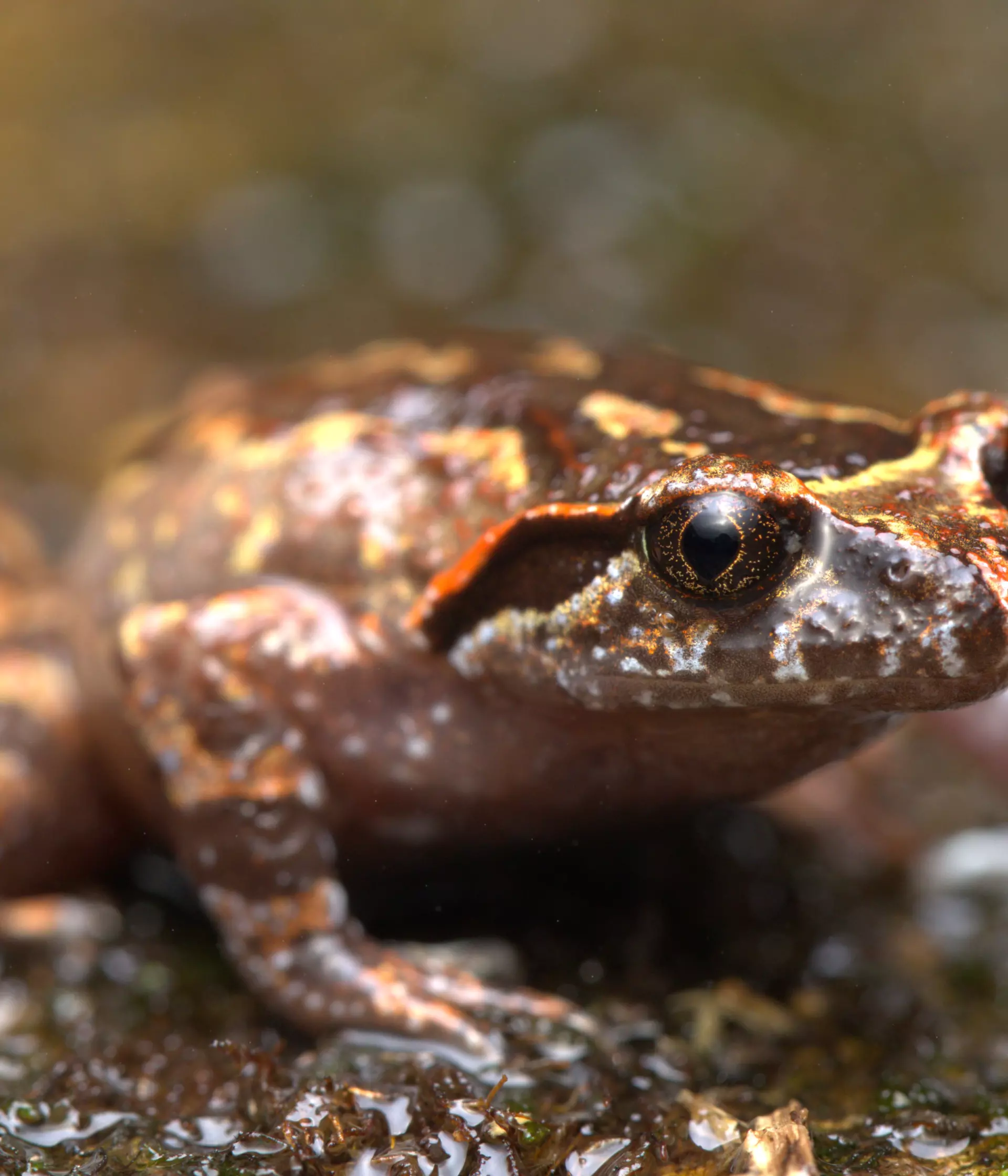
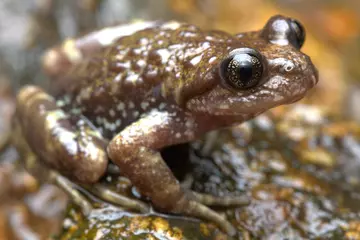
Previous research in Vietnam has focussed on two species of frog: Sterling's toothed toad (Oreolalax sterlinage) and Botsford's leaf-litter frog (Leptobrachella botsfordi): this time was no exception as both frogs occur throughout the higher parts of the Hoang Lien Range and are very much in need of study to better understand them and the threats they face.
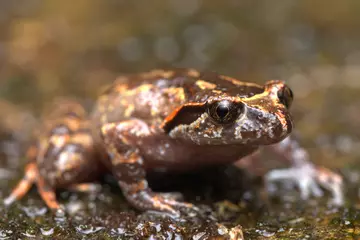
Sterlingae are the larger of the two species, around the size of plum, whereas an adult botsfordi would easily sit on a teaspoon. Both are found in and around streams running through forest from around 2,400m upwards and were originally described from Mount Fansipan just a few minutes’ walk from one another.
In the years since surveys have documented them on many neighbouring mountain peaks and computer-generated projected ranges cover a greater extent than has been explored by herpetologists. It is important to ground-truth these models with physical expeditions and, of course, our surveys encountered many more species of amphibian and reptile species.
This expedition was planned so we hit the period of highest rainfall. We expected this to coincide with the breeding season for several of our target species of frog and we hoped this higher activity would make detecting them and their young much easier than outside this period.
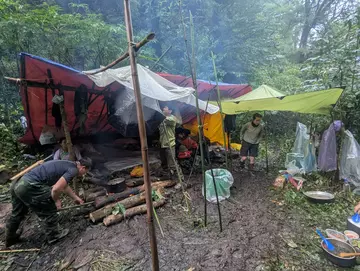
We certainly got the rainy part right, with a mixture of daily downpours interspersed with hours of drizzle. Many hours were spent trying to dry cameras, clothes and wellies around a campfire when we weren’t out looking for frogs. In general, however, frog activity was lower than in the months of April, May and June when we have previously noted peaks in frog activity. It seems likely this is a seasonal change, though continued monitoring throughout the year will help us be certain of the drivers of amphibian activity in these mountains.
At the start of the trip we had a meeting with the Hoang Lien National Park staff to update them on our plan; something we would repeat at the end of the trip to make agreements for direction of future work. By mid-afternoon that day we were on our way up to our first camp at 2,200m elevation on Fansipan.
The frog activity this night was far lower than expected, with only two species calling and perhaps six encountered. The next day we hiked up to 2,800m elevation, taking around five hours. Here we spent three nights searching for sterlingae and botsfordi. Again, activity was lower than expected and it took 36 people-hours of crawling on hands and knees flipping bamboo leaves in the streamside forest to locate just a handful of botsfordi.
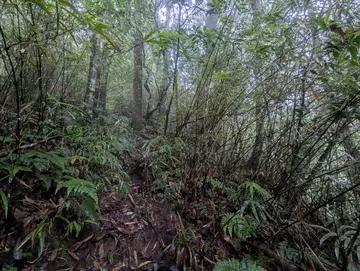
We did better with the sterlingae, and found some adults active at night and many tadpoles in pools below waterfalls. The data we collected from these frogs is needed to help answer key population-level questions: How many frogs are there? Are the populations from different streams linked? Is the number of frogs stable, increasing or decreasing? Results of this can then help guide the best strategy for future conservation actions in the park.
After heading down the mountain and having a shower we headed to our next site: Mount Nam Kang Ho Tao. To access the summit area of this mountain took our team two days of hiking, staying first in a village around 1,200m elevation and then in a mountain shelter used by cardamom plantation workers for roasting the pods prior to transport off the mountain.
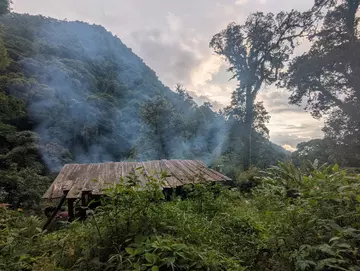
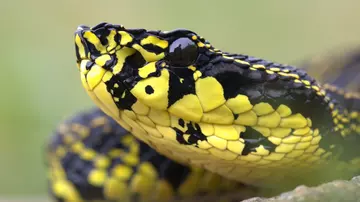
We made a camp for a few nights at around 2,550m elevation and, to our delight, even had resident snakes around this area. Accessing the summit, at 2,881m elevation, involved a steep, wet, slippery 90-minute hike from our base camp which we did on consecutive nights so we could hit our required sample size (>14) of botsfordi to have informative results.
Unfortunately, the sterlinage were nowhere to be found despite being known from this mountain. Just another reason for the team to return and continue surveys to discover more about the species and the habits of the frogs of Fansipan.
We are grateful to the staff at Hoang Lien National Park for their assistance and collaboration. We extend our thanks to the People’s Committee of Lao Cai Province for supporting this programme of research, and Hoang Lien for Tourism and Wildlife Conservation (Hoang Lien National Park) and the Asian Turtle Program for collaboration.