







21 July 2026
New research led by ZSL has revealed that elephants living in modern zoos are living significantly longer than they did in the 1960s, with survival now matching or exceeding that seen in some well-studied wild and semi-wild elephant populations.
Published in Scientific Reports, the study analysed records spanning more than six decades and found that life expectancy for zoo elephants has increased substantially over time. The international research was led by ZSL (Zoological Society of London) in collaboration with Species360, the University of Southern Denmark and the Max Planck Institute for Evolutionary Anthropology.
Drawing on the world's largest database of animals in human care, Species360, researchers examined records for more than 3,000 African (Loxodonta Africana) and Asian elephants (Elephas maximus) held in Species360 member zoos around the world.
The findings suggest that decades of collaborative work across the zoo community to improve elephant care, welfare and management are having a measurable impact on longevity.
Decades of progress
The researchers compared two time periods – 1960 to 1992 and 1992 to 2024 – reflecting major developments in elephant care that began in the early 1990s.
Across both African and Asian elephants, survival improved on nearly every measure. Female life expectancy increased by up to 21%, while male life expectancy increased by as much as 44%. More elephants are also reaching older age, with lifespan equality increasing for females of both species.
Improvements were also seen in younger animals. Infant and juvenile survival rates increased across several groups, particularly among African elephants.
Crucially, in the most recent period analysed, the survival of zoo elephants was comparable to – and in some cases higher than – that recorded in the wild African elephant populations of Amboseli and Samburu in Kenya and the semi-wild Asian elephants working in Myanmar's timber industry.
How improved care has made a difference
The authors point to major advances in elephant husbandry and welfare standards over the past three decades as likely contributors to these improvements.
These include the development of larger and more complex habitats, more varied diets and enrichment, opportunities for bathing and natural behaviours, enhanced veterinary support, and a greater understanding of the importance of social herd structures.
Many of these advances have been driven through international collaboration between zoos, researchers and professional associations, alongside continually evolving best-practice guidance and regulatory standards.
Because elephants are such long-lived animals, the researchers note that the full impact of changes introduced since the 1990s may not yet be fully reflected in population-level data.


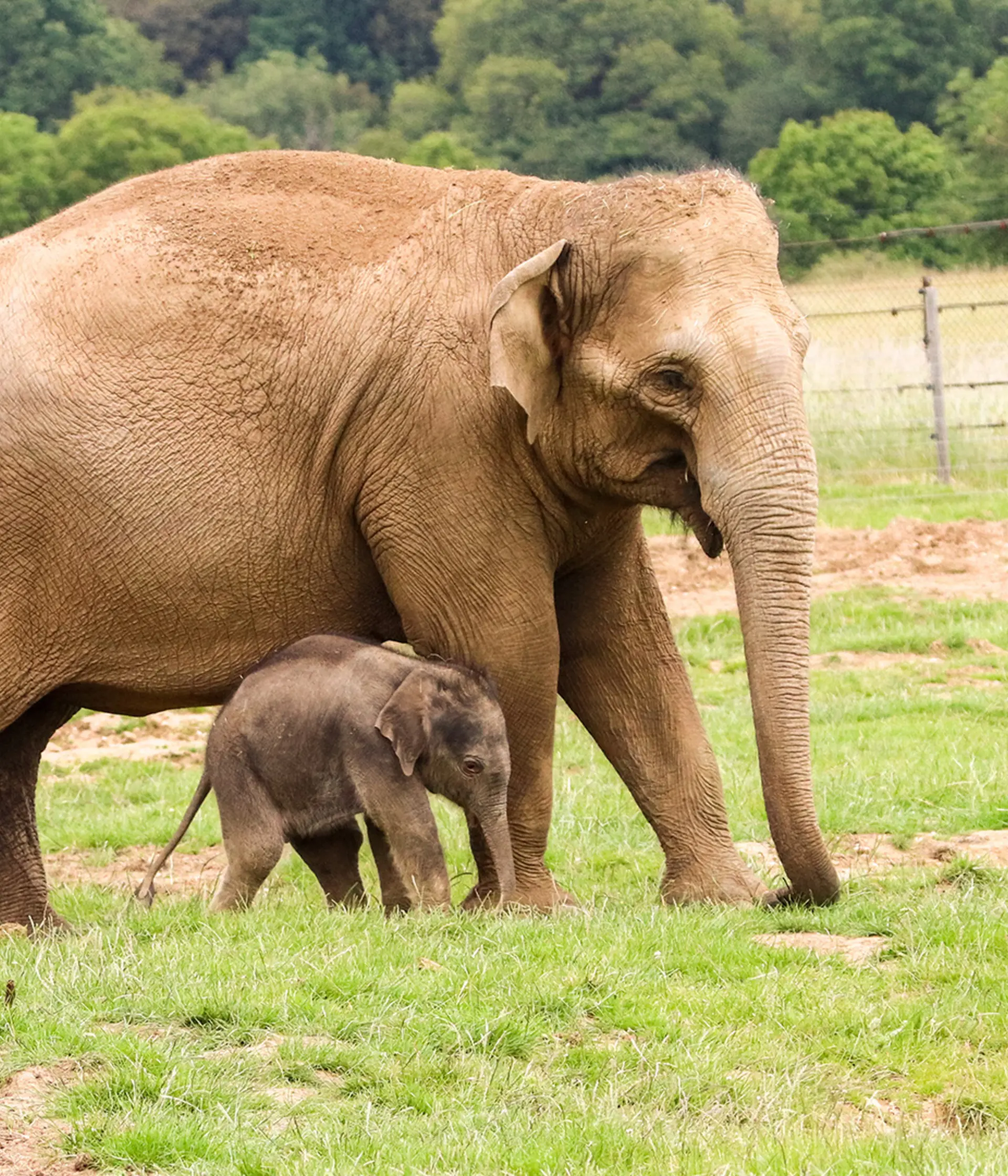
Asian elephants at Whipsnade Zoo
Supporting conservation through science
As a conservation charity driven by science, we work to improve understanding of species both in the wild and in human care. Long-term datasets such as those provided through Species360's Zoological Information Management System (ZIMS) play an important role in building evidence that can inform animal management, welfare and conservation.
The researchers highlight that understanding factors linked to longer, healthier lives can provide valuable insights not only for elephants living in zoos, but also for the conservation and management of elephant populations globally.
Fiona Sach, lead author of the study and researcher at ZSL, said: "Our analysis shows that elephant survival in zoos has improved markedly over the past six decades. While longevity is only one component of welfare, these findings suggest that changes in husbandry, veterinary care and population management have been accompanied by measurable improvements in survival. Continued monitoring of both survival and welfare remains essential."
Hannah Jenkins, co-author of the study and Conservation Data Lead at Species360, said: "ZIMS represents the most comprehensive global repository of animal care data ever created. For this elephant research, its power lies in the consistency and standardisation of survival records kept by our member institutions across more than 100 countries. This enabled researchers to track 64 years of survival trends and demonstrate how they've improved over time, driving scientific understanding and informing policy."
Looking beyond longevity
While the study found clear improvements in survival, the researchers emphasise that longevity alone does not provide a complete picture of elephant welfare. Elephants are highly intelligent, socially complex animals whose wellbeing depends on a wide range of factors, including opportunities to forage, explore, socialise, bathe, wallow and express natural behaviours.
The study argues that measures such as life expectancy and lifespan equality should form part of a broader toolkit for assessing animal welfare, alongside indicators that capture the day-to-day experiences and wellbeing of individual animals.
About the study
The study analysed records for more than 3,000 African and Asian elephants held by Species360 member institutions and recorded in the Zoological Information Management System (ZIMS), the world's largest database of animals in human care.
The research was conducted by scientists from ZSL, Species360, the University of Southern Denmark and the Max Planck Institute for Evolutionary Anthropology.
Reference:
Sach, F., Stärk, J., Jenkins, H., Conde, D.A., Tidière, M., Fitzpatrick, M. & Colchero, F. (2026). Temporal improvements in elephant longevity challenge the notion of compromised survival in zoos. Scientific Reports.