






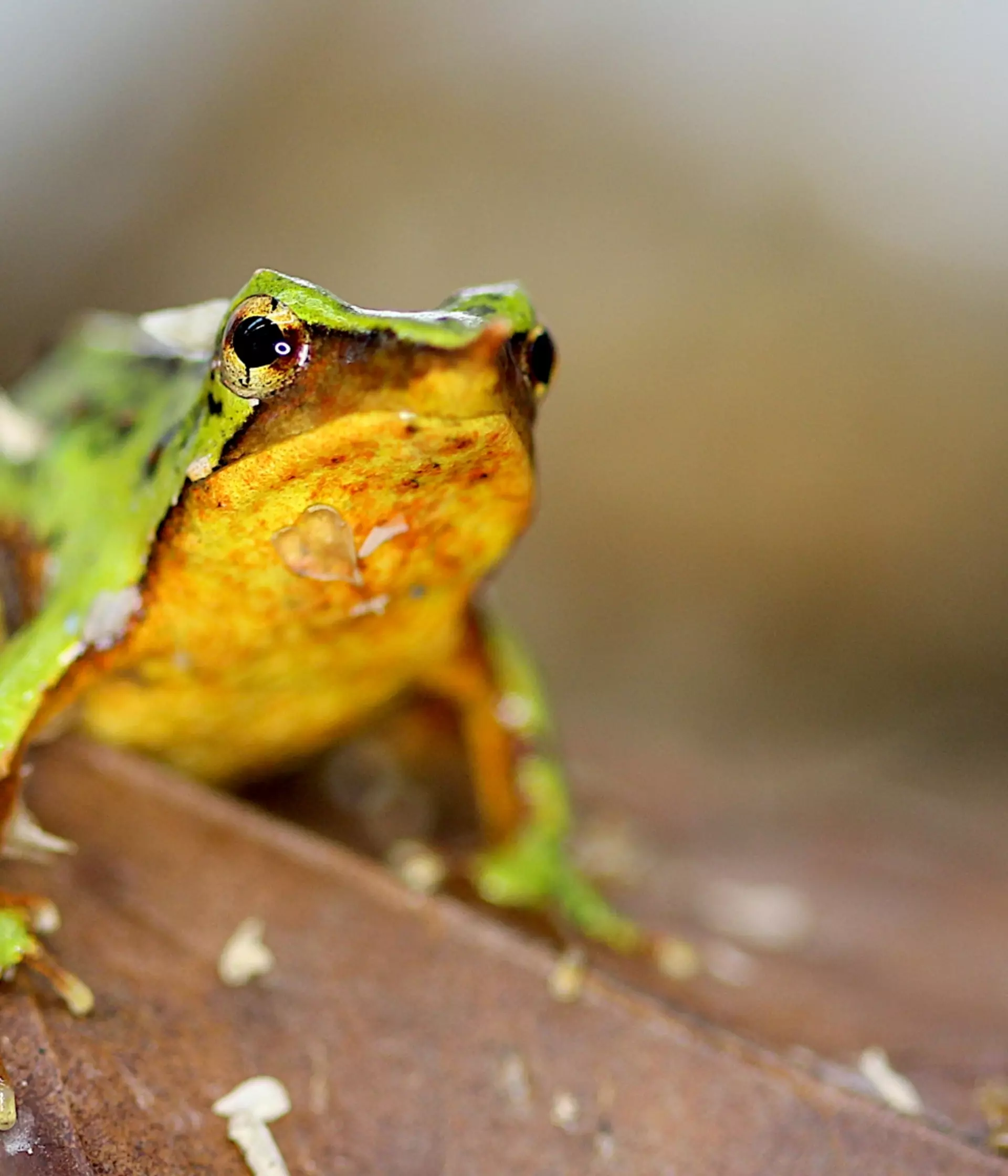
'Silent' outbreaks of a deadly fungus are wiping out the tiny, endangered Darwin’s frog, reveals our latest research with Chilean NGO Ranita de Darwin - unlocking insights that could help halt a global amphibian ‘apocalypse’.
A breakthrough discovery
Published in Nature Ecology and Evolution, the new study reveals how the devastating chytrid fungus has quietly swept through populations of the threatened Southern Darwin’s frog (Rhinoderma darwinii) in southern Chile’s remote Parque Tantauco forests - driving the alarming 90% declines that prompted our team and partners to launch an emergency rescue mission to save a population of this unique, postage-stamp sized species in 2024.
Bringing together field data collected over the course of a decade from almost 1,500 frogs, the study is the first time that outbreak patterns of the fungus-caused disease have been documented in a species that spends its entire life on land.
This new knowledge provides vital insights for conservationists working across the globe to address the threat of the chytrid fungus.
The fungus was previously understood to spread only through water, but the findings reveal that extremely local contact between frogs allows it to spread on land.
Darwin's frogs living in forest patches closest to an infected neighbour are at greatest risk, creating tiny ‘hidden’ epidemics of chytridiomycosis that can wipe out small populations long before they can be detected by wider surveys.


Dr Andrés Valenzuela-Sánchez, Research Fellow at our Institute of Zoology and lead author of the study, said: “The global spread of chytrid fungus is one of the biggest threats for amphibians – of an apocalyptic scale – but we still have a chance to turn things around.
“Darwin’s frogs are a unique part of South America’s rich biodiversity, and uncovering these hidden dynamics gives us the tools to monitor and manage the fungus as effectively as possible in our fight to protect this precious frog and other amphibians across the world.”
Saving a unique species
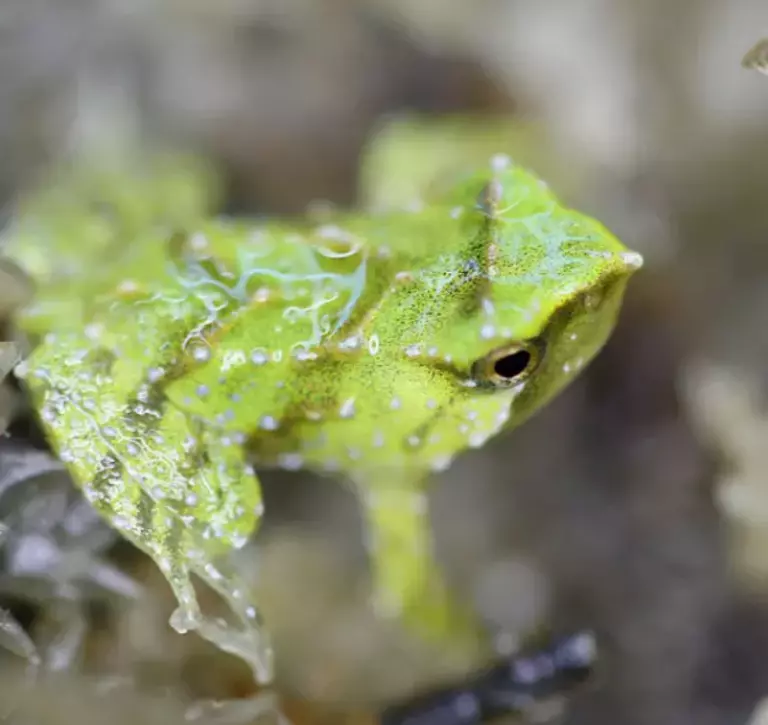
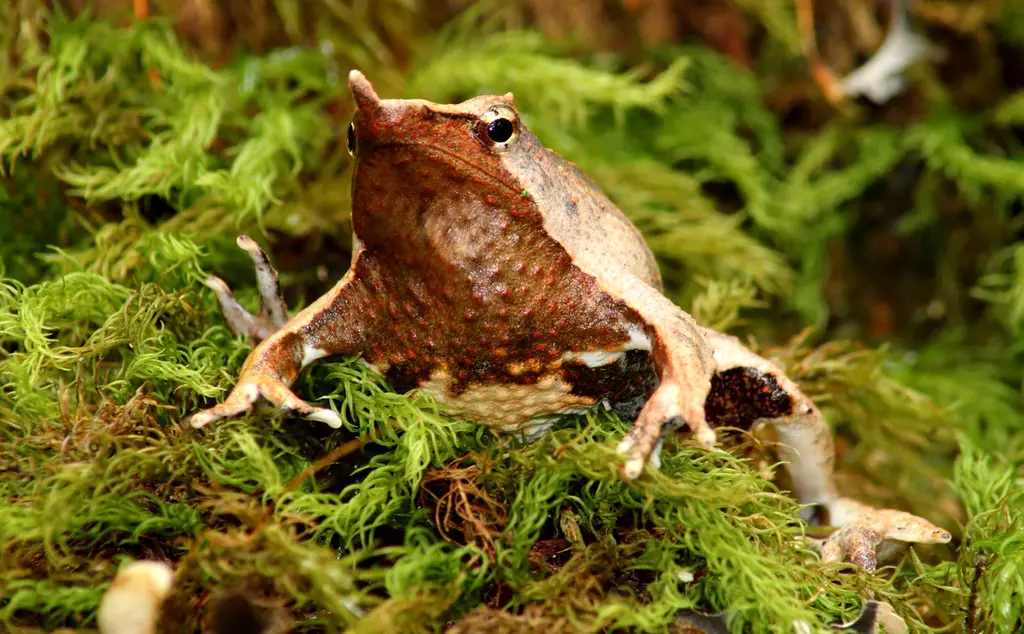
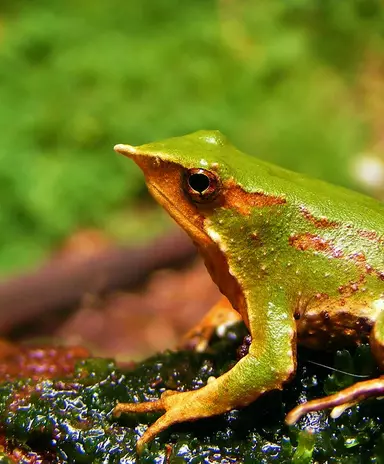
Weighing less than a 1p coin and under 4cm long, Darwin's frogs are found exclusively in the humid forests of Chile and Argentina, where their distinctive whistle-like mating call is the only sign that they are nestled amongst the moss and foliage.
Males carry their tadpoles in their vocal sacs for around two months, protecting the growing young until they are ready to hop out of his mouth as miniature, perfectly-formed froglets – a unique parenting style that allows these frogs to live entirely on land.
With distinctive pointed snouts that give them a leaf-like appearance, these land-loving frogs are an Evolutionarily Distinct and Globally Endangered (EDGE) species, meaning they represent a unique, irreplicable branch of life on Earth.
How chytrid fungus threatens species worldwide
Chytrid fungus - first identified as the cause of amphibian declines by an international research team led by Professor Andrew Cunningham at our Institute of Zoology – has had a devastating impact in around 500 frog species worldwide and driven 90 amphibian extinctions in just 50 years.
The fungus attacks the permeable skin that the frogs use to absorb water and balance levels of essential minerals known as electrolytes. The resulting imbalance of these minerals leads to heart failure, with Darwin’s frogs being particularly susceptible to the disease – it is known to kill around 85% of infected Darwin’s frogs.
An urgent rescue mission to save the Darwin's frog
When a 2023 survey revealed that the fungus had arrived in the remote forests of Parque Tantauco, killing an estimated 1,300 Darwin’s frogs within in a single year, we partnered with Ranita de Darwin and Parque Tantauco to swiftly launch a rescue mission to establish a protected breeding population of the threatened frogs.
The 53 chytrid-free frogs were transported 13,000km by boat, car and plane in specially designed, climate-controlled boxes to London Zoo, one of our conservation zoos, where the zoo’s team of amphibian keepers can care for them in biosecure habitats. Since the frog's arrival in October 2024, over 30 rice-grain sized froglets have already been born at the zoo.
Dr Benjamin Tapley, our Curator of Amphibians and Reptiles, explained: “Conservation zoos are lifelines for wildlife, including the hundreds of amphibians whose futures are threatened by this deadly fungus. They allow us conservationists to boost numbers and raising awareness while we use science to develop strategies to tackle this pandemic.
"Every insight we get into the disease brings us one step closer to releasing zoo-bred Darwin’s frogs back into the forests of Chile and Argentina.”
We have been working to protect Darwin’s frogs for over 15 years, including through our EDGE of Existence programme, which supports early-career conservationists spearheading conservation of these extraordinary species. The research team is working with partners in Chile and Argentina to protect Darwin’s frogs and the forests they call home through the Binational Conservation Strategy for Darwin’s Frogs, supported by Zoo Leipzig.
By working together to save animals close to extinction and those who could be next, we will shape a more balanced, vibrant and connected world.