



Written by

ZSL
Zoological Society of London
8 December 2025
Every year, ZSL’s programme of science and conservation awards recognises the contributions of outstanding individuals
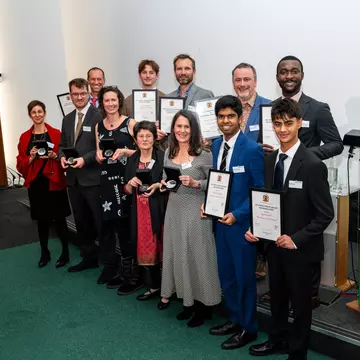
This week we celebrated our winners at the annual ZSL Awards Celebration, hosted by ZSL President, Professor Sir Jim Smith FRS. From awarding original work submitted as a doctoral thesis with the Thomas Henry Huxley Award and Marsh Prize, to recognising exceptional impact through communication with the ZSL Clarivate Award, we are thrilled to showcase the efforts and achievements of our award winners.
Find out more about the breadth of exceptional work demonstrated by this year’s winners below.
ZSL Prince Philip Award and Marsh Prize
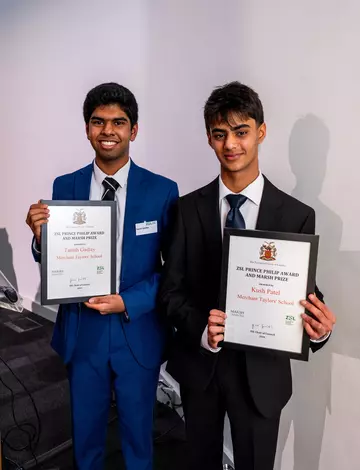
The Prince Philip Award and Marsh Prize is presented for a research project undertaken by A-Level students in the UK. This year we present the award to Tanish Gadlay and Kush Patel, from Merchant Taylors' School, for their project ‘The effect of changing temperature on the metabolic activity of Gryllus bimaculatus’.
Kush and Tanish explored how change in temperature affects the metabolic activity of crickets, indirectly measured by the volume and frequency of chirping. The students demonstrated good background knowledge of the subject and used appropriate methodology to analyse their data. The students included an excellent section on ethics, and the strengths and weaknesses of the study, and ideas for further research were discussed. Tanish and Kush also conducted a second study to explore the impact of female crickets on male chirping. The students worked independently, staying late after school, and we understand that the constant chirruping caused lots of entertainment for other students in the lab!
ZSL Charles Darwin Award and Marsh Prize
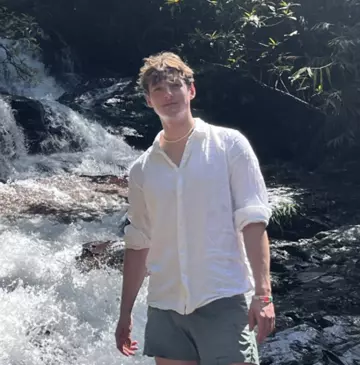
The ZSL Charles Darwin Award and Marsh Prize is awarded for the best undergraduate project submitted by a university in the UK. Our award this year is presented to Flynn Bizzell, University of Oxford, for his project ’Ant queens cannibalise infected brood to contain disease spread and recycle nutrients’.
In this dissertation, Flynn describes a series of innovative studies that explore disease management by Lasius niger ant queens. Flynn discovered a previously unknown form of hygienic cannibalism, whereby queens selectively eat fatally infected larvae to prevent disease spread, and at the same time, recycle nutrients to boost reproduction. The study combines elegant experimental design and original scientific insights, and provides compelling evidence for a key evolutionary mechanism shaping eusociality. The work has since been published in the journal Current Biology – a remarkable achievement. The mark for Flynn’s project of 92.2% was exceptional; so much so that the Chair of Examiners thought it must be an error… until they read the project.
ZSL Thomas Henry Huxley Award and Marsh Prize
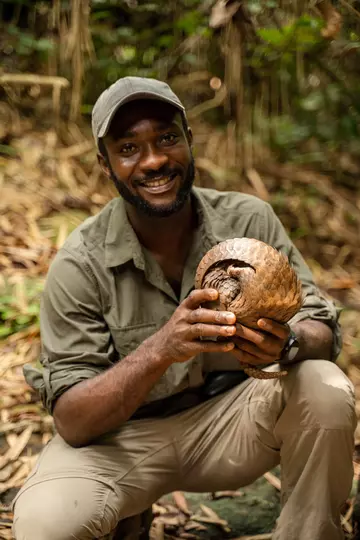
The ZSL Thomas Henry Huxley Award and Marsh Prize is awarded for the best PhD thesis submitted by a university in the UK. This year’s winner is Dr Charles Emogor, University of Cambridge, for his thesis ‘Pangolin exploitation and wild meat hunting in Nigeria’.
Despite the challenges of the COVID-19 pandemic, Charles built one of the largest wildmeat-harvesting datasets ever assembled for a tropical site, and used this to examine the scale and drivers of pangolin and other wildlife offtake in West Africa. Remarkably, Charles managed to access customs seizures, through which he was able to uncover the extraordinary extent of illegal pangolin harvesting across Africa, and highlight both key trafficking routes, and the limited impact of interventions to stop the trade. Charles’s fieldwork around Cross River National Park, which involved tracking 30 hunters daily for three years and collecting meat-consumption data from 80 households, showed that pangolin hunting in this region is driven mainly by domestic demand for meat. This surprising result has major implications for efforts to reduce the exploitation of one of the world’s most threatened mammals. Charles’s research has already produced numerous research papers, and earned him a prestigious Schmidt Science Fellowship at Harvard.
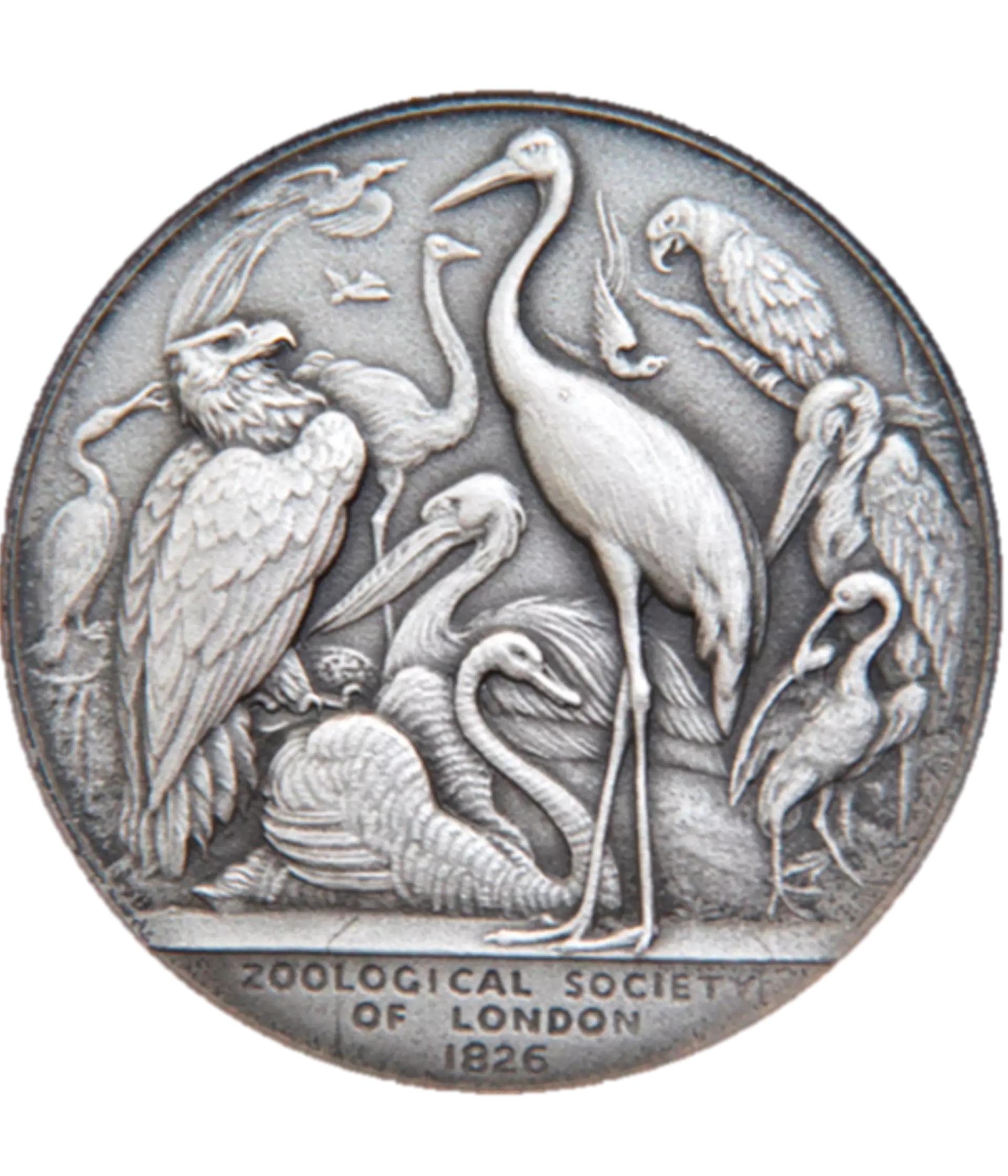
ZSL Scientific Medal is awarded for outstanding contributions by an early career researcher. This year awarded to three candidates:
Professor Cristina Banks-Leite, Imperial College London
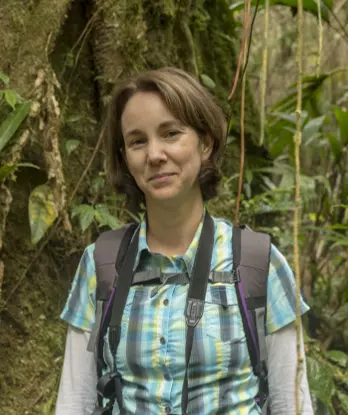
Cristina is an internationally recognised conservation ecologist whose research has transformed our understanding of biodiversity change in human-modified tropical landscapes. Through her work, Cristina has shown that species’ responses to habitat loss vary widely across their geographic ranges, and that this variability is driven by macroecological processes occurring at much larger spatial and temporal scales. Her landmark paper in Science provided compelling evidence that biodiversity collapses non-linearly below a 30% forest cover threshold, and this finding has reshaped both scientific theory and conservation practice.
Cristina’s research is cited in dozens of policy documents worldwide, and has had a profound and lasting impact on tropical conservation and landscape restoration. Her leadership extends beyond research: Cristina is a deeply committed mentor, supporting a diverse cohort of early-career researchers and fostering a collaborative, inclusive academic environment. Cristina exemplifies scientific excellence, impactful engagement, and tireless dedication to addressing some of the most urgent environmental challenges of our time.
Dr Sally Keith, Lancaster University
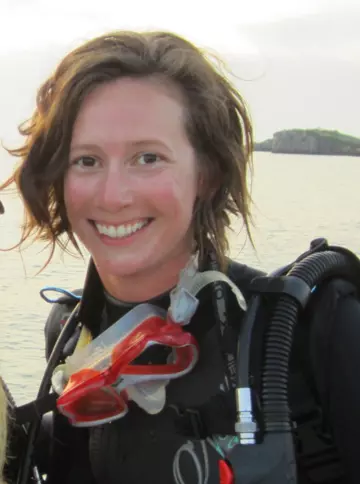
Sally is one of the UK’s, and the world’s, leading researchers in macroecology and behavioural ecology, and recently combined the two to define the field of macrobehaviour. Sally’s research is embedded in ecological theory and testing patterns at large scales, and is increasingly focused on environmental change.
Sally has significantly advanced our understanding of thermal tolerance of the early life-history stages of reef corals across latitudinal gradients, and how the pace of temperature increase influences coral spawning. Sally’s research also focuses on behavioural ecology, and how this influences species outcomes to environmental change. Sally exemplifies a scientist who commits deeply to a biological system, such as coral reef fishes, and uses that system to address a remarkable breadth of ecological questions driven by curiosity, rigour, and creativity. She has an exceptional ability to see the bigger picture, forging robust connections between distinct scientific disciplines and advancing ecology through conceptual innovation and insight.
Professor Stephen Montgomery, University of Bristol
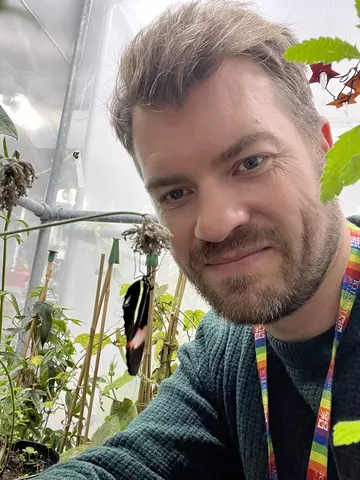
Stephen is an internationally recognised evolutionary neurobiologist, whose research provides one of the clearest and most compelling demonstrations of how behavioural evolution can be mechanistically traced to changes in neural architecture. His groundbreaking work on Heliconius butterflies revealed a major adaptive expansion of the mushroom bodies, a neural region associated with learning and memory, linked to the evolution of pollen-feeding, which requires long-distance spatial memory and specialised plant recognition.
By integrating behavioural experiments, neuroanatomy, developmental biology, and genomics, Stephen has provided profound insights into the relationships between ecological niche specialisation, brain structure, and cognitive function. Alongside scientific excellence, Stephen has shown exemplary leadership in mentoring and in advancing Equality, Diversity and Inclusion through major institutional initiatives and contributing to national best-practice frameworks. Stephen’s work embodies innovative research and inclusive leadership.
ZSL Frink Award
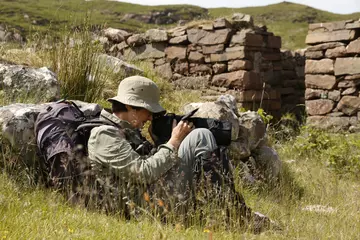
The Frink Award, ZSL’s ‘life-time achievement’ award, is presented to a zoologist for substantial and original contributions to the advancement of science. This year we present the award to Professor Josephine Pemberton, University of Edinburgh. Josephine is one of the UK’s most influential zoologists, whose contributions to behavioural ecology, evolutionary genetics, and long-term field research have transformed our understanding of wild animal populations.
After studying zoology at Oxford and completing her PhD on fallow deer at Reading, Josephine joined the long-term red deer project on the Isle of Rum and the Soay sheep project on St Kilda, studies that continue to produce influential research on behaviour, ecology and life-history evolution. Josephine developed and applied DNA fingerprinting, microsatellites and single nucleotide polymorphism-based approaches to more accurately measure reproductive success in these study systems, leading to large pedigrees for both study populations. Josephine’s contributions have been recognised through numerous honours, including election to the Royal Society of Edinburgh in 2008, the Molecular Ecology Prize in 2010, election to European Molecular Biology Organisation in 2014 and the Royal Society in 2017, the Darwin–Wallace Medal of the Linnean Society in 2018, and the Genetics Society Medal in 2025. Josephine’s research has shaped entire fields, and her mentorship has inspired generations of zoologists to pursue rigorous, field-based science.
Marsh Award for Conservation Biology
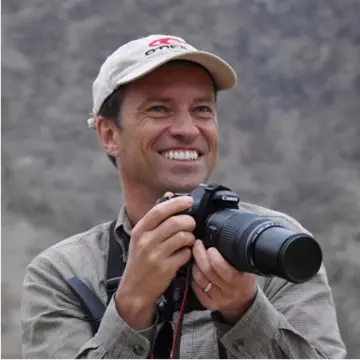
The ZSL Marsh Award for Conservation Biology is awarded for fundamental science that has significant impact on conservation biology. This year’s winner is Professor Tim Blackburn, University College London. Tim was one of the early pioneers of macroecology, developing new theory and producing seminal analyses of large-scale databases, and setting the agenda for this research area. Tim contributed to the first global map of species richness for any major clade (birds) revealing a lack of congruence between hotspots of richness, endemism, and rarity, and shaping subsequent research on global biodiversity patterns.
Tim is probably best known for his contributions to invasion biology, where his work has profound scientific and policy impact. His unified framework of biological invasions forms a core component of the IPBES assessment on invasive alien species, and his work led to the development of the Environmental Impact Classification for Alien Taxa which is the IUCN’s global standard for assessing the severity of environmental impacts caused by invasive species. In addition to his substantial research and policy influence, Tim has significantly shaped public understanding of biodiversity change and biological invasions through his writing, media work, and outreach.
Marsh Award for Marine and Freshwater Conservation

The ZSL Marsh Award for Marine and Freshwater Conservation is awarded for fundamental research which has had significant impact on marine and freshwater conservation. This year’s award is presented to Professor Nicholas Graham, Lancaster University. Nick’s influential work, spanning coral reef ecosystems, climate impacts, food security and fisheries, and social-ecological systems, has resulted in multiple landmark papers that have shaped real-world conservation outcomes and global policy dialogues. His seabird-nutrient research has catalysed global island restoration initiatives, and he was a key driver of the Island-Ocean Connection Challenge – a global effort that aims to restore and rewild 40 island-ocean ecosystems by 2030.
Nicks’s fisheries micronutrient studies have transformed international food security debates, embedding fisheries into nutrition and development policy frameworks. Nick has been invited to speak at the highest levels of global policy, and his ability to bridge rigorous science with conservation practice and global policy advocacy distinguish him as a leader in marine conservation.
ZSL Stamford Raffles Award
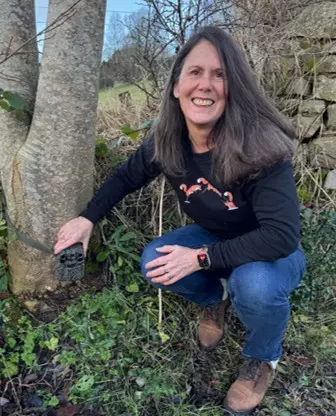
The ZSL Stamford Raffles Award is presented to an amateur zoologist in recognition of work which is outside the scope of their professional activities. This year we are delighted to present the award to Joanne Gilbert, WildChiswick. Joanne is an inspiring community conservationist whose dedication and leadership has made an enormous contribution to wildlife in Chiswick. In 2006, after a successful career in marketing, Joanne followed her interest in wildlife and volunteered at Paignton Zoo and local rescue centres. In 2021 Joanne co-founded WildChiswick, a community-led, not-for-profit organisation that now has over 350 members. Joanne has built impactful collaborations with many organisations including ZSL, the Peoples Trust for Endangered Species, and the Mammal Society. Her work with London HogWatch, where she coordinates camera-trap surveys and champions hedgehog highways, has greatly improved our understanding of hedgehog distribution in the area. Joanne also leads swift monitoring and the installation of nest-boxes across Chiswick.
Joanne promotes conservation education, and has written a children’s book on hedgehogs. Joanne describes herself as “an amateur who learns by doing”, showing how much can be achieved through passion and community engagement. Her dedication to making a difference for wildlife is an inspiration to us all.
ZSL Clarivate Award for Communicating Zoology
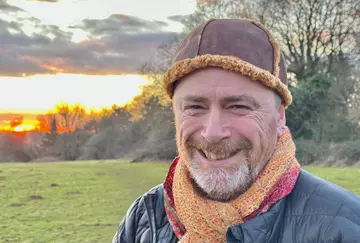
The Clarivate Award for Communicating Zoology is awarded for a communication of a zoological nature that has an outstanding impact on a general audience. We are delighted to present this year’s award to Hugh Warwick, for his book The Cull of the Wild. Hugh is an ecologist, author and storyteller, whose work confronts one of the most challenging and emotionally charged questions in conservation: is it ever right to kill one species to save another? In Cull of the Wild, Hugh brings together science, ethics, history and humour to explore the difficult topic of culling, invasive species management and the choices we make about which animals live, and which do not. As a conservationist who abhors harming animals, yet understands the ecological consequences of inaction, Hugh uses vivid case studies, from red and grey squirrels in Anglesey to cane toads in Australia, to explore the global movement of species and the ecological consequences that follow.
Hugh engages with scientists, policymakers, animal advocates and communities on all sides of the debate, listening carefully and inviting us as readers to do the same. With warmth, wit and a deep sense of fairness, Hugh challenges us to examine our own biases and acknowledge our own species preferences. Hugh’s message is ultimately hopeful – making the case that ethical conservation begins not with conflict but with compassion and honest dialogue, in place of division.
We are grateful to our sponsors, the Marsh Charitable Trust and Clarivate, for generously supporting ZSL's awards programme.