






19 December 2025
Home to the world’s first scientific zoo, we revolutionised the study of wildlife by enabling real animals to be studied, rather than solely relying on taxidermy or drawings.
This shift enabled important breakthroughs in taxonomy and zoological and veterinary science. Both of our conservation zoos, London and Whipsnade, alongside our Institute of Zoology, have since supported generations of scientists and conservationists to study behaviour, wildlife disease and animal care in ways that have informed the protection and restoration of wildlife across the world.
But to protect a species, you first need to know that it exists. Another way we have made an impact on wildlife is by formally describing new species – bringing them into the scientific record and helping us understand the planet’s rich biodiversity. In doing so, ourL scientists have shaped zoology as a field and helped direct conservation efforts where they are needed most.
Recognising knowledge: from 'discovery' to 'first described'
In the 1800s and throughout much of scientific history, it was common to say that Western scientists ‘discovered’ a species when it was first recorded in scientific literature. This language reflected a time when much of science was centred around colonial exploration and often overlooked the rich knowledge systems of Indigenous and local communities.
Today, we understand that animals and plants are not truly discovered by the scientists who first describe them in formal scientific records - rather, they are first described in the context of Western science. This shift in language acknowledges that people living alongside these species - including Indigenous communities, local populations, and traditional ecological knowledge holders - have often known and named these animals for generations, and were often experts on them long before Western scientists began studying them.
Using terms like ‘first described in Western science’ or ‘first recorded in scientific literature’ reflects a more inclusive, accurate, and respectful approach. It recognises that scientific naming is one way of knowing, not the only way, and that biodiversity knowledge exists in many cultures and forms.
Our science - the early years
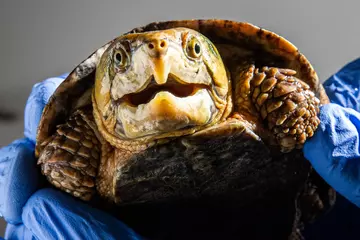
In 1831 we began holding scientific meetings for ZSL Fellows – a group made up of scientists, zoologists and often explorers - to present their findings and share knowledge. By the end of its first full year, an astonishing 232 animals new to Western science were introduced at these meetings. These include the big-headed turtle (Platysternon megacephalum), first described by J.E. Gray at a meeting on 12th July 1831, which is today recognised as an important EDGE (Evolutionarily Distinct and Globally Endangered) species. This ZSL-led programme targets conservation action towards unique species that have no other living relatives on the evolutionary tree. You can see big-headed turtles at London Zoo today, in our Secret Life of Reptiles and Amphibians exhibit.
Here are a few more incredible species described by ZSL with our partners over the past 200 years.
The okapi: a hidden forest giant
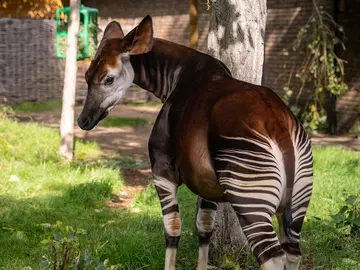
One of the most iconic animals associated with ZSL’s history of species description is the okapi. Native to the dense forests of the Democratic Republic of the Congo, the okapi (Okapia johnstoni) is a shy and elusive – and the only living - relative of the giraffe. It was first described in 1901 by ZSL Fellow Sir Harry Johnston, who helped document the species for Western science, with the support of local people.
Despite local communities being well aware of the okapi’s existence, it was unknown to Western science until then. It was their expertise that allowed Johnston to find and document okapi, before ZSL played a critical role in bringing this remarkable animal to the attention of the global zoological community. The okapi remains a symbol of ZSL’s dedication to both scientific inquiry and conservation. Today, you can see okapi at ZSL’s London Zoo, where they are part of a vital global breeding programme for the Endangered species.
Hidden gibbons
In 2017, ZSL’s Prof Samuel Turvey worked with international colleagues to help describe a new gibbon species in China: the Skywalker hoolock gibbon (Hoolock tianxing), a primate with long arms for brachiation and striking black and white markings. It is named after the character Luke Skywalker in Star Wars - and because gibbons move gracefully through the high forest canopy and “walk in the sky”.
Its discovery underscored how much we have still to learn about the conservation status and existence of many large mammals, and how important it is to combine fieldwork, genetics, and conservation today to understand and protect our world’s extraordinary diversity.
Just a year later, Prof Turvey and colleagues made another remarkable discovery hidden inside an ancient Chinese tomb: the remains of a previously unknown gibbon species that is no longer in existence. Named Junzi imperialis, this species was identified from a 2,300-year-old burial site belonging to an aristocratic family during China’s Warring States period. Using detailed skull and jawbone comparisons, the researchers confirmed that Junzi imperialis did not match any living gibbon species.
The find revealed an entirely new branch of the gibbon family tree - and offered the first documented case of a primate extinction caused by humans within the last few thousand years.
Historically, gibbons were revered in Chinese culture, and were once widespread across much of China. But habitat loss and hunting gradually erased them from much of their range. The discovery of Junzi imperialis highlighted how far-reaching past impacts have been on biodiversity, reminding us that human pressures on wildlife and natural habitats are not solely a modern phenomenon.
By understanding lost species - and newly described ones - scientists can better understand their patterns of vulnerability and resilience to changing human pressures, and better protect existing species and landscapes into the future.
The H’mong keelback snake
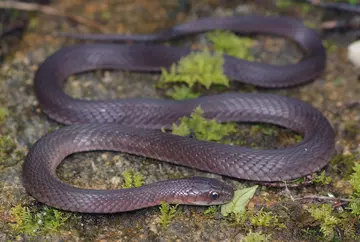
Deep in the misty forests of northern Vietnam, a snake went unnoticed by science - until ZSL's Daniel Kane, Dr Benjamin Tapley and Luan Thahn Nguyen described it in 2023, whilst on an expedition collecting data on threatened frog species on Mount Fansipan. Returning to camp shortly after midday after collecting supplies, two porters from the local H’mong community - Chang A Sung and Pao A Vang - came across an unusual small purple snake. The ZSL team’s initial careful examination confirmed that this individual didn’t match the description for any described snake. DNA analysis eventually confirmed it to be a new keelback species.
Named the H’mong keelback (Rhabdophis hmongorum), after the local community, its discovery reminds us that even in well-studied regions, nature still holds important secrets. Over the past ten years, in addition to the H’mong keelback, ZSL staff have been involved in the description of 8 new species of frog from the Hoang Lien Range in Vietnam - the Mount Po Ma Lung toothed toad (Oreolalax adelphos), the leaf-litter frog (Leptobrachella graminicola), the Fansipan horned frog (Boulenophrys fansipanensis), the Hoang Lien horned frog (Boulenophrys hoanglienensis), the Hoang Lien cascade frog (Amolops spicalinea), Cuong’s torrent frog (Amolops cuongi) and the Mount Ky Quan San horned frog (Boulenophrys frigida).
ZSL’s role in documenting these species highlights our ongoing mission to explore remote habitats and help assess and protect species before they and their fragile ecosystems are lost.
Vorombe titan – the world’s largest ever bird
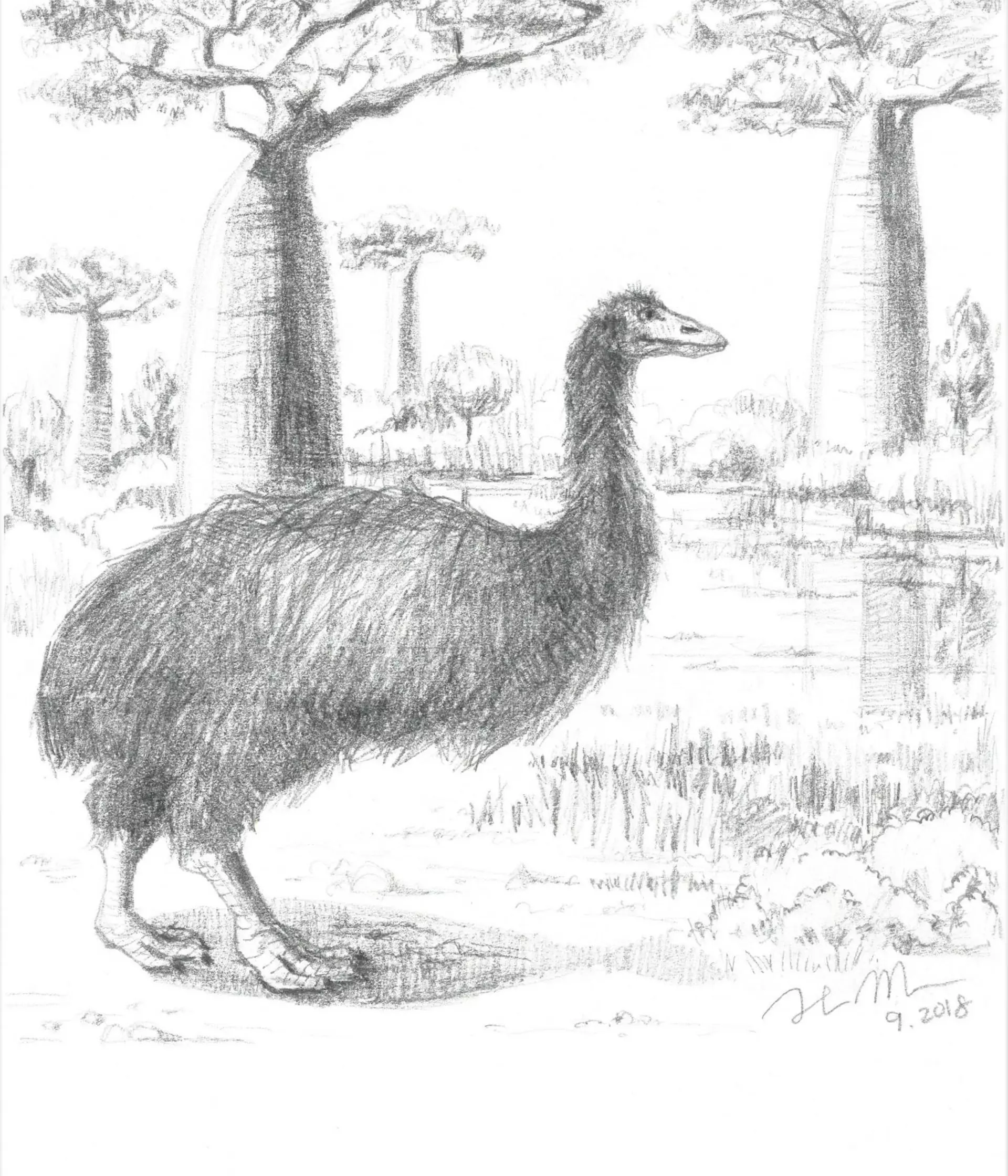
In 2018, ZSL scientists Dr James Hansford and Prof Samuel Turvey re-examined hundreds of bones in museums across the world belonging to Madagascar’s extinct “elephant birds” - the largest of Madagascar’s megafauna and an important part of the island’s evolutionary history. They made a remarkable discovery: some of these bones were so distinct that they represented an entirely new genus, which was named Vorombe after the local Malagasy word for “big bird”. The only species, Vorombe titan, was a colossal bird standing up to 3 metres tall and weighing an estimated 800 kilograms - making it the largest bird ever known to have lived.
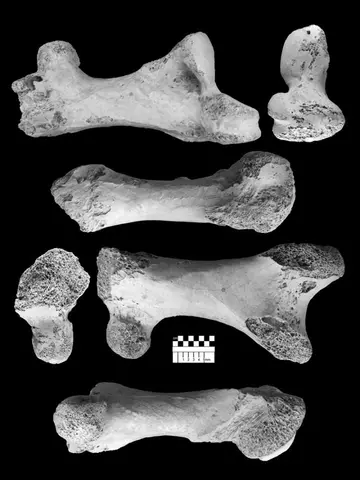
Madagascar’s elephant birds disappeared around 1,000 years ago, likely due to habitat loss (and possibly landscape change due to farming). Research into their extinction provides valuable insights into how ecosystems respond to new land-use practices and other pressures from human communities, and what this might mean for Madagascar’s threatened biodiversity today - lessons that continue to shape modern conservation efforts to protect species at risk.
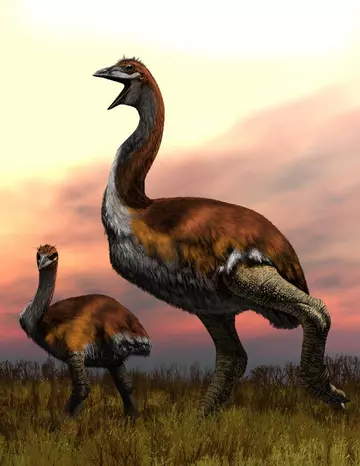
Our role in describing Vorombe titan highlights how even long-extinct species can deepen our understanding of biodiversity loss and how to prevent it.
Building on a legacy of description and discovery
With a legacy stretching back 200 years, ZSL has always remained true to its founding mission - the advancement of zoological science. Over two centuries, we have contributed to the formal description, rediscovery, and conservation of hundreds of species. While our understanding of discovery has evolved, the importance of exploring landscapes and monitoring wildlife remains unchanged.
From the coastlines and rivers of the UK, to the forests of Central Africa and the mountains of Southeast Asia, our scientists and conservationists, alongside local people and partners, have helped increase understanding of the world around us, bringing us closer to wildlife.
Today, the need for scientific description and taxonomic research is greater than ever. The animals we describe today may become the focus of tomorrow’s conservation success stories.
ZSL's 200th Anniversary
Discover more about our incredible 200 year history and how you can get involved with our 2026 celebrations by heading to our 200th anniversary hub