







Rob Deaville
CSIP Project Manager
What 35 years of strandings data, project milestones, and climate research can tell us about our marine environment
Last week marked the 200th anniversary of the founding of ZSL. This year we are also celebrating the 35th anniversary of the inception of the Cetacean Strandings Investigation Programme (CSIP).
In 1988 an outbreak of a disease called phocine distemper virus (PDV) led to the deaths of thousands of seals across Europe. We didn’t learn until later what had caused this mass mortality and, perhaps more importantly, we didn’t even know what marine mammals died from normally. So partly in response to this mortality event, what was then the Department of Environment (now Defra) set up a contract with ZSL’s Institute of Zoology, to investigate the causes of marine mammal strandings across England and Wales, for a five-year period from the end of 1990. CSIP was born, and 35 years later here we are, with the programme still going strong and with plenty of stories to tell.
What have we achieved in 35 years?
In 1992 we recorded Europe’s first mass mortality of short-beaked common dolphins due to bycatch (Kuiken et al. 1994), demonstrating that the dolphins had been caught in trawls or nets intended for fish. Further study of bycatch through investigation of strandings in later years subsequently helped lead to the ban on pair trawling in southwest England in 2005.
The CSIP has also produced one of the world’s largest datasets on chemical pollution exposure and effects (Jepson et al. 2016; Williams et al. 2023), helping contribute to policy changes such as the EU wide ban on some flame retardants in 2004 (e.g. Law et al. 2010) which contain persistent and toxic polybrominated diphenyl ether (PDBE) compounds.
We have also documented data on over 16,000 cetacean strandings and conducted more than 3,200 necropsies across our reporting region. We hold one of the world’s largest marine species tissue repositories, with over 150,000 samples helping to inform global research.
"CSIP is very much a citizen science programme, relying on the help of the public to report strandings and working closely with the volunteer networks run by the Cornwall Wildlife Trust Marine Strandings Network and British Divers Marine Life Rescue"
What has changed in 35 years?
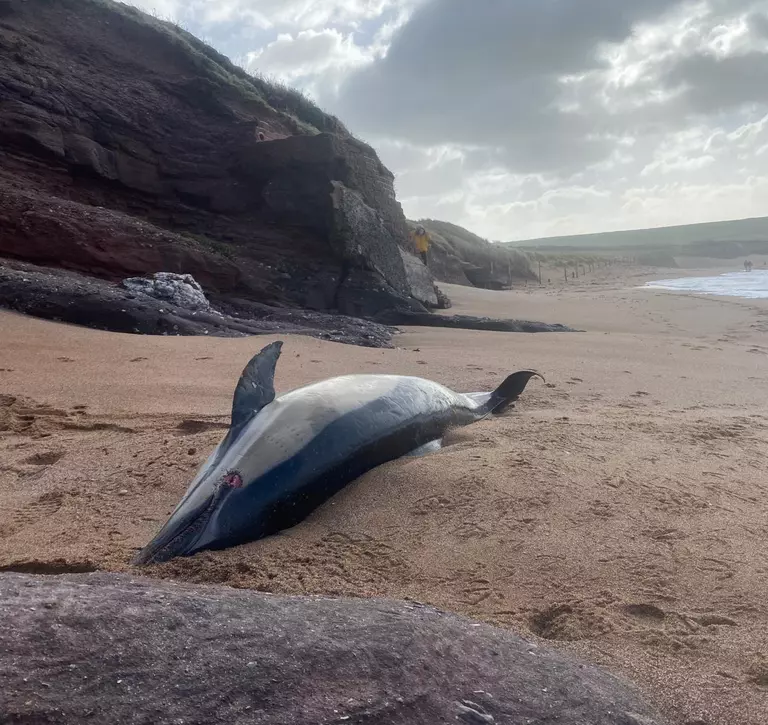
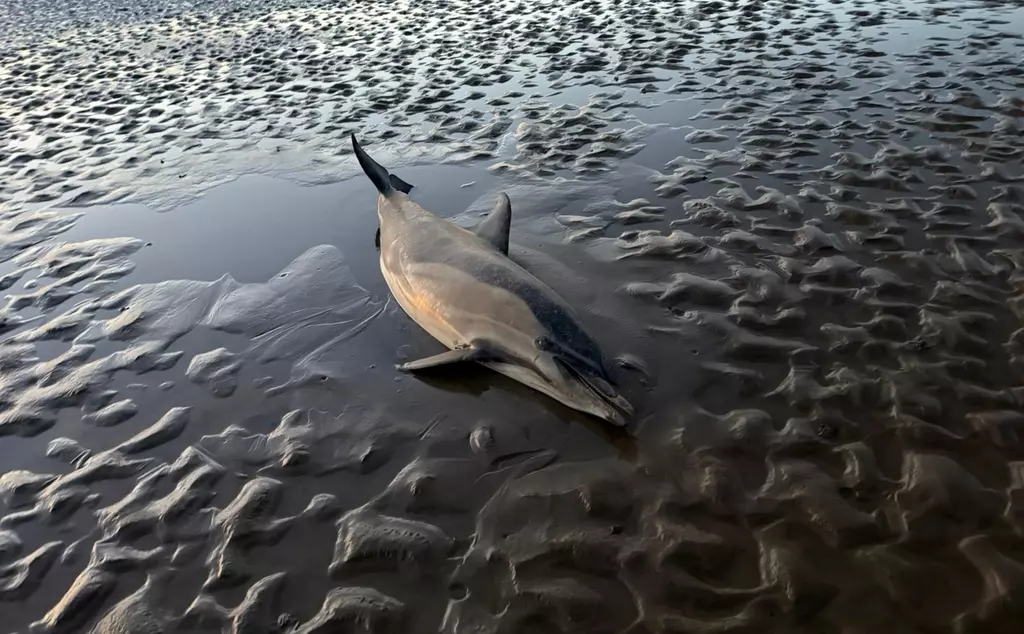
Over the last 35 years we’ve seen much change. As I’ve travelled around our country attending and recovering strandings, I often get asked by the public why these events occur and, increasingly in recent years, I’m asked if climate change is the cause of strandings. This can be a difficult question to address directly, but what I can see from my near 30-year involvement with CSIP is that the pattern of what we are seeing and recovering around our shores has altered and is continuing to change. For example, the CSIP has recorded significant increases in reported strandings of common dolphins over the last decade and for the first time, it has become the most commonly reported cetacean species stranding across our reporting region. Alongside this, their distribution has also changed, with many reported strandings further north and other evidence suggesting increasing presence closer to shore than in previous years. The common dolphin is a warmer water species and recent CSIP supported research proposed the use of this and other dolphin species as sentinels of climate change in the UK (Williamson et al. 2021).
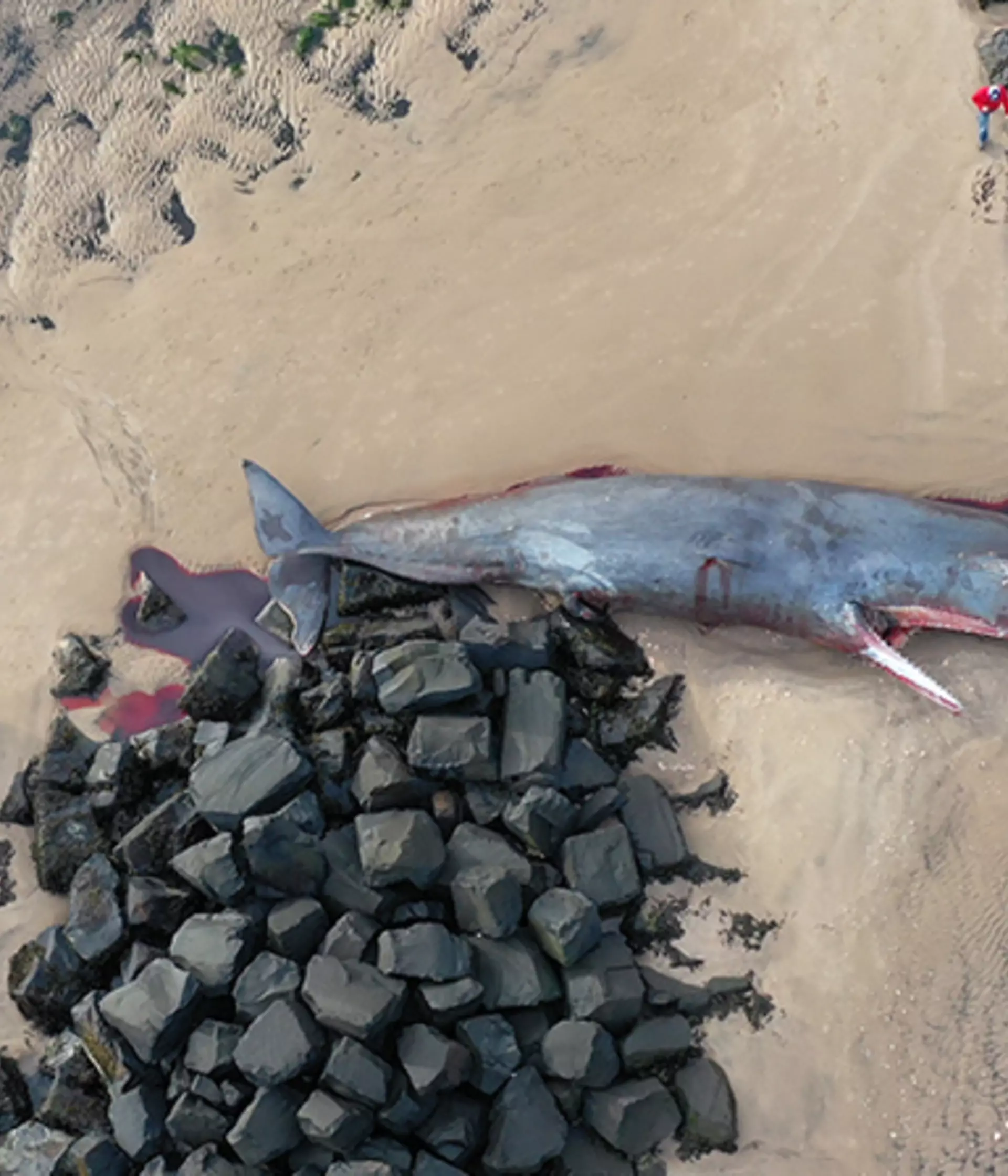
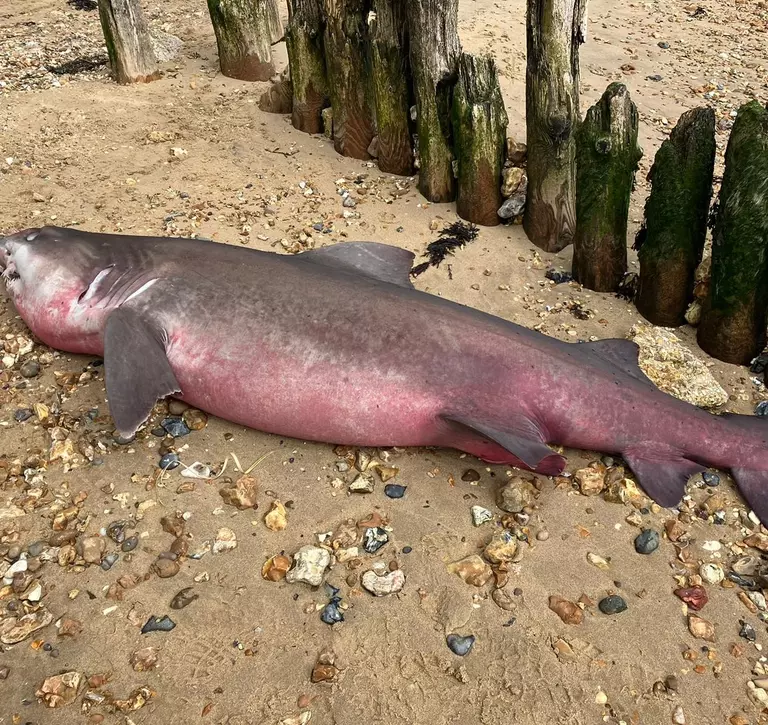
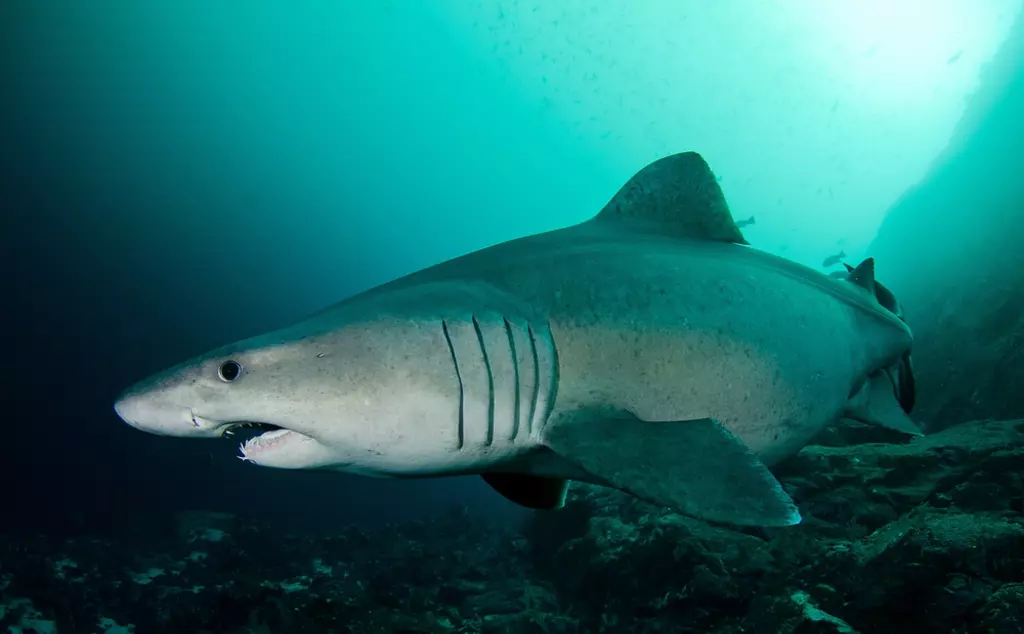
We’re also seeing strandings of species previously considered previously unusual for our waters. In 2023, several smalltooth sand tiger shark strandings were recorded in England and Ireland. These represented the most northerly recorded strandings of this warmer water species (Curnick et al. 2023) and may indicate range expansion, potentially due to increased warming of coastal shelf waters in recent years. We’ve recorded changes within other species too: Sperm whales have a highly structured social society, with females and young forming matriarchal pods in warmer water’s latitudes, whilst males form bachelor pods in colder waters, eventually becoming solitary. Around the UK we have historically only ever recorded male sperm whales, given our cooler waters and proximity to these bachelor pods (e.g. IJsseldijk et al. 2018). In over a century of strandings recording in the UK, only four female sperm whales have ever been recorded- and all have occurred in the last decade.
These are all obviously just individual examples- but taken together, they paint a picture of a world that is changing around us.
What does this mean for marine mammals?
Climate change has the potential to cause multiple impacts on marine species. For common dolphins, their altered distribution may be leading to greater exposure to chemical pollutants and infectious disease mortality, as recent research led by CSIP has highlighted (Williams et al. 2025). As we increasingly see new species in our waters, there is also an increased risk of disease outbreaks through introduction into previously unexposed areas. This is one of the theories behind the outbreak of PDV in Europe in 1988 and again in 2002/03, with Arctic seal species thought to be responsible for introduction of the disease into northern Europe (Duignan et al. 2014). Continued environmental perturbation through climate change may also increase the chance of similar disease outbreaks in the future.
As our seas continue to warm, understanding the impact this may have on vulnerable marine species is essential to improve their conservation status.
The full extent of that impact is not clear at this stage, but it is our ambition at CSIP to continue to shed light on the changing times and to strive for better protection for our wonderful marine life.
The CSIP is a collaborative consortium, with ZSL the lead partner, working together with our partners at the Natural History Museum, Marine Environmental Monitoring, the Cornwall Wildlife Trust and the Cornwall Marine Pathology Team and is co-funded by Defra and Welsh Government. We also work closely with our partners in the Scottish Marine Animal Strandings Scheme, which coordinate strandings investigation in Scotland. Its current remit includes the investigation of strandings of cetaceans, seals, marine turtles and some elasmobranch species, with the current contract running to 2031.
This is the second in a series of blogs being released over the course of 2026, to coincide with ZSL’s 200th anniversary, and to also mark 35 years of work on strandings investigation by CSIP partners. Watch this space for more information on other blogs and events we hope to run through the year.
Climate change and human activity have pushed our precious planet to its limit, causing the devastating loss of so many habitats and species. From lab to field, hands on and behind the scenes, we’re leading the future of conservation, shaping agendas and influencing change to support better life, health and living for people and wildlife.