







ZSL
Zoological Society of London
A deep-dive into half a century of stories from the Welsh fishing community has offered a new perspective on the history of angelsharks, once thought to be locally extinct. Jake Davies, Project SIARC Technical Specialist, shares his experience of finding hope in understanding how the angelshark's history allows us to monitor and conserve populations for the future.
Preserving coastal heritage
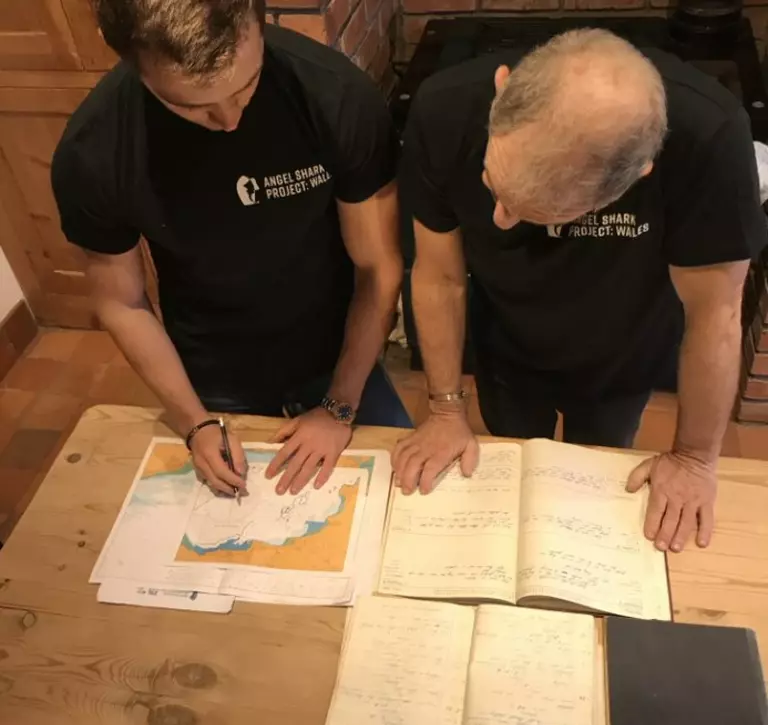
Growing up in a small coastal community in northwest Wales, in a maritime fishing family, my earliest memories are of being on the water, lifting lobster pots with my dad. This upbringing shaped my curiosity in understanding the local coastline, where I often listened to anecdotes from family members, friends, and the fishing community about how fishing has changed. As part of Angel Shark Project: Wales, I had the exciting opportunity to sit down and hear these memories and stories, as well as reading logbooks and looking at photographs, to gain insight into the changes that have occurred over the past 50 years. Using these personal accounts, we have been able to understand how these changes have influenced records of the angelshark, as well as other sharks, skates, and rays off the Welsh coast.
“We have been able to showcase the value of local community voices in researching less commonly recorded species.”
How rare are angelsharks?
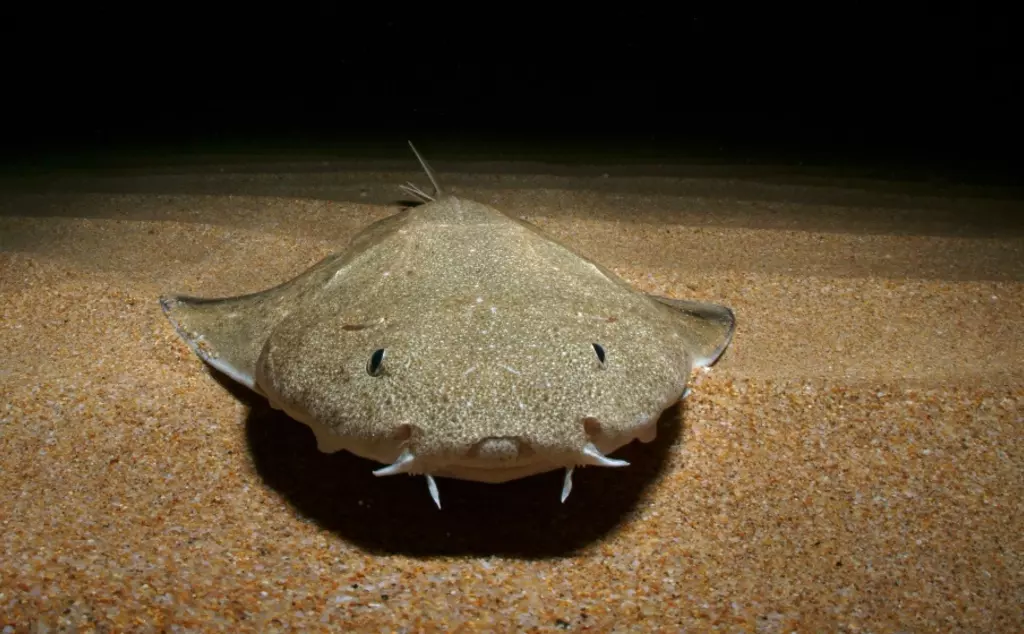
They are masters of camouflage; their skin is perfectly coloured to match the sand or mud they live in, and they use large and powerful pectoral fins to completely bury themselves into soft sediments.
However, angel sharks are one of the most threatened shark families in the world. Out of the 24 species that are found, the angelshark (Squatina squatina) is the only one that is resident to the waters of the UK. Historically their range extended from North Africa up to the North Sea. Yet in recent decades, this has decreased to just a few pockets of populations around the Canary Islands, Mediterranean and Celtic Sea. In this project, we set out to better understand the status of the angelshark population around Wales, which was thought to be one of the last strongholds for the species.
The journey to discover more about angelsharks in Wales
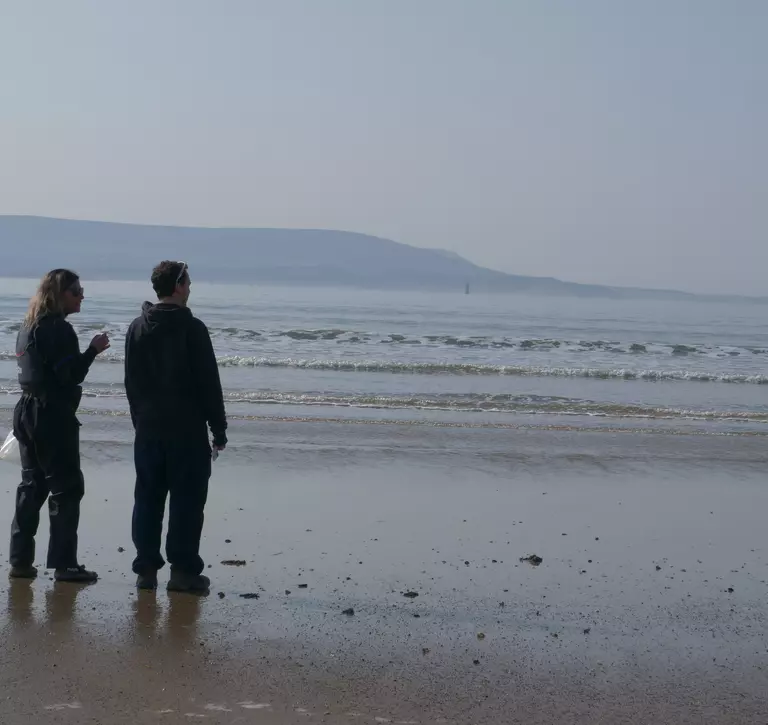
Prior to the start of a pilot project in 2017 led by Natural Resources Wales and ZSL, there were very few available records of angelsharks off the Welsh coast, with only a handful from scientific surveys yielding limited results. This led to the belief that the species was no longer present in the region and had become locally extinct. However soon after the pilot project started to engage with local fishing communities in North Wales, encounters with angelsharks were being reported and stories of their occurence along the Welsh coastline began being told.
“The project aimed to work closely with communities and fishers to learn more about angelsharks and to celebrate this precious natural heritage.”
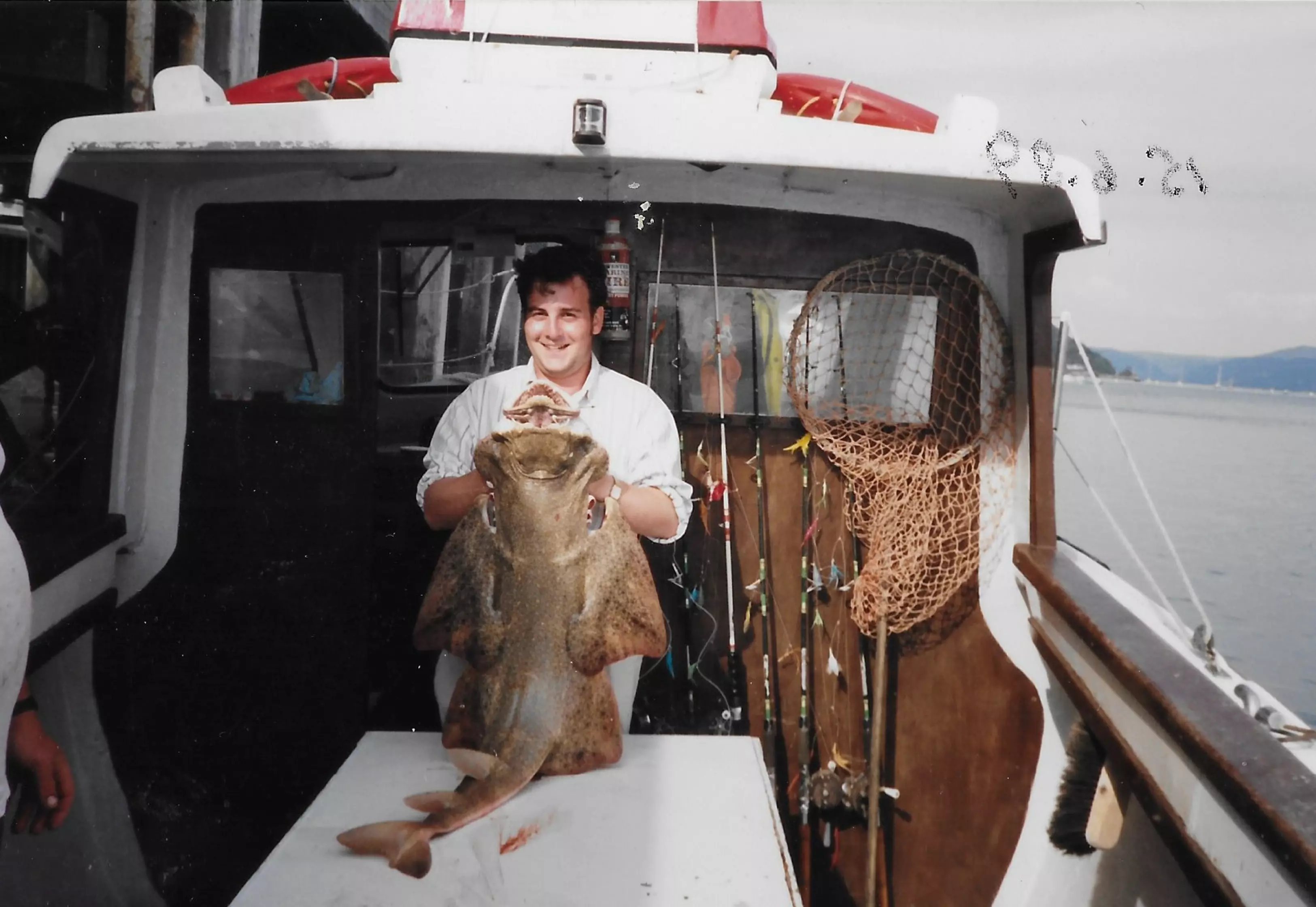
In fact, the species sparked memories and stories with people we spoke to spanning half a century, with historical images being unearthed from phones and old dusty photo albums. After listening and learning more about the species’ historical presence along the Welsh coast, Angel Shark Project: Wales was launched in 2018.
How a community’s stories helped build a picture of a population
Through travelling all over Wales and speaking with active and retired fishers from different sectors, the reverence that the species was held in became abundantly clear. Memories of their unique appearance and unforgettable strength had left lasting impressions. Yet interactions with this iconic species had seemingly been declining, which has led to other researchers concluding that the population species in Wales had faced dramatic declines. However, reflecting on how fishing had changed over the years was a major part of our conversations and it became increasingly clear that there were other factors that likely led to fewer records being reported in recent in years.
Through traditional fisheries analysis techniques, these subtle and nuanced changes in fisher behaviour, regulations and wider social circumstances are overlooked. By pulling them all together however, a bigger picture emerged that may, at least in part, explain the reduction in sightings. This included the closure of inland industries impacting income, therefore reducing the likelihood of visiting the coast and spending money on charter fishing trips. Alternatively, changes in regulations for commercial and charter fishing along with changes in target species were all likely to reduce the likelihood of encountering an angelshark. This gives us hope that the angelshark population around Wales is healthier than originally thought, and perhaps we have just become worse at finding them.

Celebrating sharks and the people who live alongside them
Without the stories, photographs and experiences shared by fishers and local communities we would have a significantly reduced understanding of this rare shark species in Wales. Yet, more importantly this work is an opportunity to celebrate that one of the world’s rarest shark species is still present off the Welsh coast, with records being shared to the project each year (plus recent detections through our work with eDNA). This work highlights the importance of engaging and working closely with local communities especially when studying less commonly seen species. Core to all our work is an ethos and commitment to work in meaningful partnership with fishers and local communities. It is from this foundation that ASP: W has continued to grow and has now evolved into Project SIARC (Sharks Inspiring Action and Research with Communities), to better understand the importance of Wales for more shark species and the people who they live alongside them.
Climate change and human activity have pushed our precious planet to its limit, causing the devastating loss of so many habitats and species. From lab to field, hands on and behind the scenes, we’re leading the future of conservation, shaping agendas and influencing change to support better life, health and living for people and wildlife.