







23 June 2025
Forests at the heart of climate solutions
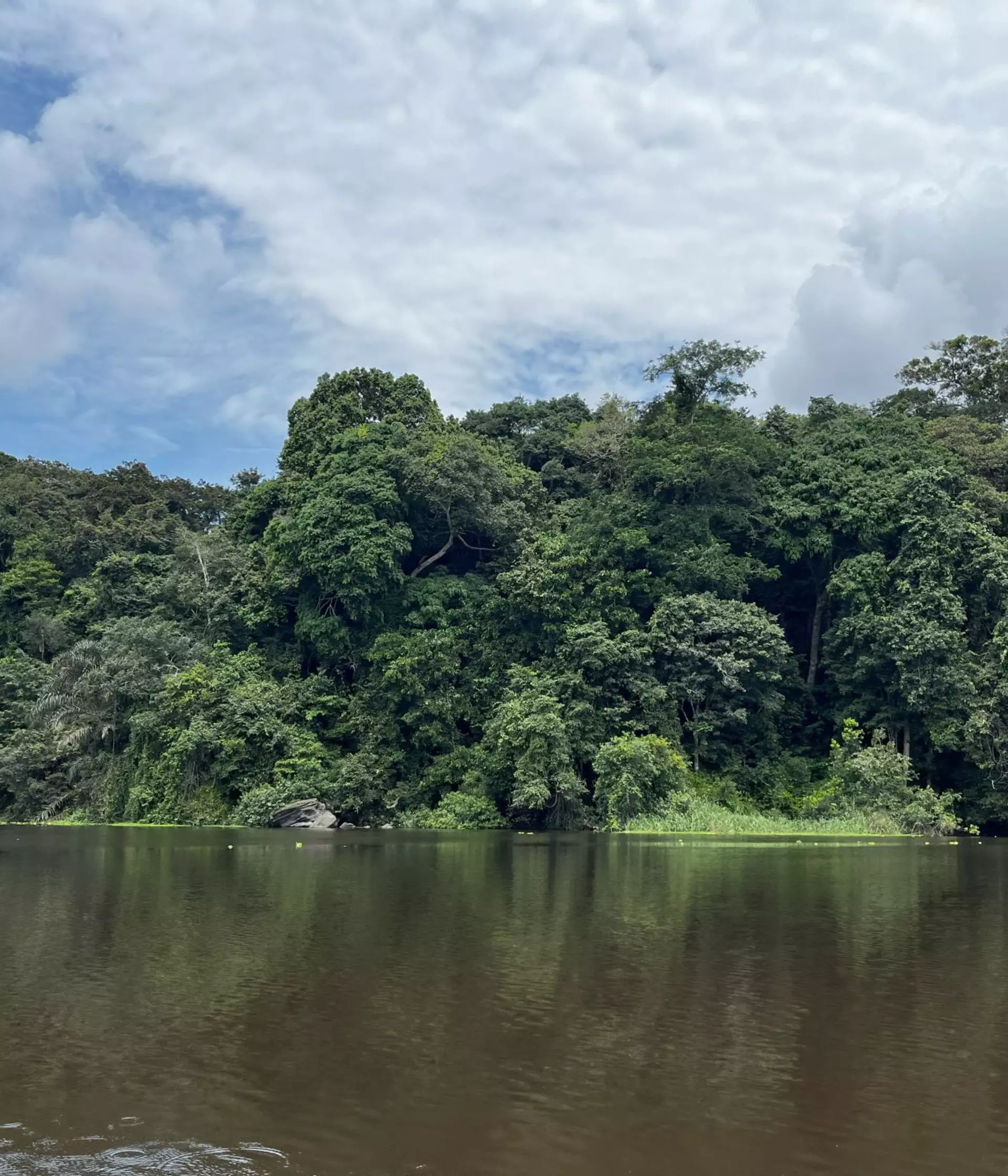
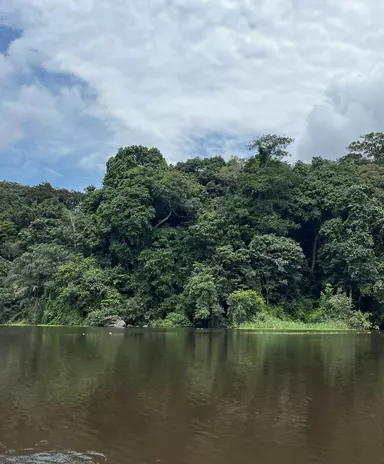
Forests are fundamental to global wellbeing – central to climate stability, biodiversity and community livelihoods. The Western Congo Basin (WCB), one of the most intact and pristine rainforests on Earth, plays a pivotal role not only regulating the global climate, but also the blue ecosystems.
Mirroring our wider organisational commitment to restoring nature and helping people and wildlife thrive together, the Biodiverse Landscapes Fund (BLF) programme in the WCB programme has a far-reaching impact through the different activities under seven components, tackling deforestation, supporting inclusive forest governance, and advancing sustainable, climate-resilient development for forest-dependent communities – especially women, youth, and Indigenous Peoples. The programme is a model for how climate action can be driven from the ground up, while also informing national and regional strategies.
A transboundary landscape of global importance

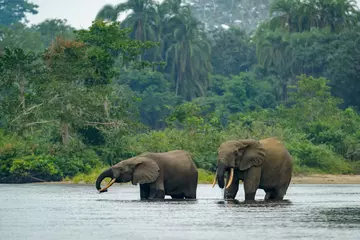
The BLF-WCB programme is centred around the TRIDOM (Tri-National Dja-Odzala-Minkébé) Landscape – part of the world’s largest rainforest outside the Amazon. Spanning Cameroon, Gabon and the Republic of Congo, the TRIDOM is home to forest elephants, western lowland gorillas and central chimpanzees. The TRIDOM also includes 11 protected areas – 24% of the total area – where many Indigenous Peoples and Local Communities (IPLCs) live and depend on the forest.
Learn more about the landscape and our conservation focus here.
Placing Indigenous Peoples and Local Communities’ rights at the heart of our work
Biodiversity aside, TRIDOM is inhabited by several IPLCs, including an estimated 10,000 Baka individuals. Despite the low population density of one to two inhabitants per square kilometres, IPLCs are at the centre of the programme. The programme takes a rights-based approach, recognising and ensuring IPLC rights to self-determination, autonomy, land, and natural resources, Free, Prior, and Informed consent (FPIC), and access to grievance mechanisms. Across all activities, we are invested in developing an in-depth understanding of the local context, IPLC views and concerns, legal and customary rights, and the barriers that limit participation – so we can co-develop culturally sensitive approaches together.
Collaboration across borders and institutions
The forests of the Western Congo Basin cross national borders, as do the challenges that threaten them. To respond, the governments of Cameroon, Gabon, and the Republic of the Congo signed the TRIDOM Collaboration Agreement in 2005. Supported by the Central African Forest Commission (COMIFAC), this agreement led to a shared strategy focused on five priorities: supporting communities to access natural resources, protecting Indigenous rights, promoting sustainable food systems, advancing climate action, and conserving biodiversity. These priorities closely align with the goals of the BLF programme.
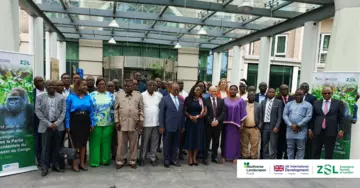
To deliver on these aims, BLF works across all levels of society. Regionally, it engages with COMIFAC. At the national level, it supports ministries and technical agencies such as Cameroon’s National Observatory of Climate Change (NOCC). Locally, it partners with Indigenous Peoples and community-led organisations like REPALEAC, along with NGOs, researchers, civil society groups and the private sector, such as timber companies.
The programme brings these actors together to share knowledge, coordinate their efforts, and make decisions that benefit both people and nature. It also supports the development of practical agreements – such as land use plans or biodiversity strategies – that are shaped through inclusive dialogue and grounded in FPIC, ensuring that Indigenous and local voices are at the centre of the decision-making process.
Science-based tools to monitor impact
Specific to climate, ZSL’s Institute of Zoology has developed a deforestation early-warning system for the landscape looking at rates of deforestation and ecosystem integrity. This tool also helps monitor trends in biodiversity, functionality of ecosystems, and changes in livelihood – providing a clearer picture and impact measurements of how our activities can reduce threats and improve livelihoods.
Activities led by and for Indigenous Peoples and Local Communities
IPLCs are directly included in co-designing and the implementation of some activities. An example is powering climate action through community-led ecotourism and forest carbon. We are working with the NOCC and co-developed scalable solutions to protect Congo Basin forests and uplift communities. We assessed some 165,692 hectares of community forests for carbon project development; and identified potential touristic sites for community-based tourism, including the preservation of Indigenous cultures and leveraging natural assets.
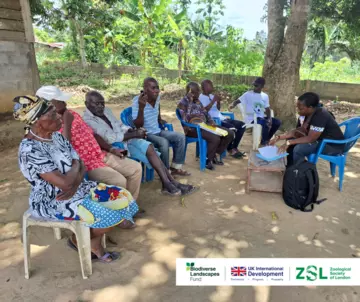
Another example is the adoption of zero deforestation through Good Agricultural Practices (GAP). Some 200 people have been trained so far, including smallholder farmers, IPLCs, women, youths, local agricultural extension workers, NGOs on environmental protection, community leaders and members of Common Initiative Groups (CIGs). They were further trained on agro-forestry practices and integration into crop ecosystems, post-harvest management and cost-benefit analysis of farm operations.
Another practical example comes from the area around the Dja Faunal Reserve where cassava is a staple crop. We partnered with local communities to address the devastating impacts of Cassava Mosaic Virus. Through training on integrated pest management, composting, and demonstration plots, communities are beginning to see real change. A representative from the Endengue community shared:
“Before Moses from ZSL came here, we didn’t know about integrated pest management and how to deal with the cassava disease. We’re happy to see the plants in the demonstration plots are not as affected by disease and the cassava roots already look bigger.”
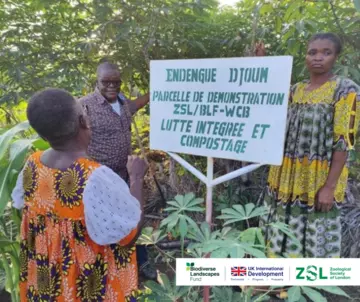
Supporting communities with practical tools and knowledge is not just improving crop yields - it’s helping to reduce pressure to clear new forest areas and providing alternative sources of income, particularly for women and Indigenous families. By investing in agroforestry and sustainable value chains, the project is creating locally rooted solutions that benefit both people and biodiversity.
Delivering conservation impact at all levels
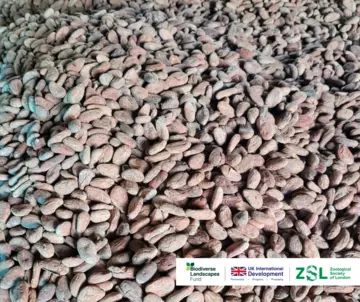
These activities do not only protect forests but contribute to improved and sustained livelihoods through equitable benefit-sharing; benefits from protecting vital carbon sinks and high-value biodiversity corridors; diversified income generating activities to reduce dependency on the forest and related resources; improved recognition and involvement in the decision making processes; valorisation of products such as cocoa and non-timber forest products (NTFPs) and increased market access, amongst others.
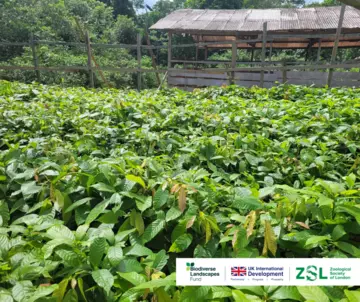
The BLF-WCB programme shows how climate and conservation efforts can succeed when they are inclusive, community-driven and built to last. By supporting sustainable livelihoods, especially for women and marginalised groups, and encouraging responsible use of natural resources, the programme helps reduce pressure on forests while protecting biodiversity.
This reflects ZSL’s own approach to conservation – one that is grounded in science, shaped by local knowledge, and centred on people. Across the Western Congo Basin, we’re helping communities restore ecosystems, live alongside wildlife, and build the skills and networks to lead conservation efforts themselves. At the same time, we’re supporting stronger governance and better policies – so that nature is not an afterthought, but a foundation for long-term resilience.
A model for scalable, inclusive climate action
The BLF-WCB programme offers a powerful model for sustainable, community-led climate action. It combines established, traditional practices with innovative approaches, all co-designed with local stakeholders. What makes the programme stand out is its emphasis on long-term sustainability: by ensuring that local communities lead and benefit from the work, it builds ownership and attracts investment in nature-based solutions.
While rooted in the Congo Basin, the programme is shaped by decades of conservation experience and driven by a commitment to learning. Its flexible, landscape-wide approach allows partners to adapt to changing local conditions, share lessons across contexts, and build systems that last beyond the life of the project.
By restoring ecosystems, enabling sustainable livelihoods, and empowering communities, the programme strengthens long-term resilience to climate risks and supports biodiversity. At its heart, it recognises the deep connections between environmental justice and social equity – showing how IPLC rights, gender equality, and conservation are all essential to effective climate solutions.
Discover the programme
Explore how the Biodiverse Landscapes Fund – Western Congo Basin programme is working with communities across Cameroon, Gabon and the Republic of Congo to protect forests and drive climate resilience.