






Using genomics to assess wildlife health at the genomic, cellular, and regulatory levels
The accelerating pace of global change presents profound challenges for wildlife health and survival. From habitat loss and climate change to pollution and emerging diseases, threatened populations face a host of pressures that jeopardise their resilience.
Conservation biology has traditionally focused on genetics, but advances in genomic sciences now offer unprecedented tools to understand how species adapt, persist, or decline in the face of these threats. For scientists working in species recovery, these approaches also provide the evidence needed to design more effective interventions for example by optimising breeding or translocation programs. Whether diagnosing hidden genetic risks, uncovering the environmental imprints in cells, or measuring recent environmental exposures through epigenetics, molecular advances provide tools that can guide populations toward persistence in an increasingly uncertain world.
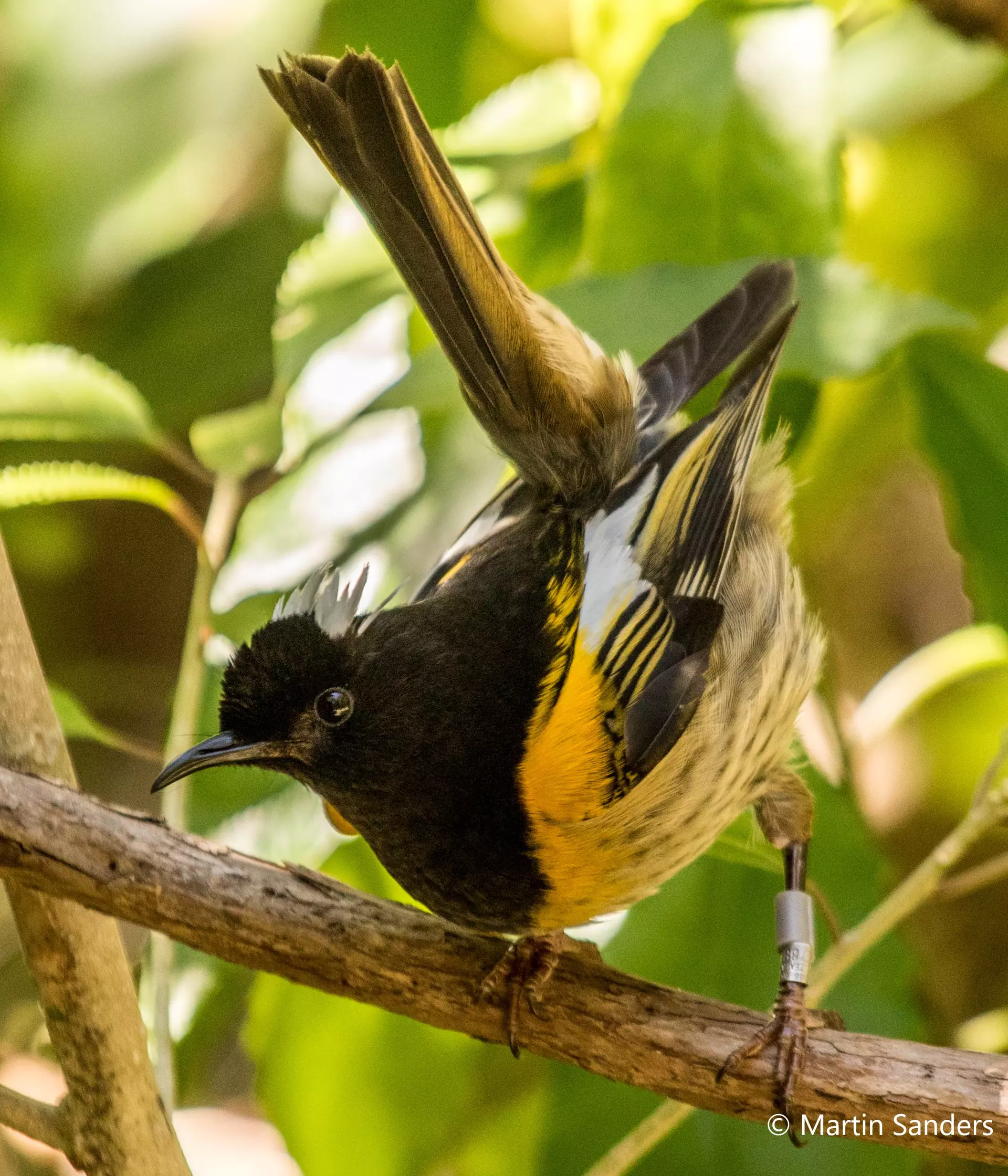
This event will explore how genomics can move conservation beyond traditional markers of diversity, enabling us to assess health at the genomic, cellular, and regulatory levels. Speakers will focus on innovative tools developed in biomedical research, and how these can be integrated to offer insight into wildlife health, from the hihi in Aotearoa New Zealand to the sea turtle in Cabo Verde.
For researchers, practitioners, and policymakers, the combined talks underscore that genomics is not just about decoding DNA - it is about understanding how genomes interact and respond to the environment, and how this knowledge can be used to safeguard biodiversity and health.
Speakers
- Dr Patricia Brekke, Institute of Zoology, ZSL - Genomic health and reproduction in conservation
Patricia Brekke is a conservation biologist and Research Fellow at the Institute of Zoology, ZSL. Her research focuses on adaptation and the ecological, genetic and evolutionary consequences of conservation interventions and management of species under anthropogenic threat.. Patricia's interest in female reproductive failure stems from her work on captive breeding and reintroduction programmes, and the associated impact of inbreeding on hatching success and offspring survival. Patricia is part of the IUCN Conservation Translocation Specialist Group and is an advisor to various bird reintroduction programmes in the UK and New Zealand. Patricia completed her PhD at Imperial College London on the genetic consequences of reintroduction on the New Zealand hihi.
- Dr Charley Yen, Queen Mary University of London - The Turtle Project: how can epigenetics advance sea turtle conservation?
Charley Yen completed her PhD at Queen Mary University of London in March 2025. Her research involved developed genomic and epigenomic tools to aid sea turtle conservation under climate change, focusing on the loggerhead turtle population in Cabo Verde, West Africa. She is now working as a postdoctoral researcher jointly between Queen Mary University of London and the University of Massachusetts Amherst, where she is continuing to develop high-throughput epigenetic tools for sea turtle conservation, now focusing on Hawaiian green turtles. Previously, Charley earned her bachelor’s degree in Natural Sciences and master’s degree in Zoology at the University of Cambridge, where she studied the evolutionary genomics of colour patterning in wood tiger moths.
- Dr Alex Cagan, University of Cambridge and Wellcome Sanger Institute - Ecology in Every Cell: Reading the Genomic Health of Species
Alex Cagan is an Assistant Professor at the Departments of Genetics, Pathology and Veterinary Medicine at the University of Cambridge. His lab focuses on developing and applying methods to study how the DNA inside the cells of organisms, including ourselves, changes as we age and how this process can be influenced by environmental factors. This relatively new field of somatic genomics has profound implications for our understanding of evolution and ageing. By applying these new genome sequencing technologies to the species that share our environment he aims to find new ways to monitor and understand how environmental exposures impact our health.
- This Science and Conservation Event is free to attend but registration is required so we can monitor attendee numbers.
- The event will feature talks from the speakers, followed by a Q&A discussion panel. It will run from 6:00pm - 7:30pm, and doors will open at 5:30pm.
- In-person seats are allocated on a first-come, first-served basis.
- Venue: Huxley Lecture Theatre at the Meeting Rooms of the Zoological Society of London, Regents Park, NW1 4RY.
- Travel: Nearest underground: Camden Town Station; Nearest bus: no. 274.
- Recording disclaimer: The presentations and Q&A session will be filmed during this event, and the recording published on our Science and Conservation YouTube channel afterwards. Please be aware that by attending this event you consent to be filmed or your voice to be recorded during the Q&A session, which will be included in the published video.
- ZSL Science and Conservation Events sustainability guidance can be found here.
- For enquiries about this event, please email scientific.events@zsl.org.
- For press enquiries, please contact the ZSL Press Office: press.office@zsl.org.
- Listen to our ZSL Wild Science podcast here or subscribe on your favourite podcast app.
- Follow us on Twitter @ZSLScience to hear about new publications from our researchers, upcoming events and podcast episode releases.
- Follow us on Facebook @ZSLScienceAndConservation to receive notifications about new events.
- To catch up on all our recorded previous events, you can subscribe to our YouTube channel.
- For more information about how to join the ZSL Fellowship programme and engage with a network of thousands who are shaping the future of conservation, please click here.