






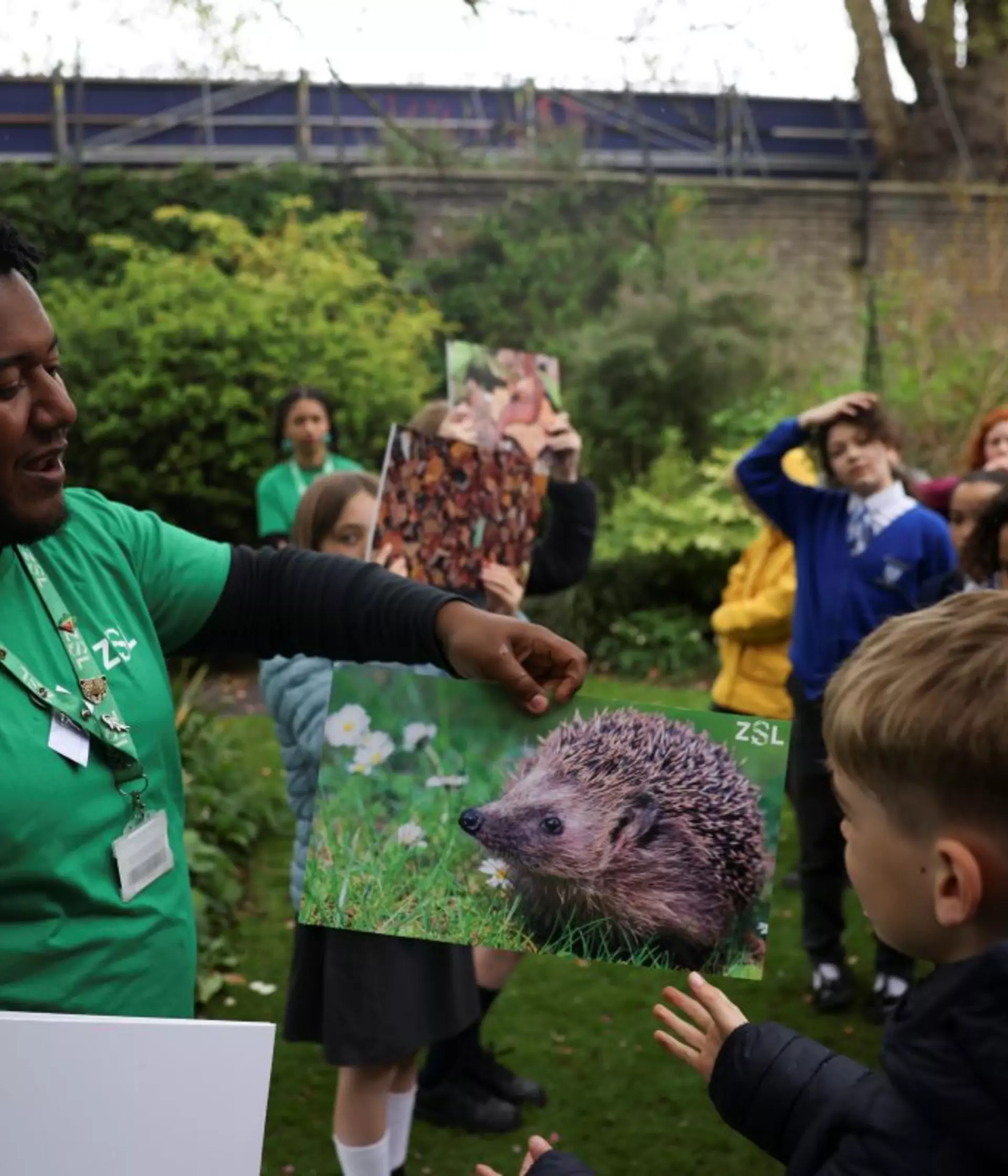
All the resources that you need to support your students to get outside and connect to nature
On this page you will find:
- Ideas to teach the curriculum outside
- Activities to connect your students to nature
- Resources to survey your school grounds to measure the biodiversity.
Curriculum-linked resources
We would love for teachers to be empowered to move lessons outside or use natural materials in their lessons. To support this and to show that teaching outside is not in addition to delivering the curriculum, we are producing curriculum linked packs full of ideas.
Before you start please read our how to guide and download our outdoor learning plan:
The following subject specific packs are split by sub-topic and pitched to all of the different key stages for you to choose the resources most appropriate to your young people. Idea packs are in green and supporting resources are in white below the key stage pack that they apply to.
Please bookmark this page - more resources will be added soon - please see readily available resources below:
Outdoor maths resources KS1-KS4
Outdoor science resources KS1-KS4
KS1 Outdoor science Opportunities
KS2 Outdoor Science Opportunities
Parts of a flowering plant sorting mat
Vertebrate & invertebrate ID mats
Animal gestation and weight information
Blood components facts and functions
Transporting nutrients relay cards
Reversible and irreversible changes cards
Invertebrates classification key
Electricity orienteering cards
KS3 and KS4 Opportunities Coming Soon
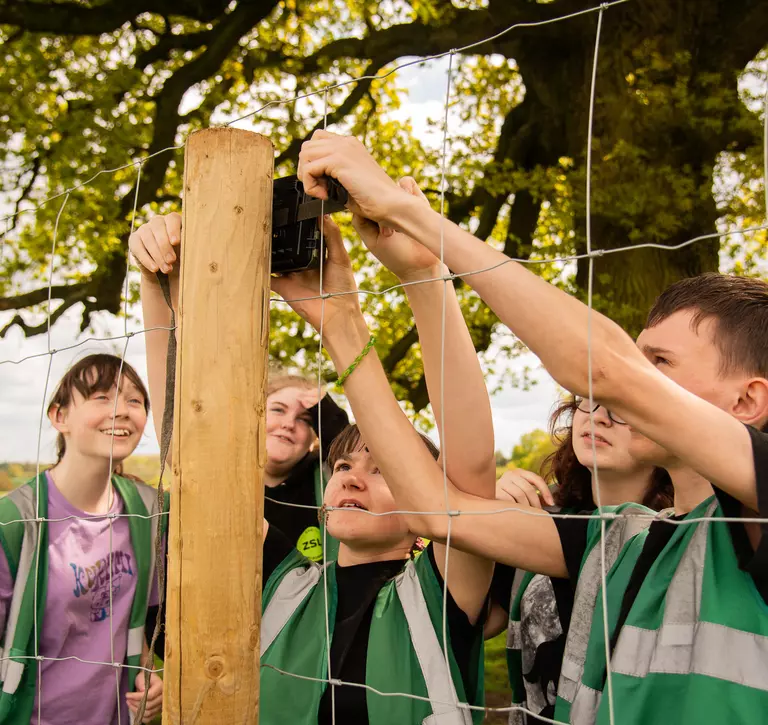
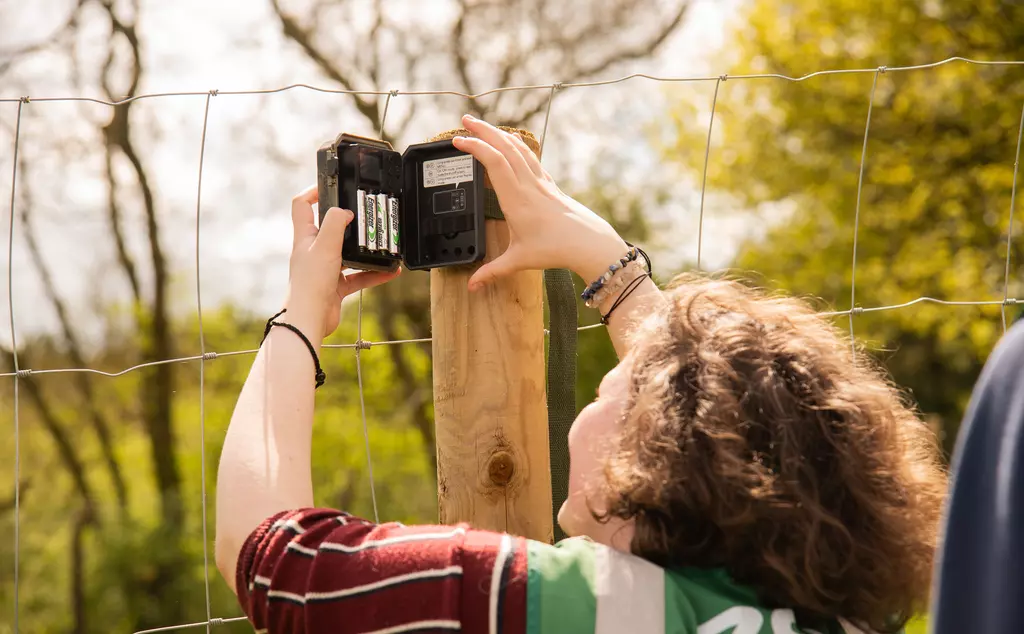
Students setting camera traps on a fence to monitor wildlife
Nature connectedness
Nature connectedness is 'An individual's subjective sense of their relationship with the natural world' (Pritchard et al., 2020)
Many studies have found positive relationships with:
- Overall wellbeing
- Happiness
- Life satisfaction
- Purpose in life
We have produced packs of resources to support your students with their nature connectedness. supporting them to explore the pathways to nature connection:
- Senses - Using all our senses to connect to nature.
- Beauty - Noticing, appreciating and celebrating the beauty of nature.
- Emotions - Seeking, noticing and reflecting.
- Meaning - Exploring Personal and cultural stories that help people see how nature is a part of human culture.
- Compassion - looking after nature helps you care more about it.
Below is a set of 5 minute Nature Connectedness activities, perfect for a calm start to the day, a movement break, a form time; when getting outside for a few minutes would be a big benefit for classroom productivity later in the day.
5-minute Activities for Nature Connection
There are also these supporting proformas for resources you might see featured in the document above:
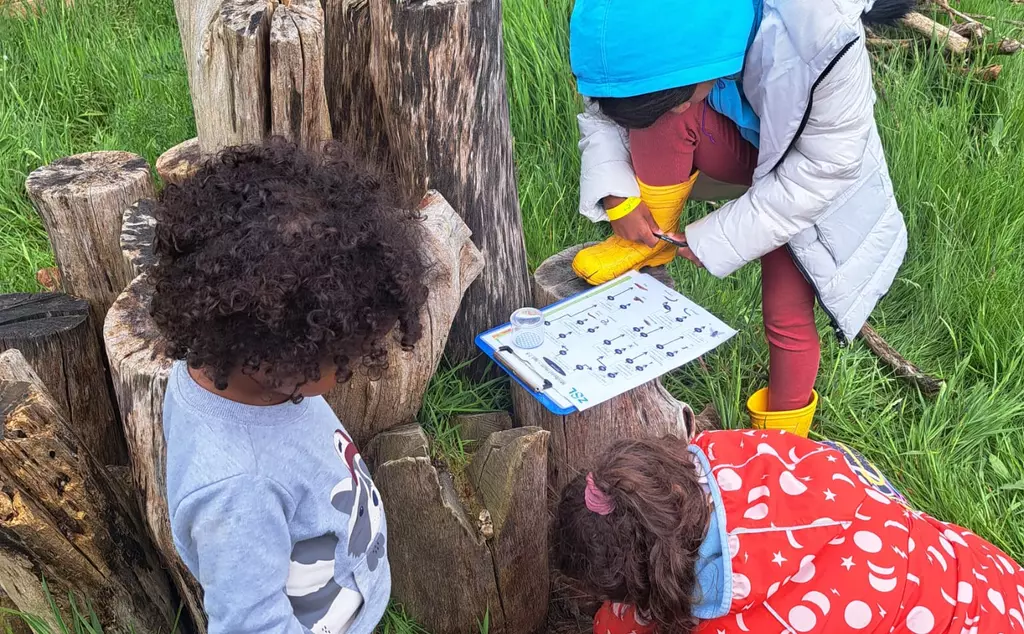
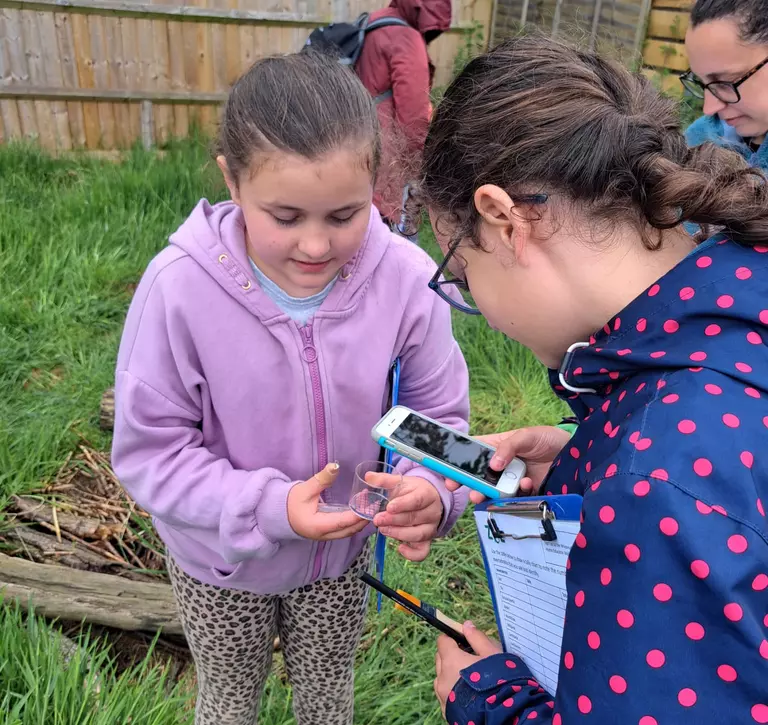
Students of different ages conduct an invertebrate survey
Surveying school grounds for biodiversity
Some schools wish to engage their students in learning about the species that live on their school site.
If your school is also embarking on a site transformation, planting trees, vegetable gardens or wildflower patches, you may wish to measure the impact of these changes with the students by taking measurements before and after the changes have been put in place.
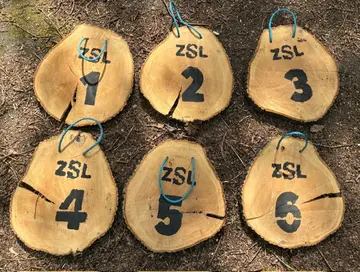
The resources below rely on 6 locations being set up as the 'sample locations' around the school site. These could be in a woodland area, by a flower patch, alongside a hedge or even on the edge of the playground. Schools we have worked with we have used numbered log disks to mark these locations, however paving slabs would also work well.
Using the following resources students will be supported to survey birds, by either their song or by sight, ground invertebrates, butterflies and pollinators. There are teacher guides to support you to instruct them, along with the data collection sheets and different levels of identification sheets.
Bird surveys
There are two options for surveying the birds on your site, either analysing their song using an app (Merlin Bird ID), or using an Identification Sheet.
Merlin Bird ID student data collection sheet
Merlin Bird ID student data collection sheet - SEND version
Bird ID student data collection sheet
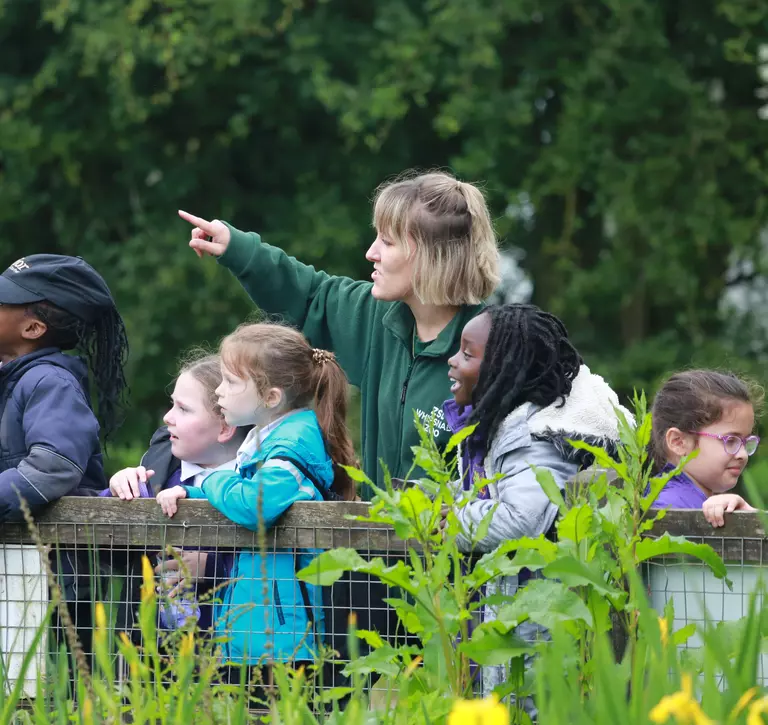
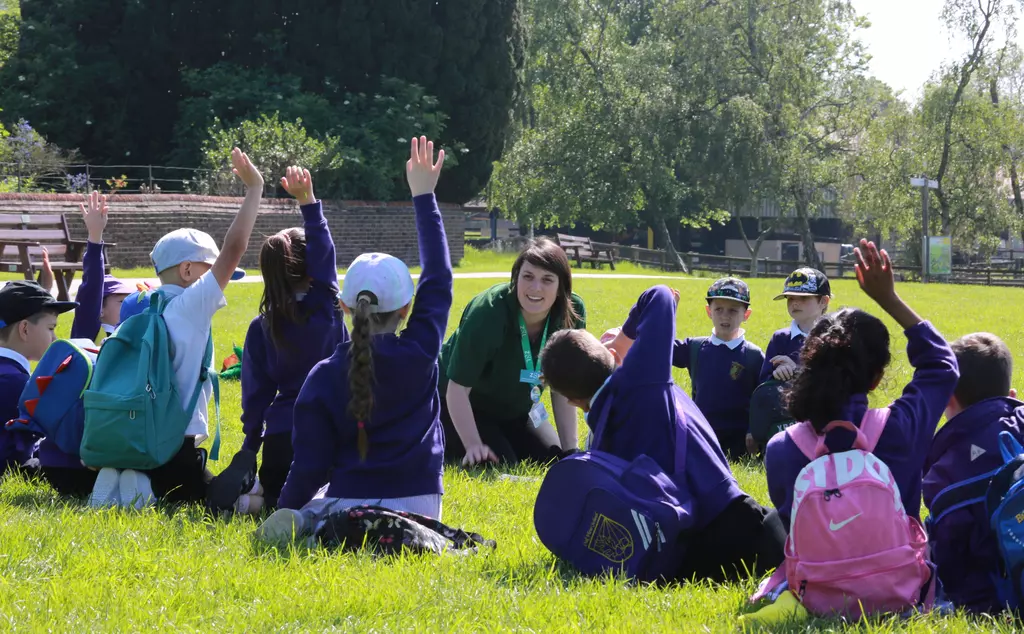
Education officers work with students outside
The information and guidance provided by ZSL are intended for educational purposes only. Responsibility for the safety and supervision of pupils remains with the school and its staff at all times. Teachers should only undertake activities that are appropriate to their setting and must ensure that all activities are planned, risk assessed, and carried out in accordance with their school’s policies, procedures, and safeguarding requirements.