






Asian elephant facts: nine things you didn’t know about Asian elephants.
Asian elephants can spend up to two-thirds of their day eating
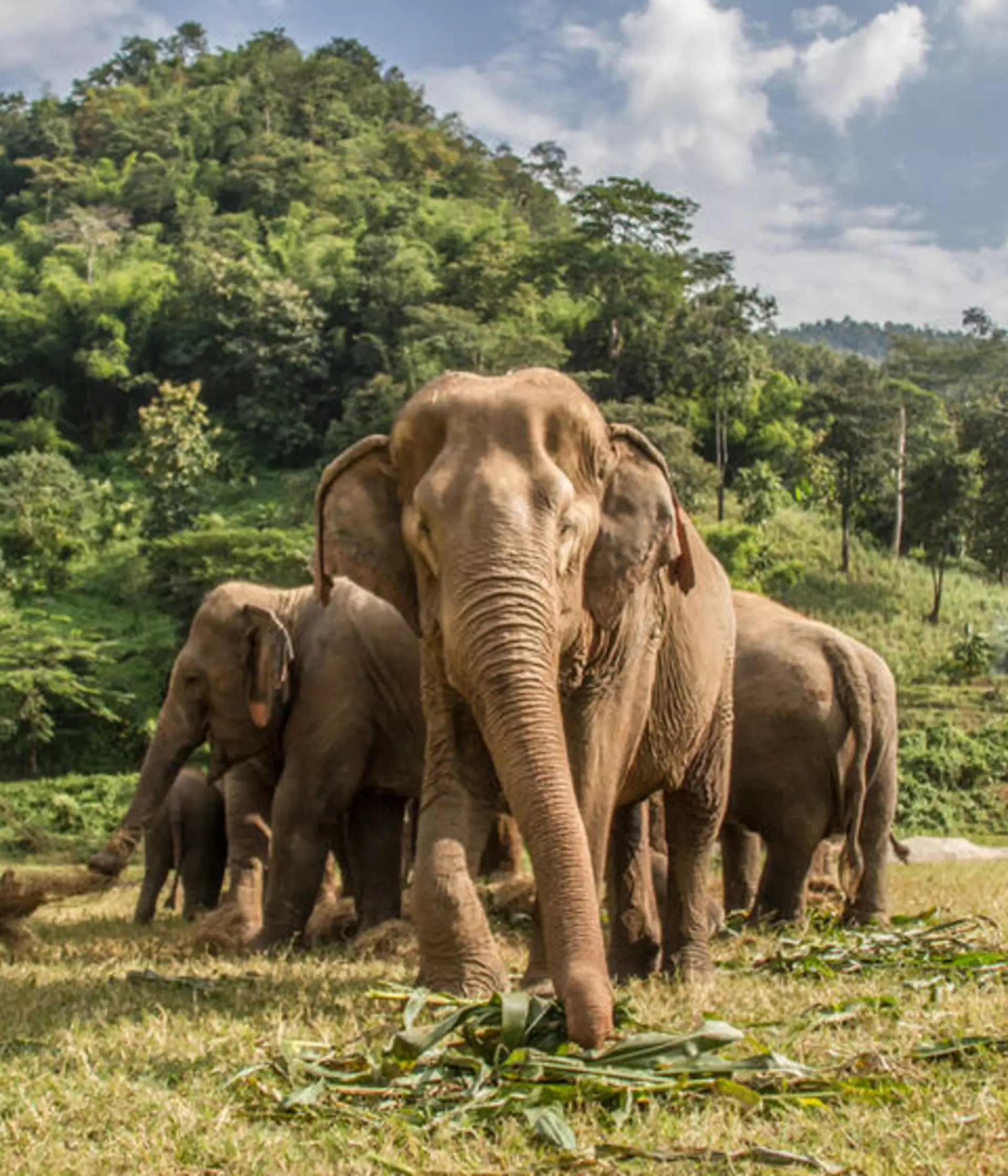
- As Asia’s largest land mammal, these elephants need a lot of food to sustain them and they can spend up to two-thirds of their day eating.
- Elephants are herbivores, and their diet consists of vegetation including fruit, twigs, bark and roots, which can vary throughout the year depending on what’s available.
- Their long trunks allow them to forage for a variety of foods, and they can also use their tusks to dig to get to food, and strip bark from trees.
Elephants have the longest gestation period of any land mammal
An Asian elephant’s pregnancy can last between 18 – 22 months. Why is it so long? Not only are elephants huge (even a newborn weighs more than 100kg), they are also highly intelligent and are born with advanced brain power. Plus, elephant herds are always on the move, so the calf needs to be developed enough to be able to stand and walk within minutes of being born, and keep up with the herd as they travel.
Calves often nurse from their mothers for two to four years, and female elephants tend to give birth once every four to five years.
Elephants have complex communication systems
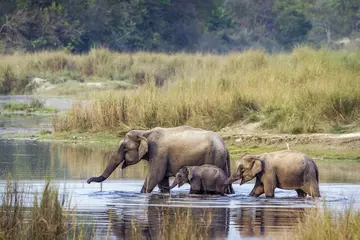
Asian elephants are highly social mammals with strong family ties. Typically living in small herds of related females and young males, they form complex relationships, working together to raise their young and to protect the group.
There's still a lot to discover about how elephants communicate, but the more we can learn, the better we will be able to help communities living alongside these amazing animals.
Research has been carried out using acoustic loggers with our herd of Asian elephants at Whipsnade Zoo to reveal four distinct sounds: a ‘trumpet’, a ‘rumble’, a ‘roar’ and a ‘chirp’.

Asian elephants play a crucial role in their ecosystem
Asian elephants are a keystone species, playing a crucial role in their ecosystem because of their size and diet, for example by:
- Dispersing seeds – these giants eat a lot, travel long distances, and deposit seeds in their dung.
- Encouraging plant regeneration – By knocking down trees, and trampling vegetation, they open up clearings so sunlight can reach the forest floor, which promotes further plant growth.
- Sharing resources – Elephants break off branches and bits of bark that can be used for smaller animals to hide under, while other animals pick up any leftover food that elephants leave behind.
Without elephants, forest and grassland ecosystems would drastically change, which would have a knock-on effect on hundreds of other plants and animals.
Elephants are crepuscular
Elephants are crepuscular, which means they typically sleep during the day and are most active at dawn and dusk.
In the wild, elephants don’t sleep very much – only around 2-hours a day – and they can sleep both standing up (in a light sleep) where they’ll lean against a tree or each other for support, and lying down (for REM sleep), which they’ll only do every 3-4 days as getting up quickly to face danger can be difficult.
Elephants tend to nap in short bursts of sleep, and will often take it in turns sleeping so that someone is always alert and keeping watch.
An elephant’s trunk has lots of different uses
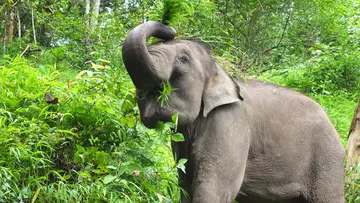
Why do elephants have trunks, and what do they use them for? An Asian elephant’s trunk has multiple uses, including:
- Picking things up and grabbing things, for example food. It can lift heavy logs, while also pick up a blade of grass or remove a peanut from its shell.
- Drinking – elephants will suck up water from their trunk, and then spray it into their mouth.
- Comforting – you’ll often see a mother elephant reassuring her calf with her trunk.
- Smelling – elephants have a fantastic sense of smell
- Breathing – when underwater they can use it like a snorkel.
- Communicating – elephants can make a trumpeting sound that can be heard over long distances.
Asian elephants have six sets of teeth
During an elephant’s life, they will go through six sets of molars.
Their teeth are worn down over time, and as they wear out, another molar pushes through to replace it. Each new set is larger and lasts longer than the previous set.
Their final set has to last them for the rest of their lives, and teeth loss is a leading cause of death for mature elephants in the wild. As their last molars break away, it’s increasing difficult for an elephant to chew food, which can lead to malnutrition or starvation.
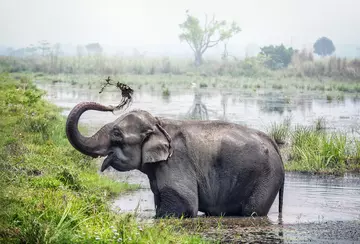
Asian elephants are under threat
Asian elephants have no natural predators, and yet they’re sadly endangered in the wild. Their biggest threats are habitat loss due to deforestation for agriculture land and conflict with humans, which often go hand in hand.
As their habitat is reduced, elephants are increasingly coming into contact with people and human-elephant conflict (HEC) can be a major challenge in some areas.
Elephants frequently wander into farms searching for food, and crops like sugar cane and bananas are highly attractive. When elephants raid these farms, they can cause a lot of damage to crops, and even buildings, leading to financial losses for local farmers, as well as community safety fears.
ZSL is working to protect elephants in the wild
At ZSL, we're working around the world to protect all three species of elephants – Asian elephants, African elephants and African forest elephants.
Our experts are using cutting-edge wildlife technology to monitor Asian elephants and are working with local communities to address and reduce conflicts.
Our elephants at Whipsnade Zoo are also playing an active role in developing new conservation technology, contributing to vital veterinary advancements and helping conservationists through behavioural and scientific studies – all of which are applied to efforts to preserve elephants in the wild.