






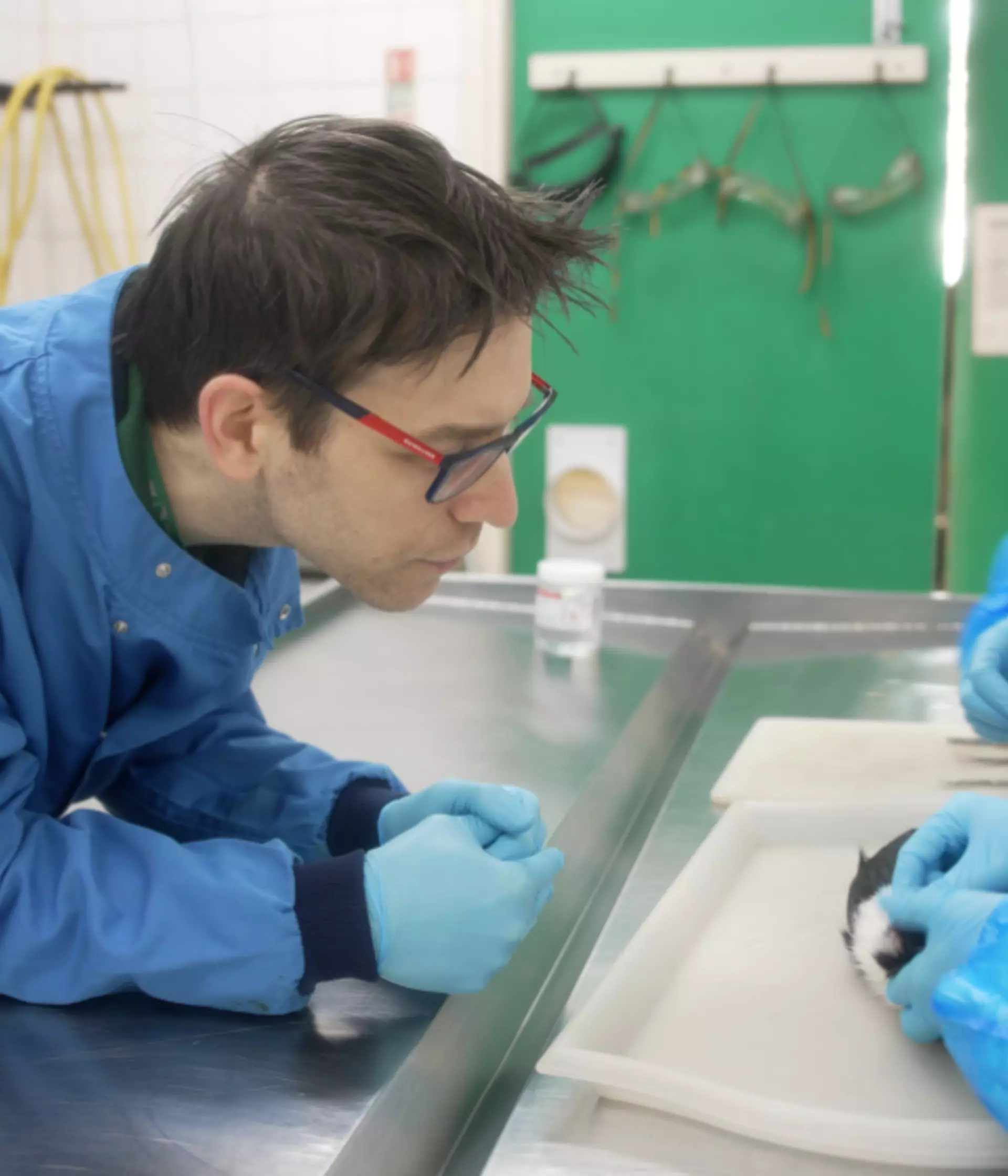
From examining a tiger’s tissue sample under a microscope to uncovering the cause of death in a critically endangered amphibian, veterinary pathologists work at the intersection of animal care, science, and detective work.
At ZSL, our anatomical pathologist plays a vital role in understanding disease, supporting conservation breeding, and helping ensure the health of our animals — from individual zoo residents to entire wild populations.
There are two main types of veterinary pathologists: anatomical pathologists, who work with tissues and organs (through biopsies and post-mortems), and clinical pathologists, who analyse body fluids like blood and urine.
Whether it’s a routine biopsy, a forensic post-mortem, or investigating disease outbreaks in wildlife, the work is varied, challenging, and often fascinating. As Simon Spiro, our anatomical pathologist, puts it:
“You’re basically playing Where’s Wally or Spot the Difference all day — but your results really matter. They can save lives or even whole species.”
Watch our short video following Simon behind the scenes at London Zoo, where he shares what it’s really like to be a veterinary pathologist — and why he loves the work.
What does an anatomical pathologist do?
Anatomical pathologists specialise in diagnosing disease by recognising physical changes in an animal’s tissues — both through what they can see during dissection and what they can detect under a microscope.
Most of the time, that means working with tissue samples. If, for example, a cat has a lump removed, a pathologist will examine the sample to identify what it is, whether it’s been fully removed, and what the prognosis might be.
They also investigate causes of death. Post-mortem examinations (also called necropsies) involve examining an animal’s body, tissues, and organs to determine what went wrong. This process might include further testing — all aimed at informing future care, preventing outbreaks, or contributing to conservation goals.
At ZSL, anatomical pathology supports both zoo animal health and field conservation programmes, as well as research and wildlife forensics.
Why become a veterinary pathologist?
If you’re curious, observant, and fascinated by the inner workings of life, veterinary pathology might be the perfect fit.
It’s a chance to apply scientific investigation to real-world problems — with outcomes that directly improve animal welfare, guide veterinary decisions, and help conserve threatened species.
“It’s fun!” Simon says. You get to follow the evidence, uncover what’s hidden, and use that knowledge to protect animals. No two days are the same.
Pathologists also support research and teaching. At ZSL, Simon collaborates with conservation teams and trains future wildlife vets in understanding and diagnosing disease.
How do I become a veterinary pathologist?
To become a veterinary pathologist, you’ll first need to complete a veterinary degree — typically five years in the UK. Most then go on to do a three-year residency in pathology, gaining hands-on experience and preparing for board certification exams. This specialist training helps develop expertise in anatomy, diagnostics, and lab-based investigation.
Veterinary pathologists are in demand across zoos, conservation projects, research institutions, and even in wildlife crime investigations — making it a highly specialised role with broad real-world impact.
