







How can conservation agendas and local worlds mutually shape one another for the benefit of people and wildlife.
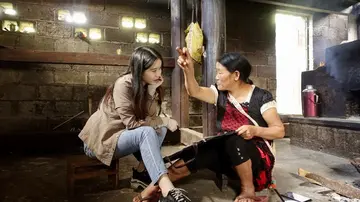
Jingyu is a conservation professional and doctoral researcher in social anthropology, with a focus on community-based conservation, human–wildlife coexistence, and the social and political dimensions of conservation. Since 2018, Jingyu has worked with Cloud Mountain Conservation, a grassroots NGO in China, on the conservation of Skywalker hoolock gibbons (Hoolock tianxing) and other non-human primates. Jingyu's long-term engagement centers on community-based conservation with Lisu ethnic minority communities in Yingjiang County, near the Sino-Myanmar border.
Jingyu's doctoral research examines how conservation agendas and local worlds mutually shape one another through situated practices, knowledge and governance. Drawing on anthropology, her research explores how conservation is interpreted, negotiated and transformed through everyday interactions between practitioners, local communities and institutions. Jingyu is particularly interested in how different forms of knowledge acquire authority in conservation decision-making, how power relations shape the possibilities for local influence, and how communities continue to define their own priorities and practices within the constraints and possibilities created by conservation interventions. Rather than treating communities as recipients of externally defined interventions, Jingyu approaches conservation as an ongoing social process whose meanings, practices and governance arrangements remain open to negotiation and change.
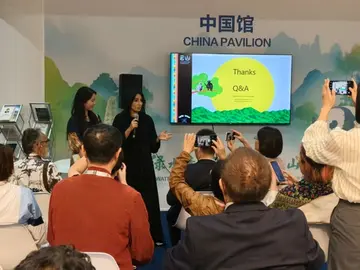
Jingyu holds a master’s degree in Anthropology from the Institute of Anthropology at National Tsing Hua University, Taiwan, and an MPhil in Conservation Leadership from the University of Cambridge, where she graduated with Distinction. Her doctoral project also engages with the localisation of the Kunming–Montreal Global Biodiversity Framework and related agendas concerning environmental justice and social innovation, using China as a key case through which to examine wider questions relevant to the Global South. Across her research and practice, Jingyu seeks to bring anthropological perspectives into interdisciplinary conservation research and to understand how conservation can engage more meaningfully with local knowledge, social relationships and culturally and politically situated ways of living.
Professional history
Education
2026-2030: PhD student in Anthropology, Institute of Zoology and University College London
2024-2025: MPhil in Conservation Leadership, University of Cambridge, Distinction
2019-2022: M.A. Anthropology, Humanities and Social Science, National Tsing Hua University (NTHU)
2013-2017: BA Chemistry (The Basic Discipline Talent Training Program), Fuzhou University, China
Professional
Jul 2024-Present: Advisor, Section on Conservation, Cloud Mountain Conservation (CMC), China
Feb 2024-Present: Consultant, Section on Conservation, Chinese Felid Conservation Alliance
Dec 2023-Dec 2024: Project Consultant, Northern China Biodiversity Project, World Wildlife Fund (WWF), China
Jan 2023-Jan 2024: Project Consultant, Section on Conservation, Kadoorie Farm & Botanic Garden, Hong Kong
Mar 2022-Jul 2024: Senior Project Manager, Section on Conservation, Cloud Mountain Conservation (CMC), China
Jul 2018-Mar 2022: Project Manager, Section on Conservation, Cloud Mountain Conservation, China
Publications
Ma, H., Zhang, D., Xiao, L., Wang, Y., Zhang, L., Thompson, C., Chen, J., Dowell, S.D., Axmacher, J.C., Lü, Z. and Turvey, S.T., 2022. Integrating biodiversity conservation and local community perspectives in China through human dimensions research. People and Nature, 4(6), pp.1461-1474. https://doi.org/10.1002/pan3.10408