






Investigating the impact of chemical pollutants on the reproductive health of porpoises.
Endocrine disrupting chemicals (EDCs) are chemicals that have the potential to disrupt any aspect of hormonal action within an organism. They are used in industry, agriculture and the production of every day products, and are known to be ubiquitous in the environment due to pollution.
Many chemicals have been associated with changes to the reproductive fitness of humans and lab animals but little is known of their impact on wild populations. Some chemicals enter the food chain and biomagnify, increasing in concentration until they bioaccumulate in tissues, often liver and fat, of top predators.
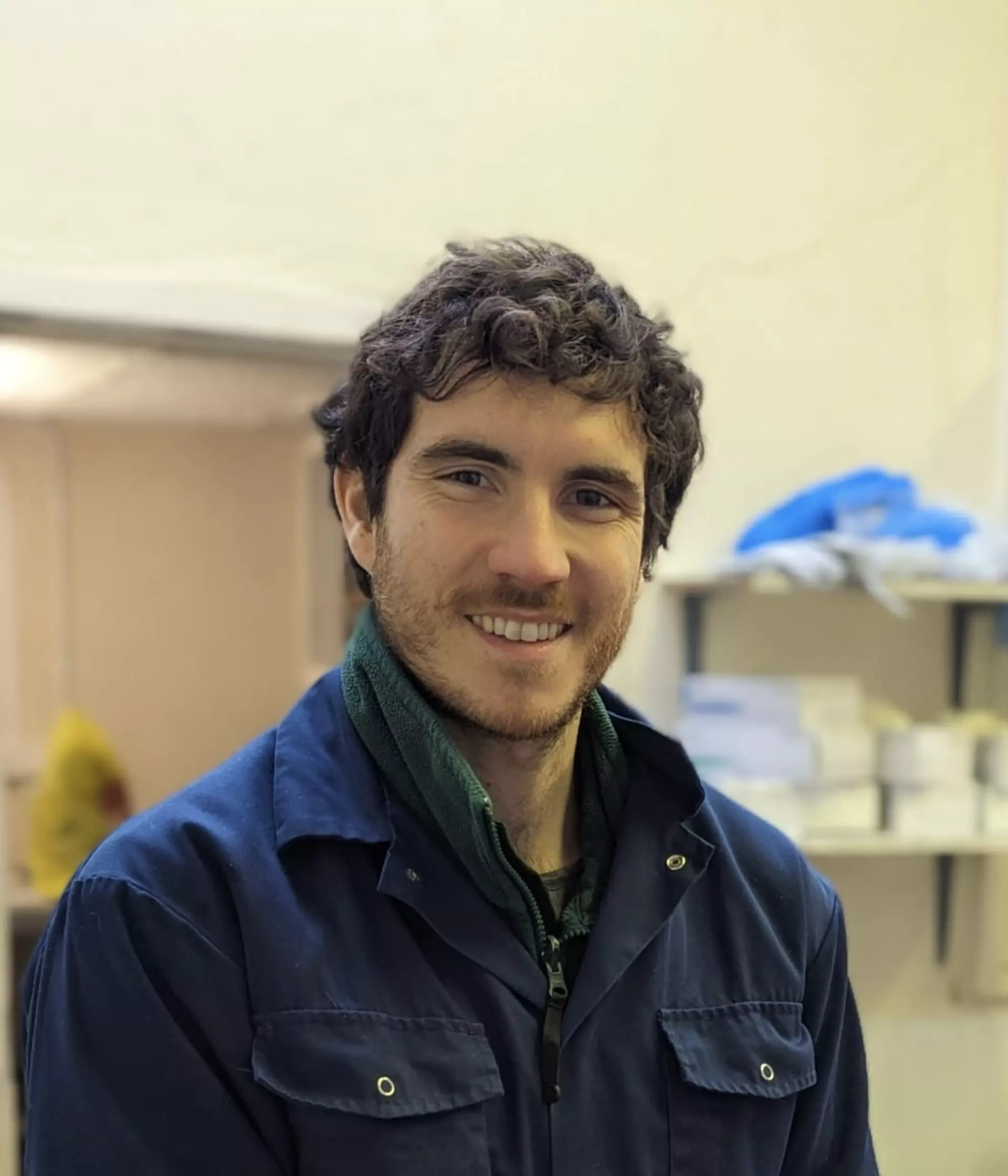
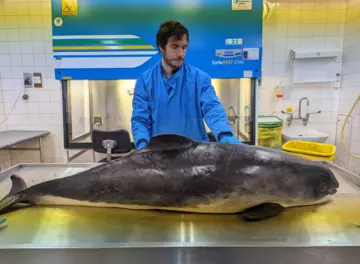
Within the marine environment, cetaceans (dolphins and whales) have been found with high concentrations of EDCs in their tissues. A recent study found that, in male harbour porpoises (Phocoena phocoena), EDC tissue concentrations had a negative relationship on testes weight suggesting a possible decline in reproductive fitness. Ethan's work aims to expand on this by looking at other metrics of male reproductive physiology in harbour porpoise - reproductive morphometrics, cellular architecture, and spermatozoa health - and relating these to chemical exposure. To do this, Ethan is utilising 30 years worth of data collected from the Cetacean Stranding Investigation Programme (CSIP), as well as samples from ongoing investigations of fatally stranded harbour porpoise around the UK. Ethan's methods include toxicology, histology and post-mortem examination.
Professional history
2025-present: PhD Student, ZSL Institute of Zoology and University of Portsmouth
2020-2026: Pathology Technician, Wildlife Health Services, ZSL
2016-2017: MSc by Research, Stingray ecology, University of Exeter
2013-2016: BSc Conservation biology and ecology, University of Exeter