







Understanding how animals respond to human impacts in urban areas and in ex-situ care
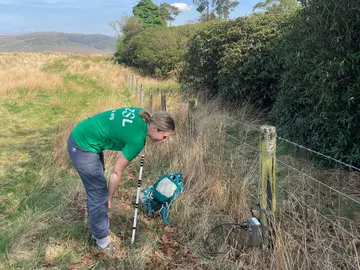
Amanda’s research investigates how wildlife responds to human-driven environmental change, with a particular focus on urbanisation and conservation management under human care. As human activities increasingly reshape ecosystems, many species are forced to adapt to novel and often challenging conditions. Amanda’s work aims to bridge individual-level health and welfare with population processes, to generate insights that inform both wildlife-friendly urban planning and threatened species management.
Understanding wild animals’ responses to urbanisation and parasitism
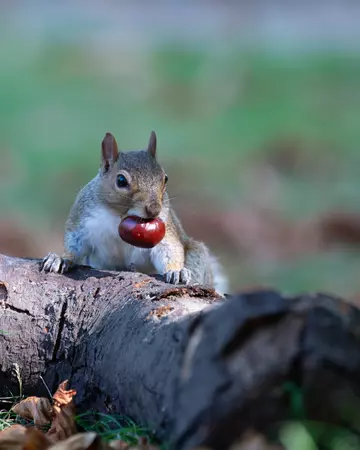
Urban environments are characterised by novel stressors that can profoundly impact wildlife health and welfare. While some species are excluded from urban areas, others persist - or even thrive - under these conditions. At the same time, urbanisation can alter parasite dynamics, with important consequences for animal health and welfare, as well as zoonoses risk. This project explores how urbanisation and parasitism interact to shape wildlife health and welfare. Using grey squirrels across an urban-rural gradient in the UK, Amanda integrates parasite data with physiological indicators and behavioural observations from camera traps. This work aims to improve our understanding of how wildlife may respond to global urban expansion and to inform wildlife-friendly urban design.
Small population recovery and ex-situ conservation
Ex-situ conservation (managing threatened species under human care) is an increasingly important tool for preventing extinction. However, maintaining healthy and viable populations in these settings presents significant challenges, and can impact threatened species’ recovery potential. Amanda’s research focuses on understanding the factors that influence ex-situ populations. Using the the ex-situ population of the extinct in the wild sihek (Guam kingfisher), she investigates factors influencing hatching failure, survival probabilities, and genetic threats from inbreeding and inbreeding depression. The goal is to improve conservation breeding strategies and enhance the success of future reintroductions.
Professional history
2024-present: Wild Animal Initiative Challenge Grant, Institute of Zoology, ZSL
2021-2024: Morris Animal Foundation Research Fellowship, Institute of Zoology, ZSL
2019-2021: Postdoctoral Research Assistant, Institute of Zoology, ZSL
2018-2019: Postdoctoral Research Assistant, University of Aberdeen
2017-2018: Research Ecologist, British Trust for Ornithology
2016-2017: Data technician, Scottish Chough Study Group, University of Aberdeen
2012-2016: PhD Biological Science – “Conservation genetics and demographics of red-billed chough in Scotland”, University of Aberdeen
2009-2010: MRes Ecology, Bangor University
2006-2009: BSc Biology, Cardiff University
Publications
Mitchell, M., Felice, R.N., Ewen, J.G., Ferrie, G.M., Royer, E., Medina, S., Newland, S., Trask, A.E. (2025) Parental Age, Inbreeding and Incubation Method Influence Extremely Low Hatching Success in the Ex-Situ Population of the Extinct in the Wild Sihek. Animal Conservation. DOI: 10.1111/acv.70023
Vernet, M.* Trask, A.*, Andrews, C., Ewen, J. (2024) Assessing invasion risks using EICAT-based expert elicitation: application to a conservation translocation. Biological Invasions. DOI:10.1007/s10530-024-03341-2 *Joint first authors.
Nichols, S., Ewen, J., Gottelli, D., Grueber, C.E., Santure, A.W., Trask, A., Brekke, P. (2024) Genetic rescue attempt in a small, inbred population of a wild endangered passerine. Biological Conservation. DOI: 10.1016/j.biocon.2023.110430
Trask, A.E., Carraro, C., Kock, R., McCrea, R., Newland, S., Royer, E., Medina, S., Fontenot, D., Ewen, J. (2023) Balancing conservation and welfare in ex-situ management of the extinct in the wild sihek: sex- and age-specific causes of mortality and contributions to population growth rate. Animal Conservation. https://doi.org/10.1111/acv.12895
Reid, J.M., Bignal, E., Bignal, S., McCracken, D.I., Fenn, S.R., Trask, A.E., Monaghan, P. (2022) Applying advances in population and evolutionary ecology to conservation strategy through long-term study of red-billed choughs. Journal of Animal Ecology. DOI: 10.1111/1365-2656.13615
Fenn, S.R., Bignal, E.M., Bignal, S., Trask, A.E., McCracken, D.I., Monaghan, P., Reid, J.M. (2021) Within-year and among-year variation in impacts of targeted conservation management on juvenile survival in a threatened population. Journal of Applied Ecology. DOI: 10.1111/1365-2664.13998
Canessa, S., Trask, A.E., and Ewen, J.G. (2021). Mind the gap (between assessing risks and prioritizing management). NeoBiota. DOI: https://doi.org/10.3897/neobiota.68.60816
Trask, A.E., Ferrie, G., Canessa, S., Moehrenschlager, A., Laut, M., Barnhart Duenas, L. Ewen J.G. (2021) Multiple life-stage inbreeding depression impacts demography and extinction risk in an extinct-in-the-wild species. Scientific Reports. DOI: 10.1038/s41598-020-79979-4
Fenn, S.R., Bignal, E.M., Trask, A.E., McCracken, D.I., Monaghan, P., Reid, J.M. (2020) Collateral benefits of targeted supplementary feeding on demography and growth rate of a threatened population. Journal of Applied Ecology. DOI: 10.1111/1365-2664.13721
Trask, A., Canessa, S., Moehrenschlager, A., Newland, S., Medina, S., Ewen. J. (2020) Extinct-in-the-wild species' last stand. Science, 369, 516. DOI: 10.1126/science.abd4560.
Trask, A.E., Bignal, E.M., Fenn, S.R., McCracken, D.I., Monaghan, P., & Reid, J.M. (2020) Conservation Strategy for Red-Billed Choughs in Scotland: Assessment of the Impact of Supplementary Feeding and Evaluation of Future Management Strategies. Scottish Natural Heritage Commissioned Report RR1152.
Boersch-Supan, P. Trask A.E., Baillie, S. (2019) Robustness of simple avian population trend models for semi-structured citizen science data is species-dependent. Biological Conservation. 240, 108286.
Trask, A.E., Fenn, S.R., Bignal, E.M., McCracken, D.I., Monaghan, & Reid, J.M. (2019) Evaluating the efficacy of independent versus simultaneous management strategies to address ecological and genetic threats to population viability. Journal of Applied Ecology, DOI: 10.1111/1365-2664.13464.
Trask, A.E., Bignal, E.M., McCracken, D.I., Piertney, S.B. & Reid, J.M. (2017) Estimating demographic contributions to effective population size in an age-structured wild population experiencing environmental and demographic stochasticity. Journal of Animal Ecology, DOI: 10.1111/1365-2656.12703.
Trask, A.E., Bignal, E.M., McCracken, D.I., Monaghan, P., Piertney, S.B. & Reid, J.M. (2016) Evidence of the phenotypic expression of a lethal recessive allele under inbreeding in a wild population of conservation concern. Journal of Animal Ecology, DOI: 10.1111/1365-2656.12503. *highly commended in the British Ecological Societies’ Elton Prize.