






Professor Bill Holt is a leading figure in reproductive biology who has had a long and fascinating career with ZSL.
He first joined in 1969 as a histology technician and went on to become Head of the Reproductive Biology Group at the Institute of Zoology. Over the years, he has contributed to pioneering work understanding the reproductive processes of a range of species, from antelope and giant pandas to seahorses, frogs and fish, with his research helping to support conservation breeding programmes around the world.
Some of his most notable achievements include developing better ways to measure sperm movement and studying unique reproductive systems such as male pregnancy in seahorses. His outstanding contributions to reproductive science have been recognised with awards including the Setchell Medal and the Society for Reproduction and Fertility’s Marshall Medal.
Even after retiring, Bill has continued to play an important role at ZSL as Secretary of our Ethics Committee, helping to guide research and conservation work through his scientific expertise and commitment to ethical practice.
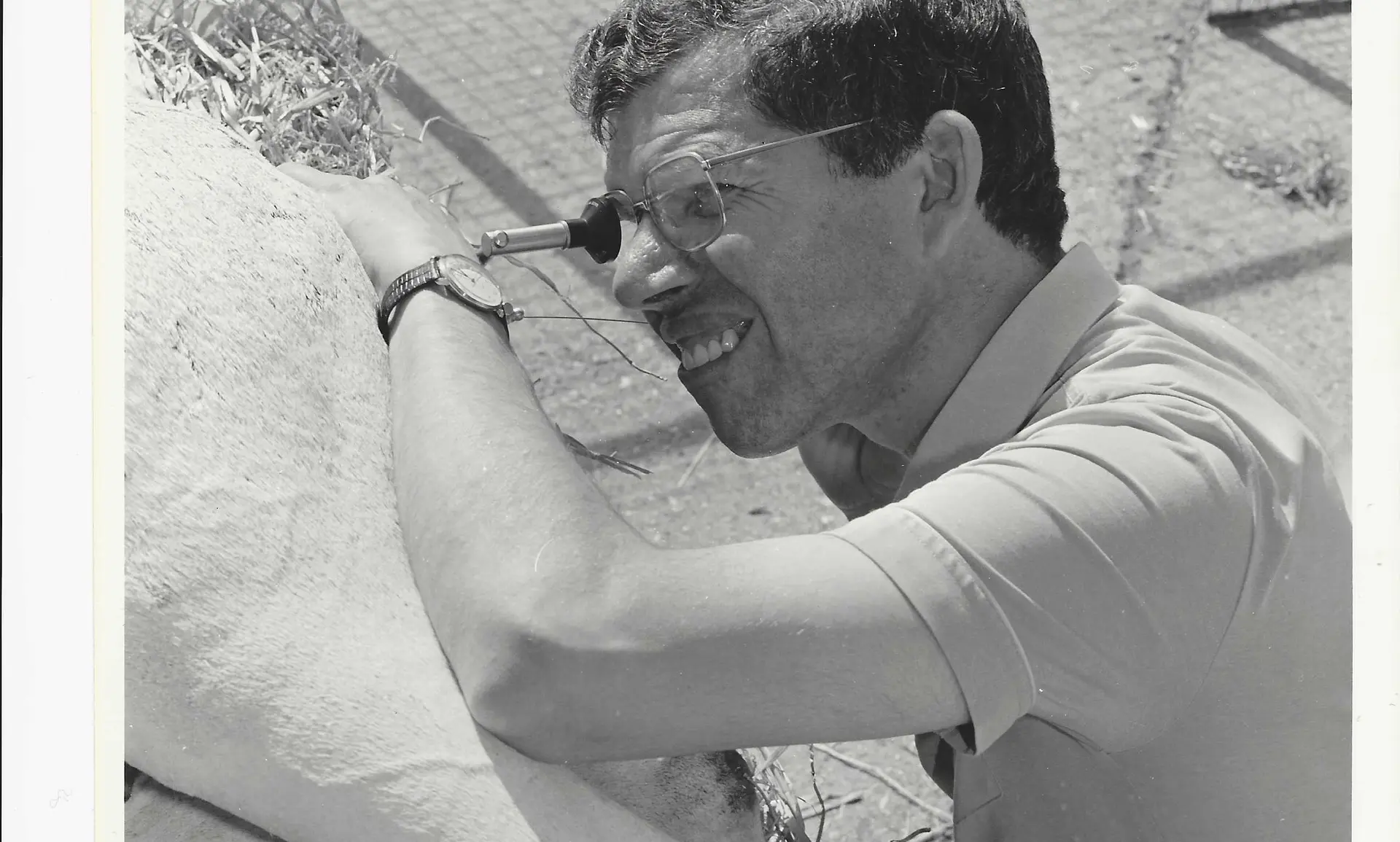
Bill Holt:
My name is Bill Holt, and I first joined ZSL in 1969. When I was only 22 years old, I came as a research technician in the Wellcome Institute for Comparative Physiology. As it was then, the Wellcome Institute stood apart from the Nuffield Institute of Comparative Medicine. They were two different institutes on the same site, and very little interaction between them. So, my job at that time was to work as a histology technician for Dr Rowlands, who was not only the head of the department at the Wellcome Institute, but also its director at the time. The organisational change was a bit different. So, my job at the time was cutting sections of tissues, mainly reproductive tissues, for Dr Rowlands, who was particularly interested in a group of rodents called hystricomorph rodents. These are a whole group of rodents that include chinchillas that people will be familiar with, and a whole lot of South American rodents of varying sizes and varying capybaras, which is which are the big rodents, probably the biggest one’s ever. And at the time, there was very little known about the reproductive biology of those species. When I joined, I didn't really know anything about reproductive biology or hystricomorph rodents, so it all became rather a learning curve for me. But it was good for me as well because I was working in a very friendly environment. People there, especially the people who'd already got their PhDs, were actually really helpful to me when they realised I was quite interested in their research, and I learned an awful lot from them about how to do research and some of the techniques that are beyond just being a histology technician.
A routine post-mortem was carried out on all the animals that died in the Zoo. When I joined it was legally allowed to feed the animals, which it isn't now, and it turned out to be a bad idea and caused a lot of problems. So, there was quite high mortality among zoo animals, and the pathologist - they had a full-time pathologist whose job was to do postmortems - and they asked me if I would go down every time there was an animal of interest to remove the reproductive tract and then form a collection of reproductive organs from all the animals that we could. I think that fizzled out after some years. It was just too much, too much investment, too much time, not enough space. And so, where do you keep all those things? It just it kept on going for a few years and then it stopped, but that was an interesting thing because I got to see reproductive organs from a whole range of different animals, and one of the most interesting things I learnt at the time was when there were any marsupials that landed up in the postmortem room, because the reproductive tract of marsupials can be very unfamiliar to somebody who's used to working on more conventional animals, the anatomy is different, and so on. So, it comes as quite a shock. But yes, got over that in the end, and so that's another thing which was helpful.
I would say the people that really influenced me when I was at that stage, I point to Dr Russell Jones, who was helpful. He was the person who I learned a great deal about sperm biology at the time because that was his speciality, and he even took me to one or two meetings about sperm cryopreservation. And because of that, I joined one of the societies, and I still, which is a society for low-temperature biology, and learned and met a few very influential people in that sphere. So that really set me up at the beginning of my career. He also taught me a lot about statistical analysis at the time. I wasn't much good at maths or doing anything like that, but I learned a lot from him about that.
Another person I would mention is Professor Paul Racy, who was a PhD student at the time, working on the biology of bats. And one of the interesting points about those bats is that they mate in the late summer, and then the animals go into a sort of hibernation over winter, but because they had mated in the late summer, the sperm are already in place, and so the eggs could be fertilised as soon as possible in the new year. And so that ability to retain live sperm in the reproductive tract is something which is not really understood even these days, but very interesting. So that was one of the things that he was working on as his PhD, and then I kept in touch with him over the next goodness knows how many years because he became Regis Professor of Reproductive Biology at the University of Aberdeen. I examined some of his PhD students, so that was a very nice relationship that carried on.
The other person who I'd mention is Francis de Souza, who came to the Wellcome Institute, she wasn't actually a postdoc when she came. She'd finished her thesis, and it hadn't yet been examined. She was working for the then director, who was called Professor Bob Martin, and her work was all about tree shrew biology. I didn't really take any role in that, but I did help her quite considerably. And then after she went away from the Wellcome Institute, she went into Parliament and eventually became Speaker of the House of Lords, which was quite an unexpected direction. But she did retain quite a lot of influence with ZSL.
I think the Wellcome Institute had its own name and its own governing body and its own director, and it was situated where you now find the same building called the Wellcome Building, rather than being an institute, and what was going on there was actually almost entirely based around reproductive biology. In fact, when I started working there, I was asking people why they were always working on reproductive biology and nothing else, and so the sort of topics that I mentioned-the history of morph rodents, the basic biology of that, the biology of sperm-so that was one of the objectives there: to improve sperm freezing techniques, especially related to agriculture. To be honest, at the time, farming with sheep and cattle, as well as possibly trying to apply that to wild species, but at the time that was very little. There was also the veterinary department, which is, as it is now, still housed in the same building. So the veterinary department was downstairs. The Wellcome Institute was mainly upstairs. So those two sets of things were going on. There was a little bit of crossover. So, one of the senior vets, not that I worked with him very much, but he was very interested in reproductive biology as well and started to pioneer some of the work on artificial insemination, especially with cheetahs, if I remember rightly. Now, it was in 1977. There was a parliamentary committee that came around the Wellcome Institute, and this was prompted by some outside decision: why should we have on ZSL site two separate research bodies, one called the Wellcome, one called the Nuffield Institute for Comparative Medicine.
If I say a little bit about the Nuffield Institute as well. So, the Nuffield Institute was, as its title suggested, really focused on tropical diseases. So, the director of the institute at that time had made his name because he'd been very successful in working out treatments for yellow fever, malaria, all those sorts of tropical diseases. So, there was a lot of interest in that area. He became a fellow of the Royal Society. His name was Dr Goodwin. He became a fellow of the Royal Society whilst he was working at the Institute of Zoology, and at that point, I should make clear it's not the Institute of Zoology yet. There were other things going. One of the things that they did in the Nuffield Building was to develop some very important techniques, and I'd mentioned one called enzyme-linked immuno- goodness me, I can't remember the name- but typically known as ELISA techniques, which is an analytical method based on antibodies, and it's now used worldwide, everywhere. But it was invented at the Nuffield Institute at the time, so you know they did groundbreaking work there as well. They also did things like looking into contamination. So, there was the famous leak in India. I think one of the big contamination events, which led to a lot of birth defects in the population and so on. So, there was somebody there who's now his name was Professor Alastair Hay. He works up in, I think, the University of York, and he's made his name with that topic. He's an expert on all sorts of things to do with contaminants.
So, there were these two institutions on the same site, but with hardly any crossover between them. Even seminar programs and so on. The people in the Nuffield didn't come to the ones in the Wellcome. That's quite ridiculous, really. But that's how it was. So, there was this decision to form a committee of parliament called the Gordon Smith Committee. They came and visited all these facilities, and then in the end they concluded that these two institutes should be merged, and they said that it should be the Institute of Zoology, and so that was the new name, and that's what it's been ever since. But I mean, if I just jump forward to the Ethics Committee, which I'm now secretary of, if the Ethics Committee in ZSL wants to make changes or major changes to its terms of reference, we have to get permission from the Privy Council, so we can propose something. It has to be approved by Parliament at the Privy Council. So, there is this link between what goes on in ZSL and the government. You know that that's. I don't know the real background of the decision at the time. There were a lot of very influential people around the institute at that time who had their own ideas. I think I should mention Lord Zuckerman, who was, you know, extremely influential in government. He was the president of the Zoological Society for quite a lot of years, and I think it was also his initiatives that brought about the fact that there is research going on in the institute and in IOZ. If it wasn't for him, I don't think they would be doing such research.
So, I think my career has been governed largely by luck, to be honest, if I'm honest, but with some hard work as well. So, when I was when I was working as the histology technician, I was also studying part time because at the time I had some professional qualifications to make myself into a medical technician, but I wanted to try and develop my own research rather than just do what other people said I should do. So, I spent a lot of time doing part-time study, and eventually I got what was the membership of the Institute of Biology, which is now the Royal Society of Biology. So that membership gave me what the equivalent of a first-class honour’s degree. So that made it possible then to try and find out how to get a PhD. And actually, I mentioned Professor Bob Martin in the context of Francis D'Souza, but the other thing he did for me was help me to get a stronger relationship with the Royal Veterinary College, which is just down the road from the zoo, and he got one of the professors at the Royal Veteran. To take me on as a PhD student, so I was able to work full time in the institute, doing what I was supposed to do, but also doing some of the stuff that I wanted to do as well for a PhD thesis. And the PhD thesis was about reproductive biology in miles, and specifically about the way that sperm formed inside the testis. So, this is now a much more well-understood process, very complicated. And at the time, back in the 70s, it was at the beginning, so people didn't really know a huge amount about it. So that was my PhD thesis.
At the same time, I was able to collaborate with some people who had developed engineering skills for measuring structures down the microscope. So that has been another thing which I've worked with. So needed to do that and was able to study the shapes and sizes and development of sperm that was going on inside the testis at various points. That led in that had a direction of its own, so I'll come on to that in a minute. But all of that together basically led me into an interest in what happens to sperm when you try to conserve them by freezing. So that's the whole topic known these days as cryobiology, and again, a lot of the work that I did then is was focused on trying to understand what is the problem with freezing sperm because we know that they lose their ability to fertilise eggs very quickly if you don't do the freezing in the right way, and so the interest was: Is there a right way, and how can we improve the situation? There were a lot of interest at the time in artificial insemination for cattle breeding, and one of the people who helped me again- I was lucky. Dr Chris Polge from the University of Cambridge supported my PhD, not in a formal sense, but in a helpful sense. And he was the person who discovered that if you use glycerol to protect sperm during freezing, the sperm, especially the bull sperm, which were of interest then, would retain enough fertility to be able to be used for breeding programs. I mean, in fact, his discovery of glycerol turned the agricultural industry completely upside down because then it was possible to select the sperm from different prized bulls, for example, and freeze it, check that it's not infected with anything, and then it's possible to sell the frozen semen to farmers. So that is how that whole industry, which was first exploited by the Milk Marketing Board as it was at the time, and now it's by individual companies in the UK and elsewhere, so that you know that that still needs a lot of research. But that was what I got involved with, because of the success with the cattle and the lack of success with sheep. There's a still an issue there.
Then the question started to be: Well, can we apply these sorts of techniques to wild species? And so that's how I got involved in trying to develop artificial insemination techniques, sperm storage techniques, trying to link some of the expertise, even from the bat work that Paul Racy was doing, to try to understand how do bats keep their sperm alive for six months, and can we understand any of that and apply it in a practical sense to agriculture or to conservation and so on. So that's been, you know, that that direction has been really interesting to do.
One of the things that I did soon after I got my PhD was apply for a grant. I was amazed that I applied for two grants and both got both of them. One of them was to continue working on biology and explore the use of those frozen sperm for antelope breeding in the zoo. Probably wouldn't be allowed to do it now, but in the 1980 s it was possible, and with the help of Brian Bertram, who's still on the recently on the ZSL, forgetting the name of the council, we set up a project actually in the zoo to try to understand sort of the basics of how to know when to inseminate. And this species was a black buck. It's a fairly common antelope species at the time they were held in the zoo. They probably still are. And so, before you can do any of that, you have to know when the right time is to inseminate. If you don't do it at the right time, it's not going to work. Can we freeze the semen as if it were bull semen? If not, what should we do? So those. I mean, that was really a very successful project. It took quite a long time to do, and it was supported by the Agricultural Research Council at the time, surprisingly enough. And again, these are bits of luck that I had, and the project worked, and we got some offspring, and so you know that the nice thing about that is that the technique we developed has been translated to be used in India because these are Indian animals, and one of the people who did that contacted me, and it sent me some pictures of the baby black buck that they've now got. Because although that's not a critically endangered species, it's something that the Indians are quite happy to be doing and part of their research program. So that's nice as well.
So I was doing that kind of thing, and because we wanted to know how to monitor- how do you know if the sperm are any good after you've done the freezing? The one thing you can measure is if they're swimming in culture media, they swim at different speeds. Is it possible to measure those speeds? And I mean that that sort of question had been asked about 20 years before then, and all that was being done at the time was to look down the microscope and say these are going very fast. These are not. We'll call the fast one’s number five, and then we'll try and make a scale. And so, if it's bad, it'll be one or zero. So that's, and some people still do that. But what I was able to do because of the interaction with the engineers, especially, was to team up, surprisingly enough, with a professor who worked at the University of Sheffield, whose project was to measure how fast cars were driving around in Sheffield. It sounds a bit weird, I know, but he had developed the software so that he could just have a video of cars driving around in Sheffield streets, and when I went up to see him, I took a video of sperm, and said, “Yeah, we'll do that. We'll put that on video”, and immediately his software started to measure how fast these sperm were swimming. That was, I mean, I'd say that would be one of the things that was a highlight from my point of view, because that led on to the then developed that as a commercial instrument for sperm measurements, and so for about 10 years that commercial technique was used in clinics up and down, well, internationally, because they could apply that in fertility clinics in the UK and elsewhere to make measurements of how fast sperm are swimming. So that was a whole unexpected area which came along, and basically it all came out of the research on how to keep sperm alive. I mean, that's how things develop if you work across different disciplines. I mean, I didn't know this person, Professor Hobson, at the time, and it was one of the engineers I did know who said, "Oh, you should go and see Professor Hobson, who's just been exhibiting this traffic software at an exhibition”. And so, I phoned him up, and he said, "Oh, yeah, that's you know do all these things, and you can come up with your video, and we'll have a look”. And so it was, it was in the early 1990s that I went up to Sheffield and everything sort of began from there. That's why I have an honorary position at Sheffield, to be honest.
I'll change direction and say what I've done. But one of the other things was I eventually became head of the Reproductive Biology Group in the Institute of Zoology, and because of that, I had interactions with lots of people in the zoo. Especially the interest was Heather Koldewey, who was in the aquarium at the time. She was the head of the aquarium, and I lost contact a bit with her now because she's all over the place, but at the time she suddenly turned up in my office and said, "I need to have somebody who knows about reproduction in seahorses”. Of course, I didn't have any knowledge of seahorses, and I said, "Why is that?” And she said, "Oh, we think that seahorse eggs are getting smaller globally, and we wonder if that's true, and if so, what's it all about, and everything.” And she was working with someone called Amanda Vincent, who's a professor of biology at the University of Vancouver, British Columbia, who's also an expert on seahorses. So, there I was talking to these people. It sounded very interesting, and at the same time, I had a query from a colleague I didn't know, but who was looking for a postdoc position, and he was an expert in fish biology, so I started to speak to him about: Is there anything we can do about seahorses? And it turned out that this was actually really important, and we were able to set up a seahorse breeding facility in the aquarium, the old aquarium in the zoo, and we started to do some quite detailed measurements and looking to see whether you know what is the effect of anything on seahorse eggs and what is known about seahorse reproduction turned out not to be that much actually. There were some strange myths about seahorses, and so this would be another one that it's well known that the male is the parent that becomes pregnant. So, the what happens is that the females produce a lot of eggs, and then when the time is right, they transfer those eggs to the male who has a pouch, and the eggs go into that pouch, and basically the male becomes pregnant and spends about two weeks or so, depending on species, nurturing those eggs, and then they become fully developed, and then they give birth, and that's that. Trying to think where to go next with that. So we did quite a lot of that work, and we discovered one of the things we discovered from again a little bit of luck, that the mechanism for the transfer of sperm from the male to the male pouch, which sounds a bit odd because you think they're both in the same place it shouldn't be a problem. So, people over the years, and you can look back at the literature and find that people have hypothesised direct contact with a duct running from the testis, where the sperm are produced, directly into the pouch, and so this was their explanation for a number of years as to how those sperm are transferred and how the eggs are fertilised. That, from some very nice research that was done by my colleague, turned out not to be true. And what was going on in reality is that the males produce the sperm in very small numbers, and they then go out of the male's body. They have to move about four millimetres because that is where the entrance to the pouch is. There's no internal duct, and we still don't know the details of that. So, the male and the female get together. The mating period lasts about 16 seconds, so it's very fast. They can transfer hundreds of eggs in that period into the male pouch, and at the same time, they also have to produce the sperm and the sperm has to fertilise the eggs, so we still don't know how that works. It's very, very difficult to work out how you could even study it. But that was one of the nice things that we actually came up with. And my colleague wrote a paper. She called it ‘The Unlikely Event of Reproduction in Seahorses', or something like that. So it was quite a nice paper that one. So my colleague Boris Zuba, who's currently a PhD in Czech Republic, he got a Royal Society grant to come to the zoo, and that was, I think, just after 2000, and then we got that funding, and we set up what was going on. So it would be in sort of the 2004-ish era. And there was also another postdoc who came to work with me at the same time. Was also a fish biologist, Katrine Van Duk her name was, and she also worked with that tracker that I mentioned. She'd even worked on that in her PhD as well. So it was, you know, all these things all suddenly came together.
When I left the zoo, and I started to work with Sheffield. The people in Sheffield were in receipt of some very nice EU grants, and they invited me to go to a meeting in Brussels. I wasn't working at the zoo anymore, but I described some of the seahorse work when I was in Brussels in that meeting, and then because of that, colleagues at the University of Las Palmas in Gran Canaria thought there would be a good opportunity to work with them, because they were very interested in seahorses, and because of that contact, I was able to continue working on the seahorse for another about 10 years or so with the colleagues in Gran Canaria. So unfortunately, we can't do that anymore because the facility is gone. But you know, they were the experts in seahorse biology, and that led to some very nice and important publications. Yeah, it was around the early 1980s this was.
So the panda story did go on for quite a long time actually. So there was a time when Edward Heath visited China and pandas were donated to the zoo. So there was a male and a female, and they were put into conditions in the zoo, which I, to be honest, I didn't think was very appropriate, but that's how it was. So there was, you know, a big event when the pandas and the panda enclosure were opened up, and all this, and it was thought that they would be able to breed pandas in the zoo and so on and so on. And one of the major sticking points, and I suppose people didn't realise at the time, is how do you introduce the male and the female together? And so one of the things that they did unsuccessfully was, I think they introduced them together rather suddenly, and so the female was very badly injured. So then they realised that that's not the best thing to do. So then they started to think. Well, is there another way around this? Is it possible to do any artificial insemination? And so that reply required collecting semen from the male, and one thing that happened there actually was a colleague of mine. I wasn't involved exactly in the hands-on, but he developed the method of collecting semen from the male. And not only that, but he was asked to go to Madrid because Madrid Zoo had a female, and they wanted to breed the two. So he collected semen, got on a plane, and went to Madrid together with the vet. I seem to remember that they did the insemination, and amazingly enough, they got it on the right day, and that was successful because everybody was then very confident. You know, we can do it. It's easy. The panda sperm is easy to collect and very resilient, and so you know that it looked perfect. So the male that was there was in the zoo in London, and so that. I think on one of the occasions I was called to go collect semen because I knew how to do it and go to Berlin because Berlin Zoo wanted to inseminate the panda that they had as well. So, it was my only trip to Berlin, and we did that, and of course that wasn't successful. And then the next thing that happened again in the same sort of vein is that I came into the zoo normally to work one morning. I arrived about quarter past nine. I was met by a couple of colleagues, including my PhD student at the time, who said we're booked on to the next flight to Mexico City, so you've got to leave here at half past 10, and there's a taxi ready booked. So, there was me and my colleague Harry Moore at the time, and the vet from the zoo, James Kirkwood, and they've made these arrangements for us to just suddenly jump on a plane and go to Mexico. Having at that stage, we'd frozen some sperm, so that you know it wasn't too big a problem. We had some sperm, and we could go along and take it. So that was, I mean, to get a taxi, come back home, get my passport, and then rush off to Heathrow, where the three of us met up, and then we were on the plane, and I'd never been to Mexico before, and then of course we had these interesting dilemmas about, okay, well, the female is due to come into heat, you know, such and such a day tomorrow or something like that. Do we know if that's the right day, or we don't basically? So we then spend all the time here. Do you think we should inseminate today, or should we leave it till tomorrow? That was an unanswerable question because you have nothing to go by. Only the behaviour of the female. Of course, we did all that, and the outcome was that it didn't work, which entirely, in retrospect, is not surprising. The other thing that happened was when we were at the zoo, the everybody was very friendly and very nice. But when we turned up at the zoo, they all said, "Oh, here come the football hooligans!”. So they were shouting out hooligans all the time. So that all happened about three times. So we had this semen sent out to Mexico City where they had it, and I think we did that same thing a couple of times more because it never works.
The reason why it doesn't work is that, now we know in retrospect, because the Chinese have developed techniques for doing artificial insemination in the giant panda, and what they do is they collect urine every eight hours around the time when the female is expected to be in heat, and they also they then measure the oestrogen content and the luteinising hormone content in urine, which are both indicators of ovulation. And they worked out that you can do the insemination about 40 hours after the decline of the oestrogen content, so it's really precise, and so you know, and then that works very well. But it's really hard work. The people have to be collecting urine all night over several days and all that sort of thing. Which of course we were just standing around: shall we do it now or should we do it tomorrow? So if you don't know the basics of this sort of thing, it's not going to work anyway. So, it was interesting to go all through that. I mean, one of the major illustrations is actually that giant panda work because over the last and it's taken a long time, over the last few years, it's been shown that you need very intensive study of those giant pandas. It's not just knowing when to inseminate or how to store the sperm. It requires knowledge of the nutrition, for example. So, if the nutrition is wrong, then you're never going to get anywhere, and that's been shown. The level of precision that is required if you're wanting to do those inseminations is really important, and so we know that with successes in, say, I'm not involved in insemination in big cats, for example, but people who are. They now know that you need incredible precision about when you do that kind of thing, which hormones are involved, can you measure them, what's the timing like, all that sort of thing has been developed, which we didn't know about at the time. We should have done, but we didn't have the facilities or the techniques.
That level of success has been translated to a lot of mammalian species. So people that are in zoos can take advantage, if they want to, of doing breeding programs with some level of confidence that it's going to work, and it's very specialised work. It's not something that anyone can just do. You need training, and you need the right backup. And I mean, one of the things I think, which is a, which is probably not recognised enough, is that you need to work with the veterinary team, who are there with all the right anaesthesia techniques and everything. If you're working, one of the things that was worked out, people are very interested in working with tigers, for example, and breeding tigers. That if the again, it has to be done surgically, so inserting the sperm surgically into the female tract. But knowing when the ovulation takes place is really important. But if you use the wrong anaesthetic and you need the anaesthetic, it can actually inhibit ovulation, so that was something that took a long time to work out. You know what sort of anaesthetic is the right one, one that doesn't inhibit ovulation and completely mess up your chances of breeding anything. So those are the sorts of questions which are now much more understood.
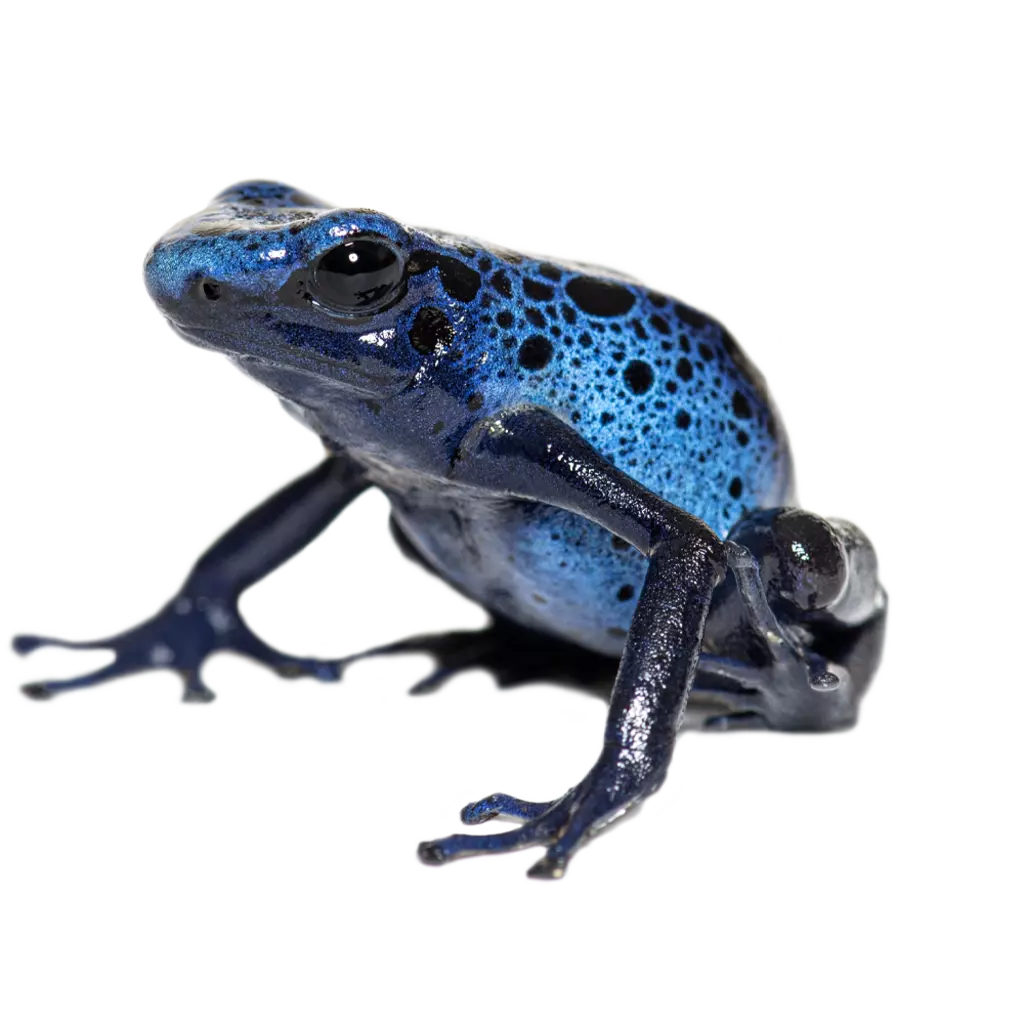
Another area that is also much more understood is moving out of the field of mammals to say fishes and frogs. Sperm cryopreservation is now being used in relation to breeding the frog species all over the world, which are being threatened by the chytrid fungus, where you have these populations of amphibians that are just being completely wiped out by this fungus that escaped. Well, basically, it was an introduced species of toad came over from South Africa in the 1930s, because the people at the time managed to use that as a pregnancy test in humans, and they didn't realise that by doing that and bringing those toads over to the UK, they were contaminated with this fungus, which at the time wasn't affecting the toads themselves, but then escaped and has got into populations and geographic locations in Australia, in South America, in the UK, all over the place. So there's been a lot of work on whether you can artificially breed and inseminate, but to protect the set up biobanks for those frogs, so the Smithsonian itself has a biobank for endangered frog species, both in Washington and in Panama. Australians are really keen on that sort of thing as well. They're one of the leading places that are working with cryopreservation and frog sperm. One of the nice things for me is that people come to ask about advice for people working in Australia and, you know, get involved in PhD projects and so forth. And the same thing applies to fish as well, but less. I haven't had so much involvement, but the work with the frogs. Yes, I have had quite a bit of involvement with that. So we've widened the field considerably, understand a lot.
The other thing I would say is that we also understand when not to do things. And one of the things that is unfortunately very popular at the moment is the attempts by some companies to bring back extinct species. And I don't know if you're familiar with all that, but people are working on whether we can bring back the woolly rhinoceros, woolly mammoth, dodo, passenger pigeon, and all that sort of thing using very fancy technologies. And I personally think that it's probably a mistake because there are lots of things that can go wrong with that, and you know you need to know when to stop as well as when to do things. But if you go onto YouTube, there are lots of videos all enthusiastically about how we're going to do this and that. Yeah, so I think that's a perspective that perhaps needs to be a bit more appreciated.
I suppose this started to be an interest actually probably more than 20 years ago. At the time, it seemed to be part blanche, and so if you fancied doing something in the zoo, you could just do it. You didn't have to ask anybody. And I know the scene, one of the senior vets. This would be about the mid 90s, probably if not earlier. He had the idea of forming the ethics committee because he had that concern. I eventually was asked to join the ethics committee, and since that time, which was a fairly ad hoc set of things that went on, there was a committee including some outside people, invited chair people, and all that sort of thing. It was a relatively informal sort of thing that happened, and people would send in proposals, and then the committee would think about it and make some suggestions as to whether it should or shouldn't be done. In general, the committee is not there to block things; it tends to just provide advice. But it has become much more organised over the last about five to 10 years; it's part of the project registration, the ZSL database, and all that sort of thing.
Approval from the committee is required very often for people proposing new pieces of work, new experiments, and also if I propose something, you know, some new projects to do with the zoo, that would have to be a formal proposal, which would then go to the ethics committee. The ethics committee has about nine people serving on the committee. The chairman is an outside person. He used to be the. I think he was the chief veterinary officer for the UK for a lot of England at one stage. So he's got a lot of background knowledge about how to handle things. There, it's now that the ethics committee has formal terms of reference, and so that is, as I mentioned, if we want to change that, we have to get permission, all sorts of things. So it's becoming more and more busy because more and more proposals that come in actually require scrutiny by the committee, and it's my job at the moment to circulate the proposal to the committee. Ask, do you have any problems with this or anything like that, and then liaise with the person, the applicant. So that keeps me up to date with what's going on in the zoo, in a sense, and the subject areas can be something to do with elephants, for example, or it can be something to do with fish or fishing programs all over the world and peanuts. There is a difference between research that goes on in the UK, which may be a bit invasive because that has to be approved by the Home Office, and so there's a whole mechanism now involving people in the zoo whose expertise is related to that kind of work in getting Home Office licenses to do particular pieces of work, especially some of the frog work that goes on in in the zoo. If it's outside the UK, those conditions don't really apply. But we get asked by journals, and we've got this paper, and somebody's done this publication, and do you think it's okay? Is it ethically acceptable, especially for something like the Journal of Zoology? So sometimes, very rarely, we've said no, it's not acceptable. But you know, it's then that I guess a sort of joint responsibility coming from a committee, not just the chairman or me or something saying no, you can't do this. So that's become much more of a routine sort of thing, so yeah, it takes up quite a lot of my time now to be honest.
Interviewer:
What stands out to you the most that's changed between when you began and now at ZSL?
Bill Holt:
I suppose there were several things. One is related to the projects, for example, at the time when I was doing most of the work I did with the zoo, I could just say, "I think I like to do this, and provided you know people would go along with it, it wasn't a problem. Now that would be almost impossible because I'd have to write protocols and get permissions here and everywhere, and the head of the institute would be the final arbiter on whether the project can be undertaken, or even if a grant application is in, you know, you couldn't just make one up yourself and send it off. So there's a lot more formality and a lot more control, in a sense, to make sure that people are doing things. PhD students are under more scrutiny. I mean, when I did my PhD, I was just left on my own devices, to be honest. And the supervisor at the vet college used to say, "Oh, that's interesting. Okay, carry on. See you in a month's time. But now it's much more formal, and so people have intermediate examinations and all sorts of things that they don't want to like that. Make sure people are doing what they said to do and not having a problem. The focus now is pretty different because it's on conservation biology in in its widest sense, and apart from the work that's going on the frog stuff and pathogens, most of it is outside the UK, as far as I can tell, quite big picture stuff, and some of the work is even you know quite intensive, but somewhere like New Zealand or something, for example, like that. So those, I suppose, the organisation has changed, and a lot of things have changed.
Favourite animal that I always get asked about favourite animals, but I suppose latterly I became very much involved with the seahorse project, and the seahorse is just something completely unexpected, and I would say there's such a lot to go and to find out, and all that mythology that goes with it as well, going back centuries. So you know, it's really important, really interesting.
These archive recordings capture personal memories and perspectives. They reflect the way people remember events which may be shaped by time, or differ from other accounts.