






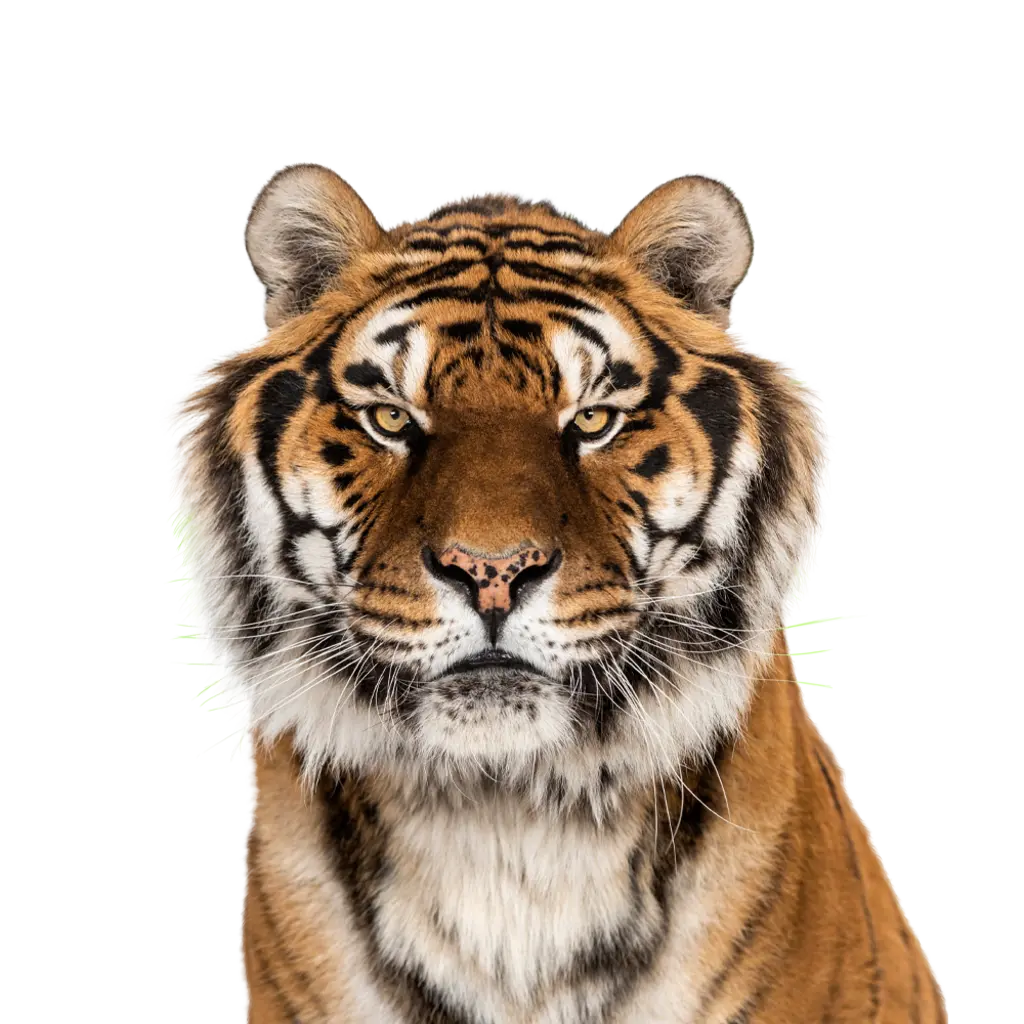
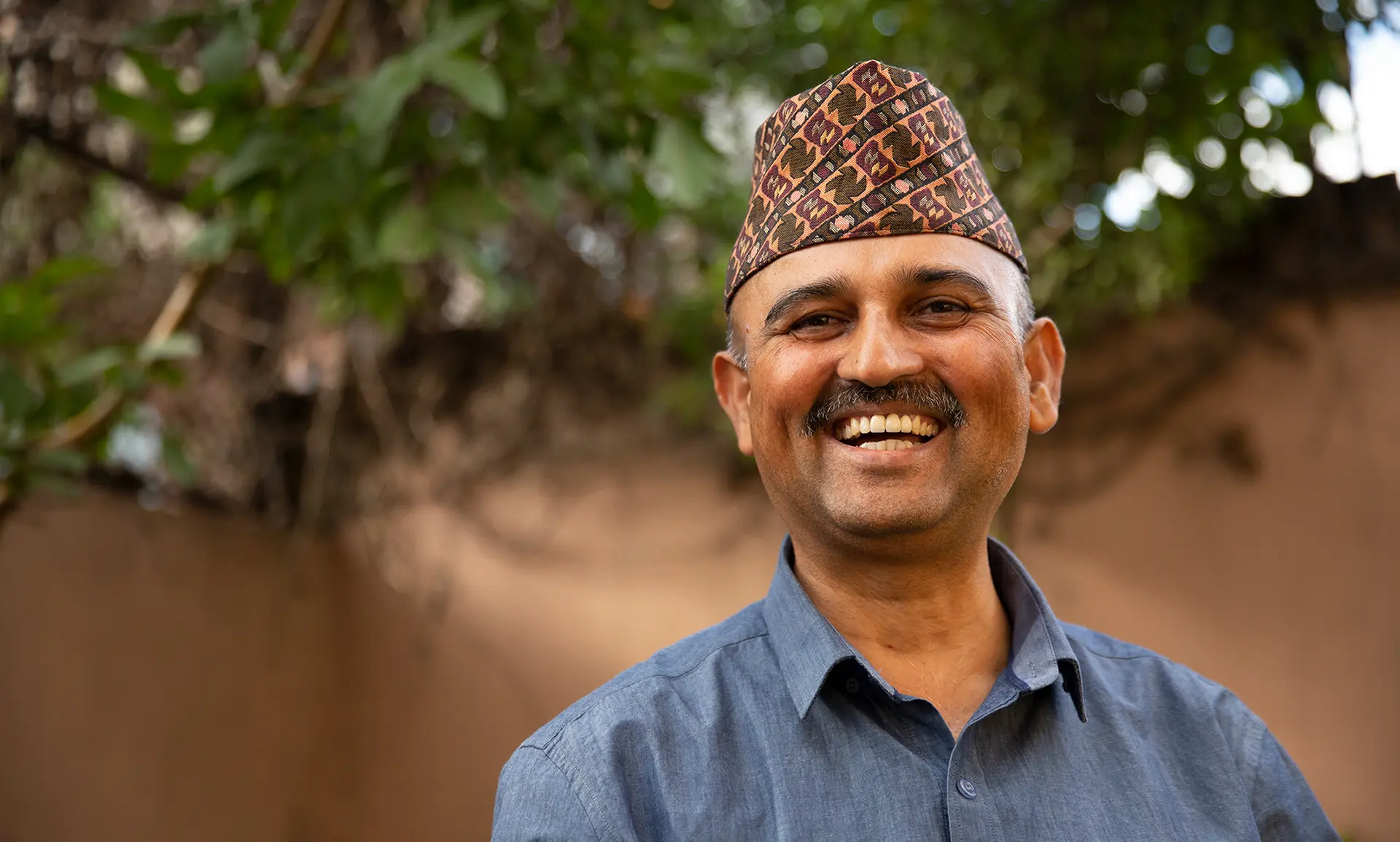
Hem Baral, a renowned ornithologist and conservationist, grew up on the edge of a protected area in Nepal.
He has dedicated over 20 years to a career working to protect Nepal’s wildlife, which led to the setting up of our Nepal office in 2013. Before his retirement, the ZSL projects he led there have: strengthened tiger conservation, restored habitats, improved livelihoods, and enhanced the working environment of frontline staff through the building of new guard posts used to monitor and protect the park. Our Nepal team have also played a key role in supporting the expansion of Parsa National Park, adding over 100 square kilometres of habitat for tigers and other wildlife, helping to bring species back from the brink.
Hem Baral
I grew up close to a protected area, and when I was a schoolboy, being primarily a Hindu country, we have many gods and goddesses. We have nearly 30 million gods and goddesses for Hindus. So one of the famous goddesses is the goddess of education. And somewhere in January we worship her. There is a special day dedicated to her. Actually, the artist makes the statue, which is made from straw inside and mud plaster on the outside. And we worship. Then after the main day of worshipping, we need to carry that statue and let the statue go into the water. We put it into the water so that it goes wherever it should go. So, I participated in one of those events. And when I tagged along with my seniors, we visited a big river in the east part of Nepal. It's called the Koshi River.
And I remember seeing huge animals jumping from the river. Several of those animals. I didn’t realise what they were. For me at that time, they were just big fish. But now I remember they were freshwater dolphins. And since that day, I think I was really influenced by the wildlife and the birds.
There were hunters in my locality, and I used to go with them. They used to hunt. I didn’t hunt, I was too small, but I just tagged along with them and looked at their techniques. Of course, I didn’t support their hunting. So, from that time onwards, I have always been interested. I think I was eight years old at that time.
Later, in school and university, I took biology as my major subject. Then I also started working as a guide in Chitwan National Park, showing birds and wildlife to visiting guests. And since that time, I realised there is so much wildlife in this small country, and so much to be studied, so much that we need to conserve. And that’s how I was really inspired to be in the conservation field.
Interviewer
And was there a particular moment or experience that led you to pursue ornithology in particular?
Hem Baral
So actually, I think ornithology came when I started working in Chitwan National Park. At that time, we had a monarchy, and the park was called Royal Chitwan National Park. When I went there, I started working with seniors who were teaching me birds, how to identify them and their status, whether they are winter visitors or whether they breed in the country. As my seniors were teaching me, I started becoming really interested.
Then I realised that some of my questions to my seniors remained unanswered. I thought, my goodness, these guys also don’t know many things about birds. So, I thought this is a good field for me to know more and be able to tell others the story about birds. Of course, we would never know everything about birds. But that was the time I thought, okay, here is an opportunity for me to be the bird person in the country. And I took ornithology.
Then in 2001, I did my PhD at the University of Amsterdam in ornithology, and that was the first ornithological PhD in this country.
Interviewer
Wow, that's very impressive.
So can you tell me a bit about how you first started working with ZSL?
Hem Baral
Basically, a lot of people don’t know this, but my association with ZSL started earlier. The first time I visited the UK was in 1990, and again in 1991. At that time, ZSL, especially London Zoo, was facing a lot of problems, particularly a financial crisis. It was close to closure.
I remember that incident, and the BBC was talking about the history of ZSL and how old it is. Even at that time, I was thinking, my goodness, would the British allow the closure of such a historic institution? But nothing happened.
In December 1995, I met somebody who had been the president of ZSL from 1992 to 1994. He was then the Governor of Gibraltar, Field Marshal Sir John Chappell. I met him at the Royal Geographical Society Hall in London at an event.
He was such a big fan of ZSL and always spoke highly of it. He and I became friends, and every time he came to Nepal, until his death, I would go birding with him. He was very keen on birds, and that brought us very close. Through him, I got to know a lot of people at ZSL long before I joined. Later, when I was working for BirdLife Nepal as Chief Executive Officer from 2005 to 2009, I started collaborating with ZSL. We worked on vultures.
Andrew Cunningham, who was the Deputy Director, is an old friend of mine. He stayed in my house. My family knows him, even my wife knows him. I had similar relationships with Nick Lindsay, Raj Amin, and many vets from London Zoo who came to Nepal to provide technical support. I was really impressed. These people genuinely liked what they were doing. It wasn’t just a job for them. I had a lot of respect for them, and I still maintain regular contact with many of them.
In 2009, I left BirdLife Nepal and immediately started working with ZSL as a consultant to develop Nepal’s first National Red List of mammals. We completed it in 2011. That was a major legacy work. From 2011 to 2016, we produced six volumes of the National Red List of Birds of Nepal - nearly 4,000 pages, the most authoritative work ever done in ornithology in this country. In 2013, the opportunity came to open the Nepal office full-time. I accepted the challenge and stayed for 10 years. I had never stayed anywhere that long. When I left, I was very emotional. I almost cried. But that’s the story.
Interviewer
So can you tell me a bit about setting up the office in Nepal, and what some of the challenges were that you faced, and how you overcame them?
Hem Baral
I was very lucky. I had a very good manager to start with on the London side, and she understood the context of this country and how things are. But I did face some challenges in the country. As a very active conservation organisation from outside Nepal, at that time there was only WWF, which had already been working in Nepal for about ten years. They had done a lot of work and were a main stakeholder, and the entire country was kind of their domain.
There were also other conservation players who were a little doubtful and hesitant to support us immediately. That was one of the challenges I faced in the beginning. But the good thing was that those challenges were nicely met. I knew a lot of people in the Department of National Parks, with whom we still work closely today. We have an MOU with them, and also with the Ministry of Forests and Environment. I had colleagues, seniors, and students working there, and they really helped me overcome those challenges. And I think the ball started rolling and never stopped.
Interviewer
And can you tell me a bit about the Darwin Initiative and your collaboration with them?
Hem Baral
Before I started working for ZSL, ZSL had a scheme of working in Nepal through one of our national partners, the National Trust for Nature Conservation, who we continue to work with. Again, thanks to the late Sir John Chappell, who was the main connection linking ZSL and NTNC.
When Alexandra Dixon was the Director of Conservation, she and others raised quite a substantial amount of funding to work in Nepal. Together with Sir John Chappell’s support, finance, and connections, ZSL did fantastic work in the late 1990s to build four veterinary centres around the buffer zone of Chitwan National Park. There was a South African vet employed to oversee construction and technical matters. Those four vet centres were fantastic initiatives by ZSL.
When I started working for ZSL, I thought we needed to bring in some big funding so we could do good work in the field. We applied for Darwin funding to work in far-west Nepal. The places we started working were not in the domain of WWF, which was already active in many areas. We thought, let’s not work in the same places. Let them get credit for their work, and we get credit for ours.
Our Darwin project was conceptualised based on what was done in the late 1990s, which was a successful legacy program.
I believe strongly in legacy. At the end of everything we do, what remains is the good work we leave behind and what people remember. I wouldn’t be sitting here giving this interview if my work had not been appreciated by colleagues in London.
The Darwin Initiative was funded by the UK government, and we were very lucky. The project included setting up two veterinary centres, similar to what we did in Chitwan. Sometimes when we design projects, we overlook certain stakeholders or elements. We did that as well, but later we corrected it and reported it to Darwin. That correction was very important for the vet centres to function independently and sustainably. Now, if ZSL staff, donors, or visitors come to see what we have done in this country, those two vet centres are one of the highlights. They are functioning far better than we originally expected. I really like that project. It was a very nice project, and the legacy is still continuing.
Interviewer
And can you tell me a bit about your work with the IUCN, especially from 2016 to 2018?
Hem Baral
Yes, that was the IUCN–KfW project. It was KfW funding administered by IUCN. IUCN announced a call to provide up to two million euros for tiger conservation in tiger range states, not all of them, but those that met certain criteria.
Our country office was formally established on the 6th of January 2014. I had started working full-time in 2013, but after two years we already had Darwin funding and support from Panthera as well. Then this opportunity came.
To be honest, in the beginning I was a bit sceptical that we would receive two million euros. Outside the UK, within ZSL’s domain, Indonesia was the only office managing multi-million-pound funds at that time. But we worked very hard. It was a joint team effort. We truly believed in teamwork. We worked day and night, there was no concept of office hours. Sometimes we worked until midnight. When that funding came through, ZSL Nepal was lifted to the level of one of the major national conservation partners in the country. Everything changed.
Previously, if the government released a conservation poster, there would usually be three logos, and ZSL was not one of them. After this project, ZSL’s profile rose so high that even today that legacy continues. ZSL is now a very trusted conservation partner, highly regarded by the government and other conservation organisations.
That was a huge success.
These two projects stand out for me. One was very grassroots - working with communities, easing their lives, improving livelihoods, and including scientific components like grassland management and restoring ungulate populations.
The IUCN–KfW project, on the other hand, focused on tigers, a flagship species, and included many elements such as improving the livelihoods of people living around park boundaries. It was really good work, and ZSL never let the government down. We have always been a very trusted partner. Fantastic.
Interviewer
What would you class as your biggest and proudest achievement during your time working with ZSL?
Hem Baral
Of course we brought a lot of resources. By the time I left, there were more than two dozen staff members and several field offices. But in the end, what matters is impact and legacy. Being recognised as a trusted partner, where the government shares everything with us and accepts us as insiders. This is a huge success. You cannot put an economic value on that trust. Money cannot buy that relationship. We earned it through hard work and consistent behaviour with our government counterparts. That is the biggest achievement.
Another legacy of the IUCN–KfW project was improving conditions for the army and park staff protecting wildlife. They were living in very poor conditions deep in the jungle. We were the first conservation partner in the country to build them proper facilities that fit into the natural environment without damaging the landscape. We upgraded their living conditions because morale is very important for protecting wildlife.
Through IUCN–KfW, we built eight guard posts. These are now considered among the best in the lowlands. Even other conservation partners take their guests to see our guard posts. The two veterinary centres we built were also very important. We helped the government extend Parsa National Park by more than 100 square kilometres, accommodating more wildlife, including tigers.
We also built strong partnerships with other conservation stakeholders who were initially doubtful about our entry into the country. They thought we were here just to do a project and leave. I always told them we were here to stay, and we did. We built trust. Now ZSL works very closely with WWF, TNC, and other partners. We may compete in some areas, but our goal is the same - to work together for conservation.
Interviewer
What would you say are the current challenges facing conservation in Nepal, and how do you think they can be overcome?
Hem Baral
The challenges are many. One immediate challenge is increasing wild animal populations and how that impacts the livelihoods of people living near forests. Human-wildlife conflict has always been an issue, and in recent years it has intensified. At ZSL, we prefer to call it human-wildlife coexistence rather than conflict.
Another major challenge is climate change. This has not been fully addressed yet. We have looked at certain problems, but we have not looked at where these problems are coming. For example, we deal with invasive alien species, but sometimes we forget what is really promoting the spread of this invasive alien and of course. A lot of research from outside the country shows that climate change is one of the drivers of spreading invasive species. Forest fires are increasing in intensity. Poaching continues to be a problem as well. Nepal today is very different from 30 or 40 years ago. We are located between two wealthy countries, India and China. The demand for wildlife products, particularly for traditional Chinese medicine, drives illegal wildlife trade, despite good government efforts and a strong network of conservation partners.
The big challenge is brought about by climate change. I talked about biodiversity impact, forest fire, shrinking wetlands and invasive alien species. But climate change also impacts the livelihood, which is entirely, you know, another big thing that we need to explore. And because if livelihood is affected, then wildlife will be also affected naturally. And then, of course, illegal wildlife trade, triggered by the wealthy nations. They have the better consuming capacity; they can pay better price. And Nepali people are not getting richer, like Chinese and Indian people. So, all these things are putting pressure on wildlife.
Interviewer
And how do you balance conservation efforts with the needs of local communities, and what role do you think local communities can play in conservation?
Hem Baral
Local communities have always been doing their best for conservation. We need to raise awareness, educate, lobby the government and connect them with other organisations that focus more on livelihoods. ZSL also runs livelihood improvement programs, but there are other organisations better equipped to improve local livelihoods. Our core focus is wildlife conservation, habitat management, and research. So I think awareness, education and helping to improve their livelihood, they will be alright. Actually, it's more on our part - what can we do to help them to make their life easier and comfortable. We need to be in their position to think what they are going through, what are the problems they have. And only then can we realise what problem these people have. For example, if an elephant destroys a home or kills my family, you cannot just talk about conservation. We can’t solve all the problems, but we can connect them with other agencies that work more on the livelihood side.
Interviewer
What advice would you give to a young conservationist today who's starting out in their career?
Hem Baral
The world is changing rapidly, and we need more people to think about nature and the environment. Nature existed before we did; we are only part of it. We cannot decide to clear forests, drain wetlands, or kill wildlife without thinking about sustainability.
My advice is to get genuinely interested in conservation. Passion is key. What I enjoyed at ZSL was being paid to follow my passion. Now I do similar work without pay, but with more free time for my family.
Young conservationists should go beyond surface-level knowledge. They should work for the love of it, not just for a job or salary. If you are passionate and genuinely care, you will make a real impact. Everything we do should be for the love of nature.
Interviewer
And if you could kind of sum up ZSL in a sentence or two, what would you say?
Hem Baral
ZSL is a great organisation with beautifully complementary elements - science, research, practical conservation, ex situ conservation, and knowledge. If you just combine all that together and make it nicely rolling in the field, the world is yours.
ZSL is just an institution. But what makes ZSL very good is its staff. I met many beautiful, passionate people - my conservation heroes - who give character to this great institution. It’s a beautiful organisation that requires continuous, strong leadership and needs to keep doing important work. I wish it all the best.
These archive recordings capture personal memories and perspectives. They reflect the way people remember events which may be shaped by time, or differ from other accounts.