


Symposium - New technologies for monitoring biodiversity
16 - 17 May 2013 – 9:00 am - 5:30 pm
This event has already taken place
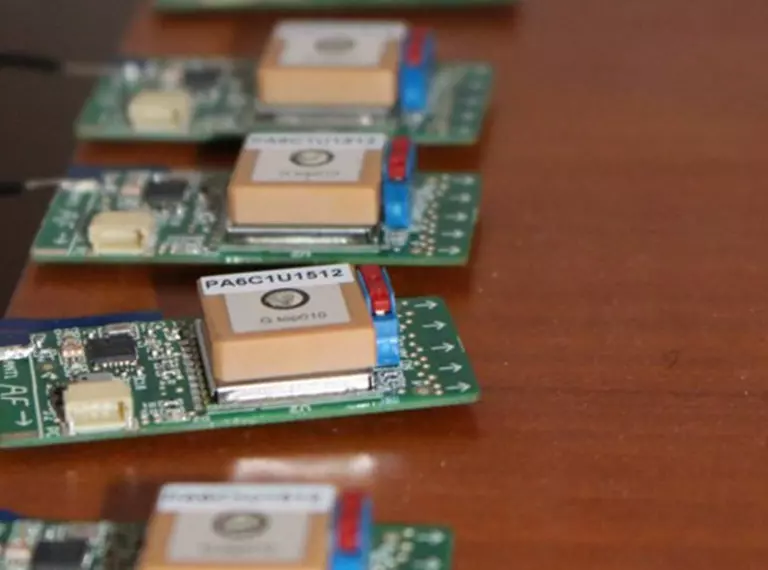
Biodiversity monitoring provides the essential information on which conservation action is based. Consistent, cost-effective implementation of monitoring is a major challenge, but capacity is developing rapidly through innovative use of technology, providing exciting opportunities for better and more affordable information on the state of the world’s wildlife. These technologies are based around the deployment of autonomous sensors to gather information in ways that human observers cannot: at larger scales, over longer periods, and in more inaccessible places, and including satellite, aerial, ground based and underwater applications. While these technologies present new opportunities, they also throw up new challenges and questions. How can we design, smaller, stronger, cheaper, more sensitive and more flexible sensors for biodiversity monitoring? How can we deploy these sensors most effectively? How can we best process and analyse the data they produce to provide useful outputs?
This symposium will give an insight into the state of the art in this area, focusing on satellite and aerial survey techniques, camera trap and related technologies, acoustic recording and the use of technology to facilitate and motivate the participation of citizen scientists in monitoring.
Organised by: Jonathan Baillie, Zoological Society of London; Kate Jones, University College London and Zoological Society of London; Margaret Kinnaird, Wildlife Conservation Society; Tim O’Brien, Wildlife Conservation Society and Marcus Rowcliffe, Zoological Society of London
Symposium programme (541 KB)
Symposium abstracts: speaker and poster presentations (4.4 MB)
Confirmed speakers and talks

Robert Rose, Wildlife Conservation Society (40.5 MB)
The top 10 conservation challenges that can be answered through remote sensing technologies
Sandy J. Andelman, Conservation International (31.9 MB)
Tropical forest monitoring: challenges and solutions
Margaret Kinnaird, Mpala Research Centre, Laikipia, Kenya and Wildlife Conservation Society (33.9 MB)
Arid- and semi-arid lands monitoring: challenges and solutions
Kirsty Kemp, Zoological Society of London (19.3 MB)
How cameras have helped to shape the current state of fishing technology
Tor-Gunnar Vagen, ICRAF (18.9 MB)
Towards a robust framework for assessing the impacts of land degradation and soil condition on mammal abundance and diversity in semi-arid rangelands
Will Simonson, University of Cambridge (31.2 MB)
Modelling species diversity using lidar remote sensing
Peter Fretwell, British Antarctic Survey (13.1 MB)
Penguins from space: finding counting and studying emperor penguins by satellite
Samantha Strindberg, Wildlife Conservation Society (14.7 MB)
Multispecies surveys and monitoring from airborne platforms: Advances in technology and analytical methods
Serge Wich, Liverpool John Moores University (13.3 MB)
The usage of conservation drones for biodiversity monitoring
Tim O’Brien, Wildlife Conservation Society (17.5 MB)
Camera trapping and biodiversity monitoring: an overview of metrics, efforts and advancements
Tom Hart, University of Oxford and Zoological Society of London (12.2 MB)
Beyond Bases: a network to monitor Antarctic wildlife
David Curnick, Zoological Society of London and University College London (12.1 MB)
An eye on the blue
Jim Nichols, Crofton, Maryland (20.7 MB)
The methodological red queen: keeping analytic pace with new data collection technologies
Marcus Rowcliffe, Zoological Society of London (15.9 MB)
Making the most of camera trap data – new analytical frontiers
Bryan C. Pijanowski, Purdue University (15.9 MB)
Soundscape monitoring
Danielle Harris, University of St Andrews (28.1 MB)
Estimating animal density using passive acoustic monitoring: challenges and opportunities
Aaron Rice, Cornell University (28.6 MB)
Technologies, challenges, and recent insights in passive acoustic monitoring of marine vertebrate biodiversity
Melania Guerra, Cornell University (20.0 MB)
Acoustic environment as context to understanding patterns in Arctic marine biodiversity
Jonathan Baillie, Zoological Society of London (21.1 MB)
Nature through the eyes of technology
Davide Zilli and Alex Rogers, Southampton University (17.6 MB)
Smartphone-based biodiversity monitoring: mobilising the crowd in the hunt for the New Forest cicada
Roland Kays, North Carolina Museum of Natural History and North Carolina State University (23.3 MB)
eMammal: Citizen science camera trapping for monitoring wildlife populations
Alasdair Davies, Zoological Society of London
Conservation tools of tomorrow - the future of camera trapping
Kate Jones, University College London and Zoological Society of London (24.8 MB)
Beyond Batman: new tools to engage people to monitor bats
Lucas Joppa, Microsoft Research (26.9 MB)
Technology for nature

Registration
Full rate: two days or part days £140; one day or part day £85
Student/ZSL Friends and Fellows rate: two days or part days £70; one day or part day £45
Lunch and refreshments are included in the registration fee and a three-course dinner with the speakers will be held on the Thursday evening; places at the dinner will cost an additional £40 per person.
Please note that the registration deadline is 10 May 2013 Bookings received after this date will incur an additional £10 charge
Enquiries: Megan Orpwood-Russell, E-mail: megan.orpwood-russell@zsl.org tel: +44 (0)20 7449 6227.
Present a poster of your research at the symposium
Posters relating to the symposium topic will be displayed throughout the meeting.
Posters will be accepted on a first-come first-served basis. Abstracts of no more than 250 words outlining poster content should be emailed to megan.orpwood-russell@zsl.org by 19 April 2013. Successful poster proposals will notified by 29 April 2013.
Poster proposal form (14 KB)
Become a ZSL member today to register at the discounted rate
Related links
ZSL Science and Conservation Events
Map showing ZSL Meeting Rooms
Directions to ZSL London Zoo
Information on ZSL membership
Symposium