Saving wild tigers
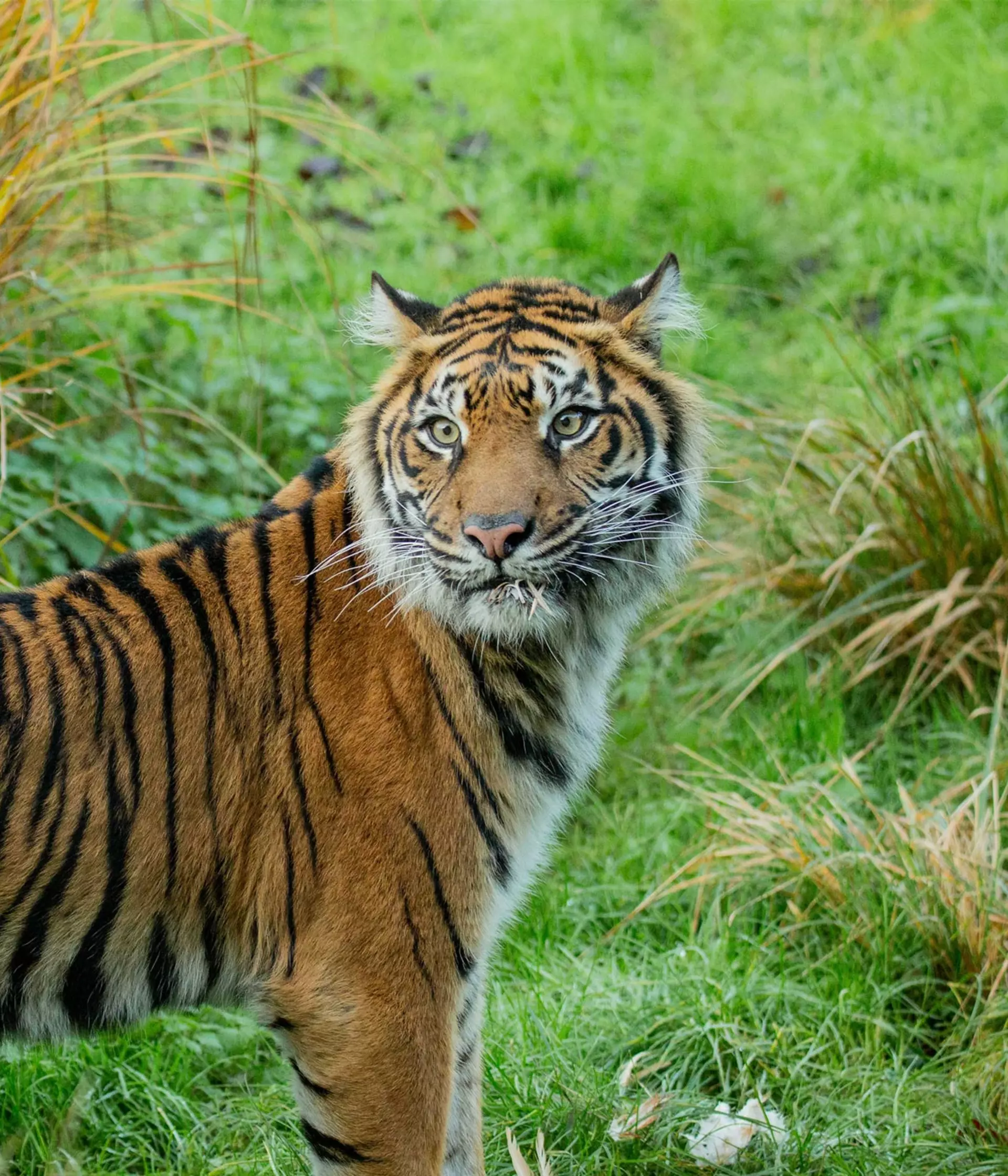
ZSL has field conservation work in key tiger ranges, including Amur tiger projects in Russia, Indian tiger work in Bangladesh and Sumatran tiger programmes in Indonesia.
Our work encompasses anti-poaching initiatives, tiger monitoring to reduce human-tiger conflict and habitat management.
This campaign is raising vital funds for ZSL’s Sumatran tiger conservation work in Indonesia.
Raising money for tigers
ZSL's Sumatran tiger campaign is raising vital funds to support three tiger conservation projects in Indonesia's Berbak National Park. These projects are:
- Anti-Poaching Patrols
- Tiger Corridors
- Save the forest, save the tiger
ZSL is a charity and every donation counts. Please help us protect Sumatran tigers
Indonesia: home to Sumatran tigers
Indonesia is the world’s largest archipelago, being made up of more than 17,000 islands extending for 4,500 km west from Sumatra to Papua.
With an area of approximately 476 000 km2, Sumatra is the second largest Indonesian island as well as the sixth largest island in the world.
The Sumatran tiger lives in both lowland and Montane rainforest and in freshwater swamp forests throughout the island.

Berbak National Park
Located on the east coast of Sumatra, the landscape in Berbak National Park is generally flat and sloping with altitudes ranging from sea level to 12.5m. A significant wetland, it contains the largest peat swamp conservation forest in Asia, and much of the forest is flooded for up to nine months of the year.
ZSL’s camera traps show that the core project area of Berbak National Park has a healthy resident tiger population, at least for now. Illegal logging is gradually destroying the park and cultivation on the borders of the park has led to large-scale fires within its boundaries.
ZSL has three field conservation programmes in this key reserve. Our aim is to protect the important population of tigers that inhabit the park’s various protected areas.
Sumatran Tiger Conservation
Tiger corridors
Tiger populations are becoming smaller, isolated and fragmented with and little or no tiger interchange and gene flow between these separate populations is decreasing.
However seemingly worthless areas of unplanted and degraded land could provide crucial ‘stepping stones’ or corridors between larger areas of forest in the surrounding landscape.
Save the forest, save the tiger
ZSL’s ‘save the forest, save the tiger’ carbon trading initiative aims to protect Sumatran tigers by protecting the forests in which they live - by making these habitats more valuable to local communities that logging or palm oil.
Working in collaboration with government and other organisations, ZSl will set up a system where wealthier nations can meet their greenhouse-gas emissions in part by buying tiger friendly carbon credits from Indonesia. In so doing, local communities could earn money by keeping their forests standing rather than cutting them down.
Anti-poaching patrols
An anti-poaching unit for Jambi Province in Berbak National Park will protect tigers by monitoring their trails regularly to deter and detect poaching, and to follow up with investigations, arrests and prosecution. The unit will also conduct community education and outreach to minimise conflict between humans and tigers.
The role of Zoos in tiger conservation
Tiger Territory plays a vital role in conservation, through breeding a species at risk of extinction in the wild.