






At ZSL, we know that conservation works best when it's powered by science. From uncovering the secret breeding grounds of the European eel, to creating 189 hectares of accessible habitat through installing eel passes, we're working together with our partners to monitor and restore the Critically Endangered European eel population across the UK.
Eels in the UK
European eel life cycle
1. Glass eels
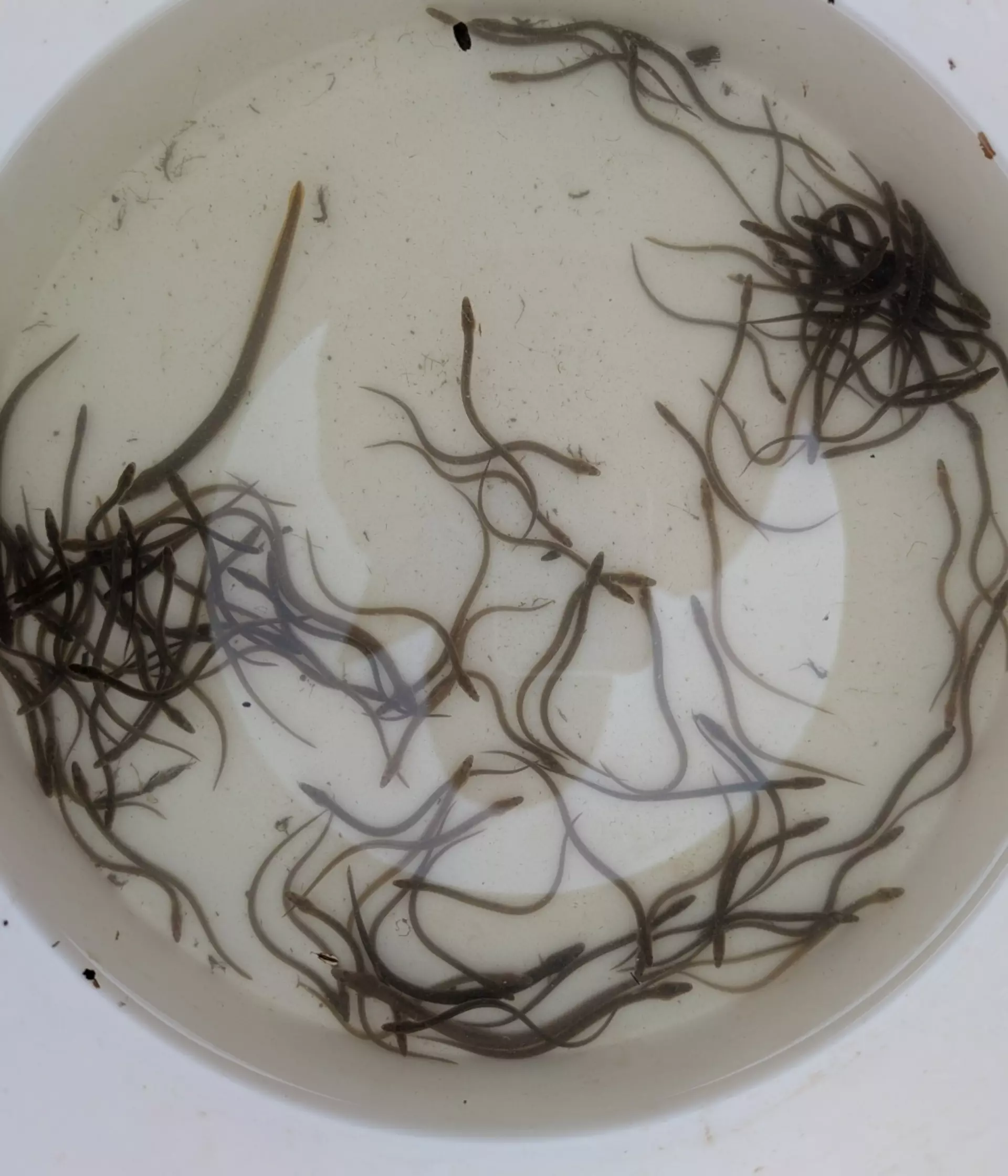
When European eels arrive in our rivers, they’re only 8cm long and transparent, yet have already travelled 6,500km. That’s because eels hatch from eggs in the Sargasso Sea, an area of the North Atlantic Ocean. Here, they spend the first year or two of their life underwater as larvae, floating towards Europe on oceanic currents, before transitioning into glass eels as they reach European waters.
2. River migration
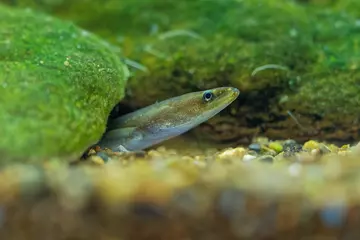
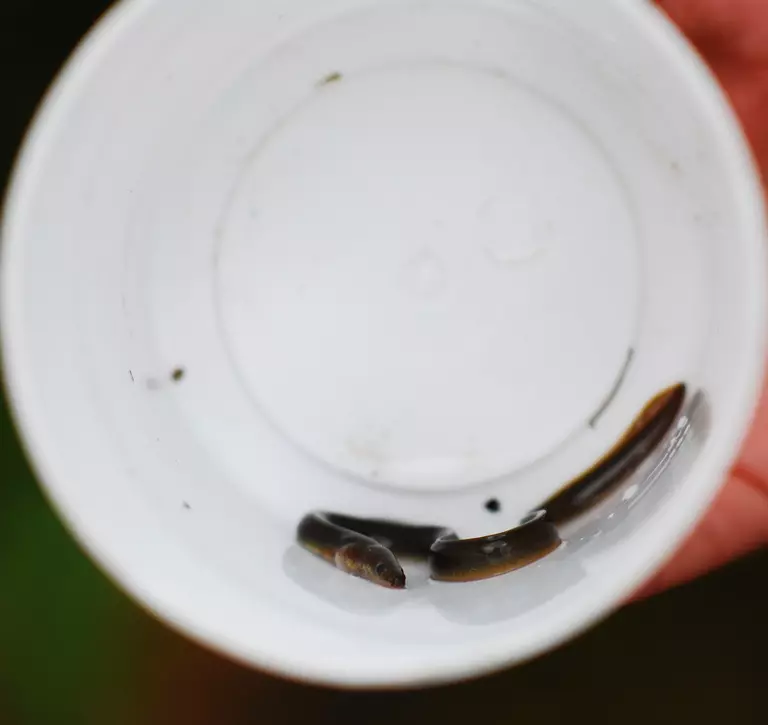
Having survived their mammoth voyage and arrived in the Thames Estuary, glass eels begin transitioning into elvers which are up to 12cm long with a dark brown colour.
Elvers travel up the Thames and into our system of tributary rivers, looking for a home where they can feed on insect larvae, crustaceans and other fish. However, the Thames River system is highly fragmented meaning elvers face over 2,000 barriers to their migration, such as weirs and dams. To help mitigate this threat, we install specially built eel passes which enables them to gain access to areas of rivers that would have otherwise been blocked off.
3. Becoming a yellow eel
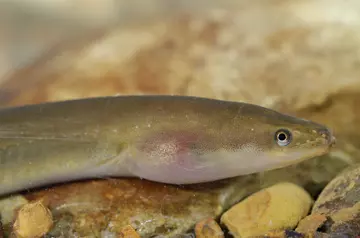
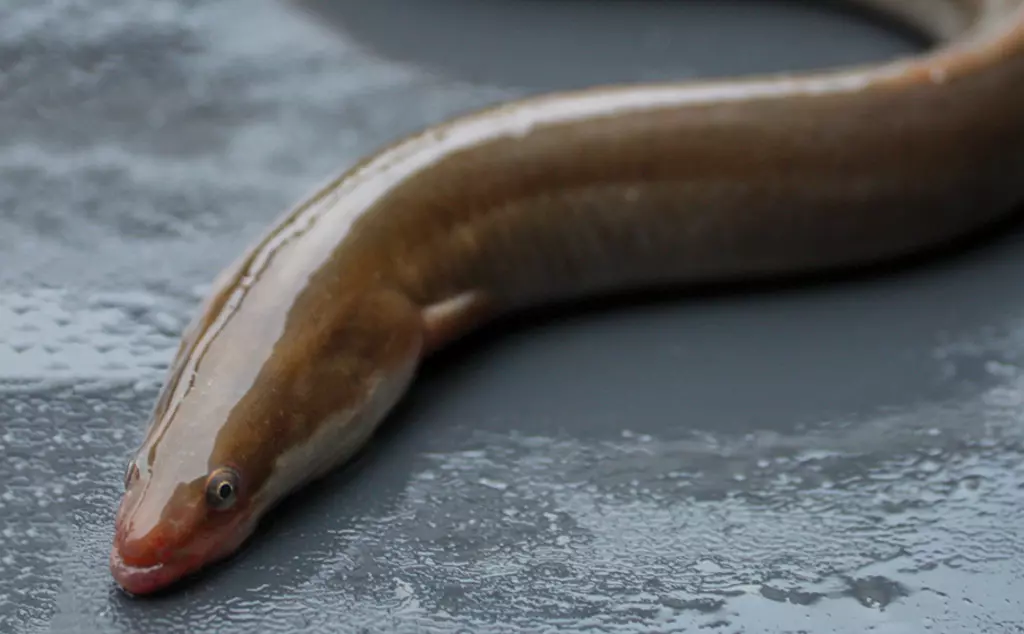
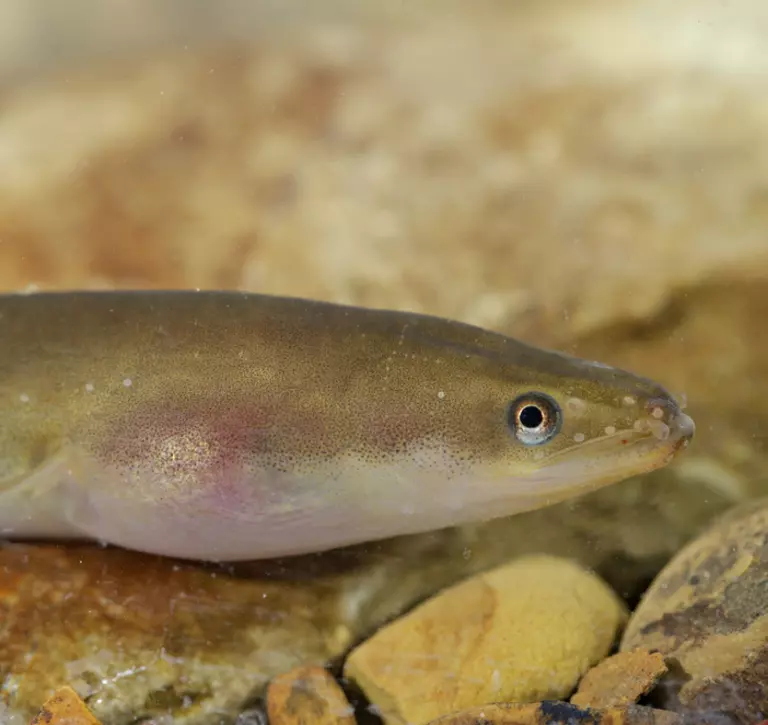
Once elvers find a safe spot to feed and grow, elvers begin the next part of their life cycle where they become a yellow eel (named because of their yellow tummies). Yellow eels can spend 12 to 20 years in our rivers, feeding and growing up to one metre in length and weighing up to 6kg – that’s about the same as a domestic cat!
4. Eel breeding
All of their hard work over the last however many years has been leading up to this moment... the eel makes its final transition into an adult silver eel. This silver colour helps camouflage them from predators they will face on their journey back to the Sargasso Sea. At this stage, the adult eel will need all the weight and strength it’s built over the last decade or two to swim 6,500km back to where they were born. For eels that do survive this journey, they get to achieve their ultimate goal: the chance to breed with other eels and lay their own eggs. After they breed, eels die and the life cycle starts again.
European eel Threats
- River barriers such as weirs and dams
- Habitat loss
- Illegal wildlife trade
- Historic overfishing
- Climate change
- Pollution
What ZSL is doing to help
European eels once thrived in London’s rivers but unfortunately the number of young eels, known as elvers, joining adult populations has dropped dramatically since the 1980's with the species now being classified as ‘Critically Endangered’ by the IUCN Red List of Threatened Species since 2008. Our work on European eels started in 2005 when we launched the Thames European Eel Project (TEEP). Since then, our work ranges from:
- Monitoring elver recruitment numbers across the Thames River Basin District
- Improving connectivity within the Thames River Basin District
- Contributing to regional and national management of eels
- Supporting evidence-based policy and international management of eel stock
Through our research, improvements to river connectivity, engagement with the public and ability to advise on policy, we work in partnership with the Environment Agency and a network of other organisations to address the key conservation issues threatening eels.
Eel discoveries
Until 2022, it was unknown where European eels came from and it had never been proved that eels bred in the Sargasso Sea. Fortunately, our scientists cracked the case by catching adult eels in the Azores and fitting them with satellite tags which enabled us to track them. This meant we were able to watch the eels return to their mysterious breeding grounds in the Sargasso Sea.
Eel passes and European eel stock assessments
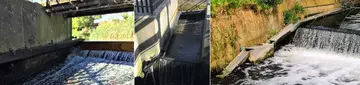
A principal conservation action for eels in freshwater systems is to restore migratory pathways by removing barriers. If removal is not possible, the impact of barriers can be partially mitigated by installing eel passes that allow eels to move upstream over them.
Our scientists are working on the ultimate eel pass. It involves presenting different ladders to eels in our labs at London Zoo, filming their ascents, and using AI to process the results. No eels are harmed – we return the eels to the river after they have attempted one ascent.
We currently have three long-term monitoring sites across the Thames River Basin District which have provided valuable data about changes in European eel recruitment over time, offering insight into spatial and temporal variation across the catchment. So far, eel passes commissioned by ZSL have made 138.95 hectares of additional habitat accessible.
The data collected to date supports the findings that the annual recruitment of the European eel across its range has reduced by 90-95% since the 1980's.
Thames Eel Management Plan and Thames Eel Action Plan
Since the launch of the Thames Eel Management Plan, we have co-chaired the Thames Eel Management Plan Implementation Group with the Environment Agency. In 2025, the Thames Eel Management Plan was superseded by the Thames Eel Action Plan (TEAP). Guided by the vision set out in the Environment Agency Eel Charter to establish thriving eel populations across suitable habitats, the TEAP focuses on addressing local challenges while contributing to broader conservation efforts and recognising the range-wide threats to the species. The plan was co-developed by 23 regional stakeholders.
Given the scale of the challenges faced by eels, working together is essential - if you or your organisation would like to join us in this work, please get in touch.
ObstacEELS
We are working with partners in the Thames Rivers Trust Thames Catchment Community Eels Project to co-develop a standardised methodology for citizen science led river walkover surveys with the aim of mapping barriers and assessing their impact on upstream eel migration. The barrier assessment method will be based on the EBAT scoring system and data captured using the River Obstacles App, which ZSL worked in partnership to help relaunch in 2021. This is an exciting development which will help fill data gaps on where barriers are in our rivers and help river Catchment Partnerships make decisions about how to prioritise conservation action for eel and other fish species by restoring source to sea habitat connectivity.


The importance of marshes to European eels
Eel predators
Eels are an important food source for other species found in the UK, including otters, bittern, osprey and herons. They also scavenge on decaying matter, helping our rivers stay healthy.
How far do European eels migrate?
Eels migrate 13,000km during their lifetime. That’s like swimming from London to Edinburgh 20 times!
How can you help?
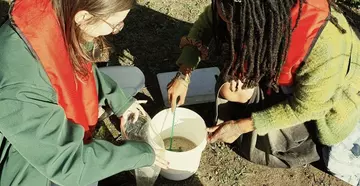
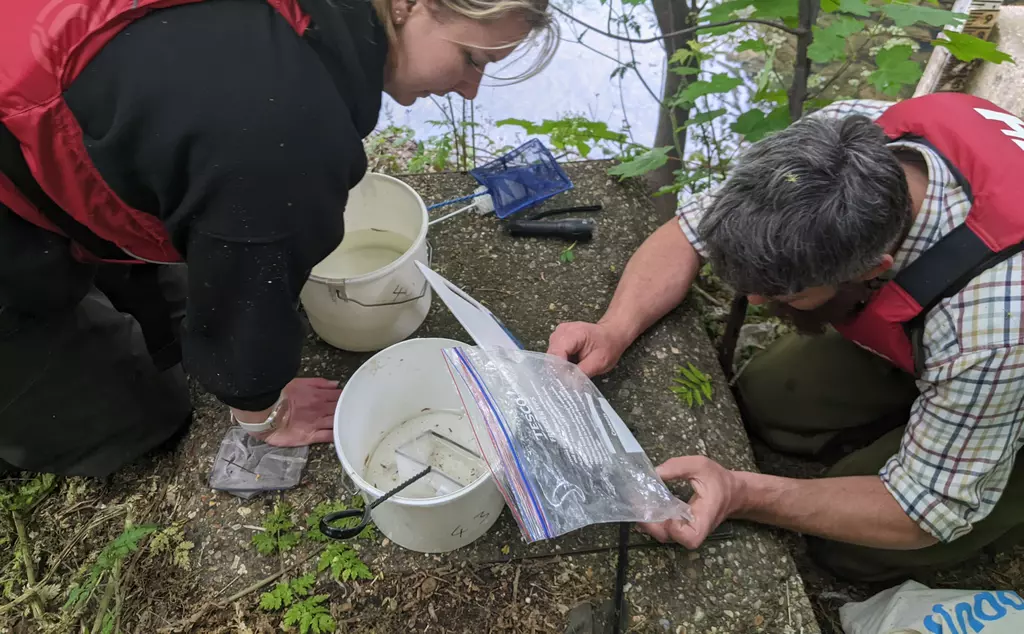
From March to June each year, ZSL and project partners recruit and train citizen scientists at sites across the Thames region to help check eel passes. If eels are found, we count and measure them before releasing them passed the river barrier that was preventing their upstream migration. The monitoring season is from April to September and we are always looking for volunteers to help us collect valuable data! Data collection allows us to assess the number of young eels, elvers, joining the adult population in rivers and can highlight the impact of barriers, one of the principal threats to eels in freshwater.
In 2018, ZSL produced a field guide for assessing the 'passability' of man-made river structures by European eels called the Eel Barrier Assessment Tool (EBAT). This step-by-step guide has been designed for use by NGOs, consultants and regulators in the UK and other European eel-range countries. The field guide includes an overview of eel behaviour in freshwater and a series of questions about the structure and its environment to produce an overall assessment score. This is a coarse assessment that can help influence and prioritise future conservation action for the Critically Endangered European eel. You can download the EBAT and the EBAT Form below:
Key species
- European eel (Anguilla anguilla)
People Involved
- Joe Pecorelli, Azra Glover and Ella Carbery-Tarrant work on the European eel conservation project.
Partners and Sponsors
- Canal and Rivers Trust
- Environment Agency
- Ham United
- Kingston University
- Medway Valley Countryside Partnership
- National Trust
- Thames Anglers Conservancy
- Thames Rivers Trust Thames Catchment Community Eels Project
- Thames Water
- Surrey Wildlife Trust
- South East Rivers Trust
- Wandle Heritage
Kindly funded by
- The City Bridge Trust
- Disney Conservation Fund
- Panton Trust
- European Maritime Fisheries Fund