






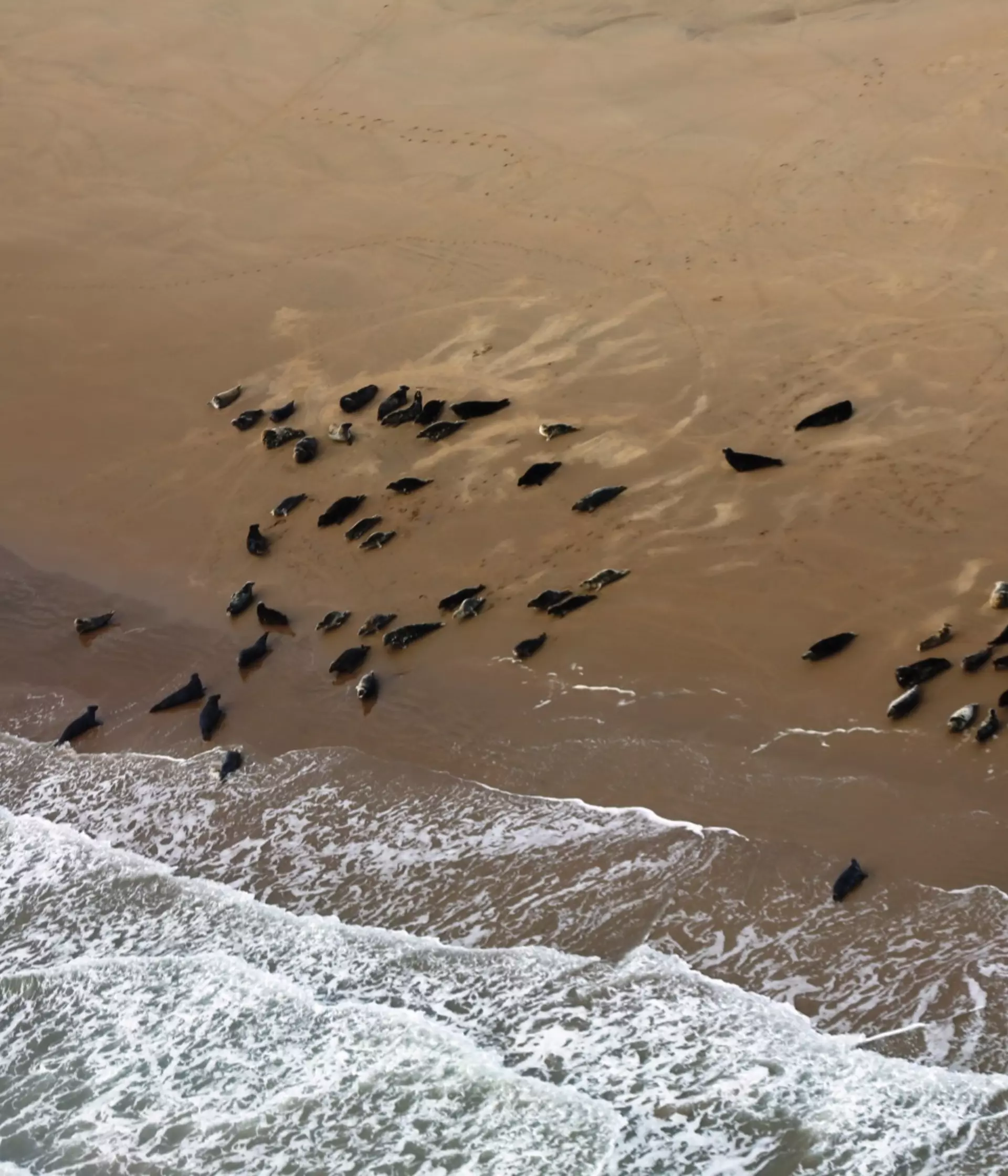
ZSL is monitoring Thames marine mammals to better understand and conserve these top predators
Why we work to monitor marine mammals
The Tidal Thames is home to several charismatic and easily recognisable marine mammals; including harbour seals, grey seals, harbour porpoises and the occasional bottlenose dolphins. These species are important top predators in a complex estuarine environment and can be found throughout the estuary and river, including in Central London. ZSL has been monitoring marine mammals in the Tidal Thames since the early 2000s, to better understand and conserve these species.
Annual seal population surveys
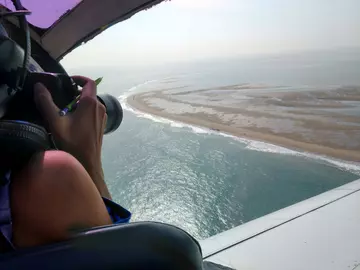
ZSL has undertaken annual surveys of the harbour and grey seal populations in the Thames since 2013, with the support of Bramley Associates and the Sea Mammal Research Unit (SMRU, University of St Andrews). The surveys are completed in August by photography from a small fixed-wing aircraft.

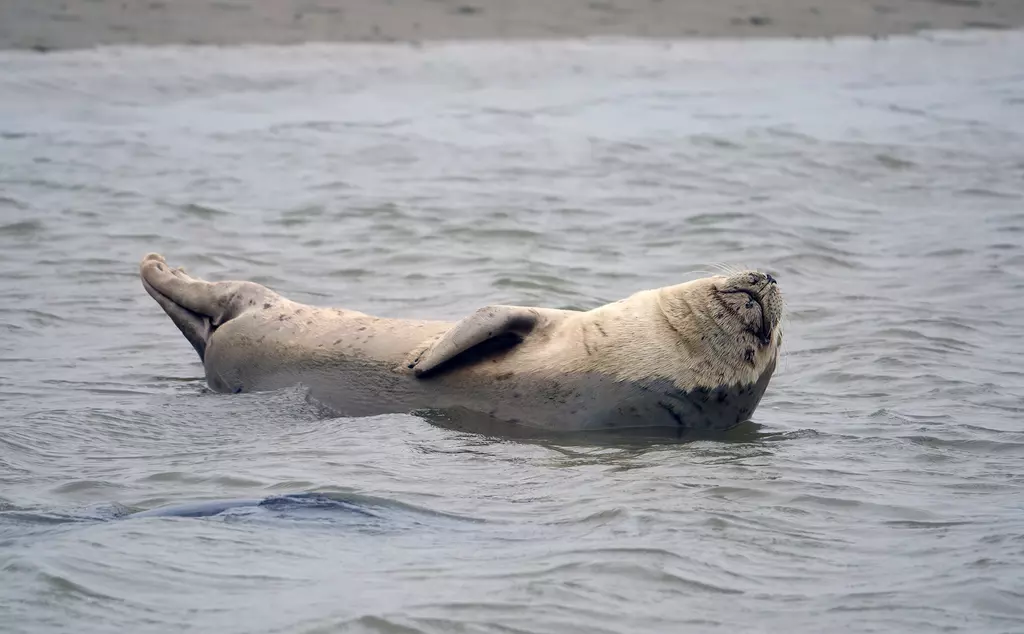

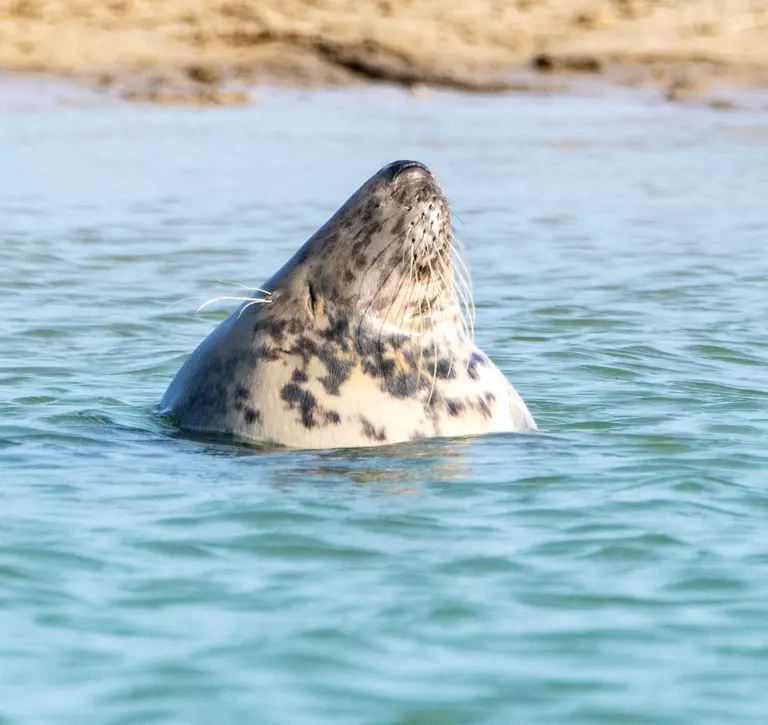
This coincides with the harbour seal moult period, when harbour seals likely spend a greater proportion of their time hauled out on sandbanks, allowing us to estimate the population size of this species and of grey seals in the Thames. By surveying year on year, we have been able to map critical habitats for the seals and follow trends in the seal population numbers.
The 2024 seal survey
ZSL took to the air and sea in 2024 to conduct seal surveys, teaming up with military helicopter pilots based at RAF Shawbury. During the seal survey, ZSL's conservationists counted 431 harbour seals and 714 grey seals laying out on sandbanks along the Thames, highlighting the importance of the iconic river for these native species.
Harbour Porpoise surveys
In 2015, ZSL partnered with Marine Conservation Research International to conduct the first harbour porpoise survey of the Greater Thames Estuary (read the published paper here). The survey monitored the Thames Estuary between Suffolk and Kent using visual and acoustic techniques. In 2022, our partnership conducted a follow up survey. These surveys have shown that the Thames Estuary is an important habitat with significant densities of porpoises present in the area, over multiple years.
We hope to repeat this survey every five years.
How you can help
Since 2004, ZSL has encouraged members of the public to submit their sightings of marine mammals from the Thames and its tributaries to help us better understand their distribution. These sightings have demonstrated that seals and porpoises are regular visitors in the Thames all the way up to Teddington lock in south-west London and are present in the estuary year around.
If you are lucky enough to spot a marine mammal in the Thames – enjoy it!
Please report your sighting to help us learn more about, and conserve Thames marine mammals.
Things to remember if you spot a seal
We also ask that you appreciate these animals from a distance – for both your safety and to not cause the animal stress. When hauled out onto land or a pontoon, seals may feel vulnerable and be easily startled. Noise and being approached by people, boats, kayaks, or dogs, etc. can cause seals to move back into the water – this can cause them injury and expend their energy unnecessarily. If you see a marine mammal in the water, many of the same rules apply and a distance of more than 100m should be maintained from the animal.
For more information on how to act around marine mammals please follow our code of conduct. Information for responsible wildlife watching operators is available here.
If you are worried about the animal and/or want to understand what is considered normal and abnormal behaviour, please refer to our leaflet and follow the action plan produced by the Tidal Thames Marine Mammal Partnership (Port of London Authority (PLA), British Divers Marine Life Rescue (BDMLR), ZSL, RSPCA, Met Police, RNLI, and London Fire Brigade).
Please do not attempt to rescue a mammal yourself.
Greater Thames Seal Working Group
The Greater Thames Seal Working Group (GTSWG) was set up in 2013, to provide a platform for information sharing and collaborative work on matters concerning harbour and grey seal populations in the region.
The members of the group are all stakeholders in the Thames, coming from varied backgrounds from commercial fisheries, development, government agencies and environmental charities. To find out more about the working group please email marineandfreshwater@zsl.org.