

Desert Conservation News

Find the latest updates from our desert conservation projects here:

Sidewinder
Call to protect forgotten desert diversity

Conservation Scientists from ZSL and partner organisations are calling on politicians at the Rio +20 Summit to keep desert and drylands habitats in mind and protect these fragile ecosystems.

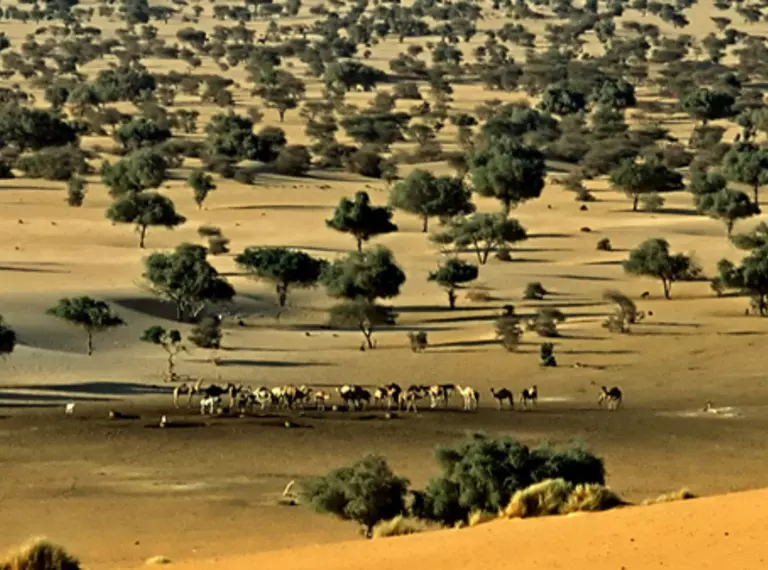
Deserts cover 17% of the world’s land mass and are surprisingly biodiverse, home to some of the most endangered species in the world. 6% of the world’s population also rely on desert regions, including some of the worlds’ poorest people.

Despite this, desert conservation has been largely neglected by policy-makers, in favour of conserving ‘biodiversity hotspots’ such as tropical rain forests. These offer greater ‘bang for buck’ in terms of species conserved per dollar spent on conservation. A far higher proportion of conservation funding is spent on forests, and this is mirrored by differences in scientific investigation.

In a letter just published in Science, ZSL conservation scientists and those in partner organisations are calling politicians to put deserts at the top of the agenda at Rio+20; to support the UN Convention on Combating Desertification; and to set a clear target for restoration of desert ecosystems to benefit biodiversity and people.

ZSL already has conservation projects around the globe to address the destruction of desert environments, such as the Sahara Wildlife Survey work with the Sahara Conservation Fund , wild dog and cheetah conservation work in West Africa , and work in the Gobi desert in Mongolia . Action across the globe is needed, however, if the world's deserts are not to become lifeless.

<<Back to top

Saharah
SSIG meeting held at ZSL

On 21st- 22nd May 2012 ZSL hosted the 12th Annual Sahelo-Saharan Interest Group (SSIG) Meeting. This meeting, facilitated by the Sahara Conservation Fund’s Conservation and Science Committee, is an annual forum for all those working in wildlife conservation within the arid areas of North Africa. The meeting provided an opportunity to bring people together to share ideas and projects, and to continue a strong tradition of collaboration on behalf of Sahelo-Saharan wildlife and people. The meeting is a unique opportunity to hear what is going on in Saharan conservation and to meet and discuss with some of the world’s leading experts on Saharan and Sahelian wildlife.

<<Back to top

Antelope Workshop
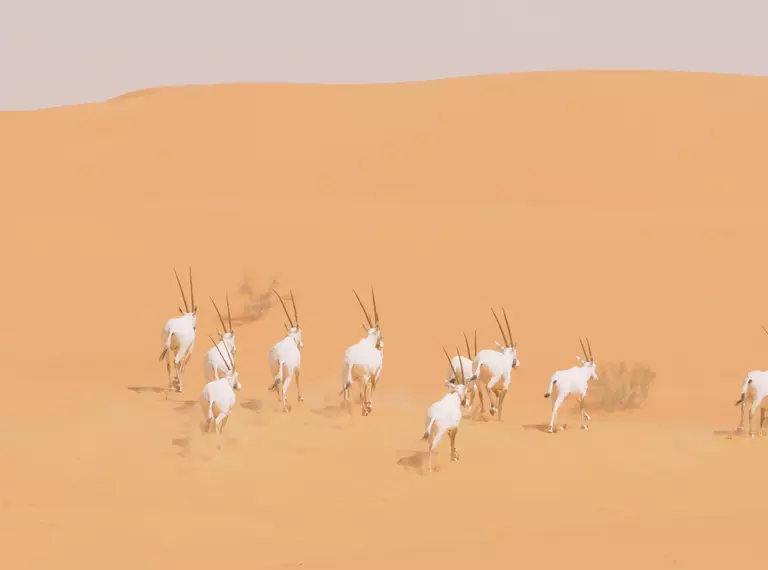
Scimitar-horned oryx Reintroduction Workshop and Field Trip in Chad

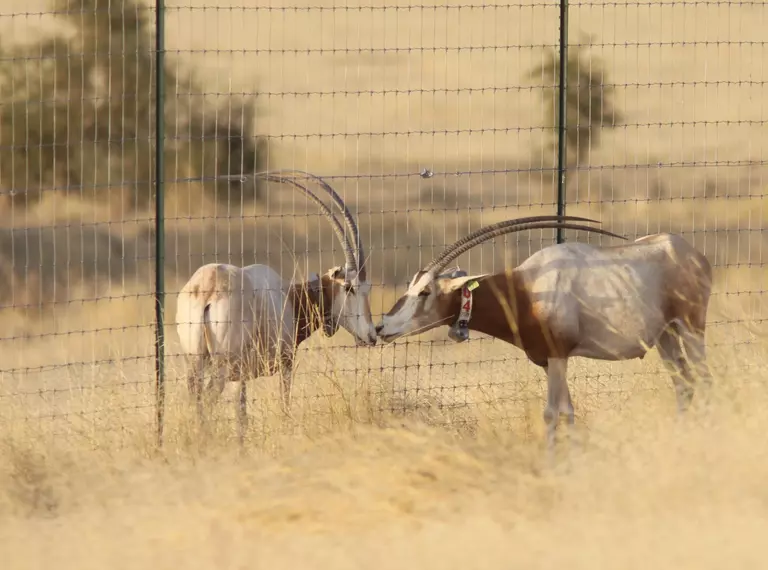
In april 2012 Tim Wacher from ZSL took part in a combined field trip and workshop in Chad organised by the Sahara Conservation Fund. The field trip element provided opportunity to report back to local authorities on results of earlier surveys (URL to OROAGR reports?), obtain new data on the status of the reserve at the height of the hot dry season. , and aimed at introduceding members of the ex situ antelope conservation community to the Ouadi Rime-Ouadi Achim reserve, the last place where Scimitar-horned oryx were found in significant numbers prior to their extinction in the wild. The workshop provided a formal setting to forum to area and obtaining national political discuss options for rehabilitation of the reserve, including endorsement in Chad for further efforts to re-introduce Scimitar-horned oryx into this area. which was identified as a promising site for reintroduction during the SCF-ZSL led Pan Sahara Wildlife Survey.

During the field trip close to 2000 dorcas gazelles were seen, plus 2 critically endangered dama gazelles and there were regular encounters (often via camera trap and tracks) with smaller wildlife such as fennec and pale fox, honey badger and aardvark. This visit, at the height of the dry season, illustrated that significant natural space (>10,000km2) still exists in the reserve area with sufficient resources where unfenced Scimitar-horned oryx re-introduction might be possible.

The workshop held in the capital of Chad, N’Djamena, was attended by representatives of the local livestock owners in Arada and Biltine, The Ministry of Agriculture, representatives of Scimitar-horned oryx holding institutions in the US, Europe and Abu Dhabi, and was opened by the Minister of the Environment and Water resources. Strong support for the general idea of scimitar-horned oryx re-introduction was consistently expressed from all quarters and a formal declaration to that effect was endorsed by all participants. On the final day of the meeting John Newby and Steve Monfort as CEO and President of SCF respectively were called back by the Minister of the Environment, taken to meet with the President to discuss the proposal, and received strong support to take the process forward.

<<Back to top

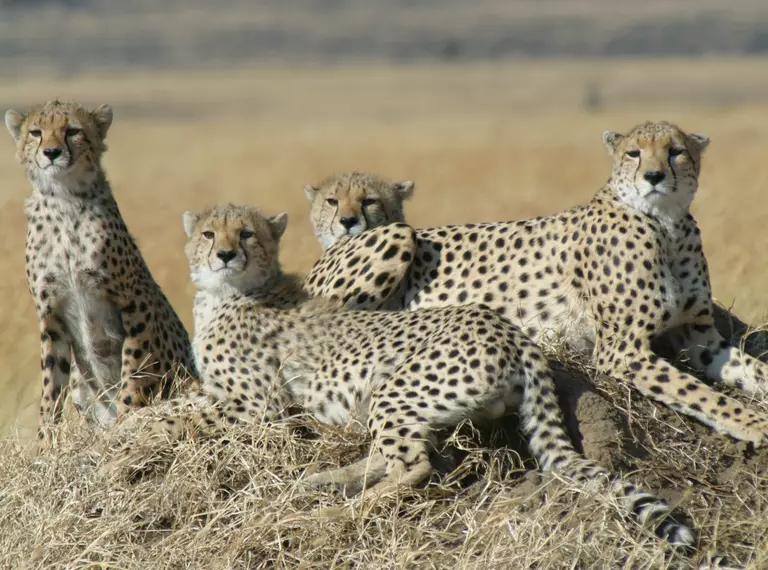
sahara cheetah
ZSL convenes meeting of international experts to draw attention to dramatic declines of wildlife in the Sahara

In October 2010, ZSL convened a meeting of 20 experts on Sahara wildlife to document the historical and current ranges of desert antelope and large carnivores in order to document the dramatic decline in these species and produce a high profile scientific article to bring scientific and public attention to the catastrophic declines of large mammals across the region.
The meeting was a great success with maps being produced for the Scimitar horned oryx, Addax, dama gazelle, dorcas gazelle, Cuviers gazelle, slender horned gazelle, barbary sheep, lion, leopard and cheetah, all of which illustrated massive range contractions for these species and the urgent need for the conservation community to take actions to address this.

<<Back to top

Printable version