

Project collaborators
Andrew Cunningham
Deputy Director of Science
Saving the mountain chicken
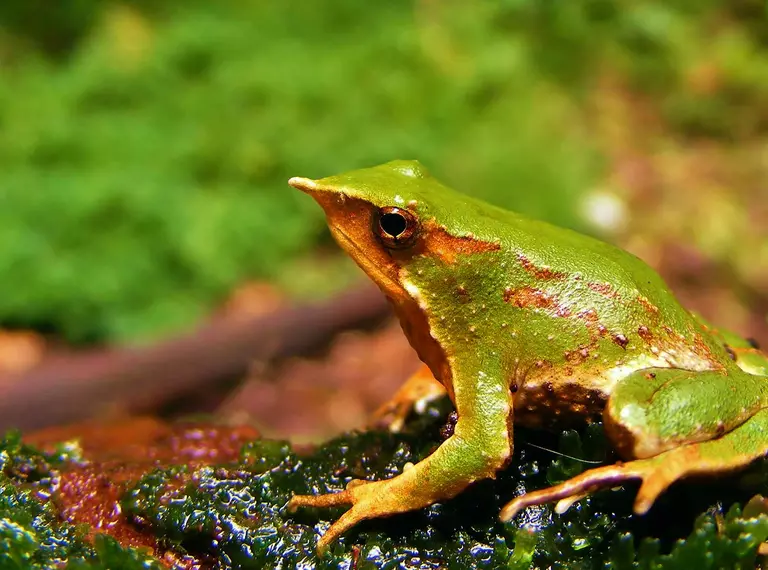
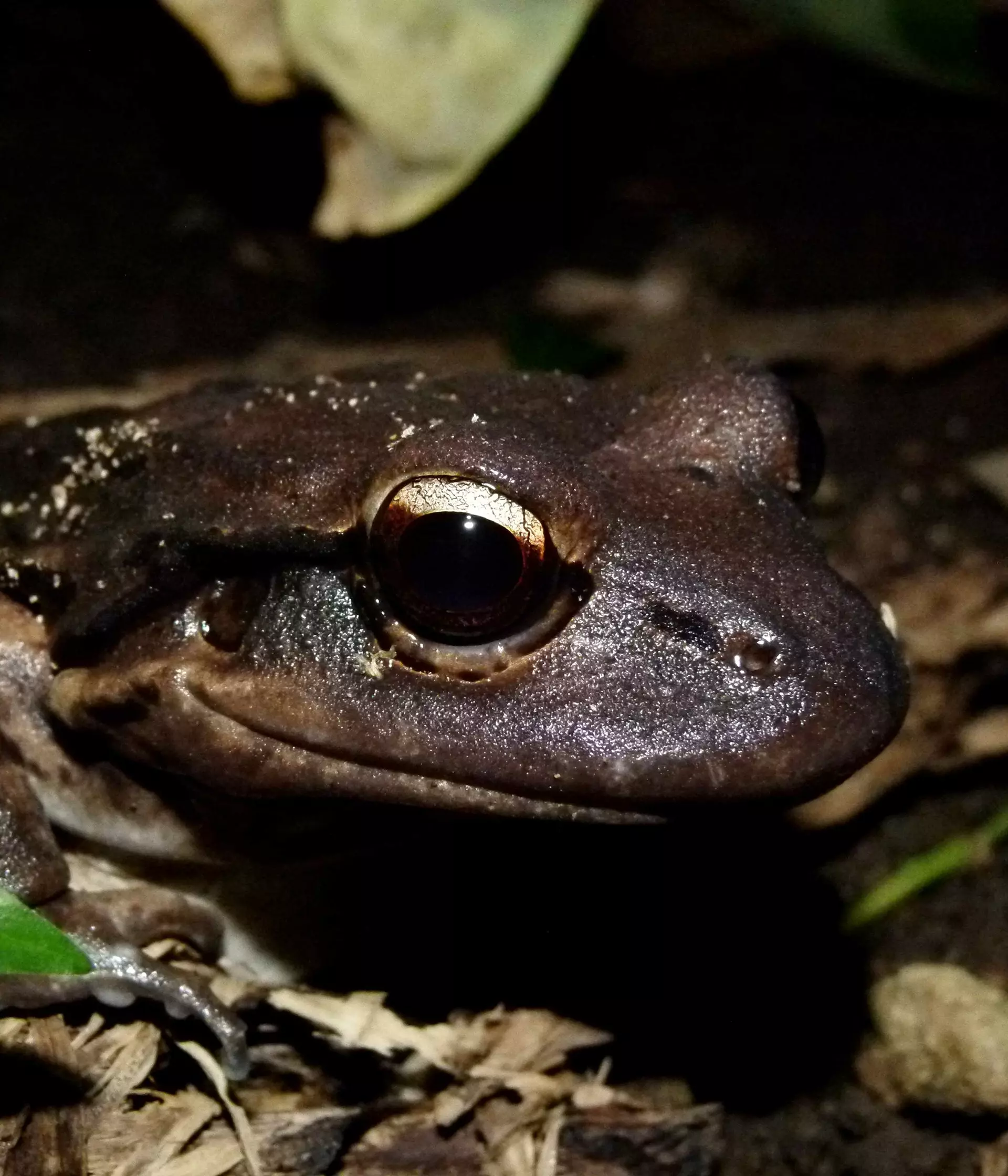
The mountain chicken frog (Leptodactylus fallax) was once found widespread across seven Caribbean islands including Montserrat and Dominica, but recent survey of hotspots on Dominica – now the last place on Earth where the species can be found in the wild - revealed only 21 of the giant frogs were left alive in the wild.
Conservationists hope the shocking figure will shine a light on how threats such as infectious disease, habitat loss, invasive species, climate change and pollution continue to threaten the future of the culturally significant frog.
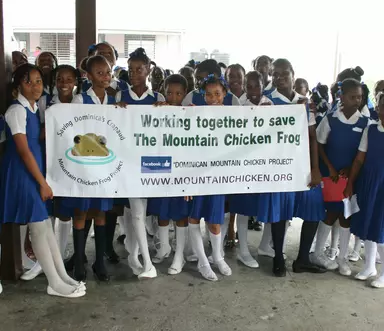
Since 2002 the Mountain Chicken Frog Recovery Programme (MCRP) – a global collaboration between scientists, conservationists and the governments of both Monserrat and Dominica - have conducted significant research into the Critically Endangered frog as well as developing innovative management techniques to try and prevent its extinction.
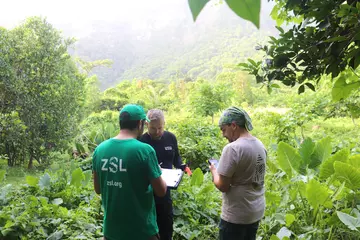
The most recent survey saw 28 conservationists from 11 organisations spend a total of 960 hours over 26 nights searching for the frog.
Andrés Valenzuela Sánchez, Research Fellow in Wildlife Health at ZSL’s Institute of Zoology and part of the survey team said: “It’s believed there were once tens of thousands of mountain chicken frogs living on the two islands – now, there’s only a small handful clinging to survival on just one. But as long as that handful is there, we still have hope. Their story isn’t over yet, and we have the chance to change it through urgent conservation action.”
One of the largest frogs in the world
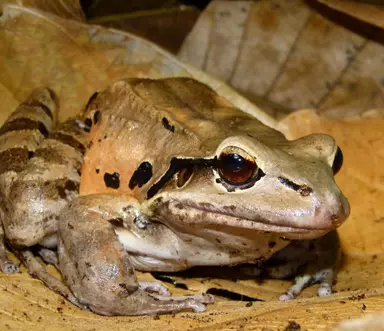
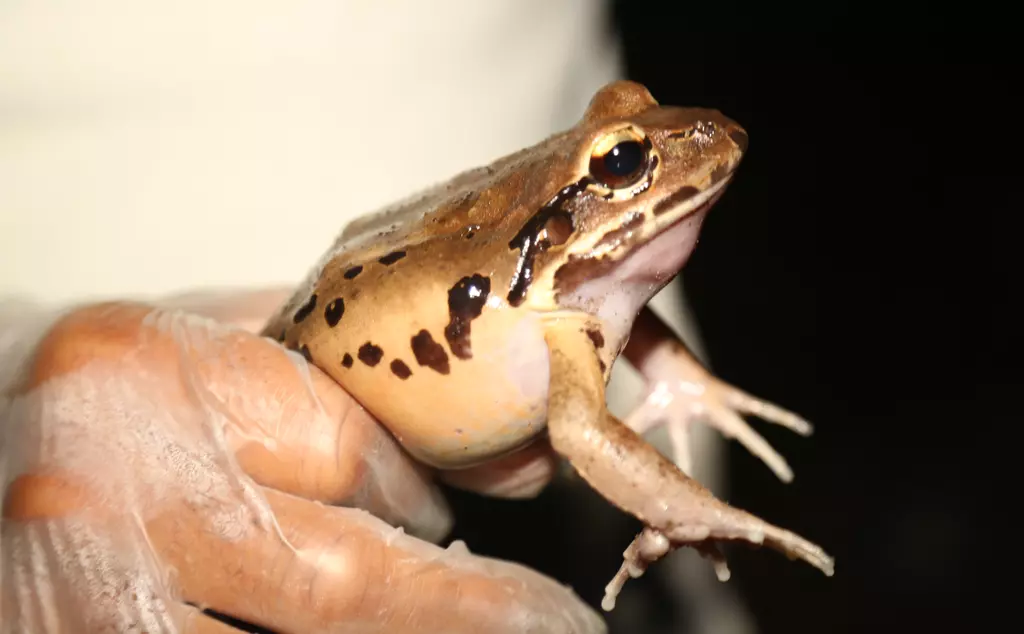
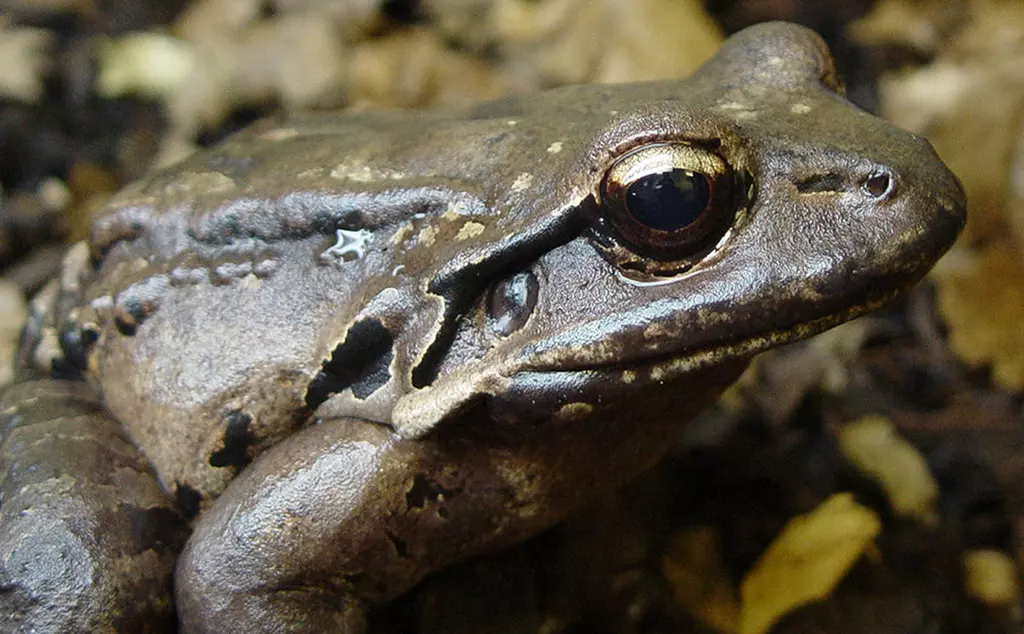
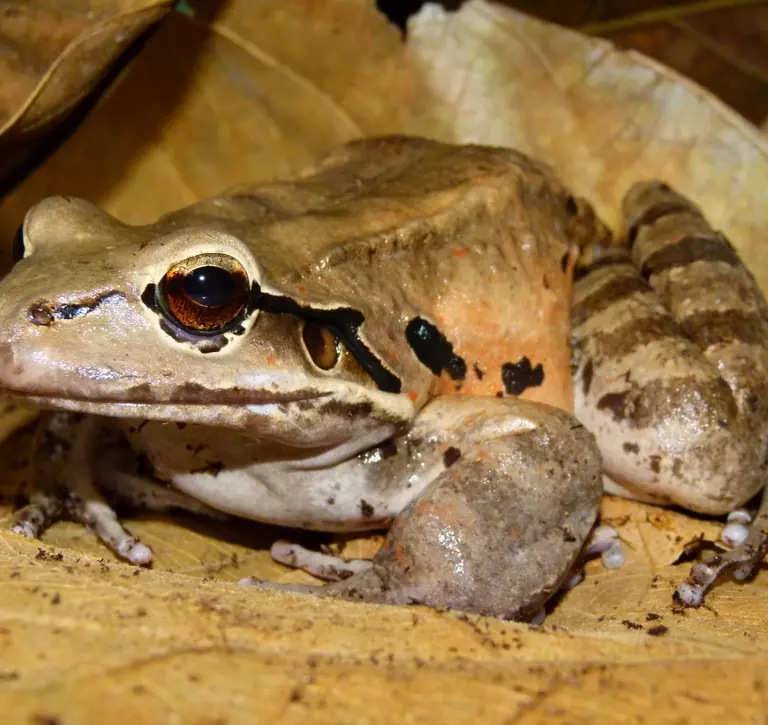
The mountain chicken is one of the largest frogs in the world and can weigh over 40 times as much as a European common frog, reaching up to 1kg in size. The predator eats a variety of animals, including insects, snakes, small mammals, and even other frogs.
Officially named the Giant Ditch frog, the species is commonly known as the mountain chicken. Although the origins of this name is unknown, one theory is that it references how mother frogs and their froglets stay together for some time after leaving the foam nest they hatched in, similar to how hens raise their chicks.
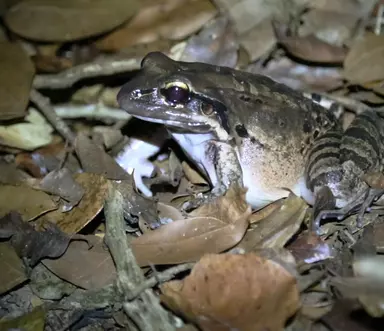
Its reddish brown and cream colour provides effective camouflage against the leaf litter of the forest floor, while its large, drumstick legs hold enough power to jump high enough to clear a standing adult human
Mountain chickens are a culturally significant species in both Montserrat and Dominica. Mountain chicken was the national dish of Dominica until their decline, and were widely eaten in both Dominica and Montserrat before the chytridiomycosis epidemic. The mountain chicken even features in the Coat of Arms of Dominica, and local people on both are islands hope their numbers can be recovered.
Mountain chicken threats
Despite surviving hurricanes, volcanic eruptions and being hunted for centuries, the mountain chicken frog has been driven to the brink of extinction by a deadly microscopic fungus. Amphibian chytridiomycosis arrived in Dominica in 2002, and caused the population to plummet by over 99 per cent. This disease has caused drastic declines in around 500 frog species across the world.
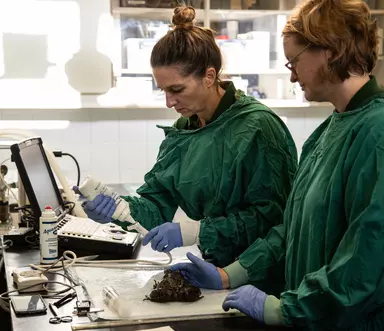
We are a part of the collaborative Mountain Chicken Recovery Programme, which is leading cutting-edge mountain chicken conservation. Together we are researching possible routes to help the species recover, such as heated water baths for a population managed in semi-wild conditions on Montserrat, and genomic investigations of disease resistance in Dominica. We also hold a population in biosecure facilities at London Zoo, which will act as a source for future population recovery in the wild. Returning an animal which is as much a key part of the eco-system as they are loved by local people.
New methods to control the disease are currently being trialed, including solar-powered heated pools for mountain chickens because the fungus cannot survive warmer temperatures; when infected frogs bath in these heated pools they may reduce their infection burden. Although historically mountain chickens have been hunted, there is now an understanding that everyone needs to work together to save them from extinction.
Professor Andrew Cunningham, Professor of Wildlife Epidemiology at ZSL’s Institute of Zoology and leader of the international team that identified chytridiomycosis as a global threat to amphibians, said that despite the challenges it’s facing, there is hope for the species. “In two years, these vitally important apex predators could become Extinct in the Wild, meaning they will cease to exist anywhere except in human care.
“It’s been over 20 years since amphibian chytridiomycosis first arrived in the Caribbean, and in that time mountain chicken frog numbers have been decimated. However, this year’s survey did give us one reason for optimism. Despite all the threats these frogs are facing, the team identified one particularly special frog. He was tagged as a mature individual in a survey eight years ago, so we know that this frog is at least 11 years old - making him one of the oldest wild mountain chicken frog known to be in existence.”
“If this individual can persist in the face of endless challenges, it gives us hope for the future of the species more widely – and we need those with the power to rewrite this story to invest in that future.”
Andrés Valenzuela Sánchez, Research Fellow in Wildlife Health at ZSL’s Institute of Zoology said the team were working to understand how to recover mountain chicken frog populations after disease drove such startling declines. “We’re working to understand how to recover mountain chicken frog populations - but our work shows that the chytrid fungus is not the only threat we must tackle to avoid these frogs being wiped out forever, and we need urgent support to save the species.”


Mountain chicken conservation
Our population at London Zoo supports translocations back into the wild. To ensure our captive frogs are ready for release into the wild, we worked together with UK zoos to develop the first validated body condition score for an amphibian and pioneered a dietary comparison between captive and wild frogs. By advancing captive husbandry techniques, we hope to improve the success of mountain chicken conservation translocations.
We have helped establish a conservation breeding facility for mountain chickens in Dominica while also releasing frogs back to the wild in Montserrat from our biosecure facility at London Zoo. Through this captive breeding and reintroductions to the wild, we are working to slowly recover chicken frog populations and prevent extinction. Our research has advanced captive husbandry and pre-release health screening of mountain chickens.
Mountain chicken breeding
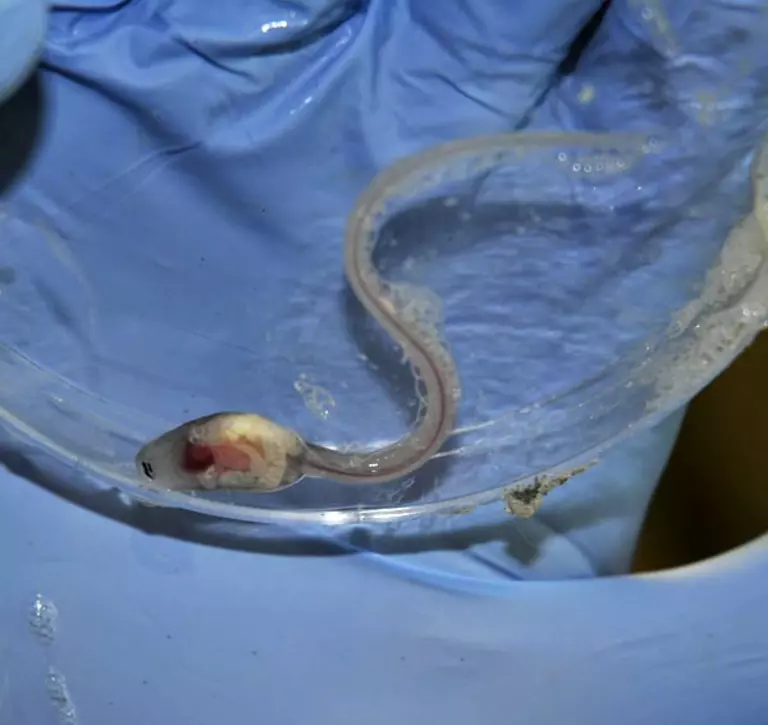
Mountain chickens breed in a unique way and take proactive care of their tadpoles. Males call from within a chamber to entice females where they produce a foam nest into which the eggs are laid. The eggs are guarded by the male and female frog, and the female frog feeds the tadpoles infertile eggs once a week for around a month until the tadpoles metamorphose.
Restoring balance for wildlife, people and the planet
From disease outbreaks to climate change, pressure on wildlife is growing. Now, more than ever, life needs our support. Join us on our journey of recovery to restore balance for wildlife, people and the planet.
Mountain chicken future
In Montserrat the species is now extinct in the wild, while in Dominica we’re working with local partners to conserve and monitor the remaining mountain chicken populations. This collaborative project is guided by scientific research which has underpinned decisions on surveys and interventions required to ensure the long-term survival of this species. There is ongoing research on the emergence, epidemiology and impact of chytridiomycosis in mountain chickens. In Dominica, this work is assessing the current size and infection status of the remnant mountain chicken population and other local amphibian species.
Mountain chickens are the perfect model species from which to learn about the impact, epidemiology and treatment of chytridiomycosis. The results of our research have the potential to guide conservation measures for many other amphibian species that are impacted by this and similar diseases.
Mountain chicken conservation key achievements & goals
Our goal is to have healthy populations of mountain chickens as a flagship species for the natural and cultural heritage of Dominica and Montserrat.
Rapid response to population declines attributed to the fungal disease, amphibian chytridiomycosis.
Established a conservation breeding facility for mountain chickens in Dominica.
Developed a molecular diagnostics laboratory in Dominica.
Capacity building: trained in-country personnel in mountain chicken husbandry, field survey and laboratory techniques.
Conducted research into the emergence and epidemiology of chytridiomycosis in the mountain chicken.
Worked with partners to develop a 20-year conservation action plan for the mountain chicken.
Key partner in the ex-situ conservation breeding programme.
Maintaining a population of mountain chickens in a biosecure facility at London Zoo; frogs have been bred in captivity and released in Montserrat.
Undertaken research to improve the captive husbandry and pre-release health screening of mountain chickens.
Trialled the treatment of amphibians in the wild for chytridiomycosis for the first time.
ZSL mountain chicken research
- 2023: A new by The MCRP survey revealed only 21 of the giant frogs were left alive in the wild in Dominica. The most recent survey saw 28 conservationists from 11 organisations spend a total of 960 hours over 26 nights searching for the frog in strongholds. 23 frogs were found in total in the latest survey, but sadly two of the frogs were found dead on the road - highlighting the need for urgent action to further understand and tackle the threats that these frogs face. Conservationists hope the shocking figure will shine a light on how threats such as infectious disease, habitat loss, invasive species, climate change and pollution continue to threaten the future of the culturally significant frog.
January 2016: A study co-authored by the Institute’s Professor Andrew Cunningham and PhD student Michael Hudson tested the in-situ treatment of individual mountain chicken frogs using the antifungal drug, itraconazole. They found increased probability of survival and loss of the fungal infection for treated frogs compared to non-treated animals. Results suggest that in-situ treatment of individuals with the drug could be a useful short term measure to reduce the chytridiomycosis-induced mortality rate and to increase opportunities for other conservation actions, including facilitating population survival in the wild during periods of high disease risk.
August 2016: Findings from research co-authored by IoZ’s Professor Andrew Cunningham and PhD student Michael Hudson suggest that the decline of the mountain chicken across its range is amongst the fastest recorded for any species, with island-wide population collapses due to chytridiomycosis occurring within 18 months on Dominica and under one year on Montserrat. There’s an urgent need to build mitigation capacity where amphibians are at risk from chytridiomycosis and to prevent the spread of the disease to new areas.
For more than 20 years, we have been at the forefront of research on amphibian chytridiomycosis, a disease which has devastated amphibian populations globally.