

Threatened Wildlife Stronghold in Djoua-Zadie-Mwagna
ZSL has been working in Gabon since 2001 at the Mikongo Conservation Centre in Lope National Park. In 2010 we changed the focus of our programme to the Djoua-Zadie-Mwagna (DZM) area, in the North East of the country close to the border with the Republic of Congo and Cameroon.

The DZM encompasses almost 20,000km2 of rainforest and includes the Mwagna National Park a name that derives from the local term for ‘Place of the Elephants’. The landscape of this area has a rich and diverse fauna and is a key component of a ‘transboundary’ landscape called the Dja-Minkébé-Odzala Tri-National Landscape or TRIDOM for short. This is one of 12 landscapes within the vast Congo basin identified as a priority by the ‘Conférence des Ministres des Forêts d’Afrique Centrale’ (COMIFAC) and the Congo Basin Forest Partnership (CBFP) on the basis of biodiversity found there, its intact nature and the vital ecosystem services it provides as a consequence.
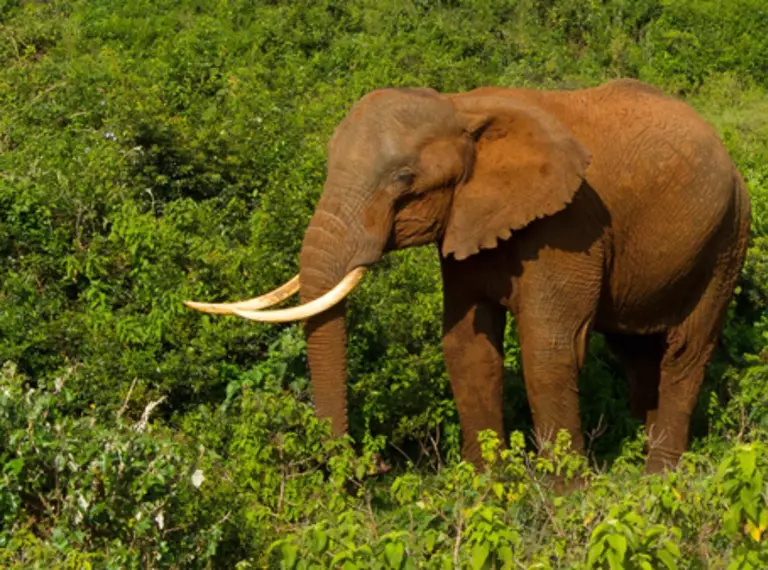
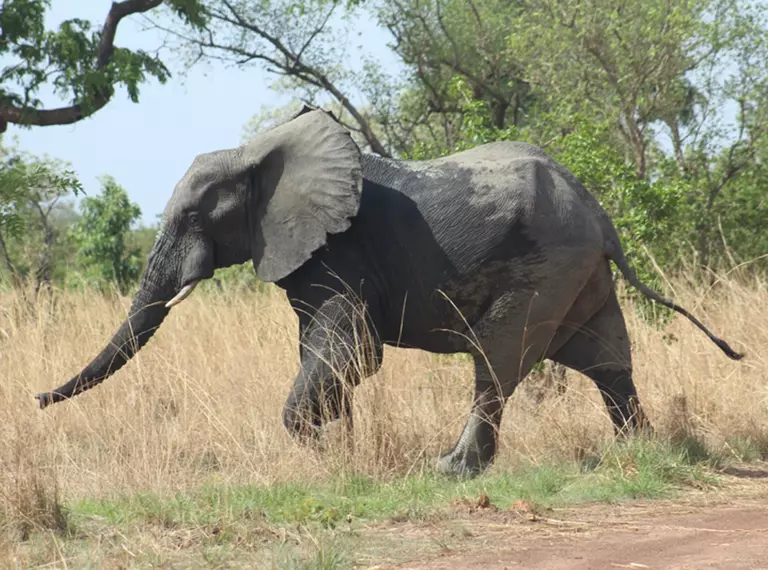
This area also has a particular significance as a stronghold for the critically endangered western lowland gorilla, the endangered common central chimpanzee and the endangered forest elephant.
Western Lowland Gorilla and Central Chimpanzee
Populations of both of these great apes have suffered catastrophic declines over the past 20 years mostly as a result of hunting and severe Ebola outbreaks, which wiped out up to 90% of populations in some areas between 1996 and 2003 contributing to the IUCN reclassification of the western lowland gorilla as critically endangered and the central chimpanzee as endangered. However, ape populations have been reported to have survived Ebola outbreaks in certain locations, especially in the Belinga-Djoua area of the DZM identified by the IUCN as an ‘Important Priority Area’ for these great apes.
More on ZSL's conservation of Western Lowland Gorillas
Donate online direct to our gorilla field conservation work
Forest Elephants
The forests of Central Africa are of critical importance to the future of the African elephant and comprise over 23% of the total continental elephant range, the largest contiguous elephant habitat left on the continent. In particular the forests of the TRIDOM have been identified by the IUCN elephant specialist group as crucial for the future of the species.
A significant issue in the area is elephant poaching for meat and ivory. Recently, major concerns about an upsurge in elephant poaching nationally has resulted in the Gabonese Government giving elephants fully protected status and establishing a dedicated paramilitary anti-poaching unit to counter the threat. Although international markets are the major driver of poaching, widespread poverty means that local indigenous communities in the DZM are involved in the commercial illegal ivory trade.
More on ZSL's Forest Elephant conservation
The DZM is an area of global significance for biodiversity and an internationally recognized priority for the emblematic but highly threatened Western lowland gorilla, central chimpanzee and forest elephant.
Djoua-Zadie-Mwagna
Despite its acknowledged significance for these species the Djoua-Zadie-Mwagna area, in common with much of the Congo Basin, faces increasing threats as human activities such as logging and mining increase across the landscape compounded by a lack of up-to-date knowledge on the status of local wildlife and exact nature of the threats they face.
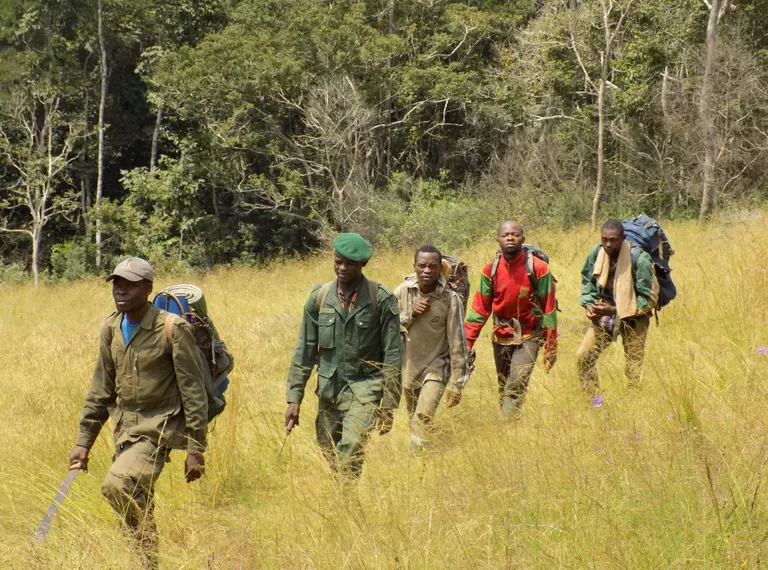
In partnership with the Gabonese agency IRET, ZSL has established a base in the historic IPASSA research station and begun to take action to secure a future for the forests and wildlife of the DZM. In the first part of 2011 we carried out social surveys in three villages and rapid biodiversity assessments of two large forest blocks to start to fill in our knowledge gaps. Initial results show that although these areas retain potentially significant populations of great ape and elephant populations; local communities have perceived a significant decrease in ape abundance over the last twenty years and there are worrying signs of illegal activities threatening wildlife in the area.
This preliminary work serves to highlight the urgency of the conservation need in this area and ZSL is in the process of expanding our activities; to evaluate the actual extent of local threats, increase the understanding of their impact on local ape and elephant populations and build local capacity to address them and help secure the future of this forest stronghold.
Partners and supporters of our work in Gabon
ZSL Gabon is grateful for the support of the US Fish and Wildlife Service and Cleveland Metroparks.