







Prof. Rosie Woodroffe
Professor
Prof. Sarah Durant
Professor
Susie Offord-Woolley
Conservation Network Manager
About our conservation work in Kenya
We’re working in the field and behind-the-scenes in Kenya to help overcome the threats facing some of the country’s most threatened species.
Widespread poaching, habitat loss and fragmentation has caused the country’s wildlife population to plummet over the last 60 years.
As the human population grows and infrastructures are developed, protected areas and wildlife corridors shrink creating human-wildlife conflict. From elephants, black rhino, African wild dogs and cheetahs, to less well-known species such as hirola, we’re working with local partners to support the recovery of Kenya’s wildlife.
We're also working with vulnerable communities to support them to develop sustainable, conservation-friendly livelihoods and reduce human-wildlife conflict.
How are we protecting wildlife in Kenya?
We work with partners in five key areas:
We strengthen wildlife protection, and the management of protected areas and wildlife corridors.
We help conservationists develop more sustainable ways of working.
We empower local communities to safeguard wildlife and manage natural resources sustainably.
We share relevant scientific information to shape conservation action and innovation including the development of action plans and national species strategies.
We support programmes about wildlife health to educate and train wildlife health professionals.
Flagship species conservation work in Kenya
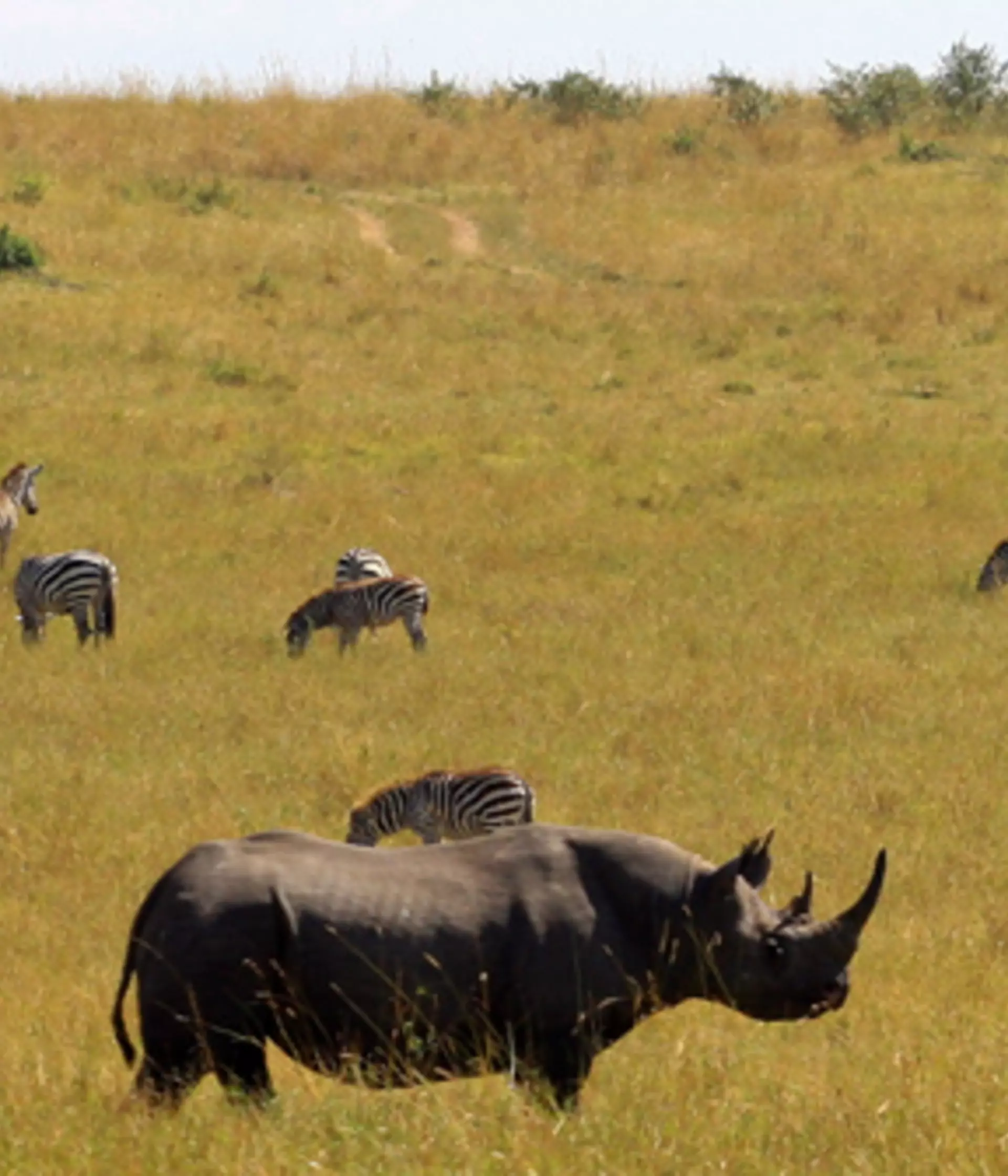
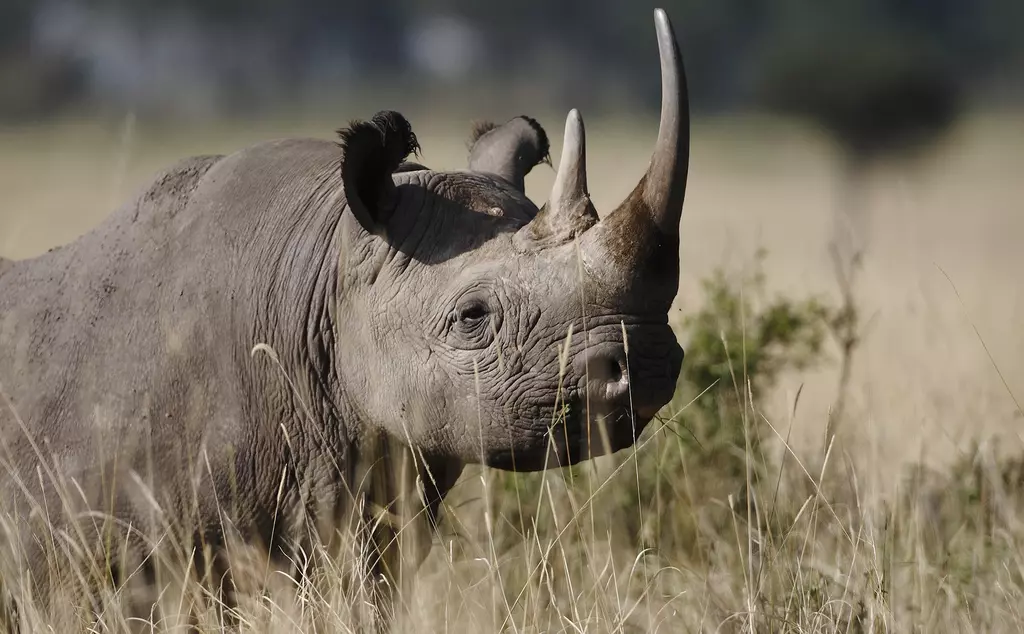
We’ve been working with the Kenya Wildlife Service for thirty years to protect flagship species such as the black rhino.
Our work has involved:
Providing technical support and training for wildlife monitoring and law enforcement.
Using SMART-based patrols.
Providing habitat assessments and management.
Providing species management such as attaching collars and transmitter devices.
Supporting wildlife health programmes including zoonotic disease management for species such as African wild dogs.
Providing strategic planning for protected areas, wildlife corridors and Critically Endangered species, including the black rhino, wild dogs, cheetah, elephant and hirola.


Community conservation work in Kenya
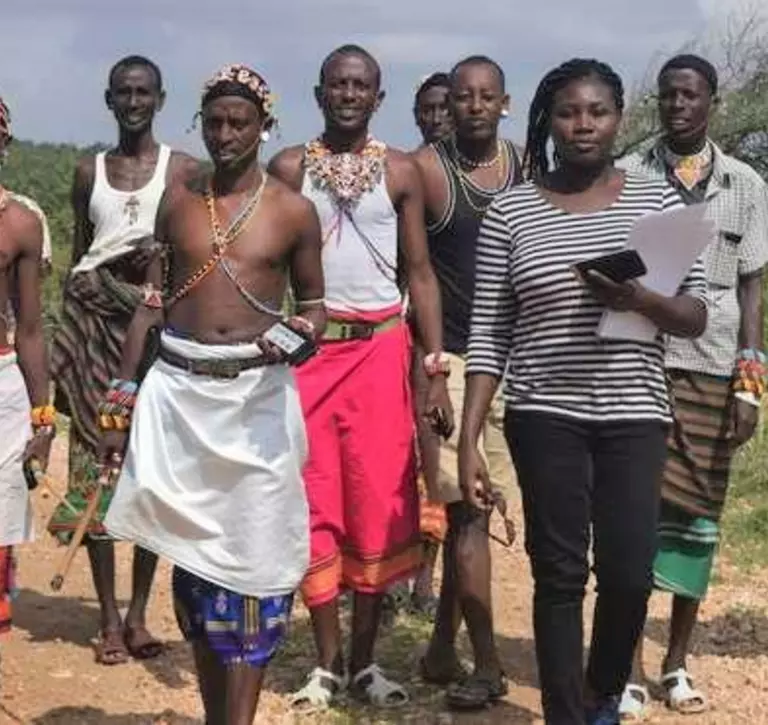
We’re working hand-in-hand with vulnerable communities living on the borders of National Parks and in important wildlife corridors to help reduce the burdens of living alongside wildlife and the poverty that can lead to wildlife crime. We’re working to improve livelihood opportunities, financial resilience and wellbeing of the communities. And we’re building positive relationships between local people, park rangers and managers. Together, we can protect the vital ecosystems provided by these protected areas.
Monitoring, technology and training conservation work
We’re working with lots of different partners to improve ecological monitoring effectiveness, with new technologies such as SMART and Instant Detect.
Conservation training
We support and train young, grassroots conservationists in Kenya with our EDGE programme. As part of Wildlife Health Bridge, a consortium of educational institutions, we work with the Kenya Wildlife Research and Training Institute to develop innovative practical training courses about free-living wildlife health for wildlife health professionals in East Africa.
We’re increasing the number of wildlife health professionals able to monitor disease threats to East African wildlife, to help combat human-wildlife conflict and to improve rehabilitation responses.
Protecting wildlife habitats and landscapes in Kenya
The Boni-Dodori forest
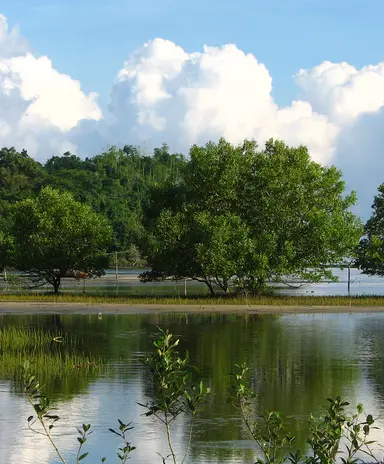
The Boni-Dodori forest is one of Kenya’s last remaining coastal forests, home to unique species, including the rarest of Africa’s Forest antelopes, the Aders’ duiker.
We worked with partners to understand the forest’s biodiversity by completing the first rigorous camera trapping assessment.
Tsavo Conservation Area
We’ve worked in the largest protected area complex in Kenya, the Tsavo Conservation Area, for many years to protect the iconic black rhino. Providing support to the Kenya Wildlife Service and working with local communities to make sure people also benefit from wildlife conservation.
Find out more about our work with the black rhino in the Tsavo Conservation Area
Kenya-Tanzania boundary
The Tushumu Project (‘tushumu’ meaning uplift and support in the Maasai language) straddles the Kenya-Tanzania boundary and encompasses the Loitas/Nguruman area in Kenya and the area east of Lake Natron in Tanzania. In collaboration with partner organisations, we’re conserving rangelands water catchments and helping communities develop climate resilient livelihoods.
Now, as human activities push our planet to its limits, it’s more vital than ever to bring people together. By with local communities and partners we can save animals on the brink of extinction and drive nature’s recovery.
People involved
Based in Kenya, Moses Wekesa is our Field Manager in the Tsavo Conservation Area and leads a team of six full time monitoring and implementation personnel.
Fridah Mutili is our Community Technical Manager overseeing our community work on the border of Tsavo National Parks.
Steven Musau, Nelly Musyoka and Bryne Kimathi sit within Fridah’s team working on livelihood development, human-wildlife mitigation and community banking.
In the UK and Tanzania, ZSL conservationists support our conservation in Kenya including Raj Amin, Sarah Durant, Nick Mitchell, Rosie Woodroffe, Rebecca Sennett Day, Susie Offord-Woolley, Hannah Klair and Ana Pinto.
Partners and sponsors
South Rift Association of Landowners (SORALO)
Universal Ranger Support Alliance
Conservation Alliance Kenya
CAK-Conservation Alliance Kenya
URSA
ACC
BIOPARMA
These projects are funded by grants from:
Woodchester Trust
The Howard G. Buffett Foundation
IUCN/BIOPAMA
DP World
Private individuals
Urgent action to stop the devastation of critical species and habitats by helping people and wildlife live better together, is the only way to save the natural world we love and depend upon. That’s where ZSL comes in, and where you can play your part.